


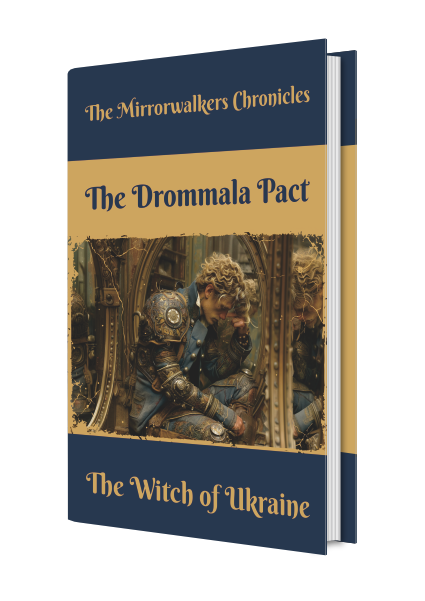
About the Book
The mirrors remember every crossing. Unfortunately, they remember Dorian Corvell.
The countless worlds of Mireth are connected by mirrors, and only Mirrorwalker blood can open them. Dorian Corvell crosses them for money.
When the Great Council offers ten thousand credits to travel to the Loteri Lands and speak to the Drommala, he takes the contract. He was not their first choice. The Mirrorwalker sent before him has vanished.
By the time Dorian arrives, the Drommala is already dead. Strange runes mark her body, the Loteri suspect murder. Meanwhile, across Mireth, other Mirrorwalkers are disappearing.
His guide dislikes him. His healer is becoming a problem. And the contract is becoming something much larger than he was paid for.
Dark queer fantasy spanning ancient forests, vampire lands and worlds of brass and steam, with blood-opened mirrors, mystery, romance, sex, dry humour, and questionable decisions.
Dedication
For my life partner. We shared more than two decades of a wonderful life together. You passed away suddenly, far too soon. You were my best supporter, the inspiration behind my writing, and the love of my life. You will always be the one. This series is for you.
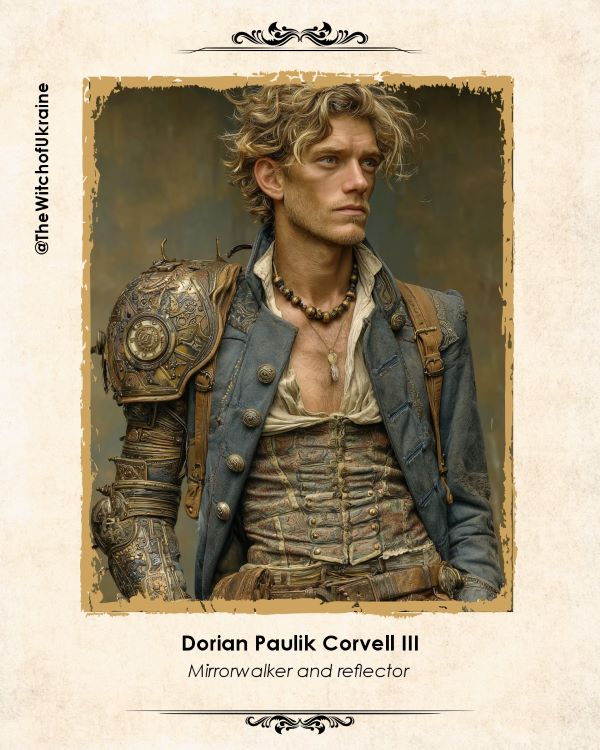
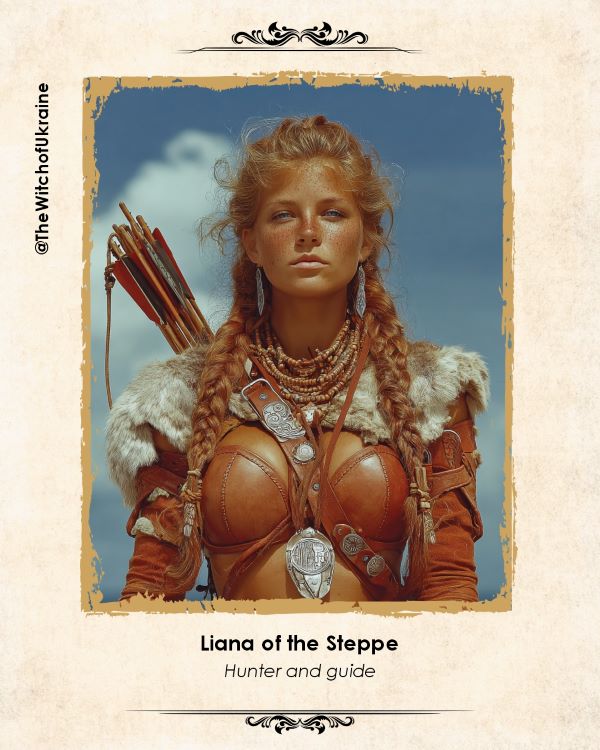
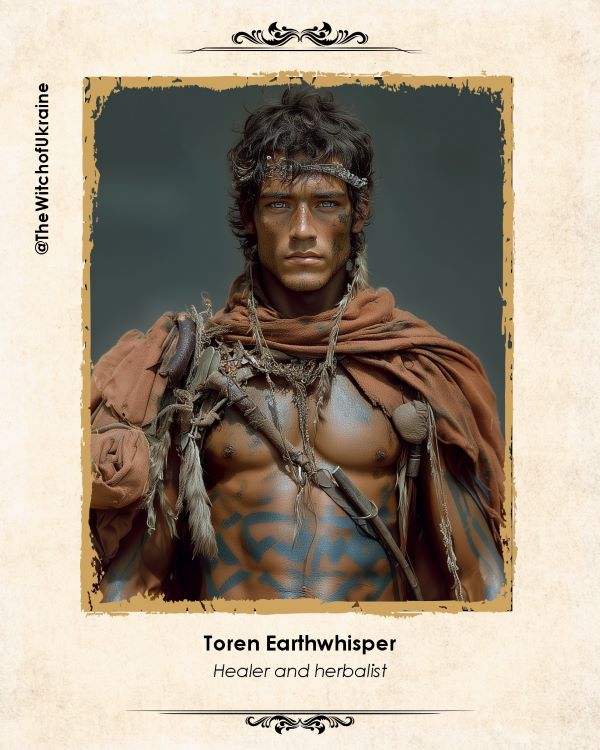
Characters from The Drommala Pact
A few familiar faces from The Drommala Pact. Some helpful. Some dangerous. Some both, naturally.
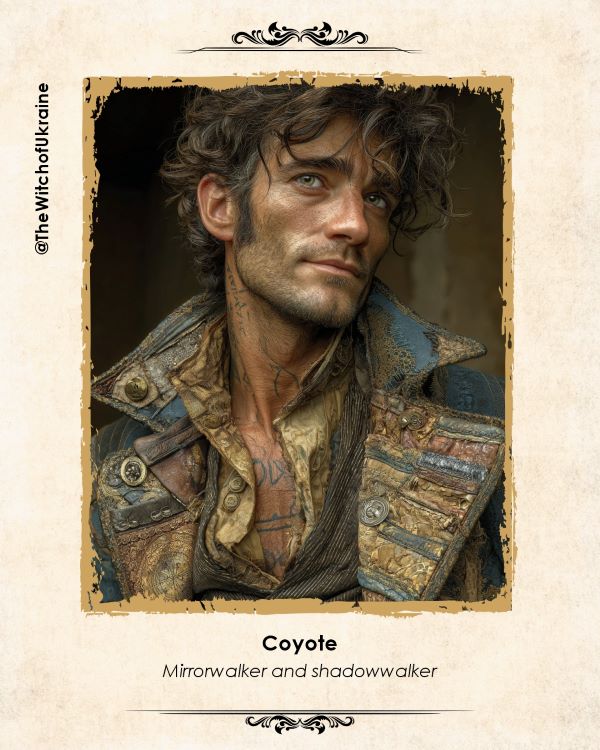
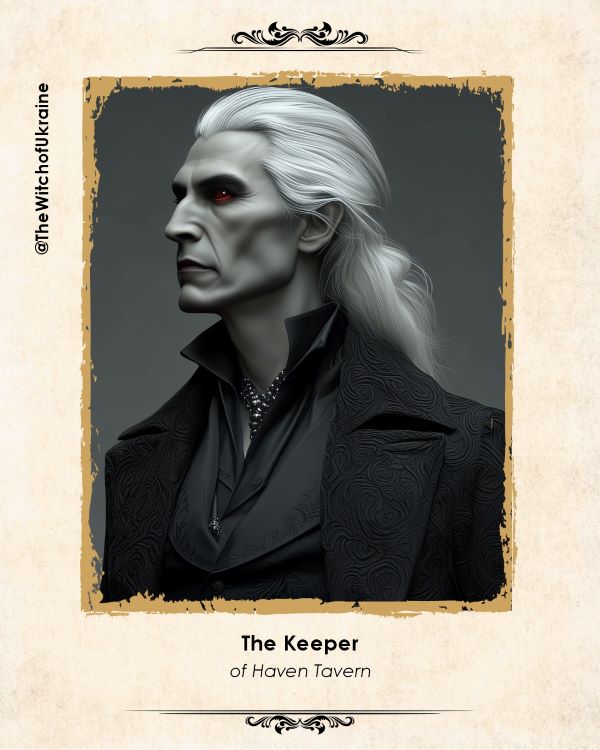
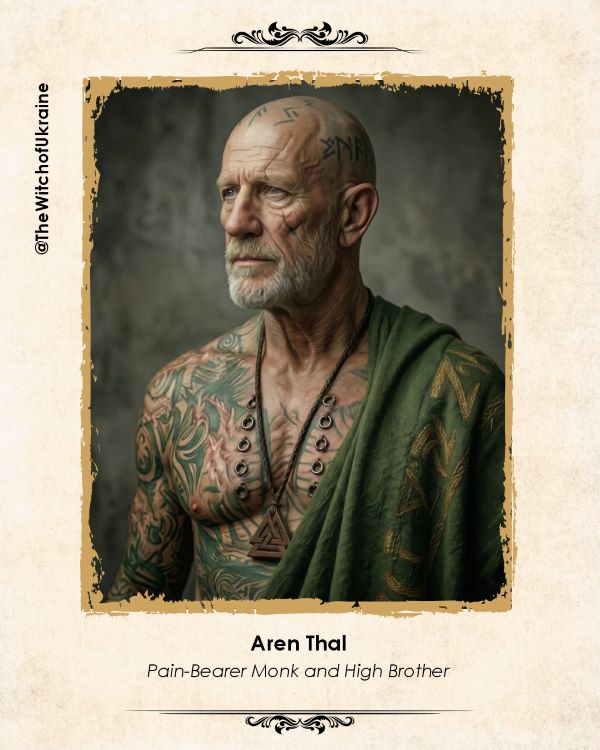
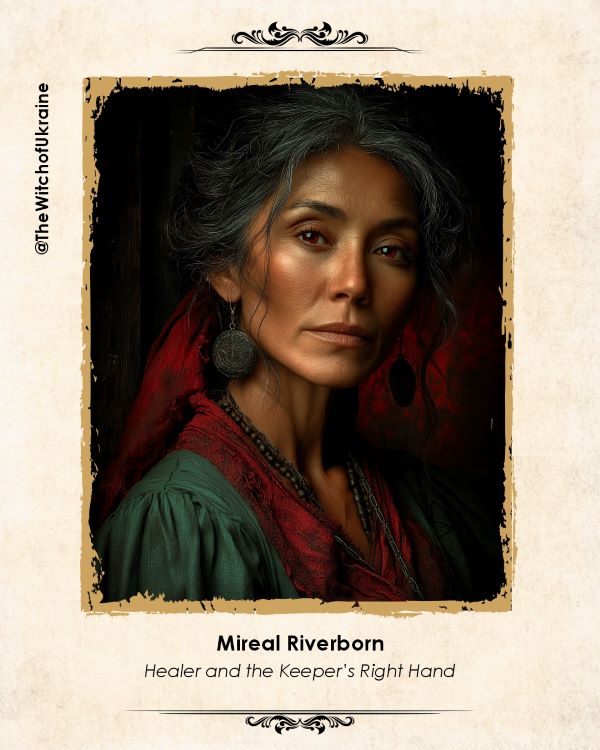
Prologue
Read this chapter on its own page →
Recovered from the Great Council Archives
Year of the Seventh Reflection
Excerpt from The Chronicles of Mireth, Book III, Page 112
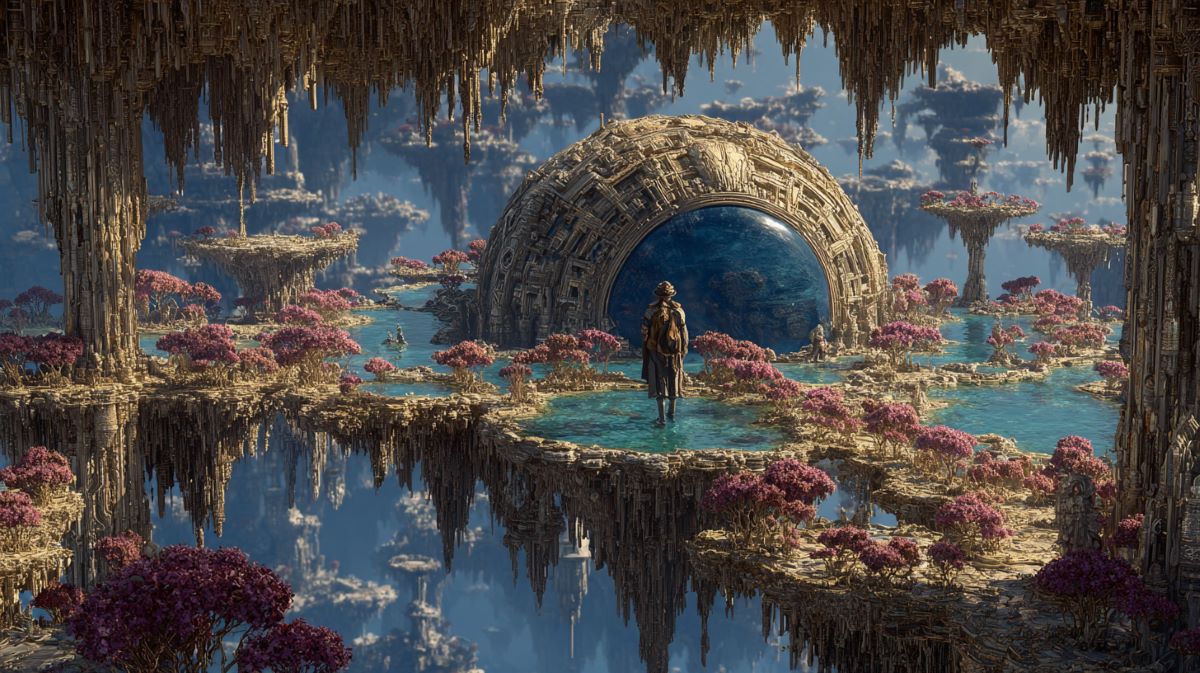
In the beginning, the countless worlds of Mireth were as one, joined by breath, by memory, and by light. Then came the Silence, and the great unity was broken. Each realm drifted away like shards of glass cast upon a dark sea.
For many ages the mirrors stood still and empty. No light stirred within them, and none knew they could be crossed. In those days, Steamhollow was one of the scattered worlds of Mireth, proud, inventive, and alone; cut off from all others by the silence of its mirrors.
There lived in Steamhollow a scholar named Alara Venn, whose heart was filled with curiosity and doubt. She studied the nature of reflection, seeking meaning in the stillness of glass. One day she laid her hand upon the mirror’s surface, and passed through her own reflection. In that moment she awakened the power that had long slept within her blood, and so became the first Mirrorwalker. With her step began the age of passage between worlds.
Those who came after were born of her line, each carrying the same quiet gift: the call of glass and silver. Among them, a few were blessed with deeper sight: they could read the hidden speech of reflection and hear what the mirrors remembered. These were called the Reflectors.
In the early days, the Mirrorwalkers brought wonder and hope, reuniting the sundered lands. But envy grows where wonder dwells, and fear soon followed. Thus came the Mirror Wars: a hundred years of broken glass and burning skies. When the fires at last faded, the survivors gathered in sorrow and swore an oath of peace.
So was founded the Great Council of Mireth: keepers of balance, watchers of the mirrors, and guardians of the fragile harmony between worlds.
Remember this, traveller : the mirrors forget nothing, not even those who wish to be forgotten.
Chapter 1: Ten Thousand Reasons
Read this chapter on its own page →
Dorian swore. Dirty, but still quite elegant, keeping his good manners up to Steamhollow nobility standards.
“My tutors should be quite proud of me,” he murmured to himself, trying to fold and pack his Lucky, a handmade brass-and-steam flying motorbike, into a storage capsule.
It didn’t fit, and one of its wings stuck outside, making the capsule shake and showing a warning message on its small monitor with his every attempt:
Error in resizing the item. Please try again.
After several tries, Dorian gave up, extracted the Lucky from the capsule’s compression field, and restored its size. His thoughts were too far from the problem, so he stopped fighting it. He left the Lucky behind and pushed open the door to The Suite of Discreet Delights, one of the dozens of brothels in Brassville, Steamhollow’s rusty capital.
He liked this place. It was somehow cosy and lacked “the splendour and misery.” His dear friend Coyote once described The Suite of Discreet Delights as “just like a friendly neighbour’s house.” Dorian grinned. Exactly like that.
He stepped into the brothel’s dark hall, and the smells of expensive cigars, cheap perfume, and machine oil wrapped around him. Strangely enough, it was quiet inside. Only the birds’ theatrical moans came through the private-room doors, mingling with the less convincing efforts of their clients.
He needed to clear his head, and this place usually did the job. The envelope from the Great Council still lay sealed in his pocket. Procrastination was not one of Dorian’s finer qualities, but tonight he was giving it his full attention.
Ruby and Jun, two of Madam Vox’s birds, waited by the doors at the end of the corridor. Dorian nodded to them. They returned it with professional calm, as if his arrival had been expected.
As Ruby and Jun led him towards the private room, Dorian noticed Madam Vox sitting on the sofa in the hall. He bowed to her. She smiled slightly, as though approving his choice. Her skin caught the dim light, and a wave of gold hair rested over one bare shoulder. Full-figured and composed, she seemed entirely aware of her effect on the room. Dorian regretted that she was retired.
Madam Vox looked no older than her birds. Either desire preserved her, or wealth did. Possibly both, working overtime.
Ruby and Jun gently pushed Dorian into a dim private room. The door shut behind them with a firm click.
The room smelled of sandalwood incense and industrial-grade disinfectant. Holographic fish swam lazily across the ceiling, casting blue ripples over antique furniture, all reproduction pieces from Old Mireth’s forgotten dynasties.
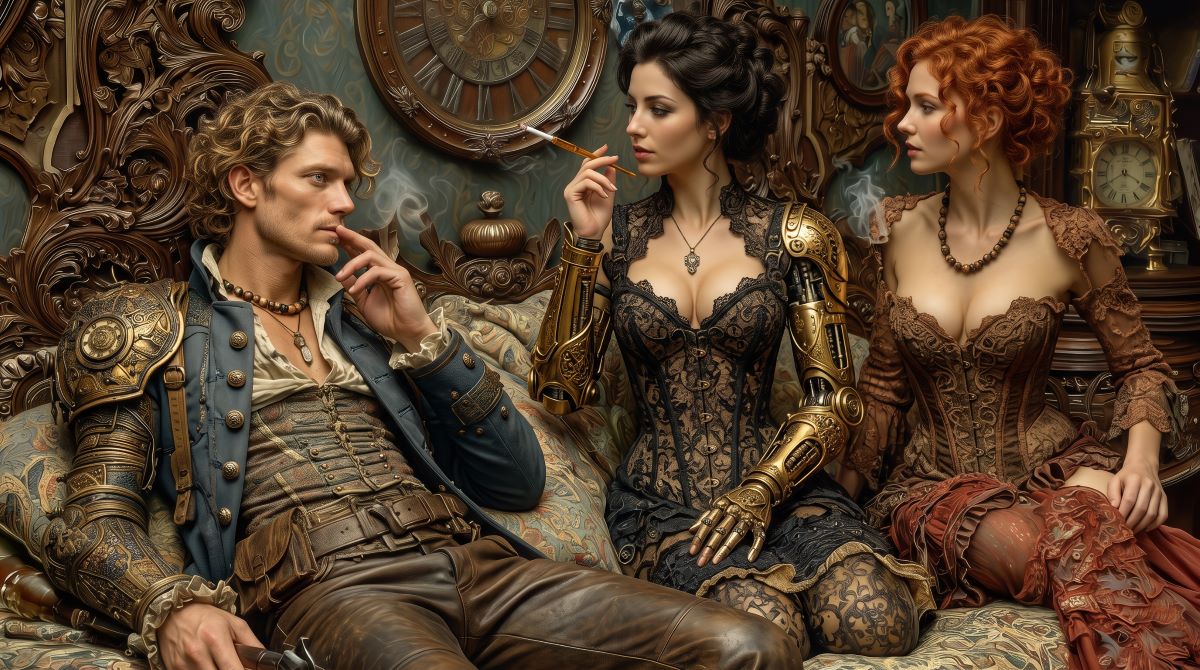
Jun’s cigar smoke lingered over everything. She picked up a long amber cigarette holder with her bionic arm and exhaled, elegant and unhurried. The smoke curled around her shiny black hair.
Expensive taste, Dorian thought.
Red-haired Ruby set the timer, a neat little brass box with numbers blinking on a narrow display, then gave Dorian a professional smile.
One hour.
He removed his brass cuff, shrugged off his coat, and lowered himself onto the bed. The old sheets were questionably clean and stiff at the edges.
Sterilised for your protection, no doubt.
The birds undressed him with practised precision. Ruby slipped on her latex gloves with the clinical efficiency of someone preparing for surgery rather than intimacy, then went to work.
Jun set her cigarette holder aside and leaned back against the bumpy mattress. She began unbuttoning her silk shirt, baring herself with calm efficiency. It should have been a useful addition to Ruby’s skilful hands and mouth.
Unfortunately, Dorian’s body, showing rather more sense than its owner, refused to cooperate with the evening’s planned activities.
The Mirrorwalker Dorian Corvell, defeated by the most basic of human functions. How terribly poetic.
Nothing could lift his penis. Not Ruby’s expertise. Not Jun’s body pressed against him.
I cannot believe that a bloody envelope could cost me my erection.
Ruby’s hands paused. She tilted her head with a touch of kindness. Sincere, perhaps, or professional enough to pass for it.
“Lost in thought, love?”
Dorian straightened and gave a strained smile.
“You were beyond all praise.” His knuckles whitened as he buttoned his shirt and corset with brisk efficiency. “But nothing enhances an evening like an invitation from the Great Council. Should I bring a cake, or is showing up with my face enough?”
He deposited his gearwallet on the dresser. Credits pulsed, ghost-blue, an afterimage of payment still in transit. No negotiations, no regrets. He doubled the rate, as always, the city’s only honest generosity.
He navigated the corridor back to the bar and collapsed onto a stool. The wood beneath his elbows was worn and sticky.
He gestured at the cheapest bottle behind the bar because, clearly, more alcohol was the solution to his problems. He would have preferred bud, but his gearwallet was too slim for that kind of mercy. This month, he had only managed a couple of commercial Walks. He was not broke. Not yet. But he was approaching it with impressive consistency.
A gloomy, tight-lipped bartender with little sense of hospitality poured a measure of what they called whiskey here. Dorian took the glass out of habit and sipped. The bartender glanced at him, then silently left the bottle on the bar.
Dorian grabbed the bottle and moved to a quiet corner table. There, he finally retrieved the envelope from his inner pocket, where it had been burning against his chest all day.
The Council’s polished emblem caught the bar’s light and reflected it back. Dorian’s fingers hesitated at the seal before breaking it with a quick, decisive snap.
The words in the letter swam before him with bureaucratic indifference:
To Dorian Corvell
Client: House Of The Great Sun
Initial Location: Tavra Sol, Steppe Loteri Lands
Request: Mirrorwalker / Reflector
Mission: Drommala
Compensation: 10,000 Credits
In case of accepting the offer, inform the Great Council office within 24 hours of receiving this envelope.
Failure to comply will result in immediate withdrawal of the offer.
Dorian checked his wristwatch, the mechanical one, not the digital implant.
Three hours left.
The Council, never late, never early; always at that one perfect moment when a man found himself flinching.
He folded the letter with care and placed it on the table in front of him. He didn’t let the first flicker of relief fool him. He really needed to think about it first, but the timer’s relentless ticking drowned out his thoughts.
Coyote dropped into the chair opposite Dorian before being invited. His pupils were still dilated from whatever chemical cocktail he had shared with the birds upstairs. His shirt hung open, revealing a leather harness beneath.
“Corvell, mate. Is it really you? Or your freaking hologram?” Coyote was in a suspiciously good mood, to the point that he couldn’t contain it.
Probably I should have chosen his birds instead, Dorian thought wistfully.
Dorian slid the envelope to Coyote. He examined the text with surgical precision, as if he expected a trick but found none.
“Ten thousand,” Coyote whistled low, returning the envelope to Dorian. “Plus whatever the Steppe Loteri throw in. Those prairie mystics practically bleed gratitude when a Mirrorwalker shows up.”
He leaned forward, the scent of sex and expensive cologne still clinging to his collar. “They’ll give you their firstborn if you fix whatever’s wrong with their precious Drommala.”
Dorian swirled the unclear liquid, watching light struggle to refract through the glass. “I don’t need a child. I need a reason.”
“Money isn’t reason enough?” Coyote’s laugh was sharp. “Since when did you become so philosophical about Council work?”
Since I started wondering if any of it matters. Dorian let the thought drift away, dissolving into the air between them.
Coyote produced an identical envelope and slid it across the table. “For Ophelia Rialt,” he said.
Dorian frowned. “She got the same offer?”
“Yes. She showed me the envelope proudly. Thought it meant they wanted her to prove she’s still got her spiritual mirror nonsense in working order. She actually believes they care.”
Dorian pictured Ophelia. Sharp laughter, sharper mind. The only woman in Steamhollow who could outdrink the nobility and still quote philosophy between rounds. Ironically, he found her spirituality and purity more appealing than the cynicism of most Mirrorwalkers.
“She never mentioned the Council mistreats her…”
“She did,” Coyote interrupted. “You were too busy trying to drown yourself in whiskey.”
He paused, looking at Dorian in slight disbelief. “Mate, really? How did you manage to annoy the Great Council badly enough to get yourself banned from government contracts for several months? That takes talent.”
Dorian stared into his glass. Let’s pretend I didn’t hear your last remark. Not the right place or time to discuss it.
“However. But why isn’t she running this one?”
“Because she’s missing,” Coyote said, voice low and almost unwilling. The words struck the air like glass hitting stone, and the silence that followed cracked wide open.
Dorian looked at him in surprise. He couldn’t remember when Coyote actually cared about someone except himself that much.
Then Dorian’s voice sharpened. “How’d you get her letter?”
“She crashed at my place for a while. Debts, bad luck, the usual. She’s too pure for this city.” Coyote tried for indifference and missed. “Don’t give me that look. You’re not exactly the moral compass of Brassville. Yes, I went through her stuff. She never left for the Loteri Lands. Her backpack is still in my apartment. I was worried, alright? She’s my friend.”
He leaned back, the mask slipping just enough to show the raw edge of panic beneath. “The Council wants you now. If they can’t find Ophelia, they’ll take the next available lunatic.”
A short, bitter laugh escaped Dorian. “So I’m the understudy to a ghost.”
“Congratulations,” Coyote said. “If you’re serious about taking this job, talk to the Keeper. That old mirror-hound knows more about the Drommala and maybe Ophelia.”
Dorian drummed his fingers against the table, tracing a faint scratch. “Drommala,” he muttered, his voice slipping between irony and curiosity. “Still the same old tale? Sacred creature of the Steppe Loteri?”
He leaned back. “I’ve never met one. I’ve dealt with smaller things, fluffy, adorable, and generally edible, but not the legendary one. I’ve seen a real Drommala once in my life; the Loteri didn’t even let a fly near it without their permission.”
The letter to Ophelia lay sprawled between them like a challenge.
“Did you read it?” Dorian asked, though Coyote’s look answered for him.
He drew Ophelia’s letter from its envelope with the delicacy of a man handling stolen evidence. Same pompous heading, same bureaucratic vagueness, different only in name and deadline.
“Forty-eight hours,” Dorian murmured, tracing the number with his thumb. “And I got twenty-four. Actually…” He checked his watch, mechanical hands slicing his future into fractions. “…make those two hours left to decide.” His gaze sharpened. “Why the rush? What aren’t they telling me?”
Coyote grew serious. “The rumour is, Loteri’s Drommala is extremely sick. Maybe already dead. Steppe and Desert Loteri are panicking. No Drommala means no water, no crops, no mercy.”
Dorian exhaled, the sound halfway between a sigh and a curse. A Reflector’s job then: to converse with a dying god. He finished his drink and braced for destiny’s next insult.
Before leaving, Coyote threw out the words, “You know the deal. I can pay you for Loteri artifacts far better than the Council.”
Dorian pushed through the brothel’s murky hallway. The air outside was a mixture of fog and something burning.
He found his stubborn machine exactly where he had left it. He reached into his coat, fingers brushing the envelope.
Ten thousand credits.
For Dorian Corvell, that almost qualified as hope.
Chapter 2: The Pact That Burns
Read this chapter on its own page →
Recorded in the Year of the Third Reflection
From The Chronicles of Mireth, Book II, page 47
Loteri Lands Oral Histories, Steppe and Desert Accounts
“The Elders said that in the first time the Loteri Lands were whole. There was no Steppe and no Desert, only endless green grasslands. Prey was plentiful, and life water ran freely through fertile fields. The Loteri lived without borders, sharing water and land, settling disputes in circles rather than behind walls. The land answered them because they listened first.
In the far North lived one Loteri apart from the others. His name was left unkept. The Whisperer Spirit of the Lands tested him, and he failed. Greed took hold. He dammed the rivers, built a fortress around the deepest springs, and demanded payment for water. Gold came first, then leather and tools, and finally children. The land suffered with every bargain. Grass cracked, prey fled, and water withdrew beneath the ground. Some Loteri left, but many stayed, unwilling to abandon their homes.
The Great Sun judged him with fire. The fortress burned, stone split, and gold melted into the soil. The greedy one was found later, his eyes burned out, the ruins ringing with children’s cries. Yet the land did not heal. Water hid itself deeper still, and thirst remained.
The Loteri gathered in a great circle and smoked the sacred bud. They listened rather than pleaded. From their prayers, the smoke, and the reflection of missing water, the Mother was born. Vast and patient, plated in blue and old copper, she listened to the earth itself.
The Steppe and Desert Loteri called her Drommala, She Who Finds Life Water. In older speech she was Morrawyn, She Who Walks the Buried Rivers.
She found life water and turned the Loteri from dead water. She stood between them and storms, and did not move aside when war crossed the plains.
When the Mother left, she gave the Loteri her daughter Drommala, so they might survive what the land had become. In return, she demanded care without possession, guarding without chains, and listening without command. This was the binding of the pact.
A daughter Drommala lived close to a hundred years. When her end neared, the Loteri sought the Mother again. She judged them by stillness. If she agreed, another daughter was given. If she refused, nothing could move her. Long ago, the Loteri tried force, and every attempt failed. They learned the rites were invitations, not commands.
In early generations, some Loteri carried the old reflective tongue in their blood and could commune with the Mother directly. Over time, wars scattered families and memory fractured, and the tongue fell silent among the Loteri.
Then the Mirrorwalkers appeared. They carried the old tongue through reflection, altered yet intact. They did not command the Mother nor speak for the Loteri, but served as vessels, carrying truth between need and judgement.
Thus the pact endured. The Lands were no longer whole and life was no longer easy, but it remained, changed by time, bound by care, and unbroken.”
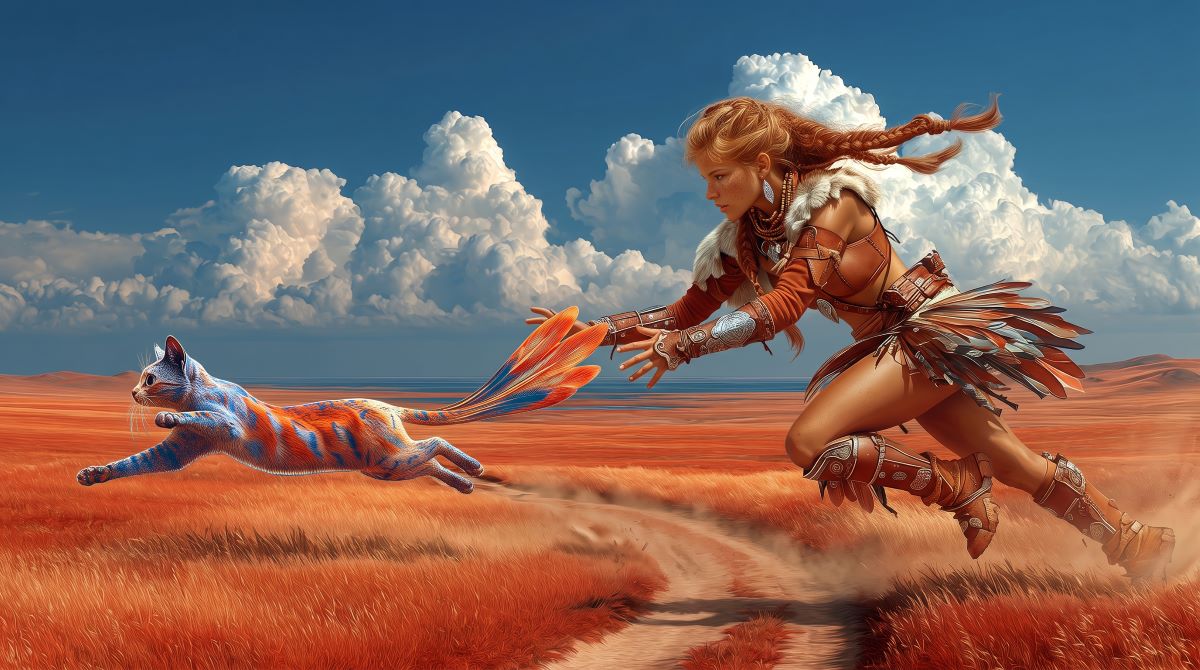
Liana had been gone from her commune for days, roaming the uneven border where the Steppe slowly gave up and turned into the Desert. Her braid was pulled tight to keep it out of her way, though it did nothing to stop the sand from finding every possible place to stick. She was hunting Feather-tail Cats, small colourful creatures with tails tipped in metallic feathers, the best kind for fletching Solbloom Bow arrows, durable and light enough to fly true.
The cats only showed themselves during their short mating season. At dusk, the females rolled in the sand and called to the males with a click-clock sound that carried across the dunes. It would have been romantic if it were not so loud. During that time, their Stillness Veil, the magic that froze you stiff before you could blink, weakened just enough to make hunting possible.
Liana heard the call, low and steady. She crouched, whispered her counter-spell, and felt the air snap back to normal. There it was, sleek and golden, tail glowing like metal in sunlight. She moved quickly. A clean snatch. A twist. She came away with a metallic feather. The cat dashed off, offended but very much alive.
She stood for a moment, brushing sand from her knees, and glanced at the feathers in her hand.
“Three days of chasing for nine feathers,” she muttered. “Perfect math.”
There was a hint of pride in her voice. She carefully packed the feathers into her pouch and started back toward camp before the heat decided to argue again.
A memory rose uninvited. Her father sat beside their leather tent, turning a broken feather between his fingers, examining it as if it mattered.
“Not bad for my daughter, for the first time,” he had said. “Excellent for any other Steppe hunter.”
He was a Steppe legend, though he never acted like one. A hunter and guide who could read the wind better than most could read a map. People said the Drommala trusted him, and maybe that was true. He did not talk much. He did not need to.
Her mother had died when Liana was born, so it had been just the two of them. He raised her between hunts, between long rides and longer silences. No speeches. No soft words. He showed her things instead. How to track by shadow. How to hear water under stone. How to keep moving when the world did not care if you stopped. He was not gentle, but he was steady. His kind of love was not something you said. It was something you did. Liana learned every bit of it.
She was still smiling when a silhouette cut the sunset clean open. Toren. Covered in dust, panting, hair a mess.
“Such a nice surprise,” she thought, then said aloud, “Took the wrong turn, Toren?”
It had taken him longer than expected to find her. His guiding magic, the one that let him sense other Steppe Loteri across distance, weakened the moment he crossed into the borderlands. The desert interfered with it. Sand scattered and reflected the magic, breaking its direction like light in a mirror. Every step sent his sense spinning the wrong way. By the time he caught Liana’s trail, he had lost nearly a day circling dunes and dry wind.
When he saw her at last, crouched low with her bow and dust in her braid, relief hit harder than he wanted to admit. There was no time to rest. The Drommala was dying, and he had already spent too long finding her. He looked at Liana, confused, not understanding the joke. His expression was lost, almost boyish.
“The Drommala is dying,” he said quietly.
Liana’s eyes darkened. Her lower lip trembled before she caught it. The loss of the Drommala was not just sorrow. It was sacred. The Drommala was the heart of their life and balance.
“The Elders sent me,” Toren said. “They are gathering the guides. It is down to hours. Maybe less.”
They packed in silence, throwing her gear together without caring about order. When everything was ready, Liana whistled sharply. Ineya lifted her head from the steppe grass and galloped toward her.
Liana swung into the saddle and nodded. “Come on.”
He swung up behind her and locked one arm around her waist, anchoring them together. On any other day, he might have blushed at the closeness. Not today.
He reached inward instead, sinking his awareness into the quiet, patient strength of the Steppe. The land answered. With his free hand, he drew the power up through himself and fed it forward into Ineya.
The horse surged beneath them, hooves barely touching the ground. Dust rose in a tight spiral around their path as the Steppe pushed them on, relentless and swift. Ineya ran as if the wind itself had chosen her.
It took only a couple of hours instead of half a day before the faint outline of the commune appeared on the horizon.
Darkness had already spread across the land when they arrived. Smoke rose in the distance, first thin, then thick above the fire pits. Toren still hoped the healing rites were continuing. He had burned the herbs himself the day before, circling the Drommala with smoke, praying she would recover.
The air changed as they neared the centre. The fires no longer smelled of herbs, but of farewell. Then they heard it, the funeral song, low and trembling, spreading through the night.
They were too late. The Drommala was dead.
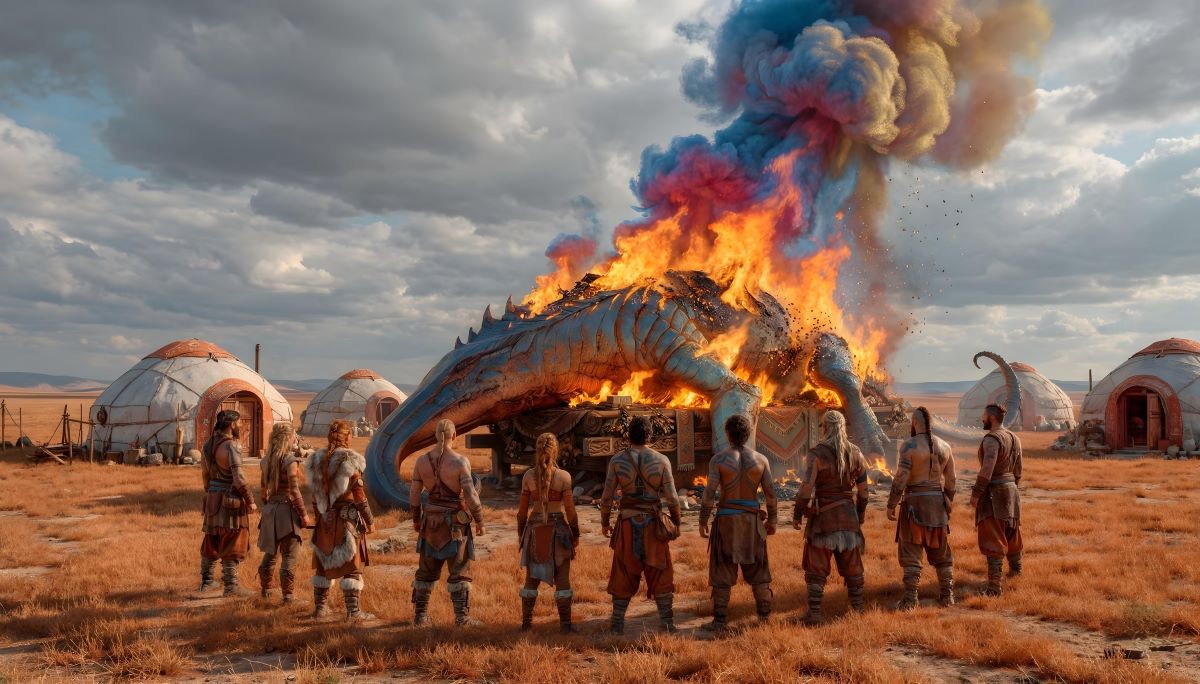
Her body lay still at the centre. The once-brilliant hide had cooled into blue and burnished copper scales, fitted together like worked metal. Her long trunk curved downward, its segmented length resting against the ground, the tip half-coiled, as if movement had only just left it. Torches packed with healing herbs burned around the pyre, their smoke thick and bitter-sweet, returning brief colour to her body. In the flicker of firelight, the Drommala looked both tragic and majestic.
The Loteri sat cross-legged, mirrors pressed to chests and brows, faces striped with ochre and grief. No one spoke. No chatter. Just the old funeral song, wrapping everyone in its rhythm. Liana and Toren joined the crowd, adding their quiet, uneven voices.
When the song faded, the Steppe and Desert Elders formed the first circle around the pyre. Ritual masks marked with ancient runes were fitted with small pieces of mirror, tied with red thread, their hands woven together in the old gestures.
Liana dropped to one knee, palms pressed into dust. Toren joined her, bowing his still-messy head. Words did not come. They had not for a long time.
“Yesterday,” Toren whispered. “I thought maybe she would recover.”
Liana did not answer.
The chanting shifted. Desert Elders took over, voices deep and rolling like sandstorms. They lifted small brass mirrors tied with red string and called her Morrawyn, She Who Finds Life Water.
Morrawyn vel, na shara ven.
They asked the Great Sun for justice, not mercy. The smoke would carry her home.
“Do you think she will be back?” Toren asked quietly.
Liana said. “Only if we deserve it.”
The Elders signalled. Children and Wise Mothers moved to the outer ring, lighting small fires and scattering steppe grass seeds. Smaller circles formed. Bone pipes were brought out, smooth and darkened with age, packed with sacred bud.
The smell spread fast. Dry and green. Familiar. Sweet on the first breath, bitter underneath. Smoke mixed with the burning wood and settled heavy in the air. The pipes passed hand to hand. No one hurried. Each person drew, breathed toward the fire, passed it on. The smoke settled over faces, clothes, thoughts. Not to erase the pain. Just to make it bearable.
Stories followed. Quiet ones. The first time she led them to water. Her shadow at sunset, long enough to cover a caravan. Toren spoke of getting lost as a child, of her turning them from dead water. Heads nodded. Everyone remembered something.
Liana listened, pipe resting on her knee, saying nothing. The smell wrapped around her like an old memory. Every breath heavier. Slower. Easier.
They spoke of fifty-three years of the Drommala sharing their lives. Of life water found and dead water avoided. Without her, there would be no communes. No trade. No life.
When the pipes burned out, no one spoke. They watched the last sparks drift upward. It was no longer sadness. Just stillness. Acceptance.
The Drommala was gone. The Steppe would have to find a new protector. Silence returned, heavy and absolute. Only the fire crackled. Liana exhaled. Toren did too.
The ritual was over.
Some Loteri remained seated on the ground. Others lay where they were. No one rushed. No one was moved along. Liana rose slowly, brushed the dust from her palms, and looked toward the faint glow of dawn behind the dunes.
“Come on,” she said. “Tomorrow everything starts again.”
They walked away in silence, not quite steady on their feet, smoke curling behind them. On the way to the communal tent they shared with few other young Loteri, Toren spoke.
“Liana. I think someone or something helped the Drommala die.”
Liana stopped mid-step, brow tightening. “What do you mean? How would that even be possible? The Caretaker’s job is to protect it no matter what. And the guardians wouldn’t just let it happen. Not with the Drommala’s power.”
“When I was burning the herbs and walking the healing circle around her,” he said, “I saw markings on her scales. Near the belly. Runes, half-hidden by the plates. I have never seen that kind before.”
“I hope you told the Elders.”
“Of course. That is why they are calling me to the Elders’ tent tomorrow.”
Dawn thinned the last of the smoke. The Steppe waited, silent, for whatever came next.
Chapter 3: What Comes After the Smoke
Read this chapter on its own page →
Morning dragged itself across the Steppe. Smoke from the funeral clung low to the ground. Liana and Toren walked in silence. No one greeted them. No one looked up. The commune moved carefully, not from grief now but from worry.
They passed the Drommala’s body. Herbal smoke still lingered, thinning as the sun rose. By firelight she had looked asleep. In daylight she looked final. The spirit was gone, though her vast body remained, heavy and unmoving, as if the land had not yet let her go.
Ahead, the Circle of Elders waited. A ring of stone seats carved with sun-lines and wave-marks, Steppe and Desert set side by side. The stones were old, heavy enough to feel permanent, rooted deep into the earth. Behind the Elders, a few mirrors hung on wooden frames, tied with red string, shivering faintly in the morning wind.
Liana inhaled slowly.
Toren muttered, “Feels like we’re about to be judged.”
“We are,” Liana said. Her voice stayed flat. She had faced Elders in worse moods than this.
People gathered in tight rows around the Circle, sitting, kneeling, or standing with stiff backs. The First Elder rose last, looked around the circle, and struck her staff against stone. Every whisper stopped.
When she spoke, her voice carried clearly, scraped clean of softness.
“We stand after a night of loss. Our Drommala has entered the smoke, on the path the Mother set for her.”
The crowd bowed. Even the wind fell silent.
She waited for the quiet to hold.
“We must find the Mother Drommala as soon as possible, and ask her to gift us her child. Only our voice matters to her. Only truth.”
Silence deepened.
Liana felt Toren tense beside her.
“Thirty years ago,” the Elder said, “the Forest Loteri marked her last known resting place. They keep the enchanted maps. They released them to us at dawn. The Mother was seen near the roots of the forests of Ashen Valley. That is where the search begins.”
People shifted uneasily. Ashen Valley was far from safe.
“We have asked the Great Council to send us a Mirrorwalker, and we pray the Great Sun does not turn them aside. They see reflection where we see only dust. They know the Drommala’s old tongue. Through them, we will find her and be heard.”
She looked across the gathered faces.
“Steppe and Desert Loteri. Our community needs you to guide the Mirrorwalker across the Loteri Lands. To stand before the Mother. To ask for her child.”
She let the words settle.
“Who will volunteer?”
No one stepped forward quickly. Not because the Mother harmed anyone. She did not. The fear was in failing her. Failing everyone. Or losing your way in lands you barely knew.
Nothing moved.
At last a dark-skinned Desert woman stepped forward. Her braids rattled with bone charms. A tall Steppe hunter followed. A rune-reader joined.
Then Liana.
She stepped forward with steady calm. She felt Toren watching her but kept her spine straight.
Toren’s feet moved before he thought. He stepped forward too, pale but steady.
Five more came. Ten in total.
“Speak your reason,” the First Elder said. “Say only truth.”
The Desert woman started. “I know signs in the sand. I saw the Mother’s shadow once, and I can read the marks she leaves behind.”
The hunter said, “I offer endurance. I can cross dunes for days, and I do not break when the heat rises or the wind turns.”
The rune-reader said, “My knowledge of stone paths is strong. I can read and understand old magic.”
Then Liana.
“I know the Steppe and Desert,” she said. “I travelled far with my father. I learned parts of the Forest paths and the River routes. I can guide the Mirrorwalker across all lands.”
Toren spoke next.
“My father is Forest Loteri,” he said. “I know Forest ground. I sense shifts in Steppe magic. I can protect and heal the Mirrorwalker if the journey turns dangerous.” His voice shook only once.
The remaining five volunteers spoke in turn. The Elders listened in silence to the best crossbow hunter, a skilled Steppe herbalist, a Desert protector with deep knowledge of magic, a quiet scholar, and a young but strong shaman.
The Elders conferred briefly.
“Ten will remain,” the First Elder said.
The chosen stepped aside. The rest returned to their work, relieved but guilty.
Liana glanced at Toren. “You volunteered faster than I expected.”
“I panicked,” he said.
“Good panic.”
Before she could say more, an Elder with sharp cheekbones put a hand on Toren’s shoulder.
“You,” she said. “Come.”
“Try not to collapse,” Liana murmured.
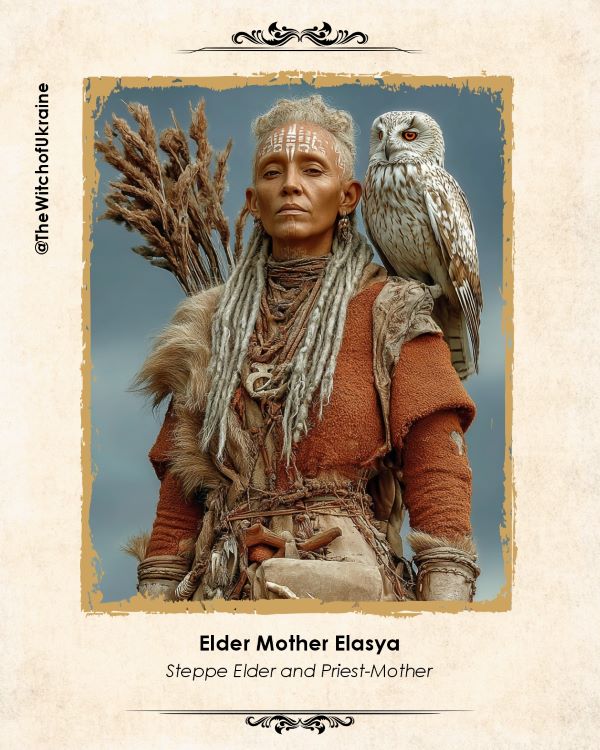
Toren managed a thin twitch of a smile and followed Elder Mother Elasya to a tent near the inner circle.
Inside, two other Elders sat cross-legged on woven mats. Between them knelt the Caretaker of the dead Drommala, a man bent low, shoulders shaking, breath breaking as he struggled to contain himself. One of the Elders lifted a hand toward Toren.
“Tell it.”
Toren hesitated. “Tell what?”
“The runes.”
He swallowed.
“When I was burning the herbs and walking the healing circle,” he said, voice steady despite himself, “I saw markings on her scales. Near the belly. Strange ones. Not part of her plating. Runes, half-hidden beneath the scales.”
Silence followed. Even the Caretaker’s breathing slowed, rough but restrained.
Elder Mother Elasya rose. “Come.”
Only the two of them went to the Drommala’s body.
The morning sun had burned away most of the smoke. Toren led her to the place he remembered, kneeling and running his fingers lightly along the scales.
The markings began to fade.
The lines thinned as he watched, sinking back into the natural pattern of the hide, as if the skin itself were swallowing them.
Toren froze, hand hovering uselessly.
Elder Mother Elasya acted at once. She pressed her palm flat against the scale and spoke a binding phrase under her breath. The air tightened. Light caught sharply along a single remaining line.
Only one rune held.
“We are fortunate to have preserved even one,” she said.
Elder Mother Elasya stood before the Drommala for a long moment in silence. The morning light caught on the great body, dull now, emptied of movement. She placed both hands against the hide, forehead bowed.
Toren heard her murmur softly, not to the Elders, not to him, but to the Drommala herself. An apology. A request for forgiveness for what had to be done.
Only then did she turn to Toren. “Help.”
With deliberate care, they loosened a single scale. No force. No haste. It came free cleanly, lifted as if it had been waiting, wrapped at once in clean cloth.
Then Elder Mother Elasya did something Toren had not expected. She moved to the Drommala’s trunk and drew a short, precise cut. Thick navy-blue blood welled slowly, heavy and luminous, dripping drop by drop from the incision. She deepened the cut just enough and produced a small glass jar from her leather bag, catching the blood with steady hands.
When the jar was sealed, she made one final cut and removed a substantial section of the trunk. It was wrapped carefully, the same cloth, the same respect.
Toren did not ask.
She spoke anyway, as if answering his thoughts. “We must try to understand how she died, Toren. We cannot place her daughter at risk.”
The scale, the blood, and the piece of trunk were carried back to the tent together, each treated as evidence, each handled with the care given to a relic.
Inside, the Elders examined the rune in silence. One of them tilted his head.
“It could be a natural pattern,” he said. “A coincidence of growth.”
Elder Mother Elasya’s reply was immediate. “No. I know the Drommala’s pattern well. This was placed.”
The Elder did not answer at once. At last, he looked to Toren. “You will not speak of this.”
Toren inclined his head. “I will not.”
“You are dismissed.”
Toren stepped out into the light, the tent closing behind him. Whatever had marked the Drommala had not wanted to remain.
Toren found Liana among the other volunteers, seated in a rough half-circle before the First Elder. She stood with her staff planted in the ground, posture unyielding, voice level.
“A Mother Drommala does not hear noise,” she said. “She hears weight. Stillness. Intention. Do not perform. Do not beg. Speak only what is true, and speak it once.”
No one interrupted.
When the words of guidance ended, small cloth pouches were passed into volunteers’ hands. Magic powder, fine and pale, faintly luminous even in daylight. The First Elder bowed her head once.
“She has already gone,” she said. “Now we help the body follow.”
The Elders moved first, touching flame from their torches to the dry grass circling the Drommala. As the fire took, they began the old chant, low and steady.
Morrawyn vel, na shara ven. Gone with the smoke.
The volunteers formed a wide open circle. One by one, they stepped forward and cast the powder into the fire. Each offering bloomed upward in colour. Blue, red, gold. Smoke thickened, rose, folded in on itself. The Drommala’s great form broke apart with unnatural efficiency, scales dissolving into light and ash as if they had never been solid at all.
By the time the last pouch was emptied, the body was gone. Only white ash remained. Magic had brought her into the world. Magic carried her out.
When the fires died down, the First Elder gathered them again. Pipes packed with sacred bud were passed out, along with parchment slips, feathers, and ink.
“You will write,” she said. “Not poetry. Not persuasion. You will write what you would say to the Mother, if she stands before you. Prepare yourselves.”
The circle loosened. Smoke drifted. Flatbread and honey were shared in silence, broken only by short, practical exchanges. Words were tested, discarded, reshaped.
Liana rose and moved away from the group. Toren followed. She sat heavily and dropped her head into her hands. “I hate speeches.”
Toren lowered himself beside her. He sat close enough to catch the scent of smoke tangled in her red hair, warm and herbal. Freckles dusted her nose and cheeks, familiar as something he had learned without trying.
“You can track anything,” he said. “Words just refuse to behave for you.”
“Tracking makes sense,” she muttered. “Words do not.”
He took the paper from her fingers and smoothed it flat. “Start simple. Say who you are. Why you came. What you offer. No flourishes. Just truth.” He handed it back. “The rest can wait.”
She grunted and bent over the page again. Toren stayed still. His fingers twitched. His breath caught on the way out. The sacred bud softened the edges of his thoughts, loosened the care he usually kept wrapped tight.
“Liana. There is something I need to say.”
She looked up. “What now?”
He hesitated, then lifted his eyes. When he spoke, it was stripped bare.
“I have feelings for you. I want you safe. We grew up together. You know me better than anyone. I do not know what waits for us out there, but I want to stand with you. I needed you to know that.” He swallowed. “Would you marry me?”
Liana blinked once. Her shoulders tightened, then eased.
“Toren. Now is not the time.”
The words landed hard, but not cruel.
She added, quieter, “It is not wrong to feel. Or to protect. But we help our people first. Then we think about the rest.”
He nodded. “All right.”
She looked back to the paper. “Now help me write, or go panic somewhere quietly.”
“I am not panicking.”
“You might,” she said, unimpressed.
They sat side by side, scratching words onto paper as the sun sank low, painting the Steppe red-gold. Behind them, the Elders spoke in low voices about runes, and the enchanted Forest map glowed faintly with the Mother’s old trail.
Everything was moving.
Whether the Loteri were ready or not.
Chapter 4: Useful Enough to Keep
Read this chapter on its own page →
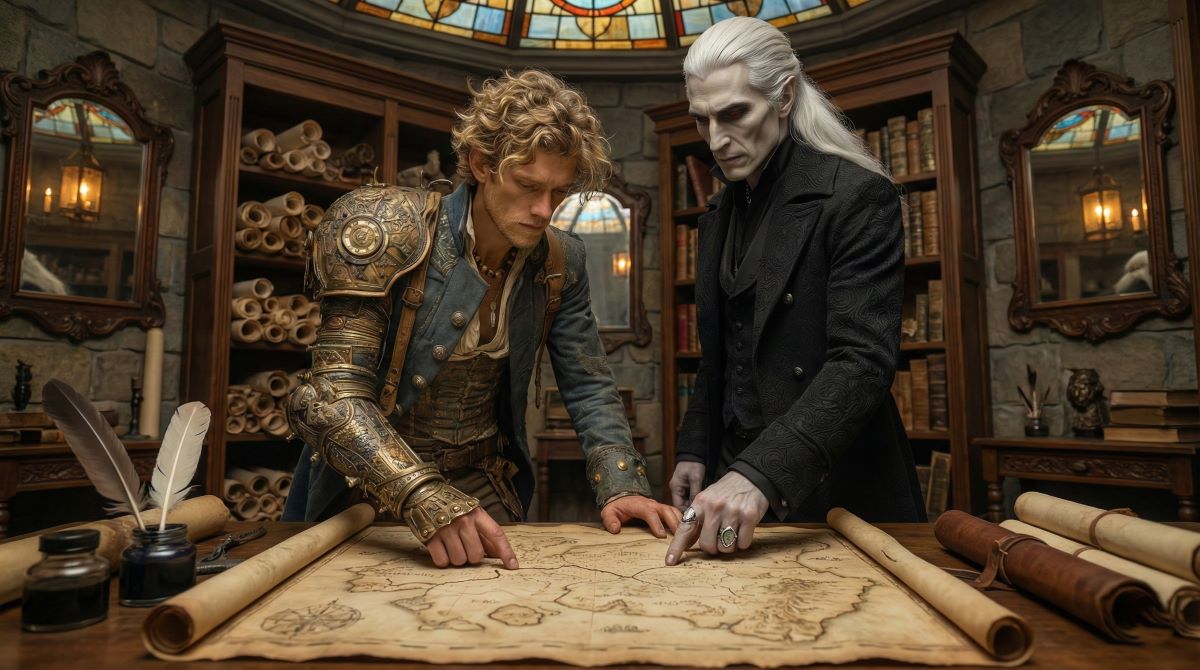
Dorian left the Great Council Administrative Office with his contract confirmed and the travel advance received. The formalities were complete. The Council had him now. Officially.
He tucked the paperwork into his coat and stepped back into Brassville’s Government District, all stone and glass. The building towered cold behind him.
Haven Tavern came next.
He slipped into a narrow side alley behind the Office. Warning posters advised citizens against employing unauthorised Mirrorwalkers. To Dorian’s surprise, Coyote’s face had not appeared on any of them.
“Progress, then.”
He scanned the alley for a mirror, a term Mirrorwalkers applied generously to anything that reflected well enough for crossing. Moving between worlds required blood. Haven did not.
A square, ordinary mirror had been set into the wall, its surface plain and well-maintained. The Haven emblem marked the frame: a broken mirror split through the centre. Such mirrors existed only in Steamhollow and led to Haven, nowhere else.
Dorian stepped closer, placed his hand against the surface, and focused. “Well, hello,” he murmured. The metal softened and accepted him. The transition was clean. It always was with Haven.
He emerged into the long corridor. Mirrors lined both sides, their frames collected across centuries. One Walker arrived through a neighbouring mirror a moment after him; another departed through the glass at the far end of the corridor. Mirrorwalkers used them as doors between Haven and Steamhollow. Reliably.
Dorian straightened his coat and walked towards the Central Hall.
Haven was a Brotherhood place. If you were a Mirrorwalker, you were welcome. The Tavern did not care who employed you or which laws you bent, as long as you could obey the Keeper’s rules. If you could not, you were corrected. Permanently, if required.
Haven lay between worlds, suspended in reflection rather than place. Nobody remembered when it had been built. The Keeper themselves were ancient.
On the way to his usual table, Dorian registered raised voices. A few Walkers at the bar were arguing fiercely but still civilised. Drunk Walkers argued. He ignored them.
Dorian sat. A moment later, a large man loomed over him. He leaned in close, filling Dorian’s space with the smell of cheap smoke and overcooked onions. “Corvell,” he whispered. “What a pleasant surprise.” Dorian looked up at him, expression mild. He did not return the greeting.
“I have some special artefacts.”
If this was meant as temptation, it had been misjudged. “Congratulations,” Dorian said. “Your friends will be delighted.”
The man laughed loudly. “Those cunts can’t even appreciate their own balls.”
“That is unfortunate,” Dorian replied. “I am broke.”
He removed the man’s hands from the table with care. The man swung once, missed, and steadied himself with visible disappointment. He stared at Dorian, then withdrew. Dorian did not watch him go.
A steady voice followed. “Some of the Walkers are far too enthusiastic about seeing you.” Mireal stood in front of him. Robust, copper-toned skin. Dark hair brushed with silver tied back in plain cloth. Her eyes were kind only when she allowed them to be. The faint scarlet beneath them marked her as immortal. A healer by trade. The Keeper’s Right Hand by fate.
“You are thinner,” she said. “When did you eat last?”
Dorian considered this. “Yesterday.”
She waited.
“Possibly the day before,” he amended.
“That is not an answer,” she said. “You will eat.”
“Yes, my lady.” He did not argue. He never had.
She turned and moved away, the matter concluded. Dorian smiled faintly. Old rules still applied.
He finished his meal just as the door to the Altar of Mirrors opened. The Keeper entered the hall. Tall, lean, ageless. Pale hair caught the light as they moved. Scarlet eyes reflected the room without participating in it. Their vampire origin was unmistakable. The hall adjusted, Mirrorwalkers stirred. One moved as if to approach, then stopped when the Keeper lifted a hand. No words were required.
They reached Dorian’s table and paused. They always paused.
“Dorian,” they said. “You look alive. That is encouraging.”
“Debatable, but acceptable.”
“What brings you to us today,” the Keeper asked, “leisure or business?”
“Leisure? Not with my luck.”
The Keeper inclined their head once, “Business, then.”
They passed through the curved glass doors and entered the Library.
Ink and metal polish settled around Dorian immediately. Rare maps and scrolls lined the shelves. Someone had nearly died for each of them.
Dorian placed the contract on the table. “They want me.”
The Keeper opened it with care. “For real?” they said. “After your previous performance, this is unexpected.”
“If they had a choice,” Dorian said, “they would avoid me.”
“They did,” the Keeper replied. “To begin with.”
Dorian smiled thinly. “I am now second on a very short list of people capable of retrieving their precious Drommala.”
The Keeper nodded.
“Ophelia is missing,” Dorian added. “That appears to have improved my standing.”
“Ophelia is missing indeed. My sources in the Loteri Lands are confident the Drommala is already dead,” the Keeper said. “Do not treat this contract lightly.”
“Ophelia never left for the Loteri Lands,” said Dorian. “Coyote still has her stuff, including her contract.”
The Keeper looked at Dorian. “It sounds more complicated than I thought.” They paused, “Right. I told her what I’m going to tell you now.”
“Any advice would be appreciated.”
“Follow their ceremonial rules exactly,” the Keeper said. “Ask Mireal if you must. Born Loteri once, always Loteri. Their Elders will tolerate you. Trust is not guaranteed.”
“I am very good at being tolerated.” Dorian’s mouth hinted at a smile. It did not reach his eyes.
The Keeper placed a thin brass tablet on the table. A Great Council licence to unseal a permanently closed mirror and, more importantly, to seal it again. “Use it wisely.”
“I will.”
“Ophelia picked a few scrolls with River Loteri spells.” The Keeper added.
“I will speak to Coyote. Maybe those scrolls are still in her stuff.”
The Keeper nodded once. Then they unfolded a map.
“This route leads to Tavra Sol,” the Keeper said, and tapped a mirror marked at the edge of the north-west of Steamhollow. The ring on their finger shimmered against the parchment. “Central Steppe settlement. You will meet the Circle of Elders there.”
Dorian leaned in. He recognised most of the marked mirrors. Some of them he saw for the first time. The Keeper tapped along the rest of the route, making short remarks. “Stable. Unstable. Sealed. Do not return through this one. Fatal if rushed. Safe.” Dorian stored the information.
“Do not be overconfident,” the Keeper said. “Keep your eyes open. Your mouth shut.”
“I will try.”
The Keeper sighed softly. They had known Dorian too long to believe that.
“One more favour.” They produced a sealed document. “Retrieve a scroll from the Desert Mirrored Library. Present this to their Senior Archivist.”
Dorian accepted it.
“Return with the scroll,” the Keeper said. “Return alive.”
“I will attempt to disappoint you as little as possible.” He inclined his head and left.
Dorian was tackled immediately.
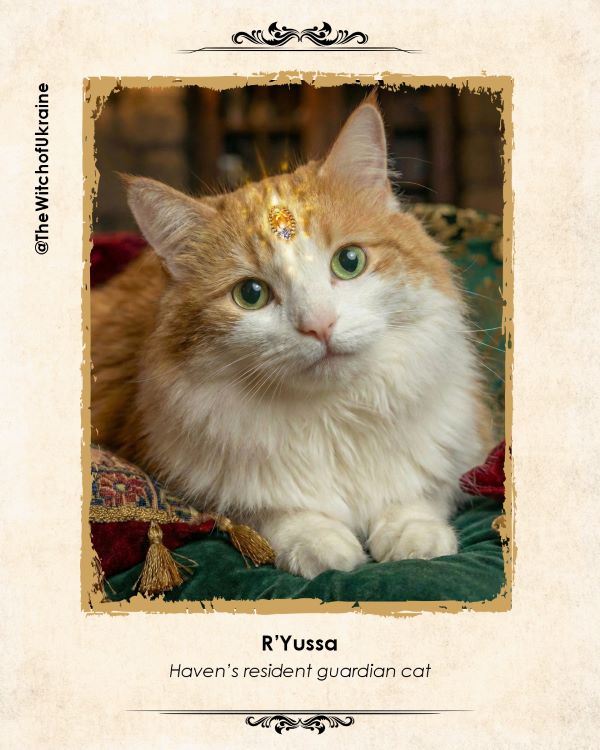
R’Yussa, Haven’s resident guardian cat, launched himself from a pile of cushions with enthusiasm and limited coordination. White and red, violently fluffy, and tall enough to reach Dorian’s waist when standing, he landed poorly, recovered instantly, and charged. Dorian and R’Yussa went down wrapped in a ball of fur and snot. R’Yussa climbed onto his chest, purring loudly, breathing with profound satisfaction. If he decided to show affection, it was done without any consideration or consent.
He licked Dorian’s face.
“Yes,” Dorian said scratching R’Yussa behind his ears. “Later.” R’Yussa disagreed.
Mireal observed the scene, enjoying Dorian’s discomfort. She decided he had enough and called the cat’s name. R’Yussa obeyed at once, moving to her side, purring. Dorian stood. They walked down the corridor together.
“My clients are the Steppe Loteri,” he said. “I am going to Tavra Sol.”
“They will test you,” Mireal said. “Accept what they offer. Food, drink, smoke. Whatever is placed in your hands. Speak truth or not at all. Repeat their words when they judge you. Do not be greedy. Share what is shared. Always.”
“Reasonable enough.” He memorised it.
She pressed a small wrapped bundle into his hand. “Healing balm. Especially for River magic wounds. River Loteri had ties to the Mother,” she added. “At least, we believe so.” She straightened. “And do not be a heroic idiot.”
“I make no promises.”
“I know.”
She watched him leave and murmured softly, in the old River Loteri tongue, “Nal ven, sha’ri.”
The mirror returned Dorian to the alley behind the Council Office. He messaged Coyote. The reply came quickly. Coyote was home. Dorian unpacked Lucky and headed towards the outskirts of Brassville. Smog reduced visibility to little more than guesswork. He continued on foot.
Like any rough neighbourhood across the worlds, Rustwing Alley was not a place to draw attention.
Dorian noticed a cornered figure. At first, he thought it was a woman, but as he moved closer, he recognised a performer, likely from one of the sketchier places nearby. The dress was torn. The wig slipping. Makeup smeared with soot and blood. One eye closed. One finger bent wrong. He had fought until he could not. The three drunk men circling him muttered about refusal and entitlement.
Dorian approached quietly from behind. The first man turned. Dorian punched him in the throat. The second lunged. Dorian broke his arm. The third drew a knife. Dorian shattered his knee. Silence followed.
Dorian draped his coat around the performer’s shoulders and guided him upright. At the cab, the performer finally stopped shivering and looked at Dorian gratefully, “I don’t know how to thank you. Maybe ...”
Dorian stopped him with a look.
“Government District Hospital,” Dorian told the driver, uploading double the fare. Travel advance was very handy.
“Learn to fight,” Dorian turned to the performer. “Some defensive spells would help too.”
Then he headed back into the alley.
Coyote always did choose charming neighbourhoods.
Chapter 5: One Guide. Competent. Furious.
Read this chapter on its own page →
Dorian left Brassville in a foul mood and with an uncooperative machine.
He had fixed the Lucky before the trip. The Lucky took this personally. The machine misbehaved all the way across Steamhollow. A small oil leak appeared. Dorian noted it and stopped caring.
By the time the factory district came into view, he was thoroughly irritated. The factory had not collapsed. It had been consumed. He noticed it only because the Keeper had been precise with their maps and because Mirrorwalkers were cursed with sensing a reflective pull. They called it Mirror Call. From above, the place barely registered.
He brought the Lucky down near an abandoned washhouse.
“I swear,” he said quietly, packing the Lucky away, “I will dismantle you bolt by bolt when I get back.”
Inside, the factory smelled of old oil and damp stone. The reflective signal stayed unhelpfully vague until he reached the stairwell. Then it sharpened. Not stronger. Just accurate. The cellar.
An irritating sound filled the space. Dorian drew his blade and went down slowly. That was when the rats decided he was a suggestion. Steamhollow rats were not creatures so much as urban policy failures. Large. Pale. Scarred. Far too confident. They came, convinced numbers would solve the issue.
Dorian disagreed. One died cleanly. Another lost its head. A third latched onto his sleeve and learned why that was a poor decision. He crushed the fourth under his boot and let the blade finish the discussion. Blood pooled. The survivors paused, recalculated, and retreated.
“Run along,” Dorian said. “I charge extra.”
The mirror he did not know waited in the cellar wall. Only when he came within a few metres did it pull at him properly. Dorian stopped short and sighed. “Of course you’re hungry.”
He rested his right palm against the mirror. The surface was cold, unresponsive. Like any unopened mirror. Then he turned the wheel on his bloodbound ring. The crystal darkened to scarlet. Dorian slid his left hand to the edge of his corset and pressed the ring against bare skin. He closed his eyes.
The needle deployed. A sharp sting. Clean. Efficient. His pulse jumped as adrenaline flooded his veins.
The mirror rippled at once. At first it drew only a few drops, thin threads stretching from his chest to the glass. Then the pull deepened. Blood lifted in a narrow stream, suspended between Dorian’s body and his reflection, drawn with steady appetite. The mirror drank.
Its surface softened, bending inward like heated metal. Recognition settled through the glass, quiet and unmistakable. This one knew Dorian now. From here on, a few drops of his blood would be enough to cross it.
“Happy now?” Dorian murmured.
He pressed the ring back to the puncture. The needle withdrew and folded itself away without resistance. The wound sealed immediately, leaving only a faint mark.
He stepped forward.
The mirror took him.
Heat followed at once. Dry. Relentless.
Dorian stepped out onto hard earth and coarse grass. He checked himself out of habit. Shirt intact. Corset clean. No blood. Neat work.
Light-headedness crept in anyway, and he paused to recover. He turned the wheel on his ring until the crystal shifted to deep blue. The stored reflective energy flowed into Dorian from the ring, threading in dark blue strands through his body. He exhaled slowly and waited. The blood draw for the crossing had been modest. The recovery was almost immediate.
Only then did he turn around and freeze.
A half-circle of people stood waiting for him in silence.
“Well,” he said, dry as dust, “this is new.”
Mirror crossings were famously unreliable. Even competent Walkers landed a few metres off. Arriving exactly on schedule was not one of the advertised features. He glanced down at the ground, then back at them.
“And you got the spot and the timing,” he added. “That’s annoyingly precise.”
A staff struck the earth. Once.
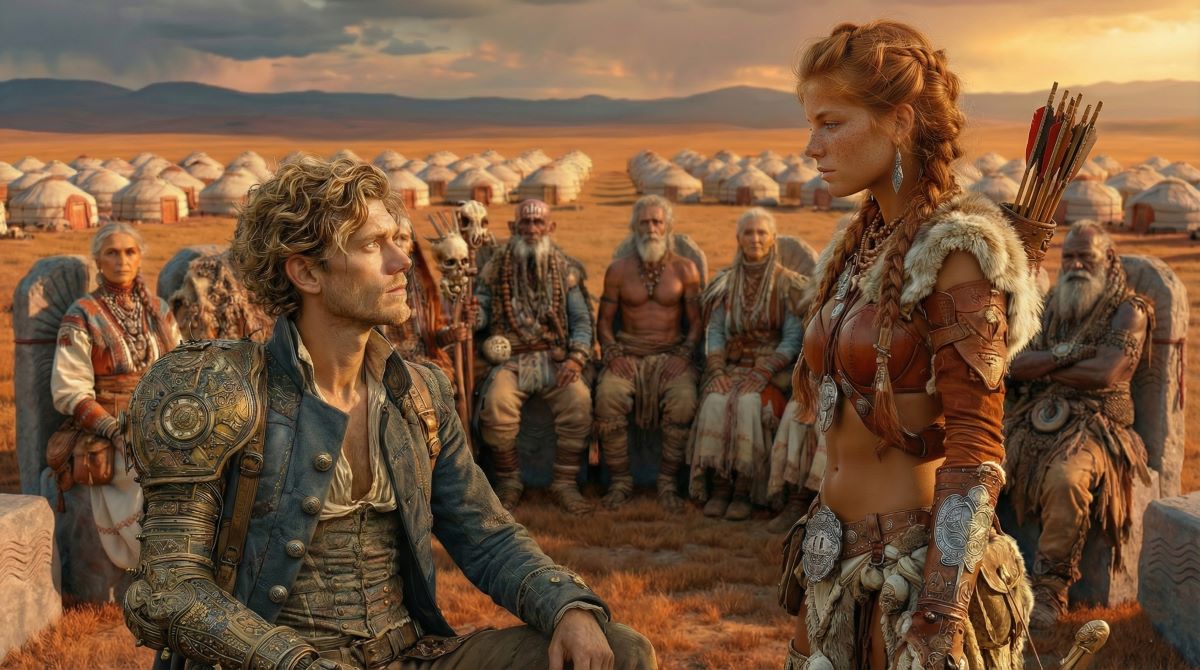
Liana stood at the centre. Tight braid. Bow across her back. Already unimpressed. “This is sacred ground,” she said. “Do not joke.”
He inclined his head, unbothered. “I’m not. I’m recalibrating.”
It was not just what he said, but how he stood there. His travel-worn clothes were handled with careless elegance. Dust was treated as optional. He was too relaxed by half. He spoke with a posh accent and carried himself, in Liana’s estimation, like an entitled twat. He did not behave like any Mirrorwalker she knew.
The volunteers moved in and guided him away from the mirror. No hands. No force. Just certainty. Liana walked ahead, clearly irritated. They took him toward the settlement and the Circle of Elders. Dorian followed, displeased despite himself, and quietly impressed.
The Circle waited. Stone seats formed a ring. Mirrors hung behind the Elders, tied with red string. Dorian stepped forward when indicated and stopped. One Elder raised a hand. Another lowered theirs. The Circle aligned.
They spoke together, voices layered rather than loud.
“Mirrorwalker.” Not a greeting. A naming.
“I hear,” Dorian replied.
“You cross by blood,” said one.
“Yes.”
“You pass by reflection,” said another.
“Yes.”
“You arrive where the land allows,” said a third.
“Usually.”
A pause. Dust shifted. The mirrors stirred.
The life water was brought forward in a shallow stone bowl, clear enough to hold the sky. Dorian took it with both hands and drank without hesitation.
A pipe followed, packed with sacred bud. He drew once, almost successfully suppressing the cough, measured, and breathed the smoke downward into the earth.
The Elders watched closely. Not his face. His hands. One Elder leaned forward.
“You stand where the Mother’s shadow rests.”
“I stand.”
“You will not bind what walks.”
“I will not.”
“You will not take what is not given.”
“I will not.”
“You will leave when told.”
“I will.”
A stone struck the ground once. “You are received,” the Elders said. “As guest. As Mirrorwalker.”
The Elders turned away, already moving on. “You will rest. You will eat. When the sun turns, we will send for you. You will meet those who would walk with you.”
“Understood.”
And the ritual was done. Dorian was quietly satisfied. Clear terms were a rarity.
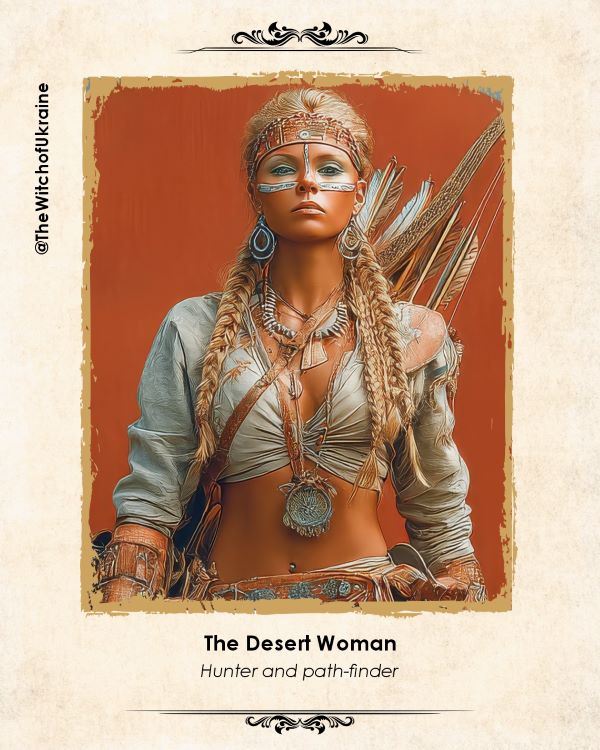
The Desert woman stepped forward without ceremony. Dark-skinned and tall, braids threaded with bone charms. Pale ritual paint crossed her eyes and brow. She inclined her head and turned away. It was not a request. Dorian followed.
They moved between the outer tents, the ground hard-packed and warm beneath his feet. The settlement breathed around them now, purposeful rather than tense. People watched without staring. A Mirrorwalker was notable, not spectacle. She stopped beside a guest yurt set slightly apart from the others, opened the door, and stepped aside.
“For your face,” she said, indicating a basin of clear water and a folded cloth. “I will bring food.”
Dorian thanked her and went inside, passing her in the doorway. The space between them was narrow. Her shoulder brushed his sleeve. She breathed in Dorian’s scent. Oil first. Clean machine oil and brass. Beneath it, heat and skin. Not sweat. Something heavier. Alive.
She turned away at once and left, her breath catching despite herself.
Dorian set his gear aside and stripped with habitual efficiency. Dust clung to him. Dried blood marked one knuckle. He leaned over the basin and washed thoroughly, water running down his arms and across his stomach.
The door opened again. The Desert woman stopped. She did not retreat. She simply looked. Dorian’s body was lean and muscular, built for endurance rather than display. Scars crossed him without pattern or apology. Old ones faded pale. Newer ones darker, some poorly healed. Forearms, ribs, low on his belly. Her gaze lingered longer than politeness required. Appraising. Interested.
Dorian lifted his head.
“A knock,” he said mildly, “would have been courteous.”
She blinked once and straightened. “I will remember.”
He finished washing, dried, and dressed without haste. The Desert woman set the tray of food on the floor. Flatbread still warm. Honey in a small clay dish. Horse meat, carrying the scent of smoke. A cup of steaming herbal tea, sharp with bitter root and mint.
Dorian regarded the food, then gestured to the space opposite him.
“Eat with me.”
She sat beside him, close enough that their knees nearly touched. It was a deliberate choice. Dorian noticed. He ignored it. Curiosity followed Walkers. Proximity. Attention. Fascination. It came with the work. He treated it like heat or noise. A condition of the environment, not an invitation.
They ate in silence at first. She took her time with it, attention drifting back to him more often than hunger required. When their hands brushed reaching for the bread, she did not apologise or withdraw.
Dorian continued eating, unbothered. Only when he tore another piece of bread did he speak. “I will need a welder. My machine leaks oil. Brass seam.”
She nodded. “There are several. Any will do.”
He took another bite, then added without emphasis, “And who is considered the best guide in the Steppe?”
This time she paused. “Liana,” she said at last. “Of the Steppe.”
The name settled.
When they finished, she rose and motioned for him to follow. The welders worked quickly. They did not ask questions. The seam was sealed, reinforced, tested. The Lucky was returned intact. Dorian reached for his credits. They refused at once.
“You are a guest,” one of them said. “Guests are not charged.”
Dorian nodded and put his gearwallet away. Instead, he produced a small clear crystal, no longer than his thumb. The air cooled as he turned it.
“For melting work,” he said. “It lowers the temperature.” The welders accepted it at once, handling it with care.
Before leaving, Dorian asked again. “The best guide?”
“Liana,” they answered, without hesitation.
He thanked them and left. The name stayed with him.
When he came back to the guest yurt, a young runner waited nearby. “The Circle calls for you,” the boy said. Dorian inclined his head and followed.
When Dorian returned to the Circle, everything was already arranged.
The Elders sat as before. The mirrors stirred behind them. Around the outer edge, ten people stood waiting.
Volunteers.
Dorian was allowed to sit. Not among them. Near them. Close enough to hear. Close enough to be measured.
“These are those who have offered to walk with you,” an Elder said. “They will go with you to speak to the Mother.”
Ten was still excessive.
“They stand by choice,” another Elder added. “You will take who you need.”
Silence followed.
The volunteers stepped forward one by one. Names were given. Brief. Skills followed just as plainly. Hunters. Guides. A healer. People who knew the Steppe and expected it to answer back. Dorian listened. He did not comment. When the last volunteer stepped forward, Dorian stiffened slightly.
“Liana of the Steppe,” she said.
The name clicked into place with mild, unhelpful amusement. The tight braid. The bow. The expression that suggested she had disliked him on sight and seen no reason to revise that opinion. So that was her. The best guide in the Steppe. And already irritated by him. Of course.
The Circle waited. Dorian let his gaze move over them once. Slowly. Deliberately.
Then he spoke. “Liana.” Nothing else.
For a moment, no one moved. The Elders exchanged looks. Concern, not disapproval. “One guide?” an Elder asked. “The way to the Mother is not kind.”
“I know,” Dorian said. “That is why I chose her.”
Liana’s mouth tightened. She did not argue. Duty came before preference.
Behind her, Toren went very still. “No,” he said, before he could stop himself. “She should not go alone.” Several heads turned.
“You may choose more,” an Elder said. “For safety.”
“One guide,” Dorian replied. “I do not need an audience.”
Silence stretched. At last, a staff struck stone. “The others are dismissed.”
Reluctantly, the volunteers stepped back. Toren lingered a heartbeat too long before Liana looked at him sharply. He obeyed.
Only Dorian and Liana remained.
The Elders invited them inside the tent and brought the enchanted maps forward. Treated hide and polished glass layered together. The markings never quite stilled. Lines drifted when untouched. Distances adjusted themselves with quiet defiance.
“Thirty years ago,” an Elder said, “the Forest Loteri marked the Mother’s last resting place, near the roots of Ashen Valley.” The lines shifted inward. A murmur passed through the Circle. Unease, earned honestly. Liana said nothing.
“Far,” Dorian said.
“And not kind.”
Dorian nodded once.
When Dorian and Liana stepped outside the Elders’ tent, two groups were already waiting. One for him. One for her.
The women moved first. Barefoot, hair loose, long linen ritual robes cut with high slits. They circled Dorian, attention focused and unspoken. Among them, he recognised the Desert woman he had shared food with.
Across from them, the men closed around Liana. Barefoot, in linen trousers, Steppe- and Desert-born. They formed a loose ring, not touching, but clear in their intent. Dorian’s attention caught on Toren among them. The line of his shoulders. Blue markings following muscle and bone.
Without ceremony, the groups separated Dorian and Liana.
Dorian let himself be led, faintly amused. Liana turned and went with the men, stride quick, shoulders set. On the way, Dorian thought about Liana. She was the best. The dislike mattered too. Antipathy drew clean lines.
One guide. Competent. Furious.
Boredom was unlikely.
Chapter 6: Learning by Exposure, With Witnesses
Read this chapter on its own page →
By nightfall, the Steppe had shifted from mourning to preparation.
The women led Dorian back to the guest tent. One side of it stood open, the leather flap tied up to let in air and firelight alike. He noted it without comment and stepped inside when guided.
They began to undress him slowly.
It was done properly. Deliberately. Fingers loosened buckles, slid fabric from his shoulders, folded each piece away as if it mattered. Their voices rose together in a low song, old and steady, in the Steppe Loteri tongue. He did not understand the words, but the rhythm carried direction rather than prayer.
Dorian did what Mireal had told him to do. He accepted.
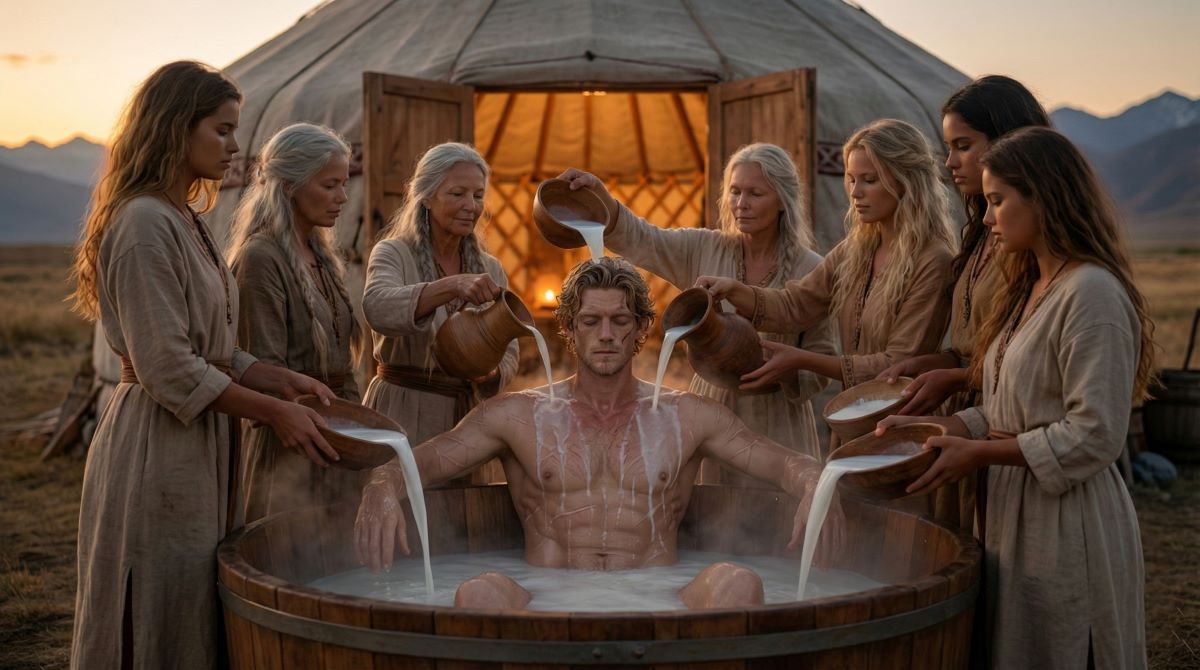
When they finished, they led him out again, barefoot, into the night air. They guided him down in the soaking tub until he sat. The first pour was mare’s milk, thick and warm, cut with crushed herbs and sacred bud. It ran over his shoulders, his chest, his arms, streaking pale against his skin. The women washed him with their hands, thorough and unhurried, leaving no part of him unaddressed. Inner thighs, hips, the most private lines of his body were treated with the same calm precision. It was procedural, designed by people who had never lost sleep over embarrassment.
For a brief moment, he allowed himself to notice the women properly. Different ages, different bodies, different faces. Attractive. And his body reacted. His timing, as usual, was poor.
Dorian exhaled, relaxed his shoulders, and let the thought pass. Control returned with some effort. The ritual continued.
After, they drew him up and stood him beside the tub. Life water followed, cool and clear, poured slowly to wash away the milk, the herbs, the residue of offering. Dorian felt as vulnerable and naked as he had not felt in a long time.
Inside the tent again, they dried and rubbed his skin with oil infused with herbs. The scent clung, sharp and green. Dorian noticed the rubbing grew more precise.
When they were done, they stepped back and formed a half-circle before him.
One of them stepped forward and placed a wreath into his hands.
It was made of small steppe flowers, pale and fragrant. Dorian stared at it, caught off balance for the first time that evening. The women waited.
“You must choose,” one of them said at last.
Choose whom, was his first thought. The most skilled? The best singer? The one who had taken most care?
His gaze moved along the line of them and stopped on the Desert woman he had met earlier that day. She had fed him and had been careful with him throughout the ritual. It seemed reasonable.
So he lifted the wreath and placed it on the Desert woman’s head. Her face lit with unguarded joy. The others nodded once and withdrew without comment, sealing the flaps behind them. The Desert woman stayed. She did not move closer, but she did not step back either. Her eyes held his openly now, desire plain and unashamed.
He paused. Of course. Another offer. Mireal’s words returned.
Dorian stepped closer and lifted a hand to the Desert woman’s face, touching her cheek gently. Her skin was warm beneath his fingers, slightly rough from wind and open days. She smelled of sun-warmed leather, herbs, and faint smoke. Dorian carried her to the mat, set her down with care, then settled opposite.
She smiled up at him at last.
“So,” she said softly. “You chose.”
He considered the statement for a moment. “I try not to disappoint,” he said.
She let out a brief, quiet laugh and reached for his hand, fingers warm and certain. “You are slow to read signals,” she said, guiding his hand to her knee.
Dorian’s mouth curved faintly. “But I learn.”
His hand moved as if confirming a theory, sliding along her knee and a little higher, stopping while it was still proper. The Desert woman met his glance briefly, then reached for the tray set nearby, already prepared. Food, tea, and a smoking pipe packed with sacred bud, set there in advance.
Time stretched while they shared the pipe, smoke passing between them until the tent softened at the edges. The sacred bud dulled urgency and sharpened sensation, turning moments elastic. Everything arrived a little late. Everything lingered.
They sat close, then too close to pretend it was accidental. Her tunic slipped from her sun-touched shoulders, revealing her breasts. Dorian’s hands traced her body with deliberate attention, following curves without haste. He enjoyed the sounds she made, the quiet laugh when his touch surprised her, the way her breath caught and settled again. There was no rush in him. Only interest.
She explored him in return. Fingers mapped his shoulders, paused over old scars with curiosity rather than caution, traced their paths without asking. She touched him everywhere with calm confidence, as if nothing about him required permission.
When his hand moved lower and firmly parted her thighs, she inhaled sharply. He stayed patient, letting the pause do its work. Whatever she had expected, it was not this. The slowness stretched further, then shifted. He changed the rhythm gradually, steadily, watching her control slip and fail to return.
The mat darkened beneath them as she arched, breath leaving her in a sound she did not bother to restrain. Dorian kept his hand where it was, calm and present, until the last tremor passed and her body finally slackened. He watched her face throughout. The disbelief. The surrender. The instant when she stopped caring how open she had become.
She pressed her face into his shoulder and laughed softly when it was over. He gave her a moment to recover, then moved his fingers deeper, setting the pressure and moving with intent now, carrying her to another peak. She came apart soon after.
“Mirrorwalker,” she murmured, voice rough and amused, once she could finally speak again, “no wonder people are curious about you.”
He smiled and waited, letting her gather herself again.
When she reached for him in return, it felt less like a request and more like a natural conclusion. Her hands were quick and certain. Dorian let go of what little control he had left and followed without resistance.
The Desert woman watched his release with fascination, surprise briefly flickering across her face. Even this marked him as other. A Mirrorwalker’s release carried a mirrored sheen, catching the oil-lamp light like newly polished metal.
Dorian landed on his back at last. She curled against him, warm and unguarded. They kissed, slow and close, and fell asleep without noticing when it happened.
On the other side of the settlement, Liana underwent the same ceremony. It was not smooth. Even men’s gentle hands could not soften her mood. When the wreath was offered, she did not look at anyone. Toren hoped anyway and was disappointed immediately. Irritation won out, aimed at the ritual, at Dorian, at the timing of it all.
Liana lifted the wreath and placed it on her own head, ending the matter.
She went to bed alone and slept.
Most of the settlement was asleep. A few Loteri moved through the half-light. Liana and Toren were already up.
Liana sat cross-legged beside her pack, tightening straps that did not need tightening. Toren knelt opposite her, sorting dried herbs into small cloth rolls with careful fingers.
They worked well together. Always had.
A quiet sound came from a yurt near the guest ring. Both looked up at the same time. Morning had settled fully over the settlement when a Desert woman stepped out, adjusting her loose tunic against the cool air. Her hair hung free now, her pace unhurried. She did not look back at the tent she had left.
Dorian’s tent.
Liana watched her go.
“Well,” Liana said, flat as old ash. “I am not surprised.”
Toren did not look up from the strap he was tightening. “You think we should be?”
“Do not pretend that you do not understand,” she said sharply.
He exhaled. “Liana. It was part of the ritual.”
“So was mine.” She folded her arms. “And I slept alone. The choice is part of it.”
“What he did is not the point,” Toren said. His hands stilled on the strap. He did not look at her. “Among the Loteri, this is how people choose each other.”
“That is not a rule,” Liana said. “It is a habit.”
“It is how people say what they want,” Toren replied. “And you did not choose me.”
Silence settled between them.
“I needed my head clear,” Liana said.
“And I needed to know if you saw a future with me.” He looked up at her then. “You did not answer.”
Liana hesitated.
“Maybe,” she said.
Toren nodded once. Not relieved. Not angry. Just careful.
He pulled the strap tight and lifted the pack onto his shoulder.
Elder Mother Elasya did not raise her voice. She did not need to.
“Toren,” she said.
He turned at once. Liana barely glanced up. She knew that tone.
“Yes, Elder Mother.”
“Walk with me.”
He obeyed, casting Liana a brief look that held apology and curiosity. She waved him off with two fingers.
Inside the Elders’ tent, the air smelled of ash, ink, and old fabric. The relics were already prepared: the preserved rune taken from the Drommala’s body, a section of her trunk, and a small jar holding her blood.
“You saw the runes more than once,” Elder Mother Elasya said. “More than anyone else.”
“Yes.”
“You may be able to recall them.”
“I am not certain,” he said carefully, “but I can try.”
“There is a man in Mossgrove,” she continued. “A monk. Aren Thal. Pain-Bearer. He understands bodies, magic, and damage done with intent.”
Toren’s breath caught. “The Pain Monastery.”
“Yes.”
“That is not a small request.”
“No,” she agreed. “Nor is it optional.”
She leaned forward. “You will travel with the Mirrorwalker and the guide into the Forest Loteri Lands. When the path turns, you will leave them and continue on to Mossgrove. You will ask Aren Thal for his help and return with what he learns.”
Toren nodded, hands steady as he accepted the relics.
By the time the settlement stirred awake, Liana was seated in the communal dining area, eating quickly from a bowl of grain and dried fruit, eyes scanning without focus. Dorian approached without announcement. He looked acceptably fresh. Dressed. Awake. Irritatingly so. Liana did not smile.
“Sleep well?” she asked, without looking up.
“Well enough,” Dorian said. “Still in one piece.”
She stirred the bowl once, though there was nothing left to mix. “Good. Thought you might be exhausted.”
Dorian shrugged. “I’ve had worse. At least this time no one tried to drown me.”
She didn’t answer. Not even a twitch.
He exhaled, realising the air between them wasn’t about to clear. “It was informative,” he said simply. “I enjoy learning by exposure.”
She looked at him then. Briefly. Her face tightened, then settled back into control. “Of course you do.”
Dorian sat opposite her. Not invited. Not challenged. He waited, which suggested experience.
“You settled in quickly,” Liana said.
“I find it useful to know where I stand,” he replied.
That earned him another look. “You had your choice of guides,” she said. “People who would please you.”
“Yes.”
“So why me?” The question was flat. No accusation. Just distance.
“Because you know the land better than anyone else here,” Dorian said. “And because pleasing me is clearly not on your list.”
“That is not flattering.”
“I am not trying to flatter you,” he said. “I need someone who will tell me when I am wrong.”
She finished her food and set the bowl aside. “You understand I am here out of duty?”
“Yes.”
Liana nodded once. “Then we understand each other.”
Dorian stood. “A rare luxury.”
Toren returned with a travel bag slung over his shoulder. Elder Mother Elasya walked beside him. The sight snapped Liana upright.
“What is this?”
The Elders gathered quickly.
“Toren will travel,” Elder Mother Elasya said. “With you. And with the Mirrorwalker.”
Dorian inclined his head. The Elders were law here.
“Toren will leave you when your path turns toward the Mother,” she continued. “From there, he will go to Mossgrove.”
Liana did not hide her relief. Having Toren with them, even briefly, settled something she had not realised was loose.
Dorian registered the arrangement without comment. Tolerable.
They left shortly after.
Two horses moved ahead, familiar and steady. Liana rode first. Toren followed, posture easy but alert. Behind them, the Lucky lifted with a restrained growl of steam and metal, hovered, then settled into a smooth glide. The Steppe opened around them, vast and indifferent.
Three travellers set out under a pale sky. Each carried a different understanding of what was coming.
Chapter 7: Smuggler’s Luck
Read this chapter on its own page →
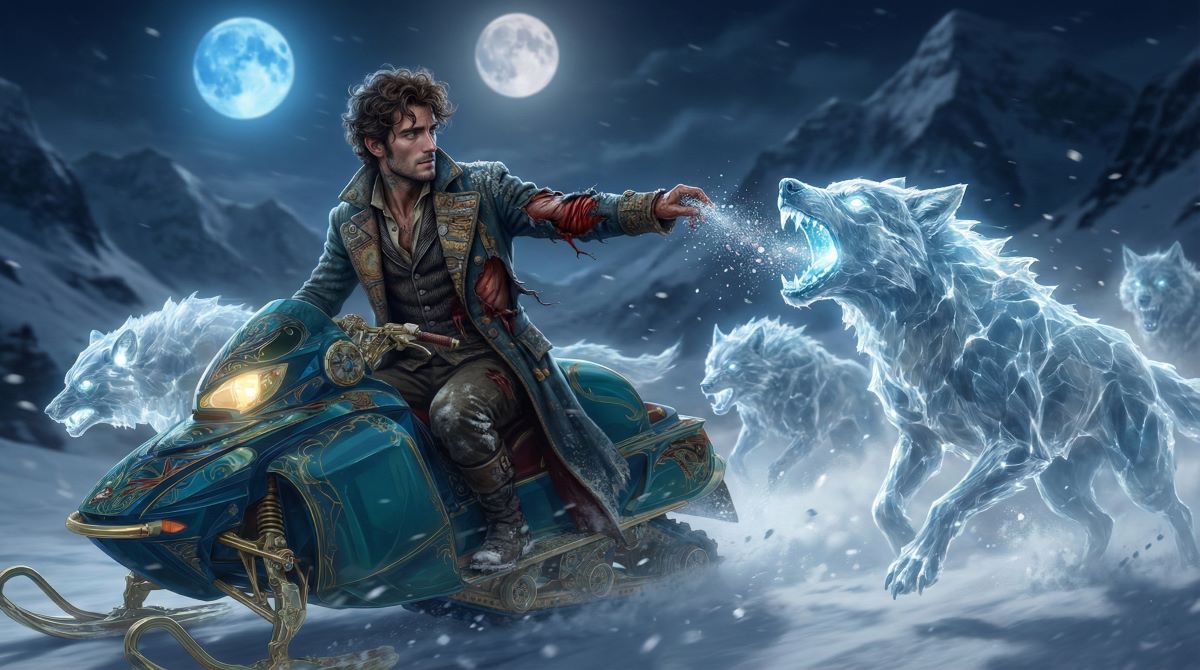
Snow and stone blurred as Coyote crossed into the Scarlet Valleys.
The snow scooter rattled under him and held. Cold pressed in at once. Sharp. Biting at his skin. Snow lay thin over rock and roots, packed down by time rather than traffic. This was a world of vampires and immortals. Cold, unchanged by centuries. Death existed here, but it did not hurry.
The inconspicuous, unofficial mirror closed behind Coyote. He did not look back. The scooter stayed quiet. Reliable enough. Questionably fast. Coyote had to pick up a package for his client in Steamhollow.
Two moons gave enough light to ride by. Snow reflected it cleanly, outlining trees, slopes, and shallow drifts. Enough to keep moving without slowing. Night travel in the Scarlet Valleys was unpleasant. Exposed. Empty. He aimed for the nearest trade city, its lights low and distant.
Staying too long in a place where immortality was common increased risk. Coyote preferred short jobs.
There was nothing wrong. But the Scarlet Valleys were uncomfortable, even when nothing was wrong. Coyote kept moving.
Velmora rose out of the dark. A trade city built for movement, not comfort. Stone packed tight along narrow streets. Snow blackened by soot. Light spilled from shops and taverns in narrow bands.
Coyote parked the scooter between two warehouses and killed the engine. He walked the rest of the way. Hood up. Hands visible. An unremarkable stride.
The tavern was easy to find. Inside, warm and dim. Smoke. Alcohol. Oil. Blood. Reflective surfaces were dulled or covered. Mirrors existed, but only as controlled objects. Decorative, sealed, or deliberately misaligned. Vampires disliked chaos. And mirrors, once active, were very good at creating it.
Coyote took a corner seat with a clear view of the door and the back wall. Habit. He ordered a shot. For warmth. He was early. A habit sharpened over years.
Vampires stood at the bar, voices blending into an indistinct hum. The bartender poured artificial blood into heavy glasses, different shades, different prices. The vampires drank openly, unbothered. Mortals stayed in the shadows, keeping to the edges.
Coyote checked the time. Three minutes late meant nothing yet but ten minutes did. Being late was exposure. He waited, shifting only enough to stay loose, resisting the urge to move. The courier did not arrive.
The tavern pressed in around him. Low laughter. A brief argument. Glass breaking, followed by a quick apology. Coyote kept his eyes on the door. He still had time. But he did not have much.
Someone stopped at his table. Coyote felt the shift in air before he looked up.
“You always did like corners, darling,” Samara said softly.
He raised his eyes. She was stunning. Annoyingly so. Amber hair, emerald eyes, and the sort of figure that made men go stupid.
“Samara,” he said, smiling.
She sat opposite him without asking. “You look busy.”
“I am waiting.”
She smiled. “You always were.”
They had known each other since Haven. Something had happened once, long ago. Something unfinished and wisely left that way. He had not expected to see her here.
“I did not know you moved,” he said.
“Yes. The Valleys,” she replied. “Six years now.”
Samara leaned back, posture careful, as if preparing words, she had rehearsed more than once.
“I am still an official Mirrorwalker,” she said. “Licensed. Registered. I work crossings.”
“For locals?” Coyote said. “Interesting.”
She exhaled sharply. “Trying my luck.”
Ah. That explained it. He looked into Samara’s eyes carefully. No red undertone. No trace of it. She was mortal. Still.
“Not successfully,” he commented.
“Not yet,” she replied.
Coyote kept looking at Samara. He had never understood her fear of ageing. She was willing to try anything to outrun it. Unfortunately, Mirrorwalker blood did not cooperate with anti-ageing magic. Elixirs failed. Spells slid off. Reflection resisted preservation.
Vampires could grant immortality, but rarely, and only with official permission, in front of a crowd of witnesses. For reasons that had nothing to do with beauty or fear of time. It happened. Just not to someone like Samara.
“I tried,” she said. “For years.”
Coyote said nothing. He could picture it easily. Poor thing had tried to seduce vampires and failed.
“I did everything right,” she continued. “But vampires are as cold as your mate Corvell.” Her eyes flickered with dislike.
Coyote laughed under his breath. “Corvell turned you down?”
“Maybe I am not his type,” she said quietly. “His money would have helped. It could make things go faster.”
“Corvell does not have a type,” Coyote said mildly. “Or money. He is a lord who refuses his inheritance. Do not mourn losses that never existed.”
Then he added, with a brief, dry laugh, “And I would pay to see you try to bribe a vampire.”
She shook her head. The playfulness drained from her face.
“I took a contract,” she said firmly. “A feeding partner contract. Official.”
Coyote stared at her. Being born a Mirrorwalker was not a choice. Crossing worlds was work. Feeding was something else entirely. Submission by agreement. Blood given on schedule to immortals. Protection in return guaranteed. Benefits optional.
“I feed my Master,” she said. “That is the arrangement.”
Her Master. Coyote nearly choked on his drink. The stories made sense. Feeding partners spoke of pleasure felt while feeding, intense enough to confuse obedience with devotion.
“And you hope,” he said carefully, “that one day he will ask for official permission to turn you?”
“Yes.” She did not smile.
“I serve him, cross mirrors for him, and stay useful enough to matter.” A pause. “If immortality ever happens, this is the only path.”
Coyote did not comment. Other people’s obsessions were none of his business.
She was quiet for a moment, then asked, almost abruptly, “Have you seen my brother lately?”
That caught his attention. He shook his head. She frowned. “He visits every month. I have not heard from him in three. Haven knows nothing.”
Mirrorwalkers vanished rarely. Ophelia had. Now this. The thought stayed with Coyote longer than he liked. It sat wrong, scratching at the back of his mind. He told himself it was coincidence.
Samara’s attention shifted without warning. “He is calling me,” she said. Coyote did not ask who. She stood, hesitated for a beat, then let the smile return, careful and controlled.
“Try not to disappear,” she said. “Stay safe, Coyote.” Then she was gone.
Coyote sighed and checked his watch. The courier was half an hour late. Inconvenient. Dangerous. He waited, nerves tightening despite himself. A few more minutes passed before the courier finally appeared.
No greeting followed. The courier placed a small package on the table between them, kept one hand on it for a moment, then released. Coyote checked the weight with two fingers, the seal with his thumb. Satisfied, he slipped it under his coat. No names were spoken. The courier stood and left.
Coyote counted to five before rising and taking a different path through the tavern. He did not rush. He did not linger. Outside, the cold hit at once. He mounted the scooter and set off.
Velmora fell away behind him, lights shrinking, noise swallowed by distance. The road narrowed. Snow returned to its proper colour. His destination lay in the mountains. A non-official mirror. Quiet. Unregistered. Reliable enough. He leaned forward and pushed the scooter harder than it liked. The scooter responded with angry gurgling. Night closed in.
The road narrowed as stone gave way to snow. The scooter laboured but held its pace. Coyote eased off only when the terrain made it impossible. He did not like to arrive rattled.
The mirror sat where it always had. A polished stone between two trees, half-buried in snow. No markings. No guards. No reason to draw attention. Coyote slowed anyway. Something was off. Not danger. Not presence. The Mirror Call was there, but extremely weak. Thinner than it should have been, like a voice speaking through a wall.
He brought the scooter to a stop and dismounted. Up close, the problem was obvious. The stone had been coated in black polish, applied carefully and evenly. Pressed into the centre of the surface sat the Great Council emblem. Sealed. Recently. The Council rarely sealed stable, unofficial mirrors. When they did, it meant there had been a reason, and reasons like that were never small.
Coyote swore under his breath, a long string of filthy curses.
A sealed mirror was useless. Crossing it was impossible without unsealing, and unsealing without a licence was illegal. More importantly, it took time. Time he did not have. The alternative was worse. The mirror he had entered through lay far back, past Velmora, past routes he had no intention of retracing. Using the same mirror to leave a world broke one of his rules. It increased exposure and drew attention. He avoided it whenever possible.
He stood still for a moment, calculating distance and fuel, then reached for his pack. As he unfastened it, something caught his eye in the branches above the stone. He stepped closer and pulled it free. The remains of a bracelet. Polished mirror beads strung on a broken thread. Cold to the touch. Too cold. It had been there for a while.
He recognised it immediately. Ophelia made those. Wore them. Gave them away. Said they helped with balance. With grounding. Said mirrors listened better when you treated them kindly. Coyote closed his hand around the beads. The cold bit into his palm. He stood there a second longer than necessary, then slipped them into his pocket.
He turned back to the mirror. No more delays. He laid out his tools and began to work.
The first sound cut through the trees low and layered. Not wolves. Coyote froze with one hand on the scrubber. The noise was off. Too thin, too many throats overlapping without rhythm. Growls slid over each other, not as warning but irritation, a pack already arguing over a meal.
Broken Wardens.
Wolf-shaped, but subtle details didn’t match. It seemed they were not moving, but sliding between the trees, pale and almost transparent. Moonlight passed straight through their forms, catching on internal lines that never quite held still.
It was believed they had once guarded the mirrors. During the Mirror Wars, those mirrors were destroyed or damaged. The Wardens endured. But their purpose did not. Sealed mirrors still drew them by instinct.
Coyote swore once and moved. He grabbed the scooter and his pack in a single motion, leaving the unsealing tools scattered in the snow. The engine protested as he forced more speed out of it than it was built to give. It was not enough. The pack flowed after him, faster than the machine. One surged close and clipped Coyote as it passed. Claws tore across his side. Pain flared sharp and immediate. Fabric ripped. Coyote hissed, nearly lost control, then forced the scooter straight and slammed the button on his coat, triggering the reflective field.
Light snapped tight around him, thin and precise. The next strike glanced off with a shriek and sparks. Thirty seconds. That was all it ever gave him. He twisted, brought up his pistol, and fired. One Broken Warden folded inward and collapsed, its shape breaking apart and pulling back on itself. Another went down moments later. But they did not slow, immortality made them careless. The shield flickered. Five seconds.
Coyote reached into his coat and came up with a small vial. Mirror dust. The last of it. He waited until one leapt, then shattered the vial against its head. Dust burst into the open maw. The Warden inhaled. Its scream cut off mid-sound. The body collapsed inward until nothing remained. No corpse. Just cold air and the faint bite of ozone. The others hesitated, but only for a moment.
Another Warden reached Coyote and snapped at his side. Teeth tore in. Pain flared again, hotter this time, warmth and wetness spreading along his ribs. He did not have time. He had to decide. Now. Coyote recalculated and chose. He veered hard toward the nearest official mirror, a massive geometric surface cut into stone, the Great Council emblem engraved deep at its centre. Crossing without clearance almost guaranteed arrest. As a smuggler, he sat on more than one Council stop list.
The alternative was simple - get torn apart. He chose arrest.
Coyote fired again as he rode, to slow them. One Broken Warden dropped. Another tripped over the collapsing body. The mirror loomed close. As he reached it, warmth seeped from the wound along his side. The mirror drank a few drops from him. The surface opened. Coyote crossed.
Steamhollow hit hard. Metal. Oil. Fog. The mirror snapped shut behind him. The Scarlet Valleys were gone.
Chapter 8: The Cost of a Feather
Read this chapter on its own page →
They had crossed the Steppe for days under Liana’s guidance, fast and safe by her standards, which meant everyone was tired and nobody was dead. Acceptable.
By dawn, Lucky came down in a controlled descent, steam hissing as the wings folded back into place. The engine dropped into its ground tone, still holding heat from the long push across the Steppe. Dorian steered the machine where he wanted it and tested the casing with the back of his fingers.
Toren watched him do it. Not the machine, not the horizon, but Dorian’s hand and the way he used it, the calm certainty of the movement, the habit of checking heat.
Dorian left Lucky standing to cool. The Steppe kept heat close to the ground, and the machine retained it longer than expected. He waited, checked again, and found it still too hot to fold into the capsule without burning himself or damaging the storage.
Liana secured the area and built a fire with quick, efficient movements. They ate without talking.
After dinner, Toren moved around the edge of the camp and burned a pinch of smoking herbs in a shallow dish. The scent was sharp and unpleasant, the kind that worked precisely because nothing liked it. He murmured the protective spell under his breath, placed the dish upwind, and watched the smoke crawl low along the ground.
Only then did he relax. His posture eased, his face softened, and for a moment he looked younger than he usually did. Dorian noted it and labelled him privately. Forest boy. He did not say it out loud, he had standards.
Lucky remained where it stood. Dorian intended to pack it later, but he fell asleep first.
Morning arrived cold and bright. The horses were ready for the road. Dorian went straight to Lucky and started it. The engine caught, coughed, and died. He tried again. The result was the same, with the added insult of a hiss that definitely did not belong there.
Dorian stared at the machine for a moment, mildly offended, then opened a panel.
A small fluffy animal stared back at him from inside the housing. It had round eyes, no fear, and no sense of guilt whatsoever. It looked warm. Comfortable. That was unacceptable.
The intruder bolted past Dorian’s wrist and vanished into the grass. Dorian watched the movement in silence, then looked back inside. The damage was obvious, and Dorian did not appreciate it. Grass packed into the tubes. Fluff wedged where pressure was supposed to move freely. A nest built where it should not have been.
Toren stepped closer, careful, and examined the mess with the same quiet focus he used on wounds. “It wanted warmth,” Toren said. “It is harmless.”
“Your harmless mate has clogged my engine,” Dorian replied, closing the panel. “Which suggests your protection did not work.”
“It was for predators,” Toren said, patiently. “This is not one.”
Liana intervened. “You left a warm hollow in the Steppe. Something took it. This is not complicated.”
Dorian exhaled through his nose. “I need water, a proper place to work, and tools I do not have.”
He rolled up his sleeves and felt Toren’s attention settle on him again. Dorian told himself it was simple curiosity. Toren watched everything; that was part of his nature. It was also about building trust, Dorian decided, a quiet form of measurement. Toren was assessing him. A sensible conclusion, which made it easy to keep.
Liana scanned the horizon, adjusted the route she kept in her head, and nodded, and nodded. “There is a settlement nearby.”
Dorian followed her gesture. “On the route?”
“Near it,” she corrected. “Off to the side.”
Toren glanced at her. “Raven Kin.”
“Yes,” Liana said. “Ravens. Not Loteri. We live in peace with them.”
She cut a sharp look at Dorian. “They value discipline. You will be quiet. If you feel the urge to be clever, swallow it.”
Dorian’s mouth twitched. “A personal challenge.”
Liana ignored him.
They approached the settlement on foot. Dorian and Toren kept Lucky moving behind Liana, pushing it along while she led the horses without looking back.
A low clay wall rose out of the Steppe, then movement, then two sentries stepping forward as if they had been there all along.
Raven Kin.
Hatchets hung at their sides, feathers tied to the handles. Their stance was loose, unguarded in a way that suggested the opposite.
“Travellers,” one of them said in the common tongue.
“Steppe Loteri,” Liana replied. “We ask for help.”
The sentry’s gaze moved from Lucky to Toren and finally to Dorian, where it paused, measuring the coat, the metal at his arm, and the way he stood.
“What help,” the sentry asked.
“Water,” Liana said. “A place to stay. Tools, if you have them. Our machine needs repair.”
The sentries leaned together and spoke in their dialect. It ran close enough to Forest speech for Toren to follow but was stripped down and hardened by Steppe rhythm. He listened, then answered carefully in the same tongue. Not fluent. Correct. Respectful.
Permission followed.
Inside, the settlement was narrow and cosy. Clay buildings pressed close together, roofs uneven, fires burning low. People watched them openly. Children stared at Dorian’s brass cuff and the unfamiliar cut of his coat. Dorian ignored it with professional ease.
They were given a small clay shed near the edge of the settlement. Water, food, a stable for the horses.
Dorian rolled his sleeves again and got to work with a quiet focus. Panels came off one by one. Tubes were loosened and flushed. The nest came out in damp clumps of grass, fluff, and stubborn fibres.
Toren helped without commentary, holding parts when Dorian handed them over and passing tools when asked. He watched him. Dorian became aware of it when he looked up and caught Toren studying his face. Toren looked away a moment too late. Dorian returned to the bolt with more force than strictly necessary. He told himself, again, that Toren was learning, building trust, confirming that Dorian was competent.
Ravens brought tools in silence and left the same way.
By mid-afternoon, Lucky stopped smelling like a damp nest and started smelling like metal again. Dorian checked the pressure lines, tapped the housings, listened for the correct tone. He left the panels open so the remaining water could dry. Without asking, Toren burned herbs around the machine and murmured a spell. Dorian assumed the adjustment accounted for fluffy idiots. He almost smiled.
The three of them ate afterwards. The food was simple and practical - grain wraps with wild meat and thin-sliced Steppe roots.
The message came near evening, when the light thinned and the settlement fires became brighter than the sky. A woman appeared at the shed.
“The Ash Ravens will see you.”
They were led to the communal fire.
There were no raised seats. No centre. The Ash Ravens sat among the others. Authority did not need arranging. Old eyes watched from the firelight, steady and without curiosity.
Ravens moved freely through the circle. Real ones. Dark-feathered and unafraid. Tribe members fed them strips of meat as they passed. The difference from the Loteri needed no explanation.
One of the Ash Ravens spoke. “Steppe Loteri. You are welcome.”
Liana inclined her head. “We thank you.”
The elder’s gaze shifted to Dorian and remained there. “You are their guest. Mirror Man.”
“I am,” Dorian said.
Silence held. Brief. Measured.
Another Ash Raven spoke. “We have heard of your Drommala.”
The Ash Ravens did not bow. Instead, one by one, they raised their hands, palms open, angled upward, fingers spread as if weighing something unseen. The gesture was quiet. Practised.
They began to speak. Their voices overlapped in a low chant, more breath than sound. Toren caught fragments. She who carried water. She who walked until her legs failed. She who did not turn aside.
The chant ended without a signal. Hands lowered. The moment closed.
The oldest Ash Raven shifted. Age had left his hands unsteady, the tremor carrying into his voice.
“Where does your path lead?”
“Forest Loteri Lands,” Liana said.
“Why?”
“We are searching for Mother Drommala.”
The circle stilled. The Ash Ravens exchanged brief looks. A breath passed between them and was gone.
One inclined his head. “Our birds saw her route. She walked beneath them.”
The oldest Ash Raven looked from Liana to Toren, then settled his gaze on Dorian.
“We pass into the minds of our birds,” he said. “We send them into the sky and see through their eyes. What they see, we see.”
“The birds followed the Mother’s path,” another added. “They saw where she walked. They saw where she returned to earth.”
A pause.
“They lost her,” the elder said. “Not because she hid. Because she crossed. The birds do not know mirrors.”
His gaze remained on Dorian.
“You do, Mirror Man.”
Silence settled.
Another Ash Raven spoke, voice firm. “But you are not Loteri. You are not Raven Kin. You do not pass into the minds of our birds.”
“Ravens’ minds are not open to strangers,” a third said. “Not even in need.”
The fire shifted.
Then the oldest bird stepped forward. Grey feathers threaded with age. A white spot marked one eye. It came to stand before Dorian and stared at him without blinking, a challenge.
The Ash Ravens watched the bird, then exchanged looks. They lived on the Steppe as well. They relied on the Drommala. On the Loteri. Between those truths stood an older law. They spoke among themselves in low voices. No haste. No interruption.
At last, one Ash Raven rose and faced Dorian directly.
“There is a way,” he said. “We accept him. Not as a guest.”
A deliberate pause.
“As Raven Kin.”
Liana leaned slightly toward Dorian. “Do not agree until you understand what that costs.”
“I agree,” Dorian said. Too fast. Too careless.
Toren closed his eyes for a brief second, then exhaled. “If he accepts anything without asking,” he murmured to Liana, not quite looking at her, “we are in trouble.”
Across the fire, the Ash Ravens did not react. They had heard Dorian’s answer.
One inclined his head again.
“Then he will try and earn his feather.”
Dorian was brought back to the communal fire and shown, with a brief motion of the hand, where to sit. Just ground. Liana watched him lower himself without hesitation. She did not look at his face. She watched his hands.
The Ash Ravens sat opposite in a half-circle. They did not speak. They watched. Their gaze moved over him.
The settlement stood quiet behind them. Smoke held low within the ring of firelight.
One of the Ash Ravens rose. He was not the oldest, but authority rested on him easily. He turned toward the gathered Ravens and spoke in their dialect. Toren followed most of it. Liana followed the cadence. Toren began translating it to Liana without being asked.
“He is naming the terms,” Toren murmured. “Not asking.”
The Ash Raven continued. “He says the stranger came to learn their ways. That he agreed to become one of them without hesitation. Without asking what would be required.”
A low shift moved through the ring. Approval.
The Ash Raven spoke again, slower this time. “He says the Mirror Man will bring the Drommala.”
The Ash Raven finished and turned back toward Dorian. The watching narrowed. Dorian lifted his chin slightly. Nothing more.
Movement stirred at the edge of the ring. Younger Ravens stepped forward, carrying something long and heavy between them. At first it resembled a frame. Rough timber. Dark bindings. Then the firelight caught it fully.
A cross, formed from two heavy beams set in an X. Built for load, not reverence.
They set it into the prepared hole at the centre. The base was driven down and secured with ropes. The timber struck once as it settled. No one spoke.
The younger Ravens approached Dorian. A hand gestured. He rose. No resistance. No questions. They led him to the timber. His brass arm and coat were removed first and set aside. The corset followed, unbuckled with practised precision. His shirt came last.
Dorian remained still.
When they turned him and pressed him against the wood, the firelight caught his back fully.
The scars were layered. Old and newer. Some healed cleanly. Others not. A map of mirrors and blood. Doors that had never opened gently.
Liana forgot to breathe. Something in her shifted. Not affection. Not softness. Reluctant respect, earned the hard way. Dorian had agreed without knowing the cost. Not for pride. For the Loteri.
They bound him with old rope to iron rings fixed at the ends of the beams. Wrists drawn wide first. Secured. Ankles pulled down and fixed. The rope was rough. Well used.
Dorian drew a slow breath as the last knot was set. His shoulders shifted once under the strain, then steadied. He did not turn his head.
A leather single-tail whip was brought forward. Used. Practical. Its handle ended in a carved bird’s head. A woman with grey hair bound tight took it and tested the weight.
She stepped close.
“Mirror Man may stop us at any time,” she said in the common tongue. “He must say the word. If he does, the rite ends unfinished and must be attempted again. Is this understood?”
“Yes,” Dorian said.
She nodded. She formed a loop and touched his back without striking. Tap. Tap. Tap. Measured rhythm.
As she spoke in dialect, Toren translated quietly. “She names what he is. Mirror. Guest. Stranger. She asks the Steppe to witness him.”
The Ash Raven stepped back, measuring the distance, and then struck.
The first stroke landed across Dorian’s left shoulder blade. A long red mark rose at once. His breath caught. His chest pressed into the wood. The rope creaked once.
The second stroke followed, striking the opposite side. The third came precise.
The Ravens began to count in their dialect.
Each Ash Raven delivered three strokes. No more. No less. The whip passed from hand to hand. Words spoken between turns. Weight shared.
Dorian breathed through it. At times his shoulders jerked hard against the rope, then steadied again.
Toren translated in fragments, his voice controlled despite the tension in his posture. “They say he is seen. That his body speaks truth. That he came without force.” Liana watched the rise and fall of Dorian’s back, muscles tightening and releasing as endurance settled into acceptance. She lost the count somewhere between strokes, her attention drawn instead to Toren’s voice, low and nearly intimate. In the firelight she caught Toren’s profile, intent and unguarded, and something in her shifted again. Toren’s eyes were fixed on Dorian. He did not notice her watching. He was holding too much at once: the urge to stop the rite, to step forward, to heal. And in his terror, he also recognised indecent thoughts.
At the midpoint, Dorian’s head tipped forward with a low, involuntary sound. An Ash Raven stepped close.
“What is your name?”
Dorian lifted his head. Breath uneven. “Mirror Man.”
The whip passed again.
By the final count, thirty-nine, his back was swollen and dark, thin lines of blood tracing older scars along the curve of his spine.
A younger Raven approached with a small pot.
“What is your name?”
“Mirror Man.”
She pressed the white mixture into the wounds.
Dorian’s body broke then. A raw sound tore from him. His shoulders sagged against the ropes as pain stripped discipline clean away.
“Salt with ashes,” Toren breathed.
When the mixture was worked in fully, the Ravens loosened the ropes and lowered Dorian to the ground. He nearly folded. Caught himself with shaking hands. Forced his spine upright.
One of the Ash Ravens leaned forward.
“Pain purged your body. Suffering shaped your spirit. You are one of us.”
A pause.
“What is your name?”
“Corvell,” Dorian said, too fast.
The elder extended his hand. “Give me your arm.”
The brand was lifted from the fire, dull red at the edge. The smell came first. Burned metal. Burned flesh.
Then the iron pressed down.
“Your name is Mirror Raven.”
Dorian jerked once, held for a heartbeat, then collapsed.
For a moment, no one moved.
Then Toren was already on his knees. Liana followed.
Dorian lay on the hard-packed earth, back burned and bleeding, arm branded, finally still.
Chapter 9: He Has Survived Worse
Read this chapter on its own page →
Dorian lay on the hard-packed earth with his cheek pressed into grit and the taste of iron at the back of his throat. He was not unconscious, merely reduced to fewer, less cooperative parts. The brand in his arm pulsed like a second heartbeat. His back burned raw. When he drew breath, his body answered with a slow, offended tremor.
Around him, the Ash Ravens waited. They did not hurry to rescue him from his choices. Heat and pain had sealed the rite. What followed belonged to him alone.
Dorian shifted his fingers against the earth and managed a small lift of his head. His vision swam. Firelight doubled.
Then Toren was there. He dropped to his knees, fast and silent, as if the Steppe itself had thrown him forward. His hands hovered above Dorian’s shoulders, suspended between instinct and discipline.
“Do not,” Dorian rasped, “look at me like that.”
Toren stilled. “Like what?”
“Like you are about to do something reckless.”
Toren’s hands settled at last, one at Dorian’s shoulder, one near his ribs, careful of the fresh welts. His touch was warm, grounding. It tightened something low in Dorian’s stomach that had nothing to do with medicine.
“I am not the reckless one,” Toren said.
From behind him, Liana’s voice cut through. “He is alive.”
Dorian exhaled sharply, the sound almost a laugh. “Technically,” he murmured, “I remain operational.”
Toren ignored the comment and leaned closer, studying his face for signs of fading. Dorian stared back, half-lidded, determined to remain inconveniently present.
The Ash Ravens moved at last. Two younger ones lifted Dorian without ceremony. They carried him to the low clay house set aside for travellers and lowered him onto a mat. Toren adjusted Dorian’s shoulder so the weight settled evenly. Dorian’s breath caught. Toren did not apologise. He adjusted again until the rhythm steadied.
A young Ash Raven woman entered without knocking. Her eyes were steady and unyielding.
“You heal?” she asked in the common tongue.
“Yes,” Toren replied.
“Salt and ash stay till morning.”
“It will burn all night.”
“It should.”
She handed him a small jar of dark oil. “Bud oil. A few drops only to pass the night. In the morning, you clean and heal. Not before.”
Dorian murmured, eyes closed, “I am glad we have agreed that my back is none of my business.”
After she left, Toren tipped a few drops of oil to Dorian’s lips. The effect was swift. Dorian’s breathing eased. His brow smoothed.
“Did I say anything…” Dorian whispered.
“What?”
“Embarrassing. During the performance.”
Toren’s mouth twitched. “Not yet.”
“Excellent,” Dorian murmured. “Give me time.”
He slept.
Liana and Toren kept watch in turns. Liana stayed until the sky paled. She disliked the new feeling settling in her chest. Appreciation for a posh inconvenience. And something dangerously close to respect.
At dawn she nudged Toren’s shoulder. “Your turn.”
She crossed the room and dropped onto the mat. “Wake me if you need help.” Within moments, she was gone.
Toren sat alone beside Dorian as he slept. He stared at the grey crust pressed into torn skin and felt anger rise, clean and bright. Not at the Ash Ravens. They followed their law. The anger was for Dorian. For agreeing too quickly. For standing there without asking the cost and still managing a trace of sarcasm.
He checked Dorian’s pulse again. Steady. It should have reassured him. It did not.
Dorian woke like a man returning from a long argument with his own body.
“Good morning,” he rasped.
“How do you feel?” Toren asked.
Dorian took a careful breath. His back objected. His arms objected. His existence objected. Then a small, unappealing smile appeared.
“I feel,” he said, “like I have been accepted into a charming community that expresses trust through violence and seasoning.”
“You got your feather.”
“Yes. Apparently I am now officially branded.”
“Do not move too much.”
Toren held water to his mouth. “Drink.”
“Is this an order?”
“It is advice.”
Dorian drank slowly. Toren watched the effort in every swallow and felt an unwelcome flicker of something that was neither anger nor fear. Dorian was trying to remain composed. He always was. It was infuriating. And quietly, dangerously attractive.
When the cup lowered, Dorian stayed still for a moment. “I require a brief negotiation with my body.”
Toren blinked once. Then understood.
“You cannot walk far.”
“I can walk enough.”
Toren pretended not to hear. He slid an arm carefully under Dorian’s shoulder and helped him sit, then stand. They moved outside toward a screened corner set aside for practical needs.
“I am capable,” Dorian muttered.
“I know,” Toren replied. But he did not let go.
Toren’s hand moved on instinct to unfasten the trousers.
Dorian raised a brow. “Trying a new treatment?”
Toren froze. “That isn’t… I wasn’t…”
“Excellent,” Dorian murmured. “I feared for your patients.”
For a heartbeat too long, Toren’s hand had slipped lower than intended. Heat rushed to his face. He pulled back too quickly.
“I did not…”
“No,” Dorian said calmly. “You absolutely did not.” Then, he added softer, “Thank you. I will manage the rest.”
Toren turned his back, suddenly very interested in the opposite wall.
Back inside, Dorian lowered himself with a slow exhale. Toren brought water, cloth, and herbs.
“Do not move,” Toren said.
“I am considering retirement from movement entirely.”
Toren ignored him and studied the hardened salt and ash pressed into torn skin.
“Thank you,” Dorian said quietly.
Toren did not answer. Dorian’s hair was close, carrying the faint scent of clean oil, dust, and something beneath it that Toren could not name. He steadied himself and pressed the damp cloth to the first welt. Dorian stiffened. The salt had dried hard; lifting it pulled at raw flesh.
“You may swear,” Toren said.
“I am conserving energy.”
When the wounds were clean, Toren moved Dorian onto his stomach and placed one palm against the earth. Toren’s breathing deepened. He drew power from the ground and laid his other hand against Dorian’s back. Heat followed, dense and steady. It sank into torn skin and swelling muscle. Dorian exhaled before he meant to.
Toren paused, gathered himself, and drew again. The worst of the pain dulled. The tightness eased. With each attempt his pauses lengthened. His fingers began to tremble.
“Toren,” Dorian said.
No answer. Another weaker pulse of heat followed.
Dorian pushed up on one elbow and caught his wrist. “Enough.”
“One more,” Toren said, breath strained.
“No.” Dorian held his gaze. “I feel nearly fine.”
“You will exhaust yourself,” he added. “And Liana will finish what the Ravens did not.”
Toren’s mouth twitched. He withdrew his hand from the earth, the magic thinned in the air. Dorian released Toren’s wrist slowly.
“You have done enough,” Dorian said.
Toren studied the reduced swelling, the calmer breath.
“Nearly fine,” he murmured.
Dorian eased upright, testing the movement. It hurt less.
“I prefer nearly,” he said. “It leaves room for improvement.”
Their eyes held. Neither looked away first.
They rested until afternoon, when the same young Ash Raven woman entered without knocking. She let her gaze settle on Dorian, who looked better than she had expected. Then her attention shifted to Toren, and something like approval flickered in her eyes.
“You heal well.”
Toren straightened slightly, caught off guard. “I try.”
Without any change in her voice, she added, “The Ash Ravens will see you.”
Dorian’s mouth twitched faintly. “They miss me already.”
“They did not finish.”
Dorian pushed himself upright and tested his balance. Pain flared, but he held it. Despite his protests, Toren helped him dress properly. The corset and brass arm were left behind.
On the way back to the communal fire, the settlement felt different. Raven Kin stepped aside as Dorian passed. A few younger Ravens inclined their heads.
“Mirror Raven,” one of them said. The name moved quietly through the air.
Only the Ash Ravens and a handful of the young waited near the fire. No crowd this time. Dorian was guided forward.
“Mirror Raven,” the oldest Ash Raven said. “Sit.”
A soft mat had been laid before them. Dorian lowered himself without comment. Toren and Liana remained slightly behind and to the side, close enough to reach him.
A pipe was placed in Dorian’s hands. It was old, its stem carved with a raven’s head, the bowl darkened by long use. The scent was familiar at first. Sacred bud. Beneath it, something sharper. Earthier.
“And the button,” Toren murmured under his breath.
The Ash Ravens watched without explanation.
Dorian inhaled. The smoke moved slow and warm through his lungs. The first pull was bud alone. Dorian’s shoulders loosened. The edges of pain softened. The brand throbbed, then dulled. He drew again, unhurried. No one rushed him. The rite moved at its own pace.
The chant began before the smoke had fully settled in his lungs. Low. Layered. Not loud. The Ash Ravens spoke in dialect, voices folding over one another. Calling. Inviting.
Toren caught fragments. “They ask the oldest raven,” he whispered to Liana, “to accept him.”
In time, the button began to take hold. Dorian felt the shift behind his eyes first. The firelight thickened. The air stretched. His hands seemed further away than they were. His pulse climbed, then dropped into something slower.
The chant deepened. The oldest Ash Raven stepped forward and laid a hand briefly over Dorian’s brow.
“Open,” he said.
The old bird Dorian had seen the previous night landed before him, the white mark over one eye stark against its grey feathers. The branded feather on Dorian’s arm burned suddenly, sharp and deep. His eyes rolled white and his body slackened.
Toren hesitated, unwilling to break the rite. The oldest Ash Raven spared him the decision, “Healer. Hold him.”
Toren lowered Dorian carefully, bracing his shoulders. Dorian’s breathing changed. Not shallow. Not strained. Elsewhere. The last thing Dorian felt of his own body was Toren’s hand at his ribs. A thought flickered, inappropriate and vivid, sharpened by altered perception. It vanished as something vast and feathered tore upward through him.
The ground dropped away.
He was not in his body. He was above it.
Wind. Cold, clean air burned Dorian’s lungs. The pull of muscle not his own. Wings cutting air. He did not see the raven. He was the raven.
The Steppe spread wide beneath him. He flew south first. The land shifted from open grass to harder ground. The border between Steppe and Forest came not as a line but as a thickening.
The raven circled twice. Dorian searched instinctively for mirrors. He saw none. Only felt a thin Mirror Call.
The bird turned.
The Forest rose beneath him, dark and dense. The canopy swallowed light. The raven dipped lower. Something below flickered. Not glass. Not surface. The Mirror Call sharpened, stronger than before. Then it was gone.
The raven shifted direction and followed the river. Water flashed silver between trees. It widened. Narrowed. Widened again. The raven did not hesitate. Dorian followed the current as if it were a road. He tried to remember as many details as his mind allowed. It was nearly impossible. All the way, a cleanness stayed with Dorian, as if everything had just been washed.
Inside his mind, something settled.
Follow the clouds. Follow the water.
It was not in a common tongue or any local dialect. It was in pure reflective language.
The river broadened into a slow, wide stretch broken by low islands. Sand and stone. Thin trees clinging to edges. The bird circled three times.
There.
The Mirror Call struck hard enough to feel almost physical. It was not visible. Not truly. But it was present. Deep. Buried. The strongest yet.
The raven held the circle longer, banking wide, then tighter.
Dorian fixed what he could in memory. The bend of the river. The shape of the islands. A cluster of trees leaning west. Light breaking through cloud.
Rain began without warning. Hard. Sudden. Dorian flew straight into it. The world blurred. The way back fractured. Direction dissolved. Forest thickened. Steppe thinned. Dorian tried to hold the path in his mind. It washed away.
Darkness came too quickly. He could no longer tell where they were. Then the ground rushed up.
Dorian gasped and dragged smoke into his lungs instead of wind. His eyes snapped open. Evening had fallen while he was gone.
He was lying on the mat. Toren’s body was warm and solid behind him. An arm lay firm across his chest, another braced his shoulder as if anchoring him to the earth. At some point they had shifted from sitting to lying. Dorian had no memory of it. Toren’s breath moved steadily against the back of his neck. The faint scent of crushed herbs clung to him, sharp and clean beneath the warmth of skin. A blanket covered them both. Liana sat nearby, watching quietly.
Dorian’s head felt split.
“He returns,” said one of the Ash Ravens.
Dorian tried to sit. The world tilted violently. Toren tightened his hold.
“Slowly,” he said quietly.
Dorian swallowed. The taste of iron returned.
“How long?” he asked.
“Hours,” Liana replied.
Dorian closed his eyes. The river remained. The islands. The call. He could not yet separate memory from illusion.
A Raven woman stepped forward and handed Toren a small cup. The liquid inside was dark and pungent.
“For the mind,” she said. “He must empty.”
Dorian looked at it suspiciously.
“You will hate it,” Toren said. “Drink.”
Dorian drank without comment.
The taste was foul. Bitter root and something metallic. It burned down his throat. For a moment nothing happened. Then his stomach revolted. Toren rolled him to the side just in time. He retched hard onto the earth beside the mat. The first wave left him shaking. The second was worse. With each purge, something cleared. The pressure behind his eyes eased. The trembling lessened.
When it ended, Dorian lay still, breathing hard but steady.
“Better?” Toren asked quietly.
“Yes,” Dorian said hoarsely. “Delightful.”
Later, when the fire had burned lower, Dorian, Toren, and Liana stood before the Ash Ravens and inclined their heads.
“You showed the path,” Liana said.
The oldest Ash Raven looked at Dorian. “You followed.”
“The Loteri thank the Ravens. Mirror Raven stands with them,” Liana continued without looking at the exhausted Dorian, who was trying to stand straight beside her.
They were dismissed without ceremony.
Back in the clay shed, Dorian sat carefully. His head still throbbed, but the pain was manageable. Toren knelt behind him and pressed warm hands lightly against his back, drawing a small measure of the earth’s strength. The healing was brief and controlled.
When Toren withdrew, Dorian remained seated, staring at the wall as if it might rearrange itself into riverbanks.
“Well?” Liana said at last.
Dorian closed his eyes and forced the fragments into order. “Some. I will try to recall them. The border first. Steppe to Forest. The pull was there. And Ashen Valley. I recognised it.”
“And?” Liana pressed.
“The river,” Dorian said. “The direction is clear enough. Something is buried there. A mirror, if it still counts as one.”
“Do you remember details?” Liana asked.
“Some,” Dorian repeated. “Not many.”
“We should start with the border.” She was already mapping the route in her mind.
Dorian considered that. “Yes. If we follow the path, we might increase our chances of finding a trace.” He added quietly, “Mirrors, if I am lucky.”
The path had been shown. Now they had to walk it.
Chapter 10: Forest Boy
Read this chapter on its own page →
The Steppe thinned until the change became obvious. Grass shortened. Dust cooled beneath the horses’ hooves. Liana rode ahead, guiding them toward the Steppe–Forest border Dorian had seen through the raven’s eyes.
She felt the shift first through Ineya. The mare slowed and tested the softer ground. Damp air brushed against Liana’s legs. The smell changed. Resin. Wet bark. Less dust.
Behind her, Toren breathed in slowly. The Steppe magic he knew so well faded from his senses, clean and hot. In its place he felt the forest. Deep. Heavy. It did not guide him the way the Steppe did. It simply existed.
Dorian slowed Lucky and let the machine roll behind the horses. The air felt thicker against his skin, carrying the scent of sap and damp leaves. The terrain matched what he had seen through the raven, but memory borrowed from another creature’s eyes was never precise.
Liana halted Ineya. Toren brought his horse beside her. Dorian stopped Lucky behind them and stepped down, the engine settling into a low hum.
Dorian packed Lucky away and moved ahead. A Mirror Call might appear as pressure beneath the skin. Or a shift in reflection.
Hours passed. Nothing answered.
Liana adjusted their direction quietly, guiding Ineya around roots and dips in the soil. Toren walked beside Dorian, clearing branches where the ground narrowed. His eyes drifted toward Dorian more than once before he forced himself to look away.
They circled the border in widening loops. The forest remained silent.
At last Dorian stopped.
“It is gone.”
Liana studied the darkening trees. “Then we follow your memory. The path to Ashen Valley goes through the Forest from here.”
Toren checked the horses, running a hand down each leg. After a moment he shook his head.
“They will not survive that terrain.”
“We leave them at the Steppe Outpost,” Liana said. “It is close. We camp there and enter on foot in the morning.”
Dorian exhaled slowly. No call. No trace.
They turned back toward the Steppe. By the time the Outpost appeared ahead, night had already settled.
The Steppe Outpost was simple. A well, a shelter wall, and a fire pit blackened by years of use. Two Steppe guards kept watch beside a small lantern. They watched the travellers arrive. Asked no questions. Liana greeted them with a brief nod. The guards returned it and remained at their post.
The horses drank before being tied nearby. Night settled quickly once the sun dropped. The last warmth of the Steppe faded with it.
They built a small fire and sat with their backs to the wind. Flatbread warmed on a stone while strips of horse jerky passed between them. The flames threw slow shadows across the ground.
After a while, Dorian asked, “You’re half-Forest, right?”
Toren nodded. “Father’s from there. Mother’s Steppe.”
Dorian studied him across the fire. “Did you grow up in the woods or on the plains?”
“Both,” Toren said. “Depends on the season.”
One of Dorian’s eyebrows lifted slightly. “Is that a Forest trait? Evasion.”
Toren expected the usual edge. It never came. He allowed a small smile. “If you like.”
Dorian leaned forward slightly. “How do you move through it? The forest. Not the stories. The real thing.”
Toren paused, then answered. “You listen. You don’t take what isn’t meant for you. If you hunt or gather, you ask permission first. Be polite. And thank the forest for what it gives.”
“And if you don’t?”
Toren met his eyes across the fire. “You regret it.”
Dorian held the look a moment, then nodded. “Makes sense.”
Something tightened in Toren’s chest. Holding Dorian’s gaze felt like standing too close to fire. He finally looked down at the flames.
Across from them Liana nudged a log with her stick. “We leave early,” she said. “Save your secrets for the trees.”
Dorian leaned back against the post behind him. Toren said nothing.
In the morning the Outpost guards agreed to keep the horses for them. They waited while Liana and Toren said their farewells. Neither Liana nor Toren rushed it. Both pressed their foreheads to the warm hide, hands steady on neck and mane, murmuring thanks in the Steppe dialect. Fingers traced old scars and familiar muscle, gentle and brief.
Dorian watched from a polite distance. His cynicism died on contact. The bond between the Loteri and their animals was not sentimental. It was practical. Lived. Earned.
The guards led the horses away, hooves muffled in the grass. Liana nodded once, more to herself than to anyone.
That was all.
Liana and Toren loaded their supplies onto Lucky. Dorian adjusted the packs, checked the straps, then looked at them both.
“If either of you fancies a rest, there’s room behind me,” he said. “Not dignified. But it moves.”
Liana gave the machine a hard stare. “I’ll trust my own legs.”
Dorian smiled. “Suit yourself.”
Toren hesitated a moment, then shrugged. “I’ll try it.”
Liana rolled her eyes and muttered something about men and their machines again.
Lucky hissed softly as its gears settled. Dorian set off, guiding the machine along the rough path. Toren climbed on behind him, leaving careful space between them. The machine jolted over uneven ground, and after a moment Dorian glanced back over his shoulder.
“Best hold on. The road’s rough, and the trees are too dense for Lucky to take off. Regrettably.”
Toren wrapped an arm around Dorian’s waist. His hand settled near Dorian’s belt as he steadied his balance. “Understood.”
The closeness was immediate. Toren breathed in without meaning to. Dorian smelled of oil, worn leather, skin, and something sharper beneath it. The sensation unsettled Toren more than the movement of the machine. He tightened his grip slightly, unsure whether it was practical or something else entirely.
Dorian did not comment. He only leaned back a fraction, enough for Toren to feel the warmth of him through fabric. Toren fixed his gaze on the passing grass and convinced himself he had noticed nothing at all.
They had not gone far when the undergrowth shifted. At first it seemed like wind moving through the brush, but the movement was wrong. Slower. Deliberate. Shadows thickened between the trunks, and roots rose where roots had not been before, lifting from the soil and weaving together until a living wall stood across the path.
Dorian stopped Lucky at once and stepped down, moving in front of Liana without thinking, his hand already drifting toward the tools at his belt. Liana noticed. Her eyes narrowed slightly before she gave a small nod, approval or respect, hard to tell.
“Step back, Mirrorwalker,” she said calmly. “You’re too valuable to lose in some forest brawl. Let us do what needs doing.”
Toren stepped forward with his hands open. His breathing slowed as he faced the wall without blinking. When he spoke, the words came in the Forest dialect, quiet and steady.
The sound moved through the roots like ripples across dark water. Each phrase reached the wall and the bark flexed slightly, as if the forest listened through the wood itself. The roots loosened. They did not retreat. Instead the wall unmade itself, strands separating and sliding back into the soil until the path opened again.
Dorian watched in silence.
Toren seemed different in the forest. Older. Certain.
Only when the last root disappeared did Toren breathe again. His shoulders dropped slightly, revealing the effort it had taken to remain calm.
They moved on.
Behind them the shadows shifted again. Not following exactly. Remembering. The Rootbounds repeated the travellers’ shapes in their slow movement, as if committing them to memory.
They made camp at dusk. Liana circled the clearing first, checking the ground for tracks before dropping her pack beside the fire ring. Toren gathered kindling nearby, working quietly. Dorian packed Lucky back into its capsule and sealed it.
After a moment, Toren spoke.
“The Rootbounds accepted us as harmless guests.” He glanced toward Liana. “In return, we don’t hunt.”
Liana nodded.
A short walk from the clearing they found a spring where warm water rose into a basin deep enough to stand waist-high. They washed in turn. Toren glanced at the healing whip marks across Dorian’s back.
“I’m fine,” Dorian said. “Disappointingly.”
They returned to the fire as the forest darkened, sitting close to the flames and eating quietly, glad for the warmth.
Liana fell asleep almost as soon as she reached the travel mat. Toren walked the edge of the camp with smoking herbs, murmuring requests to the forest. When he finished, he checked on Liana, tucked the leather cloak around her shoulders, and set a flask of water within her reach.
Dorian stepped away from the fire and leaned against a thick tree, watching. He studied Toren in silence and named him the Forest boy again. The care. The quiet ease. Always there. Toren’s bond with Liana was old and strong. Dorian had noticed it from the beginning.
He closed his eyes, arms crossed, face tilted toward a patch of moonlight between the branches. The air was cool and heavy, nothing like the Steppe heat, settling through him slowly. A sleeping mat waited on the moss nearby.
Toren lingered at the edge of the clearing. Dorian sensed his approach before hearing a step and kept his eyes closed.
“Something on your mind?” Dorian asked evenly.
Toren shook his head. “No. Just making sure.”
Dorian’s mouth twitched. “Making sure I haven’t escaped into the night already?”
“Maybe,” Toren said. The smile didn’t quite hold.
Dorian opened his eyes and looked at him. Toren met the gaze and, for a moment, lost himself in it. Neither of them spoke. The quiet stretched between them. Toren reached for a nearby branch and murmured a spell. The air thickened, drawing a sphere of stillness around them, sealing them from sight and sound.
Dorian watched him with one eyebrow raised, a half smile returning. “Do explain.”
Toren paused, gathering breath and magic.
“We’ll part soon. I don’t think I’ll have another chance.”
He fell silent.
Then Toren stepped forward and touched Dorian’s face. Dorian caught his wrist, gentle but firm.
“Well,” Dorian said mildly, “this is already a questionable decision.”
His grip loosened but did not fully release.
“Are you certain?”
Toren nodded.
Dorian studied him for a moment longer, as if offering one last chance to reconsider. Toren didn’t move.
Dorian let go.
The space between them disappeared. Toren kissed him first, tentative at the start, lips tight with nerves. Dorian answered with unexpected softness and let him lead. The tension eased as the kiss deepened, Toren’s hands sliding over Dorian’s shoulders and beneath his shirt as curiosity replaced restraint.
For a moment, Toren paused. Dorian’s body was not entirely unfamiliar to him. He had seen it before while tending the ritual wounds. But touching it now felt different. His fingers brushed across the thin scars along Dorian’s ribs.
Toren dropped to his knees without grace, the moss damp and itchy beneath him, hands sliding down to Dorian’s hips. He fumbled at the fastening of Dorian’s trousers, fingers shaking slightly. The button resisted. He tried again, determined not to look up.
Dorian watched him with quiet amusement before reaching down and covering Toren’s hands with his own, guiding the fingers until the fastening gave way. Toren glanced up briefly. Dorian’s gaze was patient.
Once the fabric loosened Toren slipped his hands inside, fingertips tracing warm skin. He leaned forward, mouth moving lower, cautious at first while he tested Dorian’s response. Dorian exhaled slowly in approval, resting one hand in Toren’s hair and letting him explore.
Toren moved with too much care, every motion deliberate, desperate to do it correctly. Dorian noticed and filed it under nerves. Toren pushed himself deeper until he choked and had to pull back, breath catching.
Dorian’s hand tightened gently in his hair.
“Easy… Forest boy,” he murmured, voice low and rough.
The words slipped out before Dorian noticed. He caught himself, surprised, but did not take them back. Toren looked up, eyes wide, holding the moment as if committing it to memory.
Dorian’s control nearly slipped, but he kept it. In one motion he pulled Toren to his feet and pressed him back against the tree. Dorian undressed him slowly, exploring Toren’s body unhurriedly. Toren closed his eyes and breathed in the scent of Dorian’s hair, his pulse racing.
Then Dorian guided Toren down onto the sleeping mat. Kneeling over him, Dorian watched for the slightest sign of hesitation. Toren gave none.
Toren leaned up, hands working clumsily at Dorian’s shirt until skin met skin again and their mouths found each other, impatient now.
Dorian’s hand moved between Toren’s thighs, pushing them apart. Toren held his breath as Dorian’s fingers tested him.
Dorian paused, gaze sharpening. “Ever been with a man before?”
Toren nodded too quickly.
He lied.
Dorian studied him a moment longer before saying nothing. The scent of clean oil lingered as he eased his fingers inside Toren, slow and careful, opening him without pain. The sensation made Toren gasp. Sharp at first. Then warmth spread through him.
As Dorian leaned over him, Toren felt the firm pressure of Dorian’s erection brush the inside of his thigh, steady and impossible to ignore. Dorian’s other hand moved over Toren’s arousal in an even rhythm until tension snapped into release. Toren shuddered, breathless, clutching the moss beneath him.
Dorian held him until the shaking passed.
Only then did Dorian rise and guide Toren back toward him. Toren finished what he had begun earlier, taking Dorian into his mouth and swallowing the metallic taste as Dorian released.
Afterward, Dorian placed a brief kiss on Toren’s temple before dropping beside him on the moss. They lay side by side in silence, catching their breath.
Toren spoke first, voice rough. “That wasn’t how I imagined it.”
Dorian watched the branches above. “I rarely match expectations.”
Toren smiled faintly. “Very much the Mirrorwalker way, I suppose.”
Dorian glanced at him. “That would be an exaggeration.”
Toren rolled onto his side and traced a slow line along Dorian’s cheek and down across his scarred chest. “Why didn’t you take me, Dorian?”
Dorian froze at the sound of his name, then relaxed again beneath Toren’s hand.
“I don’t have a habit of breaking people,” Dorian said mildly. “Especially useful allies.” He kept the rest to himself.
Toren curled closer, murmuring, “I’d love you to break me.”
Dorian laughed quietly. “Loteri are the most stubborn folk I’ve ever met.”
He buttoned his shirt and wrapped them both in Toren’s cloak. Neither spoke again.
Dorian lay awake, watching the branches above. Idiot. He had broken his own rule. Never be someone’s first.
It’s fine, he told himself. They would part ways soon. One night. Nothing more. The thought satisfied him enough to drift off beside Toren.
Morning came cold and quiet. Toren was already awake. Clean and composed, as if the night had not happened. He checked the packs with efficient movements. Liana crouched by the fire, poking at a pan with her usual unimpressed expression as the smell of something edible drifted through camp.
Dorian sat up and watched them both.
The world had already moved on.
On the road, Liana agreed to ride behind Dorian for a while. She lasted ten minutes before climbing down again, muttering about machines and personal dignity. Toren took her place, arms settling around Dorian’s waist.
After a while, Dorian felt the pressure of Toren’s erection.
He inhaled quietly but kept his eyes on the road ahead.
Entirely his own fault.
Chapter 11: The Purple Collars
Read this chapter on its own page →
The cell stank of piss, mould, and the metallic trace of old blood. Coyote could taste it at the back of his throat, foul, damp, lingering. He had been in worse places. The thought brought no comfort. Only irritation.
He had been arrested less than an hour after crossing illegally from the Scarlet Valley into Steamhollow through an official mirror. Efficient pricks, when annoyed. Now he sat in a prison cell built for common criminals and fitted for Mirrorwalkers. A suppression field hummed through the walls, low and constant, designed to stop Walkers from drawing reflective energy to heal, fight, or damage property. Broken ribs, apparently, were acceptable. Council property was another matter.
The Council medics had done the minimum. His side was wrapped badly. A cut along his ribs pulled every time he breathed too deeply, and the bruising across his shoulder had settled into a thick, hot ache. He chewed another ironberry from the strip hidden in his sleeve. Rare, expensive, and only mildly useful. It helped with blood loss a little. Not enough to improve his view of anything.
Across the cell three men watched him with the lazy interest of people deciding whether he was worth the effort. One of them, thin and sharp-faced, leaned back against the wall and grinned.
“Thought that was you.”
Coyote glanced over. “How unfortunate.”
The man laughed through his nose. “Talvek says you still owe twenty.”
“Then Talvek continues to be a dull man with an excellent memory.”
That earned a few snorts from the others. Not friendly. Just appreciative in the way bored criminals appreciated anything that might turn unpleasant.
The thin man pushed off the wall. “Prison does not clear debt.”
“No,” Coyote said. “Though it does lower the quality of collection.”
The man smiled without warmth. “We collect in other ways too. Men short on credits usually find themselves useful.”
A couple of the others laughed.
Coyote looked him over slowly. “If that is Talvek’s idea of repayment, I begin to understand his financial troubles.”
Another prisoner lifted a hand before things went further. Big fellow. Shaved head. One ear half gone. Thick fingers wrapped round one knee. He sat by the bars, looking like a man who let others start trouble so he could finish it.
Coyote took the hint and said calmly, “Tell Talvek that Vesk will cover it.”
That changed the air.
The thin man gave a short laugh. “Vesk?”
“Yes.”
The big man looked at him properly then. “You haven’t heard?”
Coyote frowned.
“Vesk vanished,” the thin one said. “His gang announced the new leader not long ago.”
Someone muttered from the straw that there had been no body, no message, no trail worth a damn. By rumour, Vesk had been missing since last year. His people had searched, asked questions, and broken a few men over it, but found nothing. They kept it quiet, hoping to find him before Brassville noticed.
Coyote disliked the sound of that.
Vesk ran one of the ugliest gangs in Brassville. Loud when it suited him, greedy by nature, and not the sort of man who simply vanished. More irritating was the pattern. Vesk. Then Eric. Then Ophelia, recently. Three Walkers gone in a row. And those were only the ones Coyote knew about.
The sensible part of his mind told him it proved nothing. People disappeared all the time. His instincts disagreed. Quietly.
“When was he last seen?” Coyote asked.
The big man narrowed his eyes. “Why?”
“Curiosity,” Coyote said. “One of my more expensive defects.”
Before the man answered, keys rattled outside the bars. A mirror officer stopped in the corridor, grey coat and brass buttons catching the weak light. The Great Council emblem was stitched over the breast in dull silver thread.
“Coyote. Up.”
That improved the room.
The thin prisoner clicked his tongue. “Lucky bastard.”
Coyote stood carefully, mindful of his ribs. “Not luck. Administrative charm.”
The officer ignored him and led him out.
The corridor beyond smelled different from the cell. Less piss. More oil, damp stone, and stale paper. Brass pipes ran along the ceiling, hissing softly where steam leaked through old seals. Wire-caged lamps cast weak yellow light over iron doors and grey-painted walls. The officer’s boots rang against the metal strips bolted into the floor, the sound carrying farther than it should have.
They stopped at the discharge office. Coyote’s belongings lay on a scarred wooden table beneath a hanging lamp: his ripped coat, a half-empty backpack, the gearwallet, and the package. The clerk behind the desk had yellowing cuffs and the expression of a man who considered mercy a filing error.
“Your bail has been paid,” he said.
Coyote raised an eyebrow. “How generous.”
“You may leave now,” the clerk said, “or remain to complete the original term of three months for unlawful mirror crossing from the Scarlet Valley.”
“A difficult choice.”
The clerk slid the forms forward. Coyote pressed his brass ident plate to the registry box, then checked his things one by one. His backpack was missing only the instruments he had lost near the sealed mirror. The gearwallet was intact. When he picked up the package, he felt a small private satisfaction. The reflective encryption still held, untouched.
The Council rarely troubled itself over suspected smuggling unless someone brought proof. A protected package alone was not worth the time or paperwork of decryption.
Coyote shrugged into his coat, tucked the package inside, and stepped back into the yard. Cold air hit him first, clammy with soot and rain. Steam hissed somewhere beyond the outer wall.
His client waited by the gate, expensive coat and bad temper arranged neatly under the iron arch.
“You took your time,” the man snapped.
“You paid for release, not efficiency.”
“Not here.”
They walked two streets to a narrow service lane between a boiler shop and a boarded tavern. Wet brick, coal smoke, oil, and the sour, stale smell of old cabbage leaked from some unseen kitchen.
The client turned on him immediately.
“Do you have any idea what this delay cost me?”
“Yes,” Coyote said. “One bail payment and whatever remains of your nerves.”
“You were arrested.”
“I had noticed.”
“You were meant to deliver discreetly. That bail comes out of your reward.”
Coyote looked at him with quiet contempt. The man was desperate and they both knew it. Coyote drew the package from his coat and held it out. The client grabbed it and tried the latch. Nothing. A faint reflective shimmer slid along the seam.
“What did you do?”
“Reflective encryption.”
“Open it.”
Coyote held out his gearwallet. “Payment first.”
The man frowned. “I paid your bail. I’ll cut it from the amount.”
Coyote looked at him mildly. “No. And the price has changed.”
The man stared. “What?”
“Double.”
“That was not the deal.”
“It is now.”
“You little shit.”
Coyote grinned. “You are welcome.”
The client held the package as if rage alone might open it. It did not. At last he swore, transferred the credits, and stepped back. Coyote checked the sum, took the parcel, broke the reflective seal with a brief pulse of light, and handed it over properly.
The client snatched it like an insult and left in a fury. Coyote adjusted the poor bandage at his ribs and decided the day had not been entirely wasted.
Coyote called a cab and turned toward one of the few places in the city where he could arrive without explanation. The cab dropped him two streets away. The cab dropped him two streets away. The brothel was one of the oldest and cheapest in Brassville. It had never liked unnecessary attention, and neither had Coyote. He walked the rest of the way.
The building stood exactly where it always had, pressed between two taller houses that leaned toward it like tired neighbours. The sign above the door had faded into polite anonymity. Only the shape of a painted bird remained.
Inside smelled of soap, cloying perfume, and kitchen grease. A few of the birds looked up as he entered. One of them blinked, then laughed softly.
“Well,” she said. “You look like something disagreed with you.”
“Professional misunderstanding,” Coyote said.
No one asked for details.
Birds led him upstairs without fuss into his mother’s old room. Coyote had been born in this place and bought the room when he could afford it. Nostalgia, perhaps. Or habit. He had never examined the distinction closely and saw no need to begin now.
The doctor the house used arrived soon after, stitched what needed stitching, and wrapped his ribs again with the calm efficiency of someone who had done this work for years.
“Nothing dramatic,” the doctor said. “Try not to get stabbed again today.”
After he left, Coyote pressed a small button on his brass bracelet. Reflective energy began the slow work of healing. Then came the hot bath, the finest bud and silence. A few hours later, he came downstairs acceptably clean and functional again. The brothel looked as it always had. Soft light over old wallpaper. Powder hiding cracks.
Someone placed tea in front of him.
“You did not come only for the hospitality,” one of the birds said.
“No.”
He asked about Eric. The birds thought for a moment.
“Haven’t seen him in months,” one said.
That matched what Coyote expected.
“Did he come with anyone unusual?”
At first there was nothing. Then one of the birds leaned back.
“Actually… there was a man once. Eric was talking to him outside.”
“What do you remember?”
“Not the face,” she said. “But the collar.”
“The collar?”
“Purple. Silk, maybe. Or something pretending very hard to be silk. It caught the light strangely.”
Coyote said nothing.
“That’s why I noticed it,” she added. “Most men around here dress like damp laundry.”
“You heard them speak?”
“Only a few words as I walked past. Enough to hear the accent.”
“Not from Steamhollow?”
“No. Definitely not local.”
That was all she had. And all Coyote had to work with: a bloody foreigner in an elegant collar.
Which might not be a clue at all. Eric did official crossings most of the time, but occasionally took illegal work on the side. Birds were his expensive hobby.
Vesk, at least, might leave a better trail. Bigger men left bigger shadows.
The factory on the edge of Brassville had once belonged to industry. Now it belonged to the gang.
The building took up most of the block. Broken windows. Exposed iron supports. Brick dark with soot and damp. The whole place leaned slightly. Inside, the air smelled of oil, cold metal, and old smoke. Rusted walkways crossed the open space overhead. Dead machines stood where they had failed, some stripped for parts, others left where they dropped.
The gang had made the ruin usable. Gambling tables sat under hanging lamps. Crates, tarps, and old blankets had been pushed into corners to make sleeping spaces out of the draught. Smoke drifted up through the broken rafters and hung under the roof.
Many of the people moving through the factory wore the usual signs of Steamhollow’s cheaper solutions to expensive problems. Improvised limbs hammered together in workshop metal. Glass eyes. Reinforced jaws that clicked faintly when they spoke. Bad surgery patched with practical engineering. The kind of repairs people got after fights, bad deals, or desperate visits to the wrong sort of surgeon.
Contraband was there, certainly. Strange devices. Rare materials. Goods that had clearly crossed mirrors without permission. Vesk had been a Walker, which meant his gang handled things from other worlds more often than most. That made the stock valuable. It also made it dangerous. Other gangs wanted it. The Great Council wanted to confiscate it. Vesk’s people had long since become used to both.
One man watched from a broken conveyor platform above the floor. Half his skull was bare bone. The other half had been replaced with glass. Under the clear casing, artificial tissue pulsed faintly, threaded with pale metal. Every so often a spark jumped inside when he moved or spoke.
Ugly work. Expensive survival.
More importantly, no one else spoke over him.
The welcome was not warm, but recognition moved through the room quickly enough. Coyote had dealt with Vesk’s people for years, moving certain goods through the black markets. That history kept the knives where they were, at least for the moment.
“What do you want?” someone asked.
“I’m asking about Vesk.”
Suspicion sharpened at once.
“Who sent you?”
“No one,” Coyote said calmly. “I heard today that he vanished.”
A few faces hardened further, weighing that.
“He mattered to me,” Coyote said. “We did business for years. I’m only trying to find out what happened. Same as you.”
The room stayed quiet for a moment while that settled.
“We already looked,” someone said.
“Everywhere,” said another.
“Asked questions.”
“Found nothing.”
Then the man with the glass skull spoke after a long pause, his voice slightly warped by the machinery in his head. “There was one thing. If you find anything, you’ll share it with us.”
Coyote nodded.
“People saw someone following Vesk before he disappeared.”
“How many?”
“Two. Maybe three.”
“Why remember them?”
The man tapped the glass side of his head.
“The collars.”
“What collars?”
“Purple,” someone said from the back. “Dark purple. Shining oddly under the lamps.”
“Identical,” another added. “Too neat for fashion. Too coordinated for coincidence.”
“Magic?” Coyote asked.
“Maybe.”
A woman near the weapon bench wiped her hands on a rag. “We looked for them. Markets, docks, gambling halls. Anywhere Vesk’s enemies might hide. Nothing.”
The man with the glass skull gave a small shrug.
“They didn’t belong here.”
“Meaning?”
“Travellers,” he said. “From somewhere else. Another world.”
Coyote left the factory with almost nothing. Except the collars.
Coyote turned the pieces over in his head and got nowhere useful. Instinct had carried him as far as it could, but no further. That got on his nerves.
Corvell would have assembled the fragments into something resembling sense. He had always been good at that, even back when Coyote had been a little street brat and Dorian the polished son of a wealthy house.
Unfortunately Corvell was not here.
Which meant Coyote needed the Keeper.
He headed for the nearest mirror that led to Haven.
It was time to ask for help.
Chapter 12: Not What He Expected
Read this chapter on its own page →
By the time they reached Old Town Mossgrove, the forest had taken on the shape of a settlement. A proper Forest road ran ahead of them now, flat stones laid between the roots, slick with moss and old rain. The air smelled of wet bark, fern, woodsmoke, and mushrooms. Water moved somewhere under stone. Ahead came voices, footsteps, a door shutting, wind in the canopy.
The first people they passed looked as though the forest had dressed them. Hair braided with feathers, bone, beads, and copper. Paint and old tattoos curled across skin like leaves. Leather, woven cloth, fur, cord, metal. Nothing polished. Nothing careless. No one stared. They simply noticed everything.
Dorian noticed the change in Toren at once. Not much. Just enough. His stride loosened. His shoulders settled. Something in him answered the place without effort. Dorian smiled to himself. Forest boy suited Toren rather well.
Liana stayed sharp as ever, eyes moving over people, doors, paths, exits, the sort of things sensible travellers noticed before trouble introduced itself.
Old Mossgrove gathered around them in bark, root, and living wood. Houses were set into trunks and moss-dark stone so naturally they seemed grown rather than built. Amber light glowed from round windows. Fungal lanterns cast pale gold over the paths.
The tavern stood inside a vast tree, sunk into root and stone beneath a shelf of pale fungus. Inside, the air was warm with food, ale, smoke, damp wool, and pine resin. Low voices drifted. Cups touched wood. A chair scraped.
They took two rooms. Toren would stay with his father.
Liana decided they needed supplies. Dorian stood.
“No,” she said.
He looked at her. “A charming tone. Very hospitable.”
“You are noticeable from across a room.”
“That sounds like a flaw in other people.”
“It sounds like a problem for me. Sit down. Try not to become memorable.”
Toren, the traitor, looked amused.
Then they left together, and Dorian was abandoned in the tavern with his boredom, which had never once improved any situation.
Dorian washed properly, which was already generous by the standards of travel, changed into cleaner clothes, and went back downstairs instead of surrendering himself to his room like an obedient invalid.
Amber light filled the tavern. Low voices drifted by the hearth. Cups touched wood. Smoke, ale, resin, and hot food hung in the air. Dorian chose a dark corner where he could watch without being obliged to join in. Travel-worn and bored, he was not at his best.
That was when he noticed the music.
A man stood at the far side of the room with a lute in his hands, singing as though he had no need to demand attention in order to keep it. Hard to place his age exactly. Black hair. A face built for trouble. The sort that tended to create unnecessary complications in otherwise manageable evenings.
The song was about love. Passionate without becoming embarrassing. A rare achievement. Dorian listened at first because there was nothing better to do. He kept listening because the man was actually good.
By the end of the song, half the audience looked as though they wanted to be him, and the other half wanted to shag him.
The bard looked local enough, but his coat was entirely wrong for Forest fashion. Cut close through the body, with clever fastenings and boots made for roads rather than roots, it belonged somewhere beyond bark, moss, and fungal lanterns.
Interesting. Inconvenient, but interesting.
At some point the bard’s gaze found the corner and lingered. Not long. Just long enough. Dorian, naturally, did nothing about it. When the set ended, the bard spoke to someone by the hearth, and crossed the room toward Dorian. Up close he was prettier still. Also, annoyingly, self-possessed.
“I was beginning to think you’d vanish before I finished,” he said.
Dorian leaned back in his chair. “I was merely bored.”
The bard smiled. “And now?”
“Less so.”
“Good.”
He rested a hand on the empty chair. “I finish in a couple of hours. If you are still here, I’d be happy to share a drink with you.”
Dorian looked at him for a moment, then inclined his head. “Very well.”
The bard returned to the centre of the room as if he had not just improved the evening. Dorian stayed where he was, listening with actual attention now. Waiting a couple of hours, he decided, might not be the worst use of his time.
Liana and Toren crossed into the market beneath roots and fungal lanterns. Liana bought what they needed with her usual efficiency. Food, lamp oil, cord. Toren gathered his own things for the monastery, then slipped several packets of herbs into her satchel.
She caught him at it. “I am not carrying all that.”
“You are taking them.”
“I will be travelling with a Walker.”
Toren’s hand stilled. “Yes. But not with me.”
That took the argument out of it. A moment later he lifted part of the weight onto his own shoulder, and they turned back toward the tavern together.
A couple of hours passed. Dorian remained where he was in the dark corner. When the bard finished, he came back exactly as promised and settled beside the table with the same easy confidence as before.
“You are still here,” he said.
“You sound surprised.”
“Pleased,” the bard corrected. His gaze travelled over Dorian with open interest. “You stand out badly, you know. Wrong clothes. Wrong manner. Wrong face for Mossgrove. You look like a man who has never once been overlooked in his life.”
“A terrible burden,” Dorian said.
The bard smiled, then looked at him more closely. Properly this time. “I have seen eyes like yours before.”
That caught Dorian’s attention.
“The last man I knew with eyes like that was a Walker,” the bard said. He did not lower his voice. He did not need to. “Are you one?”
Dorian gave him a faint look. “Afraid so.”
The bard’s interest only sharpened. “My room is upstairs,” he said. “I have drinks there. Better company too, I hope.”
Dorian rose.
At that exact moment, Liana and Toren came back into the tavern with their supplies and saw more than enough. The bard was already turning for the stairs, and Dorian was following, because of course he was.
Liana took it in with a single glance that confirmed, with irritating efficiency, exactly what she had already known.
Toren went still for half a beat. Not long. Just long enough to feel it. Then he shifted the weight in his arms and said, a touch too evenly, “Right. I’m going to my father’s now. I’ll see you in the morning.”
He left.
Liana watched him go, then glanced once toward the stairs where Dorian had already vanished. Of course. Leave him alone for one evening and he immediately found a new way to become administratively inconvenient.
The room was small, warm, and smelled faintly of old wood, ale, and skin.
Dorian had half a mind to laugh. Here he was, kissed against a tavern wall by a black-haired bard with warm hands and questionable instincts.
“I’m Finn, if you care,” the bard murmured.
“Dorian. In case you want to remember it.”
The kiss began clumsy with haste, then deepened properly. Finn tasted of ale and something sweet. Dorian’s hands slid under his shirt, over warm skin dampened by the heat of the room. When he touched the corset beneath, Finn stepped back.
“Before we go further,” he said, and pulled the shirt off.
The leather was harsh, tightly laced across his chest. Brutal enough to explain the flatness of his tone when he said, “True-soul. That’s what Loteri call people like me. Wrong body, still a man. If that ruins your evening, best say so now.”
Dorian looked at him for a moment. Then his gaze moved, calm and thorough, over the line of Finn’s throat, the stubborn leather, the narrow waist, the strength held tight under all of it.
“You’re a man,” Dorian said. “I had managed to gather that.” A faint smile flickered across his face. “And you chose me. I see no cause for complaint.”
Finn’s mouth twitched.
They undressed each other without hurry. The corset took time to undo. Dorian did it carefully, fingers working the laces while Finn stood close enough for their breath to mix. When the leather finally loosened, Finn let out a long breath, and Dorian kissed him again, slower this time, sweat already beginning to gather where skin met skin.
Then Dorian slid his hands down Finn’s body. “You tell me what I can touch.”
Finn’s eyes were already blurring. His “yes” came out low.
Dorian moved him to the low bed and knelt on the creaking wooden floor between Finn’s thighs. Finn’s fingers traced Dorian’s scars. He didn’t ask. Just touched, careful, like he was memorising.
Once Dorian’s hand slid to Finn’s low belly, Finn inhaled and froze. “Wait. Too much.”
Dorian adjusted without comment. Finn’s reactions were plain enough after that, and Dorian read them right. He stroked the swollen length, gentle, then took it in his mouth - steady, lips working up and down. Finn’s fingers twisted in Dorian’s curly hair. “Bloody hell, Walker.”
Dorian slid lower, tongue exploring. He pulled back a fraction. “What do you want?”
“Front first,” Finn murmured. “Then the rest.”
Dorian did. Mouth and fingers until Finn came first: bitten-off curse, thighs locking hard.
Dorian eased Finn onto his belly. Impatient. Finn felt the blunt heat of Dorian pressing against him, skin already wet and fevered. Dorian entered him slowly, front first, deliberate and controlled, his lips trailing warm, possessive kisses over Finn’s shoulders. He built the rhythm in small shifts, attuned to every catch in Finn’s breath, every unconscious arch. When Finn’s hand slipped beneath to stroke himself, matching the steady pulse, Dorian answered with deeper rolls of his hips.
Finn flinched, sharp, and Dorian stilled for a heartbeat. Then he eased out. His oiled fingers found Finn’s tighter place and started gently but firmly stretching it, pressing in slow. When Finn’s hips rocking back for more, Dorian oiled himself generously once again and pressed in, inch by careful inch. He held still until Finn’s breathing steadied, then asked, voice rough, “All right?” Finn’s voice broke open, raw exhale, half curse, half plea. “Don’t stop.”
Then Dorian started with slow glides that gradually sharpened. He kept the pace even, relentless, until Finn’s thighs began to shake with the new wave. Only after Finn came did Dorian let himself follow, the last few thrusts losing what little restraint he had left. He released deep inside Finn and ended with his face buried in the crook of Finn’s shoulder, breath rough against sweaty skin. He stayed there for a moment, then pressed a kiss between Finn’s shoulder blades.
He collapsed onto the bed beside Finn. Once he was composed again, Dorian gently stroked Finn’s hip. “Well then. Still alive, are you?”
Finn snorted, still catching his breath. “Apparently. Better than usual.”
That, Dorian thought, was close enough to praise. He passed the waterskin and started to get up.
“Stay,” Finn said.
Dorian paused. Considered for a moment. Then got back into bed. Finn curled into Dorian’s side with a soft sigh. Dorian drew him close at once, until their legs tangled and Finn’s cheek rested over his heart.
Morning light slipped through the shutters. Dorian woke to the sound of leather being pulled tight. Finn stood by the window, lacing himself back into the corset with the flat concentration of a man performing a daily irritation. The fit looked cruel. Familiar, too.
Dorian watched for a moment. “That looks barbaric.”
Finn let out a breath that might have been a laugh. “Very perceptive.”
“No magic for it?”
“Not the kind that lasts.” Finn tied one section off and pulled again. “That takes a proper surgeon. In a proper city.”
He hesitated just enough on the last part. Dorian recognised it at once. Not self-pity. Money.
“Expensive,” Dorian said.
“More than I can afford from taverns.”
Dorian watched him a while longer. Then reached for his coat, found the crystal, and held it out.
Finn looked at it. “What is that?”
“A cooling crystal. Same sort welders use in Steamhollow. Useful. Not cheap. Keep it or sell it.”
Finn stared at him. “You are serious.”
“Regrettably.”
He took it carefully, as though it might disappear if handled too roughly. “That is an absurd gift after one night.”
“I have always had poor judgement.”
That earned a quieter smile. Finn tucked the crystal away, then stepped back to kiss Dorian. Brief. Warm. Unfeigned. When he drew back, he looked at Dorian differently.
“That was dangerously decent of you.”
Dorian sighed. “A serious error in judgement.”
By the time Dorian came down, breakfast was already on the table. Liana and Toren waited. He looked passably fresh, which was close enough.
She gazed at him, unimpressed. “Planning to sample the local talent across the Loteri Lands, are you? Do let us know when you intend to resume the actual journey.”
Dorian sat, reached for tea, and ignored that entirely. Across from him, Toren said nothing. He looked composed enough, but quieter than usual. Dorian noticed. Liana noticed. Toren would probably have preferred neither of them did.
After a moment Toren set down his cup. “My father insists we see him before we leave. Ashen Valley is dangerous. He does not think you should go there without protection.”
Liana’s expression sharpened. “What sort of protection?”
“A ritual,” Toren said plainly. “An old one. For travellers crossing into the valley routes. It is meant to turn aside certain things and make others less eager to notice you.”
Dorian buttered a piece of bread with great attention. “How flattering. I do enjoy being less noticeable.”
Toren let that pass. “Liana is not going toward the valley without it.”
Liana opened her mouth, then thought better of it.
Then Toren added, still looking at the table, “And the Walker is valuable too.”
Practical wording. Sensible enough. The tone betrayed him anyway. Dorian heard it. So did Liana. She said nothing, which was louder than comment.
At last she gave a small nod. “Fine. We go to your father first.”
Dorian sipped his tea. “Splendid. Breakfast, ritual protection, probable doom. A very balanced morning.”
No one smiled, though Liana looked close.
They finished eating, gathered their things, and left the tavern together, the road delayed now by one more necessary stop before Ashen Valley.
Chapter 13: The Cost of Protection
Read this chapter on its own page →
The house stood at the edge of Mossgrove, where the path gave up and roots took over. Toren knocked once and waited. Dorian caught smoke, broth, damp bark, wet earth.
The door opened at once.
His father looked like Toren thirty years older. The same curls, gone grey. The same green eyes, only sharper. Dorian looked once, then again, and privately decided the Forest bred unfairly well.
“Liana,” the man said, warm as ever. Then his attention shifted. “And you must be Dorian.”
“Toren has spoken of me, has he?” Dorian asked.
“A little,” Eryn said, his eyes resting on Dorian a moment longer than necessary. Then he stepped aside. “Come in before the food gets cold.”
Toren had changed already. Not much, but enough. His voice was quieter. His movements more careful. He stepped in after his father and went straight for the bowls without being asked.
They ate first. The broth was hot. Mushrooms, herbs, dark bread. Liana answered the familiar questions easily. Eryn asked after her health, her work, the road. Most of his attention settled on Dorian after that. Where he had travelled from. How the Loteri Lands had treated him. There was something about Eryn’s soft voice that made Dorian feel far too comfortable for his taste. He mistrusted that at once.
Dorian answered with perfect manners and very little substance, while Toren served, cleared, wiped the table, and put everything back where it belonged. Dorian noticed that too. Toren belonged here.
After the meal, Eryn said it was time to begin the ritual that would protect them in Ashen Valley. Then he took them behind the house.
The yard thinned into moss, roots, and wet earth until it stopped being a yard at all. The forest had come close here. House and trees stood together. A little farther in, the ritual place waited.
It was ready.
The seats had been shaped into the roots themselves, set in a circle. Not cut rough and forced into place. Guided. Grown that way. Dry herbs lay around them in a careful ring. Dorian saw old black marks in the soil where other circles had burned before. Symbols had been cut into the nearest trunks long ago. Bark had grown over part of them since.
Inside the circle stood a shallow basin made of stone and root. Dark liquid rested in it.
Eryn changed as soon as he stepped into the clearing. The warmth stayed, but his focus sharpened. He moved through the circle with the ease of a man who knew every mark in the ground and what it was for. Toren had gone quiet too. Not uneasy. Familiar.
Liana looked around once and said nothing. Dorian looked longer.
Eryn showed them the seats. Liana sat. Dorian followed her, the root hard beneath him, the herbs close at his feet, the basin waiting in the middle.
The house already felt far away.
Eryn stood outside the circle. Without a word, Toren crouched and touched flame to the herbs. The dry stems caught at once. Smoke rose in thin pale lines, then thickened, climbing around them instead of drifting into the trees.
Dorian watched the ring close and recognised the effect at once. The clearing held. Everything beyond it fell back. An intimate memory flickered through his mind, Toren shutting the rest of the world out around them with that same quiet forest magic. Dorian pushed it away at once.
Eryn looked at them both. “Listen to my voice. Do not force anything. Do not hold anything back either.”
His tone remained even. Practical. As if he were giving instructions for some ordinary task instead of sealing them into a smoke-filled circle in the woods.
“I will speak in Old Forest,” he said. “Liana understands. Dorian does not. Toren will give you what matters.”
Toren moved behind Dorian without a word. Close enough that Dorian could hear his breathing.
Eryn dipped the ladle into the basin and offered the dark liquid first to Liana, then to Dorian. One measured swallow each. “Drink.”
The decoction was bitter enough to feel insulting. Earth, shrooms, and something sharper underneath. Liana drank without complaint, and Dorian did the same.
Eryn began again, slower now, the old dialect low and steady. Toren translated in short fragments near Dorian’s shoulder.
“Memory is the protection. Let it pass. Do not resist.”
Then Eryn’s voice shifted, only slightly.
“The circle will keep what rises,” Toren murmured.
Dorian fixed on the words, not Toren’s voice, not his breathing close behind him. The memory of Toren’s mouth and hands was distraction enough without being invited back into a ritual. It took effort to keep his mind where it belonged.
The smoke thickened. The air turned warm and close.
Dorian kept his eyes on the basin and waited for nothing good.
Liana slipped first.
Not all at once. Eryn’s voice still moved through the smoke. The root pressed against her back. Bitter taste clung to her tongue.
Then the clearing dropped away.
Her father was dying.
The yurt was close and stale. Blankets. Thin breath. His face already half gone. Liana tried to move towards him, but memory pinned her where she was and made her watch.
Then fire.
The burial ground. Heat against her face. Smoke rising hard into the sky. Mirrors catching dull light in unsteady hands. The farewell song low and slow, then silence. That was the worst part. Not his last breath. The silence after.
The ritual pulled her back.
Steppe wind. Sun. Dust in her teeth. She had sworn she knew the route. Her father let her lead until she did not. Shame came hot and fast. He said nothing cruel. Only stepped beside her and pointed down. Bent grass. Broken crust of earth. A track half-lost to wind.
Look there, Liana. Not where the eye wanders. Where the truth is.
Another memory.
The bow was too big for her then-small hands. They already had enough food, and still she loosed at the second hare. The arrow struck badly. Her father made her kneel beside it and finish the kill properly. Then he taught her the apology. Gratitude for the life taken. Respect for prey. Respect for the Steppe. Never kill carelessly. Never take more than need.
Firelight. A blanket around her shoulders. His voice teaching her wind, stars, distance, direction.
Further back still, his shadow covered her from the harsh sun. Tall grass brushed her arms. His hand closed around hers. He showed her where to step. She had never had her mother. There had only ever been him.
Death stayed where it was. So did grief. Underneath both sat the rest of him. The lessons. The habits. What he had left in her.
Not around her now.
Inside.
Eryn’s voice kept moving through the smoke. The circle held.
So did Liana.
Dorian held longer than Liana.
For a while he managed it. Smoke in his lungs. Root digging into his thighs. Toren’s voice just behind him, low enough not to disturb the rhythm of Eryn’s words.
Then Toren translated softly. “Do not follow fear.”
The workshop at Steamhollow.
Cold air. Metal filings. Oil soaked into wood. Dorian knew the room by smell before he saw it clearly. He turned towards the bench, towards the door, towards the empty corner where Marek, his father, should have been.
Nothing. No movement. No tools in hand. No curse from the next room.
Only a box left on the workbench. Inside it, Marek’s bloodbound ring. A rare mirrorwalking artefact. Valuable enough to matter. Personal enough to wound.
The absence hit Dorian all at once.
Another line from Toren, close to his ear. “Let memory do its work.”
The workshop thinned. The old Corvell mansion took its place.
He was smaller there. Case in one hand. Gloves too stiff. Collar crooked. Marek crouched in front of him, fixing it with rough fingers, saying something about schooling, chances, the sort of future that could not be built in hired rooms and workshops. Dorian remembered the words. What he had heard then was simpler.
You are staying. I am leaving.
The floor beneath that memory shifted.
Haven Tavern.
Warm bread. Lamp oil. Paper. The Keeper’s voice somewhere beyond a half-shut door. Mireal’s hands sorting something on a table. Dorian sat on the floor with a book, his back against R’Yussa’s great warm side while soft purring rolled through him. Safer than the mansion. Kinder too, though Dorian had not trusted kindness much even then. Marek was leaving him there. Only for a while, he said. Work first. Back soon.
Dorian had believed him because he had wanted to.
Then the oldest part opened.
A sting in his arm. Sharp enough to shock, not enough to understand. He looked down and saw blood welling bright against skin. His sisters leaned over him. Curious. Wide-eyed. Interested. Not frightened. Not sorry. Watching the drop slide towards the mirror’s edge.
Then shouting. His mother and aunt. His father arguing with both. Servants. Feet on polished floor.
Rain on his father’s coat. Iron on his hands. The hard grip of his arms lifted Dorian before anyone else could. Dorian remembered pressing his face into damp wool and leather while the mansion lurched away behind them. At the time he had understood only that he was being taken.
Now the rest came with it. Taken out. Taken away before the house could decide what to do with a child who bled into mirrors.
Toren translated again, quieter now. “Memory is the protection.”
That was when the pieces turned.
Marek had taken Dorian from the mansion. Kept him. Worked where he could. Taught him what he knew. Left him in places he judged safer when he had no better choice. Brought him back when Dorian needed more than he could provide. Then vanished only when Dorian was grown enough to stand without him.
For years, Dorian had remembered only the insult of it. Being left. Sent away. Put aside.
The ritual gave him the rest.
Not comfort. Not gentleness. Something rougher than that. A protection built badly, unevenly, and still lodged deep enough to last.
Not around him now.
Inside.
Eryn’s voice kept moving through the smoke. Toren’s followed it, close and careful, giving him only what mattered.
Dorian sat very still inside the circle and hated the truth for arriving so late.
Dorian came back slowly. Like surfacing.
The root seat was still under him, but for a moment he did not trust it. The clearing looked almost ordinary. The herbs had burned down to ash. The smoke was gone. The forest stood quiet around them, as if it had never closed at all.
It could not have been long. It felt like hours.
A blanket lay over his shoulders. Another was around Liana. Toren crouched beside them with a cup of pure water in each hand, practical as ever. He offered Liana hers first, then Dorian.
“Drink,” he said softly.
Eryn waited until they were both properly back. Then he stepped to Liana, touched her forehead with two fingers, and said, “Va theryn lo, saelen vey.”
When Eryn lowered his hand, a small blue mark glowed at the centre of her brow.
Then he came to Dorian and did the same. “Va theryn lo, saelen vey.”
Toren’s voice followed quietly. “What was opened is now closed.”
The touch was cool. Final.
“You stay here tonight,” Eryn said. “Sleep first. Leave in the morning.”
Neither of them said no. They were too worn out, and not yet ready to put themselves back together. The protection had taken hold.
Chapter 14: The Pain Monastery
Read this chapter on its own page →
They left the house quietly.
Toren came out last, carrying the wrapped Drommala remains. With a familiar gesture, he checked the green shimmer of the seal still holding rot and corruption back. Satisfied, he passed the bundle over while Dorian unfolded Lucky and fixed the bags onto it.
Toren’s father was waiting just outside. Toren stepped to him and was pulled into a brief, warm embrace. A hand to the shoulder, a few quiet words in the forest dialect, Toren’s soft answer, and that was all.
Dorian watched it with a calm face. He took hold of Lucky and rolled it out behind Liana and Toren rather than riding it. The path through Old Mossgrove was too uneven, and in any case he preferred walking just then.
Ahead of him, Toren and Liana moved through the damp morning. The living houses fell behind them bit by bit. Roots sank back into the earth. Moss and bark replaced the last signs of the town. The fungal lamps were dim in daylight now, hardly more than pale shapes between the trunks. Soon even those were gone.
Dorian kept his eyes on the path and thought, against his will, about Toren. The way he had leaned into his father’s arms without hesitation. The ease of being loved without having to earn it. Toren carried warmth as though it were the most ordinary thing in the world. Something in that boy had got under Dorian’s skin. And he didn’t like it.
The three of them stayed together until the road divided.
One path cut east towards the monastery through denser trees. The other bent away for Dorian and Liana. Toren stopped at the fork.
“This is me,” he said.
Liana went first. Toren hugged her with easy familiarity, then bowed his head and gave her a quiet blessing in the old tongue. She answered softly and stepped back.
He turned to Dorian. There was the slightest hesitation before Toren stepped forward and embraced him too.
Dorian stiffened, then returned it. Toren’s hold was warm, steady, uncomplicated. The blessing came low against Dorian’s ear. He caught the scent of smoke and herbs in Toren’s hair, and for a moment he lost the thread of everything else.
When Toren stepped back, Dorian cleared his throat. “That was almost enough to improve my opinion of people.”
A small smile touched Toren’s mouth. “Safe road, Dorian.”
Dorian’s mouth twitched. “Try not to scandalise the monks.”
Liana had already started down their path. Toren took his pack, gave them both one last look, then turned and headed towards the monastery.
Dorian stood for a moment longer than necessary, one hand still on Lucky’s frame. Then he rolled it after Liana.
Toren travelled alone for the rest of the day and through the night. By late afternoon the next day, the forest began to change around him. The path widened. The ground softened under his boots. The air cooled against his face and carried not only wet bark and crushed leaves, but the bitter edge of boiled herbs. He knew he was close from that alone.
The Pain Monastery stood inside the trees as though it had been persuaded into place over years rather than built all at once. Dark timber curved round living trunks. Roots had been shaped into steps, rails, low walls, and narrow paths worn smooth by long use. Platforms sat among the trees at different heights, joined by walkways. Everything looked made to bear weight, to be washed, and to be used again by morning.
Toren slowed once, then went in.
The first open space inside was the receiving area for patients. A few waited there, while pain monks, helpers, and apprentices moved quietly around them.
Regular Loteri healers did what they could in their communes and villages. When a case went beyond medicinals, stitching, setting bone, or healing magic, it was sent here. Toren had done it himself twice. He knew what pain monks did here. They studied pain as others studied pulse or breath, learned its patterns, and healed by taking it into themselves.
Toren paused near the entrance and watched the routine.
Monks bent over a boy on a stretcher. One touched chest and belly, went still, then gave a silent sign, and helpers moved at once, carrying the boy beyond the root wall into the dim passage. Urgent, then. Toren read it from the speed alone.
Only after that did the monks turn to the others. A woman with an injured arm was checked and sent to the side rooms. A man holding his ribs was examined next and sent after her. A few more patients still waited.
The smells were stronger here. Herbs. Oil. Old linen. Fresh water. Blood recently washed from wood. Smoke from something bitter burning low. Under it all sat the thick green smell of the forest, rich and steady.
Everything moved with the same calm. No one hurried unless the body in front of them demanded it. No one stood idle.
One of the helpers noticed Toren and came over, asking softly what his business was.
Toren’s heart thudded once, hard. “I’m from the Steppe. Elder Mother Elasya sent me on an urgent matter. I’m looking for Aren Thal, the Pain-Bearer Monk.”
The helper led Toren deep inside the monastery.
The passages narrowed after the receiving area. Root walls thickened on either side, trained so tightly together they let in only thin strips of light. The air changed too. Heavier here, the damp forest smell cut with the sharper bite of cleansing tinctures.
At the end of the passage, the helper stopped before a plain door and knocked once.
A voice from inside answered at once, low and calm. “Enter.”
The helper opened the door and stepped in. Toren followed him.
He stopped at once.
Aren Thal hung suspended in the middle of the room, his bare torso lifted clear of the floor by several hooks set through the skin of his back. Toren saw that much at once, healer’s eye moving faster than thought. The hooks held cleanly, precisely, with the practised judgement of someone who knew exactly where the body could bear strain and where it could not. Aren’s eyes were closed. His arms hung at ease by his sides. Nothing in him suggested struggle.
Toren stopped at the threshold, seized by the absurd sense that he had walked into something private, though the man hanging before him looked less exposed than self-contained. The hooks should have made the scene brutal. Instead it felt measured. Deliberate. Disciplined in a way that unsettled Toren more than violence would have done.
The suspension lines ran upward into the frame above. Beneath Aren, the floorboards were clean apart from a few dark drops already drying. A table stood against one wall, laid out in exact order with folded cloths, metal instruments, unfamiliar devices, oil, and salves. The bed in the corner had a reinforced frame beneath it.
Aren opened his eyes. Grey-green, clear, and entirely awake. They settled on Toren first, then on the sealed bundle in his arms.
The helper inclined his head. “Brother Aren. A visitor from the Steppe.”
Aren kept his gaze on Toren.
Toren spoke too quickly. “I’m Toren. Elder Mother Elasya sent me. I’m looking for Aren Thal, the Pain-Bearer Monk.”
Aren’s mouth shifted, not quite a smile. “You found him.” His voice was low and even, with no strain in it at all.
Then he lifted one hand. Toren felt the movement of magic before he understood what it was doing. The lines above Aren loosened. Slowly, smoothly, the suspended body descended until his feet touched the floor. His weight settled. A moment later the hooks released themselves with small wet sounds that made something at the base of Toren’s spine pull tight.
Aren stepped forward out of them as though this were no stranger than stepping out of water. When he turned to clean the hooks, Toren saw his back properly for the first time. The skin was marked over with old scars, pale and settled, crossed by fresher punctures that still ran lightly with blood. Not torn. Not mangled. Clean openings, placed with exact knowledge and repeated often enough to leave their pattern. Blood slid in narrow lines over his back and down towards his waist.
This was no rare ordeal. This was practice.
Toren looked away out of manners, then back again out of habit. He was a healer before he was anything else.
The helper bowed once to Aren and withdrew, shutting the door softly behind him. Silence settled again.
For a moment Toren did not know where to put his eyes. Aren, bare-backed and bleeding as if this were a perfectly reasonable state in which to receive visitors, seemed entirely at ease.
“Do you need help cleaning your back?”
Aren looked at him then with a brief, warm smile. “Healer’s nature,” he said, and nodded once.
After Toren cleaned the blood from Aren’s back, Aren pulled on a loose bark-thread robe and nodded to the chair opposite him.
“Sit.”
Toren sat.
Only then, with nothing practical left to do, did Toren look at the monk properly. He knew who Aren was. Every forest healer did. An orphan of the monastery, raised among pain and taught to carry what would break other men. The stories had never quite prepared Toren for the sight of him.
Up close, Aren looked younger than Toren had expected. Perhaps sixty. Hard to tell. His head was shaved, his beard short and silver. A pain-bearer’s pendant rested against his chest. The robe hid little. Enough remained visible to show that his back was not the only place he carried marks. Rows of metal rings through the skin. Ink. Burns. For one foolish moment, Toren thought of Dorian.
Aren sat very still. Not stiff. Just settled. His grey-green eyes rested on Toren with a calm that was difficult to read and harder to hurry. The room matched him. Everything seemed to be in order. The smell of metal and clean blood still hung in the air.
Toren became sharply aware that he was sitting opposite Aren Thal himself, the legend every forest healer knew by name and most preferred to discuss in a lower voice.
Aren glanced at Toren’s hands. “Steppe and Forest blood often make for rougher hands. Your touch is gentle. Keep it that way.”
The comment caught Toren by surprise. What he had meant to say next failed him. He only adjusted the sealed bundle across his knees and, to his annoyance, found nothing to say.
Aren noticed, of course. “So, Toren,” he said softly, “what brought you all the way from the Steppe?”
Toren cleared his throat and forced himself back to the reason he had come.
“The Drommala died,” he said. “I brought some of the remains.”
Aren kept his gaze on him. “Why send you? Why did Mother Elasya not come herself?”
Toren drew a breath. “I discovered the strange runes on the Drommala’s scales before most of them were lost. Elder Mother Elasya managed to preserve only one. She thought I might remember enough to be useful.”
Aren said nothing.
“She knows you,” Toren added. “But not all the Elders agree. Some do not believe there was interference at all.”
“A difficulty for Elder Mother Elasya, then.”
Toren nodded. “If there is even a chance someone helped the Drommala die, the Loteri need to know. We have already sent a guide with a Mirrorwalker to ask Mother Drommala for her daughter.”
Aren’s attention sharpened at once. “Open it.”
Toren broke the shimmering seal.
Aren looked down at the remains for a long moment, silent and intent. Then he said, more gently, “Tomorrow. You will rest now. In the morning, we’ll look at this properly and go through everything you remember.”
He reached for the rope beside the wall and pulled it once. A few minutes later, a helper knocked at the door.
Tomorrow, then. Toren rose and followed the helper back through the narrow passages. Somewhere in the distance came the measured tread of monks and one low, human sound that did not last long.
Chapter 15: The Truth in the Body
Read this chapter on its own page →
Toren woke before the bell. For a moment he did not know where he was. Then the hard narrow bed and plain room reminded him. He washed, put on the guest robe left for him, and went to the hall certain he was already late. Everyone was seated.
Long tables filled the room. Green robes with rune stitching. Pendants at their chests. Women and men sat together without distinction, monks, helpers, and apprentices alike. In his guest robe, Toren felt separate at once.
He stopped in the doorway.
Aren looked up, smiled, and gestured him forward. He sat among the others with nothing to mark his rank.
No one spoke.
After a moment, Aren rose and bowed his head. In the old forest dialect he gave thanks for the food, the day, shelter, protection, and pain borne with meaning.
When he finished, the monks stood. Each took hold of the pendant at the chest and pressed its carved edges into flesh. Toren watched metal touch lips, cheek, throat, chest, belly, forearm. Marks rose in the skin. No one flinched.
Silence settled again.
They held it for several moments, then lowered the pendants, sat, and began to eat.
When the meal ended, Aren rose and looked at Toren. “Come with me.” Toren followed. The true work of the morning had only just begun.
The passages beyond the hall were quieter. The air turned bitter and metallic, with hot oil lingering beneath it. When Aren opened a door and stepped aside, Toren stopped short.
The chamber’s shelves climbed from floor to ceiling. Jars. Bottles. Powders. Preserved pieces of things Toren could not name. Some floated in cloudy liquid. Others had sunk into dark sediment. On one long table stood a glass-and-brass construction so intricate it barely looked real, flasks, tubes, and narrow valves joined like some mechanical root system. Small oil lamps burned beneath parts of it. In one flask the liquid had gone black and thick. A faint foul smell hung above the machine. Beside it stood a jar of Drommala blood, already half empty.
On another table, broad enough for a whole body, lay part of the Drommala’s trunk, opened with terrible neatness. Thin slices had been laid out on thick prepared glass. A larger section rested beside them. Nearby lay the preserved rune, copied in careful lines onto paper.
Nothing here had been left sacred by distance. Aren had handled it all as evidence. Something shifted coldly inside Toren.
Aren studied the blackened flask before he spoke.
“From what I have seen so far, I do not believe your Drommala died naturally.”
Toren said nothing.
Aren continued, precise and calm. “The evidence points to killing. Most likely by magic. But I do not yet know what craft it came from.”
He crossed to the other table and laid two fingers beside the copied rune. “The greater question is how. That matters as much as the death itself. If we do not understand the working, your people will not know how to guard against it when the new Drommala comes.”
Aren tapped the copied rune lightly. “This is not enough. I need more of the missing pattern. You saw the runes before they were lost. You may be the only one who still carries them in memory.”
Toren looked at the neat lines on the page. He remembered the feel of the scales under his hands, the shock of seeing the marks there. Not the marks themselves. Not clearly.
Aren saw enough. “We will try to recover what you saw. Carefully.”
He looked at Toren as though weighing not courage, but understanding. “We begin with magic.”
Toren nodded once.
“It may work. It may fail. If it fails, we try something else.”
False confidence would have been easier to resist.
This time Aren took him past the working rooms and into a part of the monastery Toren had not yet seen. The chamber he opened was bare even by the monastery’s standards. Cold stone. A few oil lamps burned in wall brackets, their low light glinting off iron rings fixed neatly into the wall. A mat in the corner. A low table held bowls of dried herbs and polished metal instruments Toren did not like the look of. Near the wall stood a rack of chains, ropes, and flagellant tools arranged with the care of surgical instruments.
Nothing in the room threatened him openly. That made it worse.
Aren led Toren to a heavy chair fixed to the floor at the room’s centre and told him to sit. He lit herbs in a shallow dish. Bitter smoke rose at once, thick and resinous, catching at the back of Toren’s throat. Then he opened the jar of Drommala blood, dipped a finger into the dark thickness, and pressed it to the centre of Toren’s forehead.
The touch was cold.
Aren spoke in the old forest dialect, low and steady, not quite a chant but close enough to work under the skin. As he moved around Toren, he fed more herbs to the flame and touched two fingers to temple, throat, neck. Each touch carried a measured pulse of magic, precise and searching. Smoke thickened. Burnt herbs and warm blood filled the chamber.
“Let the memory rise,” Aren said. “Let me receive it.”
For an hour they worked that way.
Toren slowed his breathing and let the chamber fall away. Again and again he reached back to the Drommala’s belly, the scales, the first shock of seeing the marks there. Sometimes he thought he had one, only for it to twist as soon as he reached for it. Sometimes only fragments came. The shape of a pattern without the pattern itself.
In the end he gave Aren only one rune, and even that with doubt.
Aren stood still a moment, then drew his blood-marked thumb lightly across Toren’s brow, as if sealing the working shut.
“Va theryn lo, saelen vey,” he said quietly. What was opened is now closed.
Only then did he copy the rune onto paper. Disappointment crossed his face, brief and controlled. “It is too broken beside the preserved one.”
Toren looked at him.
“You are a healer,” Aren said. “Your mind does not take magic cleanly. It has been trained to bend it, shape it, use it, not simply receive it. What should have risen plainly came back distorted. You did not resist me on purpose. Your nature did it for you.”
He paused. “In other circumstances, that would be an advantage. Here, it means the gentler method cannot reach deeply enough.”
Toren said nothing.
“There is another method,” Aren said. “Discomfort and pain strip distraction away. Used carefully with magic, it may force the mind into sharper contact with what it has buried.”
Toren watched Aren’s face in silence.
“It is often effective,” Aren said. “If we do this, you must open yourself to it fully. Half-measures will bring pain only, not memory.”
He did not soften it or dress it as bravery or duty. Only a choice.
“You may stop here,” Aren said. “Or we may try the harsher method and see whether memory opens. If you choose to continue, you may still stop at any point. Agreeing now does not bind you to every moment after.”
Toren went still. Then, to his own surprise, he gave a slow nod. Something inside him screamed that he was making a mistake, but he put that voice aside.
Aren studied Toren’s face for any sign of hesitation. Seeing none, he drew his chair closer and sat opposite him.
“Then hear it plainly,” he said. “I will cover your eyes and head and bind you to the chair. If that loosens the mind enough, I will use magic and try to draw the memory clear. If not, I will put the body under greater strain until something gives, or we stop.”
Aren’s gaze did not leave Toren. “I will stay with you throughout. If uncertainty comes over you, speak to me.” He paused. “If you would have me stop, what word will you give?”
Toren answered too quickly. “Boy.”
Aren nodded. He brought a cup of water to Toren’s lips and waited until Toren had drunk enough. Only when the cup was empty did he set it aside and rise.
After that, he did exactly as he had said.
First came the cloth over Toren’s eyes, firm and close. Then the hood settled over his head, close and heavy, leaving him only two small breathing holes.
At once the darkness pressed against Toren’s face. The cloth sat tight over his eyes, and the hood trapped the heat of his breath until the air around his mouth felt used already. He smelled leather at once, and the sweeter scent of old sweat held in the dark.
Aren’s hands stayed calm, never fumbling, never rough. A sleeveless binding garment followed, close and heavy, meant for control rather than comfort. Then came the straps.
At first they were light. Enough to keep Toren in the chair. Enough to take choice from his hands and body, but not yet enough to force strain. Aren left him like that for a while, hooded and blind, letting the darkness work first.
“Breathe slowly,” he said.
Toren obeyed.
The hood warmed further against his face. His own breath came back at him. With nothing to see and little to hear, his body began listening too hard to itself. His pulse. The pull of leather. The weight of his arms. The shape of the chair beneath him.
“Do not rush against it,” Aren said from somewhere near his shoulder.
So Toren sat and breathed. Time thinned. He had no measure for it.
Only then did Aren begin to tighten the bindings. One strap, then another. Not much. Just enough for Toren to feel it. His shoulders were drawn a little farther back. His spine kept straighter than comfort allowed. His thighs lost another inch of ease.
That was what he had not expected. He had thought restraint meant stillness. But Aren did not merely secure him. He arranged him.
The discomfort came quickly after that, not sharp, but spreading. A growing knowledge that nothing could settle where it wanted. Aren’s hand touched his shoulder briefly.
“Do not fight it,” he said. “Let the body spend less on struggle.”
Toren tried. He let one breath out slowly and settled as best he could within the straps. Aren waited, then tightened another buckle, then another. It built with patience. That was the worst of it.
At first it was not quite pain. Only wrongness. Muscles forced to work without relief. Joints held where they would rather not be. The slow protest of every limb.
Aren stayed close. Toren heard straps checked, buckles tested, the quiet sounds of someone watching carefully. Fingers brushed his neck once. A hand settled against his ribs, feeling the pull of his breathing.
“Better,” Aren said.
Toren was not sure that was true.
More time passed. More pressure followed. One strap tightened, then another. Discomfort deepened into pain, not sharp or sudden, but full and deliberate, settling deep in the muscles.
Then something in it turned wrong in a different way. The pain carried a flicker of pleasure through him, brief but undeniable. Terror hit first, then shame. He forced his mind back to the task and dragged a breath through his teeth.
Aren did not leave him alone with it. More pressure followed. At the edge of that deepening hurt, when the body had grown loud and the mind begun to loosen, Aren’s hand came to the side of his head.
“Now,” he said quietly.
Magic moved through the dark, cool and narrow. It touched the sore place in Toren’s mind where the memory had twisted away before.
He reached for the Drommala again. Scales. Blood. Belly beneath his hands.
For one sharp instant, a mark flared clear.
Then another, harder won. Aren’s hand stayed at his head, the magic cutting through the blur until the rune rose sharp enough for Toren to feel Aren catch on it at once.
Two runes.
After that, the pain changed. What had lived in shoulder, back, and thighs gathered into one deep, agonising ache. Toren could no longer tell where one hurt ended and another began. The hood pressed close. His breath sounded far away. The chair, the straps, the dark all seemed to tilt.
He thought he heard Aren say his name. Then again, nearer this time.
“Toren. Still with me?”
He tried to answer. A hand caught at his chin, steady and warm through the hood. The pain pulled him under before he could make a sound.
Chapter 16: The Pain-Bearer Monk
Read this chapter on its own page →
When Toren opened his eyes again, the hood was gone.
He lay on a mat, a blanket drawn over him. For a moment the room looked wrong, too wide, too bright, until his mind caught up with it. His limbs felt heavy and hollow at once. The ache remained, but dulled now, as though it had been pushed farther from the skin.
Aren sat beside him.
Not across the room. Not standing over him. Beside him, close enough that Toren could see the strain held carefully out of his face.
“You came back,” Aren said quietly. His hand rose and settled against Toren’s forehead.
Toren swallowed. His mouth was dry. “Did it work?”
Aren looked at him a moment, then gave a small nod. “Yes. I got two.”
The words should have sounded like victory. They did not.
Toren tried to move, but his body would not obey. Even lifting a hand felt uncertain, as though the effort had too far to go.
Aren saw it at once. His gaze dropped to Toren’s trembling fingers and stayed there only a moment before he understood.
“Toren,” he said softly, “you will not heal yourself properly now. Let me do it.”
Toren closed his eyes and gave the smallest nod.
Aren shifted down onto the mat to face him. Then he drew Toren in with careful strength, until Toren’s temple came to rest beneath his chin. He held him close, one arm firm across his back, the other bracing him at the shoulder. There was nothing hurried in it, nothing uncertain. Only warmth, steadiness, and the quiet fact of another body bearing what his could not.
At first Toren noticed only the heat of Aren’s skin through cloth and blanket, and the smell in his hair and beard, sharp as metal and burned herbs.
Then something deeper began.
It felt as though everything within him, blood, pain, exhaustion, had found another path to follow. A hot current moved through him, real enough to catch his breath. It seemed to pass from his own body into Aren’s by degrees, as though some hidden channel had opened between them.
Aren’s mouth brushed Toren hair. “Do not hold it,” he murmured.
Minute by minute the ache in Toren’s muscles began to loosen. The burning around his joints eased. The stiffness locked into his shoulders and thighs softened enough for breath to come easier. And at the same time, pressed close against him, Aren changed.
His body grew hotter. Not feverish. Not weak. Tight. Braced. The muscles beneath his robe hardened like drawn cord. Toren, dulled as he was, felt a faint, tired amusement at the exchange. His own limbs slackened while Aren’s took on what had been tormenting them.
They stayed that way a long while.
At last Aren let out a low sound, almost a moan, and his hold loosened by slow degrees. He did not let Toren go at once. Only eased him back enough to look at him.
“There,” he said, his voice rougher now. “Enough for now.”
Then he rolled onto his back and breathed slowly.
Toren looked at him with gratitude and something harder to name. He had never witnessed pain-bearing magic so closely. Aren took Toren’s pain into himself with the ease of long practice.
Aren lay with his eyes closed, breathing through what he had taken. He felt Toren’s gaze and smiled faintly without changing position. “You will get used to it, Toren. One day.”
Then, as if to head off the reply before it came, he added, “And no, I do not need your help. What we both need is rest. We made good progress, but we cannot go further today.”
He pointed to the cup of water on the floor. “Drink and try to sleep.”
Toren closed his eyes. His body was tired, but the pain had almost gone.
Toren woke late in the afternoon and found Aren still beside him, unmoving, only his eyes open.
Toren said his name once, then again when no answer came. Aren still did not respond.
Only then did Toren reach for him and place a hand on the monk’s chest. The heart beneath it beat slowly and steadily. Warmth met his palm at once, deep and living.
“Your healer’s instinct is very strong.” Aren covered Toren’s hand with his own. His palm was large, firm, and so warm that Toren felt the reassurance of it before he knew what to do with it. “Did you ever want to become a pain-bearer?”
Toren paused, but did not pull away. There was something unsettling in how easily Aren kept him there, not through force, but through calm alone. The nearness made Toren too aware of the chest beneath his palm and the quiet strength of the hand resting over his own.
“I never thought about it. Your magic is remarkable. But I do not think it is for me.” The words sounded less certain than he wanted. Heat rose in him at the memory of his own response, and he hated the suspicion that Aren had sensed that too.
Aren paused. “Do not dismiss what your body tells you. The mind can lie. The body does not.”
He let Toren’s hand remain where it was for one breath longer than necessary, then released it and sat up. Toren could not see even the slightest sign of strain in his posture.
Aren read the look on his face perfectly. “It was not much.”
Toren stared at him. From his side of it, it had been excruciating.
Aren held his gaze a moment, seemed to consider something, then said, “I was six when they first put another person’s pain into me.”
Toren went still.
“Not enough to do harm,” Aren said. “That was the reasoning.”
The calm of it made Toren’s skin tighten.
“They began with sick children then. Fevers that would not break. Falls. Burnt hands. Small hurts first. The sort this place called safe.” His mouth shifted slightly. “Safe meant survivable.”
Toren said nothing.
“When I bore those well, they gave me more. By ten, I was taking pain from grown bodies. By twelve, they had stopped sending me away before the screaming began.”
The words sat between them with a hard, ugly weight.
“Did no one object?” Toren asked.
Aren turned his head and looked at him properly. “Who should have objected? The monks who trained me? The families whose sick walked home because I remained standing?” He paused. “Pain buys forgiveness quickly.”
Toren did not like how true that sounded.
“We do not teach children now,” Aren said. “When I became High Brother, I ended it.”
Toren frowned. “Just like that?”
Aren’s expression barely altered. “No. Not just like that. But I ended it.”
For the first time, something colder entered his face. The silence after that felt different.
Then Aren rose. “If you feel rested, I need your help with something in my garden. If that is all right with you.”
Toren nodded and followed without comment.
What Aren called his ‘garden’ was a clearing cut deep into the forest. The trees around it stood close and old, their trunks linked with ropes darkened by weather and age. From those ropes hung pieces of bone, some white and clean, some still stained. Old sacred runes were cut into the bark itself. They were almost invisible until something disturbed the boundary. Then they caught the light with a faint, sick shimmer, as if the trees had opened one watchful eye.
The clearing had been divided into sections. Some were already marked out with lines of salt and burned herbs, each with a post and a small wooden plate beside it. In several of them, things lay half-sunk in the earth, already softening with maggots. One patch shimmered with unstable colours that sat wrong in the eye, so that Toren had to look away almost at once. Another held something unrecognisable beneath a cover of thick black smoke that clung low to the ground. It did not drift. It did not thin. It crouched there over the hidden thing as if feeding on it.
The whole place was unnaturally quiet. No birds called overhead. No insects hummed in the grass. The wind still moved through the trees, but nothing living answered it. He had spent the morning in a monastery built around pain. This frightened him more.
Aren gave him a small spade.
“Dig there,” he said, indicating one of the empty sections. “Do not cross the borders of the others.”
Toren did not ask what would happen if he did. He did not want the answer.
The soil was dark and damp, threaded with roots fine as veins. It yielded easily enough at first, then grew heavier below, thick with the deep wet smell of the forest floor. Toren worked in silence.
By the time Aren returned, Toren had finished.
The monk carried a tray. On it lay the rest of the Drommala’s trunk. Beside it was a wooden plate like the others.
Aren stepped into the section with perfect care, as though he had done so a thousand times and respected every inch of ground all the more for it. He knelt and lowered the flesh into the hole.
Then he spoke a few words in dialect, quiet and precise. Toren caught enough to understand them. A request to the Forest itself. A formal asking that truth be shown, that hidden damage declare itself, that whatever had worked in secret upon the flesh would now be made visible.
When the words were done, Aren covered the trunk with earth.
He did not fill the grave carelessly. Each movement remained exact, the soil returned evenly, the surface pressed flat with the back of the spade. Then he set a sheet of thick glass over the top so that what lay beneath could be watched without being touched. After that he fixed the post into the ground and attached the plate.
Toren stepped close enough to read it.
Specimen number 7932/13
Seeding date and time: 12th Day of Falling Mist, Sunfall
The wording tightened something in him.
Seeding.
As if what had been buried here was not simply dead flesh but something planted. Something expected to answer.
Aren took up a pouch and marked a border around the grave with salt and burned herbs, laying the line with the same calm attention a careful man might give to sowing a kitchen plot. The bitter smell of the herbs rose at once, dry and sharp enough to sting the nose. It mixed badly with the damp sweetness of turned earth and the faint, rotting taint drifting from the older sections.
“We must study the speed and shape of corruption,” Aren said. “It takes time.”
He said it so matter-of-factly that the chill of the place went deeper into Toren. There was no drama in it, no attempt to frighten. Only the flat certainty of a man who had spent long years watching bodies yield up truth in ugly ways.
Toren looked again at the divided ground, the marked plots, the silent evidence of other examinations still at work beneath glass, smoke, crystal, and rot.
Garden, Aren had called it.
Aren glanced at him then and perhaps saw more in his face than Toren had intended to show.
“We need to eat,” he said. “I have duties to fulfil. Tomorrow we will try again to recall your memory. You may have the rest of the day to yourself. But if you would like to help with the patients, the brothers and sisters would be glad of your hands.”
Toren glanced towards the section where the Drommala remains lay buried beneath glass, swallowed, and said, “I am meant to help.”
Aren smiled softly. “If it becomes too much, come and find me.”
Toren nodded. The answer should have comforted him. Instead it left him wondering whether he had crossed that point already.
Chapter 17: The Collared Walkers
Read this chapter on its own page →
Coyote sat in the Central Hall of Haven. R’Yussa stretched beside his chair, violently fluffy and purring as if the world had been made for his comfort. The great cat rested his head against Coyote’s knee, warm and heavy, eyes half-closed. When Coyote scratched behind one enormous ear, R’Yussa leaned into the touch without restraint.
Coyote let him.
He had already asked around about Ophelia and Eric. Nothing useful. No one had seen either of them in a long while. He expected nothing, but missing even a slight chance would have been worse.
The Hall moved around him. Drink. Smoke. Burnt fat. Old wood. Voices rose and fell near the bar.
Mireal found him. She stopped beside the table, her eyes softening for half a second before they sharpened.
“You saw the Keeper,” she said.
Coyote nodded.
Her gaze moved to the fresh scratches on his neck. “You should be more careful.”
“I was. That is why they are only scratches.”
“You have never cared about your safety.”
Coyote gave a faint, humourless smile. “No. But you have always been stubborn enough for both of us.”
Mireal sighed, reached into her pocket, and placed a folded piece of waxed paper in front of him. He opened it. Dry berry biscuit. Sweet first, then dry, then the sharp edge of berry at the back of his tongue. Same as always.
R’Yussa rumbled softly and pressed closer.
Coyote chewed, watching the room without seeing it. The Keeper had listened. That mattered. They could reach the Great Council records, if anyone could. Now Coyote had to wait, which was where his better qualities began to fail.
He rubbed his thumb against the edge of the waxed paper, grease settling into his skin. Then he looked up at Mireal, still beside him, and smiled.
“Thank you.”
“You and Dorian will never change,” Mireal said quietly. From her, it sounded like an accusation. Or a blessing.
Coyote leaned back slightly. R’Yussa shifted with him, settling again, entirely content. For a moment, Coyote rested his hand on the cat’s head, fingers sinking into thick fur.
The first time he had come to Haven, he had been thin. Quick. Stupid enough to try. The Library had been quiet. Too quiet. The kind of place that made everything feel watched even when nothing moved. He had taken something small. Foreign-looking. Sellable.
He had not made it three steps before a hand settled on his shoulder.
Heavy. Certain.
“You took something that does not belong to you.”
The Keeper’s voice had been calm.
“For your first time, I will forget it. Steal from Haven again, and it will be your last theft.”
Little Coyote had looked up.
The Keeper’s eyes had not changed. Only deepened.
Dorian had stood a few steps away, red-faced and furious in a way that had not helped.
Coyote had put it back.
He had never tried again.
R’Yussa pressed his head harder into Coyote’s knee. Coyote scratched behind his ear.
“Don’t worry,” he said quietly. “I’m behaving.”
Coyote left the Central Hall through the door that led to the Quarters. The noise dropped behind him almost at once. Beyond it, a narrow corridor stretched ahead, lined with doors to the retired Walkers’ rooms. The air was still, carrying the faint smells of old cloth, cigars, and polished wood. He walked without hurry, counting doors by habit more than memory, and found the right one on the second pass.
The door was open.
His old tutor sat in a rocking chair, one hand on the arm, the other holding a newspaper low enough to show he was not reading it. He was all bones and creases, with wild white hair, round spectacles, and a beard gone thin. A half-empty bottle stood on the floor beside him.
Coyote stepped inside and waited.
The old man did not react. The paper did not move. The breathing was too even. After a moment, Coyote reached out and lowered the newspaper a fraction.
The old man’s eyes opened at once.
“You are getting slow,” Coyote said.
“You are getting rude,” the tutor replied, voice dry.
Coyote set a small wrapped bundle on the table between them. Then he pulled out a chair and sat.
The old man unwrapped the bundle with deliberate care. Inside was a jar of rich green buds, sealed tight and deeply fragrant.
He opened it, smelled it once, and looked up. “Expensive.”
“Yes.”
“Nicked?”
“Gifted,” Coyote said.
“That means nicked politely.”
Coyote gave a small shrug.
The old man kept the jar within reach.
“You look worse,” he said.
“I am improving.”
“Unconvincing.”
Coyote’s mouth twitched.
Silence followed, familiar and easy. The room was clean enough, stripped of anything worth taking.
Clean did not belong to his first world.
The brothel was the opposite. Narrow rooms, thin walls, cheap perfume and sweat layered over something always going bad beneath it. Voices carried too easily. Laughter that meant nothing good.
Coyote’s mother had worked there. He had never known his father, only that the man must have been a Walker.
Coyote had never understood why she kept him.
He remembered fragments, more than anything clear. Hands. Movement. His mother’s voice changing when it had to.
She died when he was still small enough to be moved out of the way, and the brothel’s birds had taken him in. Whether it was kindness or habit, Coyote had never wished to dig too deeply. He preferred to stay grateful for food and shelter.
When he was five, he found the mirror.
Unregistered. Hidden badly in one of the birds’ rooms. Used when someone needed to move quietly.
Little Coyote followed the Call before he had a name for it. His nose started bleeding at once, answering the sudden pull. The mirror reacted too fast and swallowed him before he understood what was happening.
Panic. The force of it. The pain when something went wrong inside the crossing. Not clean pain. Not a cut or a burn. A splitting pressure, as if the mirror had changed its mind halfway through taking him.
The birds dragged him back by his arms while his leg remained caught somewhere cold and bright.
He nearly lost it.
After that, the Madam looked at him differently. Not as a child. As something useful. She found him a teacher.
The man in front of him.
The birds called him Boozer. No one remembered his real name. Not young even then, already drinking too much, but steady enough to open a mirror when it mattered. He moved people. Goods. Illegally, of course.
Coyote’s real name existed only in official papers. Boozer had named him Coyote. Said the boy looked like a half-starved black coyote. Sharp-faced, all bones and teeth, always hungry for something. The name stuck.
That was where Coyote learned. Not the rules. The gaps between them.
Boozer shifted in his chair, watching him now, and the memory loosened its grip.
“You are thinking too much,” he said.
“That is new,” Coyote replied.
“It will get you killed.”
“It usually does not.”
“Usually,” the old man repeated.
Coyote leaned back slightly.
“Boozer, I need to ask you something.”
The old man looked up, interest returning.
“That is worse,” he said. “Go on.”
“Purple collars,” Coyote said. “Shiny. Identical.”
The old man did not answer at once. He leaned back, the chair creaking softly, and watched the ceiling for a moment, as if sorting through old rooms.
“A few years back,” he said, “I met one. Maybe two.”
Coyote said nothing.
“Walker. Purple collar. Not subtle. Clean, shiny, same as you described.” He paused. “The collar stood out wrong. Too bright. First thing I thought, he was trying to hit on me.”
He gave a short laugh.
“Clearly, a man with serious problems of judgement.”
Coyote almost smiled.
“He bought me a drink,” the old man added.
That drew a faint shift in Coyote’s expression.
“I remember him because he was wrong,” the old man went on.
“How?”
“Too eager. Came up like he knew me. Started talking about routes. Money. Said I could make a fortune if I worked with them.”
“Nothing unusual in that.”
“No. It was the way he said it.” The old man frowned slightly. “Same tone every time. Like a line learnt too well.”
“Scripted.”
“Worse.”
He shifted in the chair. “I told him I was not interested. He kept going. Same offer, circling back each time. Would not let it drop.”
“And?”
“I hit him.”
“That usually helps.”
“It did. For a moment.” The old man looked back at him. “He stopped. Looked at me like he had no idea where he was. Asked who I was.”
Coyote’s expression did not change.
“Then it passed,” the old man said. “And he began again. Same little speech. Like nothing had happened.”
“You left.”
“I left him in the bar.”
He paused, then added, “On my way out, I ran into his mate. I can’t remember if he had a collar. He was heading straight for the one I had just hit. That was enough for me.”
Coyote watched him.
“Accent?” he asked.
The old man shook his head once.
“Maybe. Or maybe I stopped listening.”
“Not drunk,” he added. “Not like that. Drunk has a rhythm. This had none.”
“Chemicals?”
“Maybe.”
“Magic?”
Boozer’s mouth tightened. “Possible. Badly done, if it was.”
Coyote left Haven with more in his hands than he had brought in.
The collared bastards had been operating for years. They had tried to lure Walkers first. And when that failed, what? Kidnapping? Breaking them? Using them?
Or worse.
If they were collecting Walkers, Ophelia had not been an accident.
Coyote’s mind went to her before he could stop it. Not as he had last seen her, sharp-mouthed and alive, but as a function in someone else’s machine. A route. A key. A Walker taught to open mirrors when ordered.
Hope moved in him before he could stop it. Thin, unpleasant, badly timed.
Maybe Ophelia was still alive.
He reached his apartment in Rustwing Alley by evening.
Ophelia’s bags were still in the living room. They sat where she had left them. One strap had fallen loose across the floor. Coyote looked at it for longer than sense allowed.
Then he sighed and left the bags untouched.
Not tonight.
He opened his brass mail device and read through the messages he had missed over the last few days. Most were fines for small administrative violations: using reflective energy in public, minor crossing activity in the Government District, failure to submit movement confirmation. The Great Council loved a fine. It gave bureaucracy something to do between ruining lives. Coyote deleted them without a flinch.
A few messages were job offers, but nothing worth the trouble. Poor money, bad routes, clients who used the word “simple” far too early.
Only one caught his attention. A client wanted an item retrieved from Epinalium. Coyote read the message twice.
Epinalium was a small inhabited world built mostly underground. Old tunnels. Deep chambers. It had only two known mirrors connecting it to other worlds. One could be opened, but at a cost that bordered on suicide. No Walker Coyote knew had ever managed to unlock the second one. Years ago, forcing the first open had nearly killed him, which had felt excessive even by his standards. Very few Walkers could reach Epinalium at all.
Which explained the price.
Coyote replied at once. If the mirror he had opened years ago was still functioning, the job had just become possible.
Then he closed the device, crossed the room, and dropped into bed without undressing properly.
Sleep took him badly.
Later that night, two strangers passed Coyote’s apartment for the third time.
They walked slowly, pretending to talk, but their eyes searched the area with care. Doorways. Windows. Rooflines. Shadows.
When they passed beneath the streetlamp, the light touched their necks.
For a moment, purple shone there.
Chapter 18: The Tree Wanted Blood
Read this chapter on its own page →
Liana went on ahead without slowing. Dorian had to set Lucky properly in motion to catch up, jolting it over roots and damp stones until the path widened enough to offend him less personally.
Then, without a word, Liana climbed up behind him.
She did not put her arms around him. She set both hands on his shoulders instead, using him for balance as the machine lurched forward again. She was clearly doing her best to avoid the rest of him, which, given the size of Lucky and the state of the path, was never going to be a complete success. Her knees brushed his thighs whenever the wheels struck rough ground. Once or twice she shifted with visible care, as though trying to reduce contact to the legal minimum.
Dorian felt it and smiled privately. The effort she was making not to touch him amused him more than it should have.
On one sharper jolt she lost the balance she had been protecting so carefully and her face brushed his hair. He smelled of soap and machine oil. She straightened at once and arranged her expression before he could glance back.
Lucky carried them farther into the forest, following the place Dorian had marked through the raven’s eyes. The trees thickened. Branches hung low enough to brush at his sleeves and catch in Liana’s hair. The ground dipped and rose unpredictably. Wet earth smelled dark and cold. Roots pushed through the path like old bones.
At last the machine gave a sharp metallic complaint.
“Yes, I heard you,” Dorian muttered.
He brought Lucky to a stop and, as usual, added a small compressed fuel capsule to the fuel slot above the engine. He always did. Just in case Lucky needed to fly in an emergency. Then he folded it away. Brass collapsed inward with neat clicks and a final hiss of disapproval. The sudden quiet after the engine was worse. Damp air settled against skin and cloth at once.
Then he and Liana continued on foot.
As they walked, the forest began to change. The green faded from the trees. The moss beneath their feet darkened, scorched, then crumbled into ash, with only rare patches of green left.
Dorian reached for the Mirror Calls. After a while, he found one answer. A small mirror was embedded in a trunk, nearly swallowed by moss, but still familiar.
He opened the hologram map above his brass arm and confirmed the point in thin blue light. Yes. He knew this crossing. Steamhollow. Stable, and exactly where it ought to be.
Liana glanced at it with interest. She had seen such maps before. But not one like this. Dorian’s was marked in different colours, with mirrors separated from ordinary routes, and beside them ran strings of precise coordinates she could not read.
Dorian shut the map.
“Well,” he said, “that is disappointingly predictable.”
He kept searching, but nothing else answered.
No hidden crossing. No second route. No useful surprise.
By evening, Liana found a narrow clearing where the ash thinned underfoot and the roots looked, for the moment, less likely to catch an ankle and break it.
Ashen Valley remained wrong. The trees stood pale and dry-barked, as though something had drained them. The air muffled sound. Even once it caught, the fire burned badly, low and uneven.
They made camp in silence. Dorian handled the practical work, checked Lucky’s capsule, and unpacked only what they needed. When they were satisfied with the place, they ate. Then Liana took out the sacred bud, packed it into a small pipe, lit it from the fire, drew once, and handed it to him.
Dorian accepted it without comment.
They shared the pipe for a few rounds. The smoke eased some of the strain from Dorian’s shoulders and left Liana a little less tightly strung, though neither of them relaxed enough to mistake it for comfort.
After a while, Liana said, “Why do mirrors answer to your blood?”
Dorian lowered the pipe slightly. “That is an unsettling question to hear in the dark.”
She did not smile. “Answer it.”
He looked back into the fire. “Because my father was a Mirrorwalker. Not every Mirrorwalker’s child is born to this burden. I was unlucky enough to be.”
Liana looked at him more closely. “Unlucky?”
He took the pipe back, turned it once between his fingers, then looked into the fire rather than at her.
“I knew early enough that I was different,” he said. “The vocabulary changes from place to place, but the sentiment remains tediously consistent. In some places they call Walkers freaks. In others, cursed folk. Bleeding creatures that open mirrors.”
Liana said nothing for a moment. She had not expected that.
After a pause, she asked, “And all the mirrors on your map answer to your blood?”
“No,” Dorian said. “That would make my life suspiciously convenient.”
He took another pull, then passed the pipe to Liana. “Not all of them know my blood. Some must be opened properly before they remember me. Others are sealed, restricted, or too unstable to risk.”
Liana exhaled smoke. “And the numbers?”
“Coordinates,” Dorian said. “They mark the area in which a mirror is likely to be found.”
Liana frowned. “Mirrors move?”
“Not all mirrors stay in exactly the same place,” Dorian said. “Some of them are too stubborn to be predictable.”
Their conversation broke off when something moved in the trees beyond the firelight.
The shape of it was wrong. Both of them looked up at once.
Liana’s hand went to her knife. Dorian watched the dark for a moment longer, then knocked the ash from the pipe into the fire.
“Promising,” he said.
Nothing came for them that night.
By morning, daylight changed nothing. The air still carried that faint dead smell. The pale trees stood in the same muffled stillness.
They spent the day on foot searching the roots of Ashen Valley, and the valley gave them nothing.
Dorian checked every stretch of ground that looked even faintly promising, every break in the ash, every place where the river bent too neatly or the air shifted oddly against his skin. He reached again and again for Mirror Calls until the effort became mechanical, driven less by hope than by refusal.
Nothing answered. No reflective energy. No trace of Drommala. Only the same blank silence coming back at him. By afternoon even irritation was gone.
Liana noticed the change without mentioning it. Less wit. Less polish. By evening there was something more exposed in his face, as if the place had stripped away a layer he usually kept buttoned tight.
With nothing else to trust, they followed the river.
It ran cold and dull through the valley. Pale roots split the banks beside ash-dark stone. The deeper they went, the less it felt like forest and the more like something half-burned and dead already.
By evening, they found the tree.
It stood near a bend where the bank widened into a shallow clearing. Larger than the others. Older by far. Pale roots coiled through the ash towards the water. Marks scarred the bark, old cuts or burns half-swallowed by growth. The place felt different at once. Not merely strange. Kept. Bound. Sacred in the severe forest way that suggested admiration from a distance and nothing else.
Liana stopped first.
“Do not touch anything,” she said.
Dorian did not answer. He was listening now.
The tree did not feel like a mirror. It felt worse. Something in it caught at him with the shape of a Mirror Pull, but the force of it was wrong, dragged through rot and old malice until it barely resembled anything clean. After a full day of silence, it hit hard.
He stepped towards it without meaning to.
Liana followed him at first because keeping the Walker alive was one of her main duties. Then the tree reached for her too. Not in the same way. Something brushed against her mind in the shape of trust, almost familiar, almost safe. That was what made it vile.
By the time either of them understood what was happening, they were already too close.
By the time Dorian touched the tree, evening had thinned into that foul half-light where Ashen Valley no longer looked like a place at all, only a grave.
The reaction came at once.
A low, wet sound moved through the wood beneath his hand, dangerous in a way the body understood before the mind did. As if the tree had drawn breath after holding it for centuries.
Liana swore.
Then the spirits came.
They did not emerge cleanly. They gathered out of trunks, ash, and river mist, taking shape only in fragments before breaking apart again. Too quick for the eye to settle on. A shoulder. A hand. The hint of a face. Then too many limbs where no body should have carried them.
They made a chilling thin sound as they came, sharp and broken, and it hit like a strike before the spirits themselves reached Dorian and Liana.
Liana reacted first. Her bow was already in her hand. She loosed one arrow, then another, firing on instinct at anything solid long enough to hit. The shots broke bodies apart, slowed them, bought seconds. No more.
Dorian moved at once. Reflective force snapped up around them in brief white planes. Thin shields flared into place and failed almost at once under the strain. The valley twisted the energy as soon as he touched it. He held the protection where he could, seconds at a time, then dropped it and struck back instead. Reflective force flashed from his hand, sharp and colourless. It drove through one spirit, glanced off another, and tore a third apart before the mist pulled it back together.
It was not enough.
The attack drove them together. Liana kept shooting wherever a body held shape long enough to wound. Dorian shifted between defence and strike, catching one rush, cutting off the next. There was no time for thought beyond the next movement, the next shape in the ash, the next thing coming through the dark.
Then one of the spirits broke through at the wrong angle. Too fast for Liana to turn. She had used all her arrows by then and was reaching for her knife instead. Dorian moved before he thought. He threw himself over her and drove her down. The strike slid across his back instead of landing cleanly.
At once the Mossgrove protection answered. Not like a wall. Not like rescue. Something narrower. More exact. It bent through them both, through Liana’s aim and Dorian’s instinct for defence, fitting itself to the shape of where they had fallen.
Dorian tried to raise reflective protection again. A thin white flare held for a second, then thinned at once. The field needed charging from nearby reflections, but the nearest clean surface was too far to help. Each attempt came back weaker than the last.
His damp hair brushed Liana’s cheek. She tried to pull away on instinct.
“Stay still,” he whispered to her, shifting more of his weight to keep her down. “If they break me, use me as a shield.”
His eyes were clear now, all distraction burned out. Liana could not stop looking at them. “Don’t you dare, Walker,” she said through her teeth. “Not now.”
Then another sound came through the valley. Not from the tree. Not from the spirits. Deeper than either. It ran under the roots and under the river, old enough to feel wrong in the bones. This one was full of voices. Hundreds of them, screaming in the old dialect all at once.
It hit like a blow. For one blank second the world went silent.
Then darkness.
Chapter 19: She is Mine
Read this chapter on its own page →
Dorian woke to heat, rope, and Liana’s spine pressed hard against his own.
For a moment he did not move. Pain travelled through him in slow, deliberate waves. His head throbbed. His mouth tasted of old smoke, blood and ash. Thick rope bound his wrists behind him and pinned his ankles tight enough that he could already feel numbness threatening in his feet.
Ash still clung to him in dry, grey patches. It had settled into his hair, the seams of his shirt and corset, and the folds of Liana’s clothes, turning sweat into a thin, filthy paste. His coat was gone.
Sunlight broke through the jungle canopy in ugly white shafts. The air was wet and hot enough to choke on. Around them, the camp moved with the steady confidence of people who did not fear captives.
Smoke drifted between low huts of hide and woven reed. Meat roasted somewhere nearby, rich and greasy in a way Dorian did not care to examine too closely. Heavy pots hung above the fires. Children ran barefoot through the packed dirt, shrieking at one another, their ribs sharp under sun-browned skin. Men sat in the shade with blades in their hands, sharpening them with patient strokes. Women stirred the pots or cut strips of flesh on broad wooden boards stained dark from long use.
One boy dragged something pale and curved through the dust. Bone, probably. Human, possibly.
No one looked at them. Which was worse.
“Liana,” Dorian breathed.
She jerked awake behind him so sharply he felt the shock pass through her whole body. Her breath caught. Fear reached her at once, clean and bright.
“Dorian?” she whispered.
Her voice nearly broke on his name. Dorian disliked that immediately. It meant she had stopped pretending she was in control.
He studied the camp again, forcing calm into his voice. “What are we looking at?”
Liana answered low and tight. “One of the horned tribes. Border raiders. They take prisoners. Sell them when it suits them. Eat them when it does not.”
She went rigid as she said it.
A little to their left, under a sagging canopy by one of the sheds, lay the capsule for Lucky, intact and untouched. Its indicator light still glowed steady.
Relief hit Dorian. Good.
His coat lay beside the capsule. His brass cuff rested on top of it, covered in dirt. Liana’s bow and arrows had been gathered too, all of them smeared with something grey and sticky. Their daggers were gone. That, naturally, spoiled the effect.
Dorian tested the rope at his wrists, gently first, then with more care, rolling one shoulder, shifting his weight, feeling for weakness. Nothing. The knots were rough but clever. They had been tied by people who knew exactly what they were doing. Behind him, Liana shifted, testing her own restraints with the same lack of success.
“Can you understand them?” he asked quietly. “The tribe.”
“No,” Liana said. “They are not Loteri.”
She paused. “They are strangers here.”
Dorian might have replied, but the camp changed. No shout. No alarm. Only a subtle collapse of movement, as if the whole clearing had drawn one breath and decided to hold it.
Every person dropped to their knees.
It happened all at once. Children stopped where they stood. Women bowed their heads. Men lowered their blades and bent forward as if their spines belonged to someone else.
A tall man moved between the fires. Taller than any of the tribe. Even at a distance, he looked wrong. He wore the tribe’s ritual dress: hides, beads, bone, and a horned headdress broad enough to make him seem inhuman. But his posture ruined it. He stood too straight, moved too cleanly, and carried none of the loose, half-feral weight of the camp. His hands remained clasped behind his back as he crossed the clearing, the gesture neat enough to belong in a council chamber.
Not one of them, Dorian thought.
The man gave a short order in the tribal dialect. Four warriors rose at once and came for the prisoners. Rough hands seized Dorian and Liana, hauled them upright, and dragged them across the camp. Liana stumbled once. A hand closed on her upper arm hard enough to bruise. Dorian kept his face still and his eyes open.
He counted steps. Doorways. Distance between fires. Number of armed men in reach. Possible exits. Weak walls. Blind corners. Nothing useful.
No opening. No weapon.
They were shoved through the hide flap of the tall man’s hut and forced down onto a low wooden bench. The warriors withdrew at once. The flap dropped shut behind them. The noise of the camp dulled, though it did not disappear.
Inside, the hut smelled of leather, incense, old resin, and beneath that, something that did not belong in any jungle. Disinfectant. Machine grease.
The tall man stood before them in silence for a few moments, as though deciding which version of himself he meant to use. Then he raised both hands and removed the headdress. The horned weight came away with a dull thud as he set it aside. He rolled one shoulder, then the other, and exhaled sharply through his teeth.
“Horrible thing,” he muttered. “How do they bear the weight of these wretched things for hours?”
That was the first crack. The complaint meant nothing. The accent did.
Dorian lifted his head by a fraction. He recognised that sound. Flattened vowels. Hard, clipped consonants. Every word shaped like a small act of contempt. He had heard it before from a Walker who had survived decades in captivity and escaped.
The man flexed one hand as if easing the strain from it. Six fingers opened and closed in the dim light. There it was.
Dorian went very still.
Veyra 16. Of course.
The man noticed where Dorian was looking and smiled without warmth.
“Sharp,” he said in common tongue. “Good. That saves us time.”
Liana had gone silent beside him. Dorian could feel her tension even without turning his head.
Veyra 16 was not a Coalition world under the Great Council’s authority. Never had been. Too advanced to ignore, too vicious to welcome. Their machines were elegant. Their laws were filth. A child born there with only five fingers was judged defective, impure, and sent into labour service before it was old enough to understand what had been taken from it. Dorian had read enough reports to know that Veyrans considered brutality a sign of structure and structure a kind of moral virtue.
The man sat down opposite them with the ease of someone receiving guests. He was lean and older than Dorian had first thought. Not old enough to soften. His clothes beneath the ritual skins were well cut, though travel-worn, and one cuff had been mended with thread too fine for anything made in this place. A narrow metal device sat at his wrist, half hidden. Local costume over foreign precision. The disguise worked at a distance. Up close, it merely made him look more obscene.
The Veyran studied Dorian first. Then Liana.
“Well,” he said softly. “A Walker.”
His gaze shifted to her, not with interest, but inventory.
“And this one,” he said, “belongs to you?”
Liana recoiled before she could stop herself.
Dorian moved first.
“She is mine,” he said.
Liana’s shoulder tightened against his.
The Veyran’s mouth twitched. “Is she.”
“We are together,” Dorian went on, sounding tired rather than affectionate. “She is angry because the forest went badly and I was, apparently, not good enough at saving her precious arse.”
Liana made a small strangled sound that could have passed for outrage.
Dorian kept his voice flat. “She bites when frightened.”
“Does she now?” the Veyran murmured.
His eyes moved over Liana in a way that made the air fouler. Not desire. Appraisal. Whether she would carry well. Whether she would last.
Liana’s fingers curled inward until the knuckles whitened. She did not speak. The man watched them both for a long moment, weighing, sorting, deciding what fiction might still prove useful.
Then he gave the smallest nod.
“You know what you are,” he said to Dorian, “to men who understand value?”
Dorian said nothing.
“A beginning,” the Veyran said.
His eyes flicked back to Liana.
“And better still,” he added, “you brought your own breeding stock with you. Convenient. Better blood, cleaner timing, less waste. No need to rely on tribal wombs and chance.”
Liana’s breath hitched once. Dorian heard it. He did not look at her. Something in her had changed. Not panic. Not noise. Something colder, harder, set into place. Good.
Dorian kept his face expressionless. “How efficient.”
The Veyran gave a brief laugh, almost sincere. “Oh, you have no idea.”
He rose. “Come.”
They were not asked whether they wished to. Four tribal men entered, hauled them up again, and marched them to a structure at the rear of the camp, half hidden behind hanging reeds and broad jungle leaves. From the outside it looked like another hut, but the door gave it away.
Proper. Heavy. Solid. Built to keep something in.
Inside, it was something else entirely. Cold. Bright. Clean.
White light burned overhead from fitted panels too advanced for anything this camp should have possessed. Metal tables stood in ordered rows. Glass-fronted cabinets lined one wall. Trays of instruments lay set out with obscene neatness. The air hummed with concealed current. Under the sharp bite of antiseptic sat older smells: blood scrubbed away, sweat, metal heated and cooled too many times.
A laboratory dressed in tribal skin.
Dorian’s stomach turned over once, quietly, and settled.
The door opened again, and a tribal boy came in carrying Dorian’s things. He bowed deeply to the Veyran first, then arranged the items on one of the tables with unsettling care.
Dorian watched his every movement.
His brass cuff and coat had been cleaned. That detail insulted him more than the rest. The small capsule for Lucky was still intact.
The man noticed where he was looking.
“We can discuss your fascinating possessions later,” he said with a grin. “We have time.”
Dorian said nothing.
He was stripped first.
Hands pulled at buckles and fabric with brisk efficiency. Shirt. Corset. Trousers. Boots. He did not struggle. There was no point gifting them theatre.
The cuffs were fixed to short metal chains built straight into the wall. Their locks were hidden inside the iron, neat and clever. Once the metal closed around his wrists and ankles, one of the guards used a narrow, unfamiliar key to seal them. That left Dorian some freedom of movement. Little, but enough. He could shift his weight, stand, or lower himself into the shallow niche cut into the wall behind him. Enough for rest. Not enough for escape.
He tested the restraints immediately.
Liana was stripped as well, then fitted with a collar instead of cuffs. The metal band closed around her throat with a hard pull and a solid buckle. The same strange key was used to lock it. A short chain ran from it to a ring in the floor. Long enough to let her reach Dorian. Not long enough to run away.
She stayed upright, spine straight, furious and pale.
The Veyran made a small gesture, and the guards withdrew at once.
He looked from Dorian to Liana with clinical interest, then set a small glass flask on the floor between them.
“Make proper use of him,” he said. “Not just the flask. I expect results where they matter.”
His gaze dropped to her belly. She stared at him.
“If the flask is empty and you have made no use of it when I return,” he continued, “I may decide your value was overstated. The tribe will not object to fresh meat.”
That was all. Only procedure.
His smile made it worse because it was not theatrical. It was merely real.
Then he turned, walked out, and locked the door behind him.
Chapter 20: You Can Hate This Later
Read this chapter on its own page →
Liana tried to remove her collar first, with no success. “Do you know who this sick bastard is? He is obviously not from the tribe.”
Dorian tested his own restraints. “He is from Veyra 16. A filthy old world, not under the Council. Veyrans are illegal.”
Liana looked at him sharply.
“They take Walkers when they can,” Dorian said. “Keep them. Use them. Breed them if fortune allows it.”
Her face tightened. “Breed their own Walkers?”
He gave the smallest nod, still testing the iron. “If they are lucky enough. They raise the child for service, according to Veyra’s twisted rules.”
She went still. “And what about what Walker’s body produces?”
Dorian’s exhaled. “They believed our release is a youth elixir. Expensive.”
Liana stopped trying to free from her collar.
He looked at her then. “As long as they believe you are mine, you keep some value.”
“And if not?”
Dorian went back to the restraints. “Then you become whatever they need.”
Liana breathed out slowly through her nose. “Right.”
Then she moved to him and tried his restraints instead. It did not take long to understand. Nothing here was made to fail.
Dorian watched her properly then and saw the colour had gone from her face beneath the dirt. All the sharpness in her had turned inward.
“Liana,” he said quietly.
She looked up.
“We cannot break these. Not now.”
He shifted his wrists against the metal in a brief, useless demonstration. “And as you can see, I am currently decorative. My hands are quite unavailable.”
Her eyes flicked to the flask. Then back to him. “You cannot be serious.”
“I assure you,” he said dryly, “this is an exceptionally serious humiliation.”
She stared at him.
Dorian kept his voice level. “Pick up the flask.”
She did not move.
“Liana.” A fraction softer. “Look at me.”
She did.
“This buys us time. Nothing more.” A faint twist of his mouth. “A deeply unpleasant investment.”
She stepped closer, still rigid. Dorian glanced down briefly, then back to her face. “Try not to look as though you are about to kill me. It complicates the process.”
She shot him a furious look.
“Liana,” he said again, quieter now. “We survive today. You can hate this later.”
That did it.
She touched him at last. Her grip was awkward, mechanical. No grace. No softness. Only necessity. After a moment Dorian muttered, “Gentler. I am restrained, not indestructible.”
She froze and looked up at him in disbelief. “What?”
“If we are to endure this,” he said evenly, “let us avoid actual injury.”
Her face tightened. “You are unbearable.”
“Yes,” Dorian said. “I know.”
She adjusted, still pale, still furious.
When it was finally done, she caught his release in the flask. Not all of it. Enough.
Dorian let his head rest back against the wall and exhaled slowly, “That was without question one of the least romantic experiences of my life.”
She nearly smiled, still staring at the metallic shine in the flask with fascination.
The Veyran returned exactly when he said he would. He stepped in, checked the flask, and scowled. “Pathetic. Is she that unattractive, or are you simply that weak?”
He glanced at Liana. “How about you? Anything taking root yet?”
He moved close and laid a cold six-fingered palm against her belly. Liana’s stomach turned at once. She folded in half and vomited across his boots.
The man threw his head back and laughed, loud and genuine. “All right, all right. I’ll give you a little more time.” He reached into a drawer and produced a device that looked like a thick glass pump with soft internal rings. “Primitive methods rely too much on cooperation,” he said lightly. “Fortunately, we have better tools.”
He fitted the device onto Dorian and pressed a button. The machine whirred to life, its pull tight and mechanical. Dorian’s body reacted despite himself, forced through another wave of helpless release. After a while, the flask filled again. The man watched in silence, then gave a small, satisfied nod.
“You see,” The Veyran said, almost pleasantly, “technology spares us inconvenience.”
He removed the device, set it aside, and picked up the filled flask.
“Try harder tomorrow.” He placed a fresh flask on the floor. “Or your value becomes negotiable.”
A few hours later, the door unlocked again. A huge tribal guard let in an older, heavy-set woman carrying a bucket, food, and a jar of drinking water.
She went to Dorian first. Without a word, she inspected him, dipped a cloth into the bucket, and washed him with quick, efficient hands. Then she poured water over the urine on the floor and swept it down the drain.
She set the bucket of remaining water, the food, and the jar in front of Liana, then left in silence.
Liana drank first, forcing the water down. Then she stepped closer and held it to Dorian. He bent enough to drink. The water was warm and tasted faintly of rot. She did not move away at once. For a moment she stayed there, closer than necessary. Dorian looked at her face.
“Liana,” he said, his voice dry, almost gently sarcastic, “if you continue hovering like that, I may begin to think you are concerned.”
That did it. Her expression broke. Tears slipped down her cheeks.
“Look at me,” he said again, quieter now.
She did, barely.
“We sleep,” he said. “As much as we can. Then we think again.”
Something in her gave way. She stepped forward and held him, arms tight, face pressed into his shoulder. Dorian could not return it. After a moment, he lowered his head and pressed a light kiss into her hair.
“Careful,” he murmured. “You will have me thinking I am actually yours.” He paused. “What a horror. For you.”
A small, uneven laugh escaped her. It was enough.
They shifted as best they could and slept, if that deserved the name.
In the morning, Dorian told Liana to fit the pump on him again and press the button.
She did exactly that, filling the flask.
The Veyran came to collect it. He was quieter today. He pointed at Liana’s belly. “Do not waste your time,” he said. After a moment, he added, “I need more. Do not be lazy.”
He returned a few more times after that, each visit shorter than the last, each one quieter.
By the end of the day Dorian was completely spent. The pump drew nothing now. Bruising had darkened his skin, and each breath cost him effort.
The Veyran came for the last time that evening. He stood in silence for a moment, looking at the empty flask. Then his eyes lifted to Liana then to Dorian.
Before leaving, he said, “Right. I gave you a chance.”
Liana nearly came apart again.
Dorian saw it and was just finding the words to pull her back when voices rose outside. A rough male voice, pleased with itself, and the softer, flirtatious sound of a woman.
The door opened.
The woman from the night before returned with the guard. She held the bucket and he carried the tray, smiling like an idiot, eyes fixed shamelessly on her body.
As they stepped inside, she turned and brushed against him.
Liana looked away, revolted.
Dorian did not.
From where he was restrained, he had the better angle. He saw the woman’s hand move once, quick and neat, and lift the key from the guard’s belt.
That got his attention.
The guard set the tray down. The woman leaned close and murmured something low into his ear. He grinned, thick with satisfaction, and backed out of the shed.
The moment the door closed, her face changed. The flirtation vanished. What remained was hard disgust.
Without a word, she pulled out the key and went to Dorian first. The lock clicked open. He lowered his arms with a sharp breath and flexed life back into his fingers. Then she crossed to Liana and unlocked the collar.
She raised two fingers to her lips.
Silence.
They both watched her.
The woman pulled aside the rough cloth at her shoulder and showed them the mark hidden there. A raven, dark and old against her skin. At the same moment, the sign on Dorian’s wrist shimmered faintly in reply.
Then she whispered in Raven dialect, “Ravens look after Ravens.”
Liana swallowed. She understood. Dorian did not, but the shimmer told him enough.
They dressed quickly, pulling on the damp clothes from the corner. Dorian fastened the brass cuff back onto his arm. The woman watched them, then gave them each a herbal pastila. It tasted sweet, then sharply bitter.
“For strength,” she said.
Then she drew a slim hidden knife from beneath her clothes and gave it to Dorian. He looked at her properly then.
“She will be in trouble for this,” he said quietly.
Liana understood at once and asked the woman to come with them.
The woman shook her head. “My child,” she said in broken Common.
That ended the matter.
Using elastic cords from the cabinet, they tied her loosely to the centre post, enough to suggest a struggle without hurting her.
Then she called for the guard. Her voice changed again, soft and coaxing. The guard came at once. Of course he did. He stepped inside already smiling.
Dorian killed him before he could speak. One clean forward movement, the knife driven hard into the guard’s neck. The man made a broken sound and folded. Dorian caught the body and lowered it carefully.
Before they left, Liana thanked the woman in Raven dialect. Dorian gave her a small, sincere bow, then picked up the capsule holding Lucky.
The woman answered in Raven dialect, low and quick. A blessing neither of them fully understood, but both felt for what it was.
Then they slipped out into the dark.
The night covered them well enough, and for a few precious moments no one looked their way. They crossed the edge of the settlement and reached a rough clearing cut into the forest beside it.
The open ground looked too deliberate to be natural, broken into broad sections by light metal partitions. Dorian guessed the Veyrans used it for their machines. Most of the clearing lay in darkness. Only the metal warehouse at one side was lit, harsh lamps throwing white light across its open door. Inside, hundreds of bags were stacked in tight rows. The earthy, familiar smell reached them even from the shadows.
Bud. Not a private stash. A harvest.
Then a watcher shouted.
The camp erupted. Warriors spilled from the huts, torches flaring, voices rising. Arrows hissed through the dark.
Liana swore under her breath. Her Solbloom Bow was somewhere back in the settlement, and there was no time to find it.
Dorian threw up reflective protection. His brass cuff, fully charged after two days on the reflective metal table, answered at once. Light flashed across his arm. The first arrows struck the shield and flew off course.
They ran across the clearing towards the nearest partition. For a moment, it almost looked possible.
Then a flaming arrow tore into Liana’s thigh. Another struck her shoulder. She cried out and stumbled. Dorian caught her before she fell. Blood ran hot down her leg and arm.
Behind them, the shouting swelled. More arrows came. Dorian threw up reflective protection again, counting the seconds it would buy them.
They ducked behind the partition as arrows slammed into the metal. Dorian dropped to one knee and tore open the capsule. For one ugly second, he practically prayed Lucky would behave.
It did. With a quick unfurling, Lucky sprang into shape.
Dorian dragged Liana onto the machine in front of him and locked one arm around her waist. With the other, he seized the controls.
Lucky roared beneath them.
They shot forward and lifted clear of the ground as more arrows flew below. The tribe howled in fury. Somewhere among them, the Veyran was swearing.
The forest dropped away.
Chapter 21: Avoid Strain. Behave.
Read this chapter on its own page →
Dorian kept Lucky gliding low through the dark, the machine trembling under him whenever the wind turned spiteful. Below, the forest ran black and endless. Above, the sky offered nothing useful at all.
Liana sagged against him, cold with exhaustion, her breathing too thin, her body far too still. The arrows had sealed the wounds as they went in. No blood ran now. That was almost worse. Whatever damage had been done sat hidden inside her, and she had already lost too much.
“Liana,” he shouted, shaking her as carefully as panic allowed. “Open your eyes. Stay with me.”
The wind tore most of the words away. Steam hissed around Lucky’s frame, carrying the sharp stink of heated metal, oil, and blood drying into his sleeves. His voice came back thin and useless. He shouted again and hated it for sounding so small.
He used the bloodbound ring again and again, pressing its reflective force into her body, trying to force strength back where it had drained away. The ring obeyed him, as it always did. That was the insult of it. It worked perfectly, and still it barely helped. It was made for Mirrorwalkers. On Liana, it gave only scraps. A little steadiness. A little time. Never enough.
“Excellent,” Dorian muttered. “A priceless family relic, and bloody useless where it mattered.”
Lights appeared ahead, faint and scattered between the trees.
He dropped Lucky hard onto the wooden path. Dark timber halls and narrow walkways wound through the forest, low lamps burning along the galleries. He barely looked at any of it. He snatched Liana into his arms and ran inside, shouting for help with what breath he had left.
For one sharp second, no one came.
Then figures in monastery grey rushed towards him through the half-light. Only when they reached him did Dorian understand where he was.
East.
The Pain Monastery.
Dorian sat bent forward on a bench outside the treatment room, blood-soaked and breathing hard. By then, whatever the Raven woman had given him had likely worn off. Only now did his own pain and exhaustion begin to catch up with him.
Aren came quickly down the corridor with a helper beside him. He took one look at Dorian and stopped. “Are you injured?”
“This is not my blood,” Dorian said. “My friend was struck by two flaming arrows. They sealed the wounds.”
“How long ago?”
“Around two hours.”
“Did you use anything?”
Dorian held up the ring. “This. Reflective energy. Not enough.”
Aren’s eyes sharpened. “A Mirrorwalker?”
“Yes.”
Aren gave one short nod and turned to the helper. “Stay with him.”
The helper stepped forward and reached for Dorian’s wrist.
“My friend needs it more,” Dorian said.
The helper hesitated, then thought better of arguing and moved away.
A moment later Toren came running down the corridor and stopped at the sight of Dorian. Relief flickered across his face, then vanished as he saw the blood on Dorian’s coat. “What happened? Are you hurt? Where is Liana?”
Dorian saw his gaze drop to the blood on his coat. He exhaled sharply. “It is not mine. I brought Liana here. The monks are with her.”
Toren hesitated only a second.
“Why are you still here?” Dorian said.
That sent him moving. Dorian leaned back against the wall and shut his eyes.
Toren ran into the treatment room and stopped short. Liana lay on the bed under hard lamplight, half stripped for treatment, her skin grey with exhaustion. Two monks were reopening the wounds the arrows had sealed. A helper moved through the room with burning herbs. Their bitter smoke mixed with blood and the cold mineral sting of the blue medicine Aren was feeding into her wrist.
Toren stared. “What is that?”
“Something to keep her alive,” Aren said. “She lost too much blood.”
Toren moved to the bedside at once. Liana stirred beneath his hand. Her eyes opened a fraction. “Toren?” she whispered.
“I’m here,” he said, taking her hand. Her fingers felt colder than they should have.
Her gaze shifted past him, unfocused. Then, with effort, she whispered, “Dorian?”
Toren went still for a moment. He could not remember Liana ever calling a Walker by name before.
“He is alive,” Toren said softly. “He brought you here.”
Some of the strain eased from her face, and with it something in Toren eased too.
Aren dropped to his knees beside the bed and crossed his arms over her body, setting his hands where he could without disturbing the wounds. Then he closed his eyes. Liana’s face eased by degrees as strain gathered across Aren’s.
Toren did not let go of her hand until a monk pressed him aside. Even then he stayed close. This was beyond his skill.
When they were nearly done, Aren pushed himself upright and swayed. Toren caught him at once and got him into the chair in the corner despite the weak protest that followed. Aren sat there breathing through it while the monks finished the bandages. Now and then, when Liana stirred, one of them drew off a fraction of her pain.
Before they left, they gave her herbs. Liana swallowed and drifted into sleep. Only then did Toren realise his own hands were shaking. After a while Aren rose and returned to the bed. He checked her pulse and the line in her wrist.
“She is holding for now,” he said. “Watch for fever. Do not let her move too much. If the bandages soak through, call someone at once.” He glanced at Liana, then at Toren. “Whatever your Walker did, it helped keep her alive.”
Your Walker.
Heat climbed into Toren’s face, sharp and unwanted.
Near dawn, Aren found Dorian exactly where he should not have been: alone on a stone bench in a dark passage, coat still on, head resting back against the wall. He looked less like a patient than a man waiting to be judged.
Aren stopped in front of him. “Why are you here?”
Dorian opened his eyes. “Liana?”
“She is alive. Asleep. Toren is with her,” Aren said evenly. “And you should be in a room.”
“I was not invited.”
Aren looked at him for a moment. “Get up.”
Dorian gave him a tired smile. “There is the romance again.”
Aren led him down a quieter corridor to a guest room. It was not cosy, which improved it at once. The bed was wider and softer than the monks’ own chambers. The rest was plain and useful. A small table. A low lamp. A basin in the corner. The smell of linen, soap, old wood, and sharp medicine surrounded Dorian.
Aren set down a folded cloth and a small jar on the table, then turned back to Dorian. “Take off your clothes.”
Dorian watched him with open suspicion. “If this ends with broth, I may leave.”
“It ends with an assessment.”
Dorian did not move at once. “Do you have a name, or must I continue addressing you by profession alone?”
“Aren.”
Dorian gave the smallest nod. “Splendid. Slightly less monastic.”
He unlocked his brass cuff and shrugged off the coat and the clothes beneath with care, his face tightening once when the movement pulled where it should not have. That was when Aren saw his back. Across older scarred skin lay fresher marks from a Raven whip, deliberate and exact.
Aren stepped closer. “Ravens. Their whip-masters are artists.”
Dorian turned his head sharply. “You recognise it?”
“I recognise precision.”
Aren let his gaze rest on the marks a moment longer. “May I?”
Dorian paused, then gave a short nod. “If you must.”
Aren’s fingers moved lower, following the last line of the whipwork near Dorian’s side. As he stepped in, something hard beneath the dark folds of the robe brushed Dorian’s hip. Metal. Cold.
Dorian went still, then glanced at him sidelong. “What is it?”
“My chastity cage,” Aren said. No embarrassment. Just the fact.
Dorian’s mouth curved. “Well. It has been some time since my arse attracted such focused attention. I ought to feel honoured.”
“You are not,” Aren said.
Dorian’s smile sharpened. “I was beginning to think the monastery had taken a personal interest in my suffering.”
“The monastery has taken an interest in your injuries.”
“That is deeply disappointing.”
Aren withdrew his hand. “Turn around.”
When he faced him, Aren’s gaze moved over him once, clinical and unimpressed.
“You are injured elsewhere.”
Dorian rested one hand against the bedpost and sighed. “You monks are determined to leave no part of a man mysterious.”
“No. Only the damaged parts.”
Dorian studied him a moment. “Fine,” he said. “But if you become tender, I shall take it very badly.”
“I have no such plans.”
“No,” Dorian murmured. “I had gathered that much.”
He unfastened his own trousers. Aren looked down with calm, practised precision. Bruising spread across the groin, with swelling enough to make the violence of it obvious. Dorian’s penis had been handled hard and repeatedly. For a moment Aren said nothing. Then his eyes lifted to Dorian’s face. “Who did this?”
“An enterprising man with poor bedside manners.”
Aren ignored that. “Have you passed any blood?”
Dorian shook his head.
“Good. Will you let me treat you?”
Dorian looked mildly surprised. “I thought we were already past that point. Is there an official announcement required?”
“Just yes or no.”
Dorian nodded, faintly amused by the discipline of it. “Yes.”
Aren sat on the edge of the bed. “Come here.”
Dorian’s brow lifted. “That sounded almost inviting.”
“Stand between my knees.”
“The monastery does know how to ruin a man’s sense of safety,” Dorian said, sounding faintly puzzled by the discovery.
Aren waited. Dorian stepped forward at last.
Aren drew him in with one firm movement, one arm low across his back, the other higher, keeping him steady between his knees. Dorian’s bruised groin rested carefully against Aren’s chest, supported rather than jarred. Aren turned his head and set his cheek against Dorian’s ribs, holding him there with calm, practical certainty. The closeness was unhelpfully noticeable. Dorian drew a slow breath. From the rough cloth came clean wool, bitter salve, and herb smoke. Aren was warm through the robe, solid and entirely immovable. There was nothing indulgent in the hold. That was the worst part.
“Comforting,” Dorian murmured. “In a severe monastic sort of way.”
“Be quiet.”
A moment later Dorian shuddered. His fingers tightened briefly against Aren’s shoulder. Surprise crossed his face. “Oh,” he said. Aren did not so much as twitch. Dorian stood still after that, feeling the pain ease by degrees and, with uncomfortable clarity, move into Aren instead. He felt the muscles under Aren’s robe harden and disliked how obvious his relief must have been.
“Well,” he said at last, his voice rougher now, “this is certainly the strangest embrace I have had.”
“You are being healed, not courted.”
“How devastating.”
As Aren shifted back, the fitted line of the cage brushed Dorian’s thigh once more. Dorian went still, glanced at him, and wisely said nothing.
Aren released him at once. “There.”
Dorian straightened slowly. “I confess,” he said, “I had not expected monastic care to involve quite this much close personal attention.”
“It does not. You are a special case.”
“How honoured I feel.”
Aren closed his eyes for a moment, one hand braced beside him on the bed. Dorian did not joke at once. He watched the strain settle across Aren’s face and saw faint blue reflective traces moving under his skin.
“Mirrorwalkers do leave their traces behind,” Aren said without opening his eyes.
Dorian looked at him a moment longer, then said quietly, “You really do make a charming spectacle of self-destruction.”
When Aren opened his eyes again, he reached for the jar on the table and held it out.
“Ointment. Twice a day. Avoid unnecessary strain. And behave.”
Dorian took it. “That is a cruel instruction to give in a monastery full of pretty faces.”
Aren’s expression did not change. “Consider it part of your treatment.”
Dorian watched him go and wondered, with some suspicion, what exactly they had done to Toren in this monastery.
Chapter 22: Look at Me
Read this chapter on its own page →
Dorian woke to light already on the wall and the sound of the door opening, then closing. He had slept a few hours. Too few, but they had done their work. The injury was better. The swelling had gone down, and the sharper pain had dulled. He was still tired, but no longer half-delirious.
An old shaved-headed woman crossed to the table and set down a tray of food. A dark pain pendant swung once against her plain green dress as she moved.
“You are awake,” she said.
“In the legal sense.”
She turned from the table to his bed. “Stand. Strip.”
Dorian sat up more slowly than he would have liked. “A charming place. Firm boundaries. Clear expectations.”
She waited calmly.
Her inspection was quick and practical. She examined the injury to his groin with clinical indifference. Dorian’s mouth tightened once. She placed two fingers low against his belly and murmured a short spell. Pain shifted first, drawn aside in a dull thread. Then came a cooler pulse that settled deep under the skin.
“You heal,” she concluded, and handed him the guest robe and sandals.
“A crushing disappointment.” Dorian accepted them with poor grace.
She ignored him, gathered his damp clothes, and turned to go. “Rest. Eat.”
Dorian was propped against the pillows with a book from the drawer open in his hands when the knock came. He looked up.
Toren stepped inside and stopped. Relief crossed his face before he could hide it. Dorian was upright, awake, and irritatingly intact.
“Dorian,” he said.
Dorian glanced at the page. “A second healer in one morning feels excessive. Even for this place.”
That nearly made Toren laugh. Nearly. He crossed the room at once.
“She’s alive,” he said. “Weak, but alive.”
Dorian closed the book over one finger. “Yes. I had hoped that might be the case.”
Toren looked at him. “Aren said you saved her.”
Then he moved before sense could stop him. He bent and kissed Dorian.
Dorian sighed and let the book fall onto the blanket. “Oh, excellent. Another bad idea.”
“Quiet.” Toren kissed him again.
Dorian kissed him back before thought could interfere. Toren climbed into his lap, one hand sliding into Dorian’s hair.
Corvell, you are an idiot. His arm came round Toren’s waist anyway.
For a few seconds, Toren gave in completely. His fingers moved from Dorian’s chin to his throat, then lower over scarred skin. Dorian closed his eyes and breathed in the smell of herbs, damp cloth, and monastery salve.
Then pain cut through. He went still.
Toren drew back. “You’re hurt.”
“Your powers of observation remain profoundly annoying.”
“How badly?”
“Badly enough to resent your interest.”
Toren shifted off Dorian’s lap at once, suddenly shy. “Sorry. You need to rest.”
That made Dorian smile. “This monastery appears to run almost entirely on orders.”
Toren’s mouth twitched. “Then here is another one. Liana is awake. Aren said you can see her now.”
That settled Dorian at once. He rose more slowly than pride allowed and followed Toren out.
The monastery corridors were as before: old timber, shaped roots, narrow galleries worn smooth by long use.
Liana was awake when Dorian entered. She lay propped against the blankets, pale and still weak, but no longer lost in that terrible half-silence from the night before. Her eyes found him at once.
“Well,” she said faintly, “they let anyone in here.”
Dorian stopped beside the bed. “I gather standards have collapsed.”
She looked at him more closely. “You look dreadful.”
“I was making an effort not to outshine the patients.”
A flicker touched the corner of her mouth. Nearly a smile, but too weak to last. He studied her properly. Some colour had returned, her breathing easier now. The worst had pulled back a little.
Good.
“You gave us trouble,” he said.
She kept her eyes on him. “For once, I got to be the difficult one.”
For a little while, neither of them said much. Then Liana shifted one hand against the blanket and said quietly, “Thank you.”
Dorian looked at her face for a moment. Her sincerity was irritatingly inconvenient.
“Yes,” he said. “You are welcome. After everything, it seemed only fair to keep you alive.”
This time she smiled, faint and crooked with exhaustion. “You are insufferable.”
“And still useful when required.”
“Barely.”
From Liana, that was nearly tenderness.
Two days later, Liana was walking the monastery again, recovered enough to argue but not enough to escape supervision. Toren stayed close.
Dorian healed faster than was sensible and grew bored even faster. Once he could move freely again, he sent a messenger to the Great Council Office in Old Town Mossgrove with a report on the Veyran base.
Then he found the library.
Most of its books were written in an archaic language he barely understood, which would have appalled his old tutor. The few texts on the Drommala offered only vague nonsense about “magical rhythm”. No maps. No coordinates. Useless.
One afternoon he passed a side chamber and noticed smoke slipping beneath the door. At the same moment, something faint caught at him.
A reflective trace.
Not a mirror. Something thinner. Barely recognisable.
He opened the door by instinct.
“It is not a fire,” Aren said from within. “You may come in.”
The room impressed Dorian at once. Glass, brass, neat rows of instruments, every surface ordered with the same severe precision as the monk himself. Far more advanced than he had expected from a forest monastery.
Aren glanced up from the bench. “You look disappointed.”
“I had hoped for disaster,” Dorian said. “Instead I find competence. Very unfair.”
He traced the weak pull to Aren’s desk: an almost empty jar of navy-blue liquid beside prepared fragments of flesh sealed beneath thin glass.
Dorian’s expression sharpened. “What are they?”
“The dead Drommala’s blood and tissue.” Aren adjusted a brass clamp with careful fingers. “You may feel more outside, near my garden.”
“Your garden.”
“Yes.”
“Of course. Why would a pain monastery not keep a garden full of suspicious reflective traces?”
Aren smiled faintly. “You may ask it while trying not to touch anything.”
Then his gaze dropped to Dorian’s hand. “Your ring is fascinating.”
Dorian looked at it. “Yes. A rare little convenience.”
“For mirror work?”
“Yes. It was my father’s. It makes blood easier to draw and helps restore it afterwards.”
“How do other Walkers manage?”
“Blades. Needles. Whatever gets the blood out quickly enough. Some methods are merely unpleasant. Some are barbaric. My ring spares me a fair amount of suffering, so in that respect I am lucky.”
“And restoring blood?”
“Whatever a Walker can find or afford. Elixirs. Ironberries. Artifacts. Devices. Some mirrors are greedy enough to drain a man half to death for the privilege of opening them.”
Aren studied the ring. “But this was not made for ordinary people.”
“No.” Dorian turned it once on his finger. “Not truly. It can steady them. Keep them alive a little longer.”
“As it did with Liana.”
“Long enough to stop her dying before I reached you.”
Aren was silent for a moment. “She is steady now. Stubborn already. She can leave tomorrow.”
Dorian nodded.
Aren made a brief gesture and returned to his work, which was monastery language for dismissal.
Night had gone quiet over the Pain Monastery. Dorian lay on the bed with a book open in one hand, pretending to read while his thoughts kept straying to tomorrow’s road. More irritating still was the silence of the Mirror Calls.
The door opened with the smallest scrape of wood. Toren stepped inside and closed it behind him. His gaze found Dorian at once and did not waver.
Dorian lowered the book. “Toren,” he said, “do they not teach knocking in the forests, or was this meant to be a surprise?”
Toren crossed the room without answering. He climbed onto the bed, leaned down, and kissed him. Dorian’s breath caught despite himself. For a moment he let it happen, tasting the faint bitterness of monastery tea, feeling the tremor in Toren’s hand where it rested against his chest.
Then Dorian caught Toren’s wrist, careful but certain. “You are about to make a poor decision. Again,” he said. “I am not someone you should want.”
Toren did not look away. “I know,” he said. “It is still my choice.”
Dorian watched Toren for a moment, considering, then drew him down, face to face. His fingers traced Toren’s cheek, then the line of his throat, slower over bare skin. Toren’s breathing hitched. Dorian’s hand slipped beneath the robe to find warmth. Toren answered with gentle hands, touching Dorian as though trying to remember what he had missed.
Toren’s hands nearly undid Dorian’s control. Dorian paused. “You can stop me now,” he said, voice rough. “I mean it.”
Toren shook his head, breath uneven. “I have been waiting since the forest.”
Dorian pressed a long kiss to Toren’s collarbone. Then he turned him until Toren lay on his side, back against Dorian’s chest. The smell of Aren’s wound oil lingered in the air. Toren recognised it at once. Dorian kissed the nape of his neck, then the curve of his shoulder, inhaling the forest boy’s scent of herbs and smoke. His oiled fingers moved with deliberate patience. Toren exhaled shakily, his hips moving back to meet Dorian’s arousal. Dorian didn’t rush. He kept going with the same precision until he felt that Toren was ready for him.
“You tell me if it is too much,” Dorian said, his voice breaking. He shifted forward and entered Toren slowly, by degrees, until he was fully inside him. The stretch drew a low, raw sound from Toren’s throat. The burn crowded out every other sensation at first. Dorian held still, lips brushing the shell of Toren’s ear, heart hammering against Toren’s spine. He let Toren settle first.
“Easy,” he whispered. “Breathe with me.”
He moved then in unhurried strokes, letting Toren adjust to the fullness, each glide measured and deep. Heat moved through Toren in slow, breaking waves. His fingers laced tightly with Dorian’s where they rested against his chest. Only when his breathing had steadied did Dorian ease Toren onto his back.
He lifted Toren’s leg onto his shoulder, kissed Toren’s inner thigh, watching the boy’s face the whole time, and sank deeper. Toren’s hands clutched at the sheets. Dorian moved faster with each breath, each thrust carrying him closer. He bent forward, folding Toren’s legs around his waist, holding him there. Their bodies pressed together, sweat gathering where skin met skin.
Dorian kissed him, slow and thorough, then drew back just enough to meet his eyes. “Look at me, Forest boy,” he murmured.
Toren did, his gaze wide and unguarded. Dorian adjusted the angle and found the spot that made Toren’s whole body catch.
Then he shifted his weight onto one arm and slid the other between them, stroking Toren’s length in time with each deepening thrust. The rhythm built, steady and insistent, until Toren’s breath fractured. His body arched, and a choked gasp broke against Dorian’s shoulder as release took him first, hot between them.
Dorian’s control slipped at once. He drove deep and stayed there, releasing inside Toren with a low, ragged breath.
They remained locked together, chests rising and falling. Dorian lowered Toren’s legs gently, then pulled him close, pressing soft kisses to Toren’s forehead and the corner of his mouth. Dorian reached for the folded cloth and wiped them both clean, his movements meticulous and tender.
You are an idiot, Dorian thought, sharp and devastated. You made the poor decision. Again. You should have sent him away the moment he opened the door. But here they were: Toren’s hands rested softly against Dorian’s chest, tracing the scars over his ribs. And the scent of Toren’s warm skin smothered every sensible instinct.
Tomorrow I am leaving. He is staying. That, at least, brought Dorian a little comfort.
The next morning, Dorian was already dressed when they gathered to leave. Liana still looked a little pale, but she was steady enough on her feet. Lucky waited nearby. Toren was there too, and Dorian assumed, quite reasonably, that he had come to see them off.
Then Aren arrived and said, as if discussing the weather, “Toren is going with you.”
A short silence settled. Then Toren blinked. “What?”
Aren did not look at him. “The runes have been retrieved. I need time to study them. The seed still requires further observation. I do not need you here any longer.”
Then his gaze shifted to Liana and Dorian. “You do need a healer. Neither of you is particularly good at staying alive. Toren goes.”
Useful enough, Dorian thought. Brutal as ever.
Toren looked between them, startled at first, then visibly trying not to look too pleased by it. Dorian, meanwhile, had the deeply unpleasant experience of realising that the night before had not been a farewell. It had simply been a badly timed decision.
“Be ready within the hour,” Aren said. Then he left.
Toren looked at Dorian, still caught between surprise and hope.
Dorian held his gaze for a moment, then said, “Well. That is rather surprising.”
Toren’s mouth twitched.
Dorian picked up his bag. “Do not smile. I have suffered enough.”
Chapter 23: The Restricted Case
Read this chapter on its own page →
Brassville reached the Keeper brutally, as usual.
Heat first. Boiler breath bleeding through the carriage seams. Then metal, sharp with coal and oil. Under it, blood. Fresh from kitchens. Older on the cobblestones. A split lip. A cut hand. A small dental office somewhere near the next crossing, already busy.
The Keeper closed their eyes for a moment.
Bren Reed, mechanist and the Keeper’s left hand, kept the carriage steady through the morning traffic. The Keeper preferred silence while travelling, and Bren was perfect for it. No pulse disturbed the peace. Not since the day the Keeper had turned him.
“Air would be faster,” Bren said, grouchy. The scarlet undertone in his eyes briefly deepened.
The Keeper ignored him. The old-fashioned way was better. Land did not fall.
The Government District came into view. All stone and glass. The air grew cleaner by a fraction. Officials tried hard to keep this part of Brassville smelling civilised. Which was not the same as clean.
“One hour,” the Keeper told Bren, and stepped out.
The Great Council Administrative Office looked stable.
The world around it was not.
The reception hall had the spirit of a morgue. The floor hummed faintly with mirror conduits beneath polished stone. Sections divided the space in clean lines, marked with brass plates and numbered signs. Pneumatic tubes clattered overhead without pause, carrying documents deeper into the building.
Clerks sat behind long counters sealed from visitors by glass partitions. Blank faces. Indifferent eyes. Hands moving through papers, stamps, dials, and registrations with the same slow precision. No one looked at people unless procedure required it.
The queue of Mirrorwalkers was short this early in the day. They stood apart from one another with practised politeness, pretending not to recognise familiar faces. The Keeper appreciated the custom. Walkers spent enough time knowing too much about each other already.
One of them was arguing with a clerk.
“I prevented a full nexus collapse,” the man said tightly. “Not a temporary stabilisation.”
The clerk adjusted a brass dial. He waited for a register to finish ticking before answering, “Form seventeen B. Processing time eight to ten weeks.”
“That is absurd.”
“Next.”
The Walker stood there another second. Anger fighting bureaucracy and losing badly. Then he collected his papers too sharply and walked away.
The Keeper passed the queue and moved toward the Contract Section.
Blood smelt heavier there. Small cuts. Registration samples. Fresh signatures pressed too hard against paper by nervous hands. The Council did love blood when it came properly labelled.
The Keeper moved on.
The Information Bureau sat to the side, quieter than the rest of the hall. Cleaner too. Less blood. More paper. The Keeper stopped at a brass machine fixed into the counter and selected the current date. The mechanism answered with a low sound and unfolded a pale hologram upward into the air. Lists formed immediately.
Malfunctioning mirrors. Sealed mirrors. Coordinates beside each entry. Precise. Official. The Keeper read through the list once. Then again.
The mirror in the Scarlet Valleys was not there.
They stayed still for a moment. Not surprise, just confirmation. Then they moved to the counter and slid their brass ident plate into the narrow slot beneath the glass.
“Updated list,” they said. “Paper copy.”
The clerk took the plate without looking up. The mechanism swallowed it with a click. Several seconds passed. Somewhere deeper in the wall, a printer started rattling. The plate returned first. Then a grey sheet. The Keeper checked it immediately. The mirror was missing there too.
The Keeper folded the paper once and moved to another section of the Office. They slid their black calling card through the slot, silver name first, and requested an audience.
The clerk took it with the usual indifference. Then he read the name. The indifference left his face. It disappeared completely when the Keeper named the person they wished to see.
Confirmation took only minutes.
A runner appeared and silently led the Keeper away from the main reception hall into a long corridor. There were fewer footsteps here. Thicker walls. Less public. More honest.
They stopped before a heavy wooden door. A plaque beside it read:
Lady Elena Maris Venn-Areenholm
Senior Councillor, Mirror Affairs
The Keeper stepped inside, and the door closed behind them.
They did not return to their mansion immediately after visiting the Great Council. They moved into the posh part of the city. Two old family houses. Two short, efficient visits. By the Keeper’s standards, it was satisfactory.
Outside, the city looked too familiar to them. Centuries had passed. Steamhollow people had not changed much. Better coats. Smarter vehicles.
The smell stayed the same.
By the time the Keeper returned to the estate district, evening had settled over Brassville. Their mansion stood back from the road behind iron gates. Old trees planted around the house long before the neighbourhood became fashionable.
The carriage slipped quietly into the garage.
Inside, the mansion remained exactly as it always did. Clean. Ordered. In the main hall, high ceilings disappeared into shadow above dark wooden walls. Furniture older than most cities in Steamhollow stood beneath arcs of mosaic windows. The room looked like a piece of the Scarlet Valleys misplaced in Brassville.
Bren moved ahead of the Keeper without a sound. He adjusted the old, large armchair beside the fireplace, shifting it slightly closer. The fireplace itself remained cold. Bren activated the hologram instead. Flames appeared behind the glass immediately, soft and realistic, without producing heat.
The Keeper hated real fire. The smell. The temperature. But they liked the view.
Bren placed the low footstool in front of the chair, then returned carrying a tall glass of warmed artificial blood. Expensive. Rare in Steamhollow, and not common even in the Scarlet Valleys. Dark enough to pass for the real thing in low light.
The Keeper accepted it without looking.
Finally, Bren crossed to the old music box near the wall. Brass buttons clicked softly beneath his fingers as he selected the Keeper’s preferred compositions. Music filled the room in low, distant notes.
Only then did Bren leave.
The Keeper leaned back in the chair and closed their eyes.
For a moment, the mansion almost felt habitable.
It did not last long before Bren returned quietly.
“Lady Elena Maris Venn-Areenholm.”
The Keeper opened their eyes slightly and nodded once.
Elena entered the hall and settled into the armchair opposite them in the familiar way of a regular visitor. She carried herself with polished manners and old money confidence, though age had started making small claims. Grey threaded through her dark hair. Fine lines rested around her eyes and mouth. Still energetic. Permanently tired.
Bren placed a glass beside her. Ancient red wine from the Keeper’s private collection. Elena’s favourite. Then he crossed the hall, turned off the music, and disappeared again without interrupting the silence further.
Elena took the glass and sighed softly before speaking.
“You were right. The mirror in the Scarlet Valleys was sealed last week.”
The Keeper listened without moving.
“They found a body nearby,” she added after a short pause.
The Keeper opened their eyes fully and looked directly at her face.
“It is restricted,” Elena continued. “Even I cannot access the full file before the autopsy is completed. The identity is coded. I assume they already know who it is, but the case was locked immediately.”
“Who is handling it?”
“Office of Reflective Crimes.”
“ORC?” The Keeper’s voice stayed calm. “They suspect murder?”
“Most likely.”
The Keeper’s eyes focused on their glass. “What about Eric and Vesk?”
“Eric is still in the Walker registry, but with a note marked ‘unreachable’. He missed tax reporting, so the Office tried locating him.” Elena took a slow sip of wine. “Nothing useful.”
“And Vesk?”
“Still on the wanted list, somehow. Artefact trafficking, illegal routes, all the usual stuff. ORC stopped caring after the raid a few months ago. They confiscated half the artefacts his people were moving. In the official report after the raid, he is marked as ‘missing’.”
The Keeper’s eyes returned to her face. “And unofficially?”
Elena looked tired for a moment. “Unofficially, no one expected Vesk to disappear completely.”
The hall stayed silent except for Elena’s pulse. The Keeper heard the change in it before they asked the next question. “And the purple collars?”
Her heartbeat jumped hard enough to be obvious even across the room.
“Mostly rumours,” Elena said carefully. “There were reports over the last few years. Walker accidents, strange behaviour, some recruitment attempts. But nothing strong enough to open a real investigation.”
“And now?”
Elena looked into her wine instead of at the Keeper. “Now we have missing Walkers.”
The Keeper said nothing.
Elena exhaled slowly. “There is still no evidence that Walkers were taken against their will. Not officially. Not until recently. If we count Vesk, Eric, and Ophelia.”
“If.”
Elena’s mouth tightened.
The Keeper leaned back slightly. “Elena. I need information about that body. And every report connected to purple collars. Names included.”
Elena met their gaze directly this time. “I know the Council is not perfect.”
The Keeper remained silent.
“But we are trying to do the right thing.”
“The right thing,” the Keeper said quietly, “would have been telling me when the first body appeared.”
Elena’s fingers tightened around the stem of her glass. “That is not fair.”
“No.” The Keeper met her eyes. “It is accurate.”
Elena aged right there in the chair. Not physically. Just tired in a deeper way.
“You have always been the most important person in our family,” she said softly.
The Keeper looked at her for a long moment.
“No,” they said. “Alara was.”
Elena went still.
“When her family needs me, I come.” The Keeper’s words landed and stayed there.
Eventually, Elena finished her wine without another word and stood. Bren appeared almost immediately to escort her out, silent as ever. Elena did not look back as she left. Pride, perhaps. Or fear. In that family, the difference had always been poorly maintained.
The hall settled again once the front doors closed. The Keeper remained in the chair for another few minutes. Then they stood and moved to the wall. The mirror, its frame marked with the Keeper’s emblem, opened without resistance.
Haven greeted them with cool air and quieter corridors. The Keeper walked directly to the Library.
A mirror wall stood near the back section, decorative enough that visitors rarely questioned it. Reflections shifted softly across the glass as the Keeper touched it. The mirror recognised them. The Keeper stepped through and entered a huge, cold, perfectly organised hall.
Their archive.
Mirrorwalkers from the first generation to the present.
The earliest shelves held scrolls and leather records worn thin with age. Alara Venn, the first Mirrorwalker. Her children, her grandchildren, her distant family. Notes written in different hands across decades. Bloodlines traced carefully between worlds.
Further inside, the archive changed with time. Bound ledgers gave way to mechanical storage cylinders, brass-labelled drawers, glass plates, and finally modern hologram files glowing faintly in ordered rows.
A few centuries of names surrounded the Keeper. Families. Crossings. Deaths. Disappearances.
The Keeper moved toward one of the newer sections and activated a hologram file.
Vesk.
Unconfirmed origin. Smuggling routes. Known associates. Artefact trafficking.
The Keeper sat at a narrow brass desk and added several new notes through the old mechanical keyboard. The keys answered softly beneath their fingers. The new entry locked into the system.
Then the Keeper opened and updated two more files.
Eric Still.
Ophelia Rialt.
When the hologram files settled into place, the Keeper leaned back slightly and looked across the archive.
The Council had regulations.
The Keeper had memory.
Walkers did not vanish in numbers by accident. The pattern was becoming visible again.
The Keeper remained still, listening to the low hum of the archive and the quiet weight of every name they had kept when the Council had failed to.
They must step in.
They always did.
Since the day they met Alara Venn.
Chapter 24: A Blessed Night with Priestesses
Read this chapter on its own page →
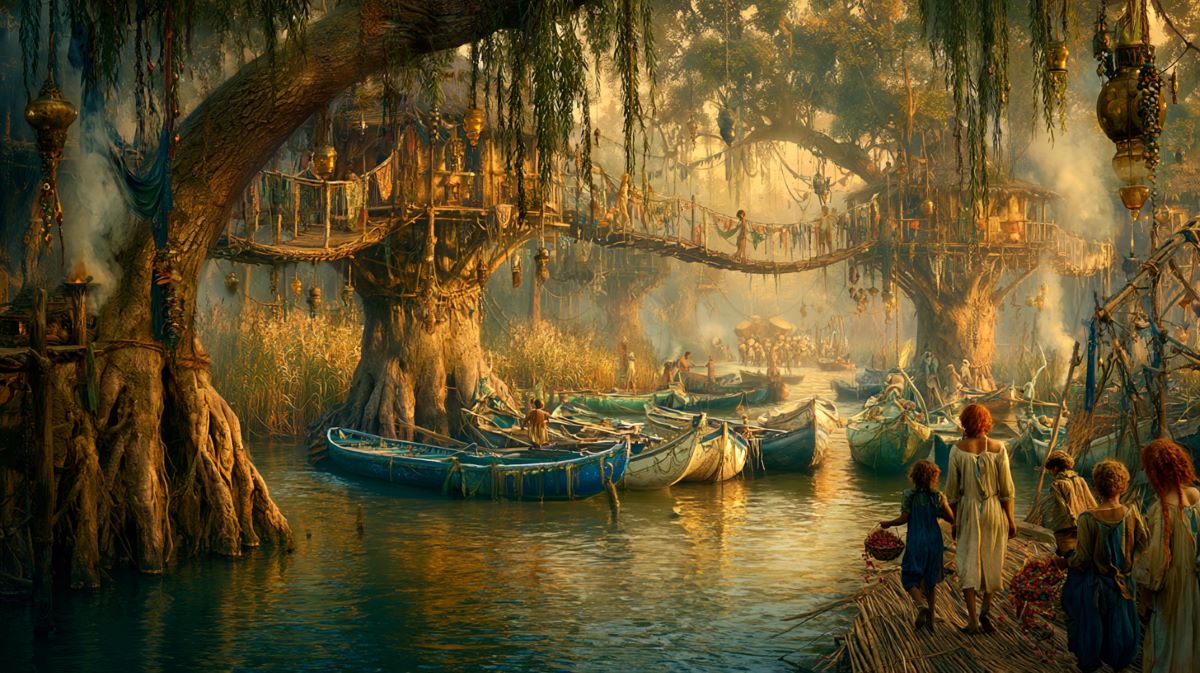
The Pain Monastery disappeared into the wet woods behind them.
Lucky carried them until the ground became too soft. Liana and Toren rode behind Dorian by turns, changing places when one of them needed rest. Toren held him with confidence now, arms firm around Dorian’s waist. When the path grew rough and pressed them closer, he breathed in the scent of Dorian’s hair as he always did.
Shameless about it now.
More surprisingly, Liana had stopped treating physical contact as a legal offence and held on when the machine lurched. Dorian noticed both improvements and smiled to himself. It was perhaps unwise, but difficult to resist.
It was only the next day that Dorian recognised the stretch of woodland he had seen through the raven’s eyes.
He stopped and packed the machine into the storage capsule.
“Walking,” he said.
Liana looked ahead. “Of course.”
It was not a path so much as mud. Wet roots and rotting leaves already clung to their skin.
Liana went first, carrying the bow one of the monks had given her at the monastery. It was well-made, properly strung, and wrong. Her Solbloom Bow had been left behind in the cannibals’ settlement, and this one sat oddly in her hand. She would get used to it. That did not make it less irritating.
Dorian walked behind her. Toren followed, quiet, listening to the forest.
After half an hour, Dorian raised a hand.
They stopped.
He stepped off the path towards a hollow. The stone frame was worn, but beneath it the cracked reflective surface still held a dull shine.
“A mirror?” Toren asked.
“Yes,” Dorian said, checking the holographic map. “And before anyone becomes hopeful, no.”
Liana’s mouth tightened. “No?”
“I know this one. It connects to a small world. Quite cute, by my standards. It probably only has three ways to kill you before breakfast.”
He did not open it.
They moved on.
The trace of reflective energy came again later, thin and broken. The river carried it to them, along with wet reeds, stirred mud, and insects.
By late afternoon, the river had widened and slowed, splitting into channels through reed beds and willow roots. The air was thick with silt, crushed green stems, and water plants left too long in the sun.
Then Auralis Crossing appeared ahead, standing over the channels on carved stilts, curved bridges, reed-walks, and ferry ropes.
Lanterns hung from bridges before sunset, each one giving off a thin herbal scent to keep insects away. Ribbons fluttered from posts. Children carried baskets of petals towards the banks. Painted boats crowded the crossings. Somewhere ahead, drums sounded from the river steps.
River Loteri moved everywhere in long blue and green tunics. Their light-coloured hair hung loose down their backs or was braided with shells, glass beads, and river charms. Blue and green eyes followed the travellers with curiosity.
People carried porcelain bowls of herb-scented water scattered with petals. They asked permission first, then flicked a few blessed drops over the hands, shoulders, and hair of those who passed by.
“Nal ven, sha’ri,” one woman murmured, touching two wet fingers to the rim of her bowl.
Dorian recognised it at once. Mireal used the same blessing in Haven.
“Flow well. Be carried safely,” he translated without meaning to say it out loud.
Toren looked at him with interest. Dorian ignored that with practised elegance.
Liana watched the crowd suspiciously. A habit. Sensible of her, really.
A few drops cooled Dorian’s cheek and slipped beneath his collar. River mint and crushed flowers lingered on his skin.
“The Night of Reeds,” Toren said. “A River Loteri celebration. Birth, death, fertility, safe passage. They gather when the reeds are high and the current turns warm.”
Dorian studied the city.
Reflections were everywhere. Water, glass, wet stone, polished charms, the bright curve of bowls lifted in passing hands. The traces had not vanished. They had become worse. Messier. Harder to separate from the city.
Liana noticed his silence. “Still there?”
“Yes.”
“Good?”
“Useful,” Dorian said.
The river had brought them here. That meant they were probably going the right way.
Finding a room in Auralis Crossing turned out to be a journey. Every inn was full.
By the time they reached The Blue Heron Rest, evening had settled properly. They passed the inn’s boat shed first, dark and narrow, crouched over the channel. Along the bridges, half the city appeared to be celebrating.
The innkeeper had one room left.
After dinner, they discovered that the room had only one bed.
Liana looked at it. Then she looked at Dorian.
“No.”
Dorian’s smile appeared with disgraceful patience. “I had not offered anything.”
Toren stood near the door, tired enough to look almost peaceful. His gaze moved once from Dorian to Liana.
Dorian did not question it. Toren would stay with Liana. She had only just recovered enough to travel, and also, Toren belonged at her side.
Liana folded her arms. “You can sleep in the boat shed.”
Dorian glanced towards the window, where boats knocked softly against the posts below. “How generous.”
Liana ignored it. “Sleep. No trouble.”
Dorian gave her a small bow. “I shall make a polite effort.”
Liana sighed.
Dorian followed the innkeeper’s boy to the boat shed. The boy unlocked it, lit a few wall lamps, and pointed to a barrel with a ladle.
“For washing,” he said, then vanished.
Dorian shut the door and undressed. The shed was warm with lamplight and damp from the river below. He washed naked, ladling cool water over his throat, chest, shoulders, hips, and hair. Mud and sweat ran down his skin and darkened the boards.
Clean and dripping, he put out the lamps and moved to the reed mats. They seemed comfortable. Annoyingly. But that did not help him sleep.
After a while, he pulled on his trousers and shirt, left the buttons undone, and stepped onto the narrow platform outside. Auralis Crossing glowed around him. Lanterns hung from bridges and balconies, reflected in the black water. Music travelled over the surface in pieces: drums, singing, laughter, the low murmur of prayers.
Dorian sat on the edge and lowered his feet into the water.
A wide, flat boat drifted towards him. Priests and priestesses sat around a bronze basin filled with petals and dark water. It slowed before the shed and stopped.
A young priest looked up and asked in the River dialect, “Traveller. Will you join the current?”
Dorian replied in Common tongue, “I was told not to get into trouble.”
The boy laughed and answered in Common too. “Then come for blessing.”
Liana had told Dorian to sleep. But the river had now sent him a boat full of priests, brew, and possible theology. Refusing would have been rude.
He stepped aboard.
They gave him warm ceremonial brew in a small cup. It tasted of honey, river herbs, and something sharp. He drank and watched the ritual move around him: names whispered into water, wet fingers touched to brow, throat, heart.
When the final song ended, two priestesses came to sit on either side of him.
The younger priestess touched his bare chest first, two wet fingers cool over his heart.
“Nal ven,” she whispered.
The older one smiled. “Be carried safely.”
The boat turned. The young priestess murmured to him in Common tongue, “Where are you from, traveller?”
Dorian caught the scent of river mint in her pale hair. The cut of her tunic opened just enough to show the pale fullness of her breasts. The brew had softened the edges of his vision and calmed his thoughts.
“Steamhollow.”
The older priestess brushed her shoulder lightly against Dorian’s, warm through the thin linen. Her lashes lowered above green eyes; the line of her throat bare above the river-blue tunic.
“And what do Steamhollow folk prefer to do at this time of night?”
“That depends on the offer,” Dorian replied.
“Would the traveller accept two offers at the same time?” Both priestesses moved closer to him.
“A traveller would be honoured.” Dorian smiled. Loteri directness amused him every time.
The three of them returned to the shed once the boat brought them back to the inn.
Nobody aboard made any comment on that.
Moonlight slipped through warped slats of the boat shed, falling across old rope, stacked oars, and hanging nets. The air smelt of river damp and water-soaked wood.
The younger priestess drew the older woman close. Slow at first. Familiar. The older priestess answered with quiet tenderness, one hand sliding over the younger woman’s waist, fingertips lingering at the curve of her hip.
Dorian watched from the wall, silent for once. Light caught in their ribbons and hands.
Only then did they reach for him.
Warm hands drew him between them. Their mouths found his in turn, deep, unhurried kisses tasting faintly of herbs and sweet brew. The drink still lingered in him. The current knocked softly against the stilts below.
Clothes loosened beneath wandering hands. Tunics, trousers, and his shirt pooled onto the reed mats. Pale skin, red hair, old scars, lean muscles. Sweat began to gather where bodies pressed too close and stayed there.
The younger priestess drew Dorian down between her thighs, smiling when his mouth found her. He moved against her, listening as her laughter softened into breath. Her warm thighs tightened against his cheeks; her fingers slipping through his hair with less grace than before. Beside them, the older priestess kissed the younger woman’s breasts, slow and attentive, while the younger woman answered with a hand between her thighs.
The younger priestess arched with a low, trembling sound, fingers tightening briefly in Dorian’s hair before her body relaxed into the mats. Then she eased Dorian onto his back and slid down his body. She kissed her way over his scarred skin before settling between his thighs. Her mouth was warm, deliberate.
The older priestess shifted above him with the same calm confidence she had brought to the ritual boat. Her red braid fell on Dorian’s chest as she lowered herself over his mouth, one hand braced against the reed mat, the other sliding into his hair.
Dorian made a low sound against her.
The younger priestess laughed softly, then took him deeper, and the sound broke in his throat.
Then she climbed astride him.
She sank onto him with a slow exhale, eyes briefly closing at the feel of him inside her. Her hips moved slowly. Pale hair spilled down her back, then clung damply to her shoulders.
The older priestess stayed over his mouth, watching him through lowered lashes while his hands closed over her thighs. She tasted faintly of salt, festival herbs, and arousal. Above him, her breath changed first, then her posture, then the careful control of her fingers in his hair.
Once she moved away to compose herself, Dorian gripped the younger woman’s waist and thrust up into her faster, meeting her with less patience now. Her breath broke. Her body shook, then collapsed against his chest before she rolled to his side.
The older priestess took him next, slender body moving with controlled grace, red braid dragging lightly across his skin and leaving a damp line where sweat had gathered. The younger woman knelt beside them, flushed and smiling now, pressing soft kisses to Dorian’s lips and shoulder while his fingers found her again.
Their breathing filled the little shed alongside the distant sound of water beneath the stilts.
By the time Dorian’s thoughts went useless, the two priestesses knelt together beside his hips. Their mouths and hands worked with certainty until he came hard, breath catching, fingers digging into the reeds. The women laughed quietly, watching his release shine faintly metallic in the moonlight.
“The Night of Reeds brought us a Mirrorwalker,” the younger priestess murmured.
“A blessed night,” said the older one.
Afterwards, they collapsed together on the reed mats, warm and spent. Beneath the shed, the river moved on.
By morning, the boat shed had acquired an atmosphere Liana did not care to name.
She stopped in the doorway. Toren froze beside her.
Dorian lay on the reed mat beneath the priestess’s blue tunic. One priestess slept curled beside him. The other had an arm resting across his chest beneath the cloth.
Then the younger priestess stirred, sat up, and took her tunic back.
Dorian did not move.
The tunic slid away, leaving him bare in the morning light filtering through the slats in the walls. Pale scarred skin. Muscular limbs. And a very obvious morning glory.
Liana looked unimpressed. She reminded herself to keep a better eye on him next time.
Toren’s gaze passed over Dorian with quiet familiarity. Dorian was beautiful, ridiculous, and entirely himself. Toren had accepted all three as facts.
The younger priestess smiled at them. “Will you go deeper into the River Lands?”
“Yes,” Liana said.
The older one sat up, reached for a corded amulet of blue glass and reed-fibre, and slipped it over Dorian’s head. The glass was still warm from her skin. Something inside it clicked softly, though nothing moved.
“Then he may need this.”
Dorian opened one eye.
“Am I being blessed or inventoried?”
The priestesses laughed, dressed, kissed him farewell, and left as if mornings often began this way.
In Auralis Crossing, they probably did.
Chapter 25: The Hush
Read this chapter on its own page →
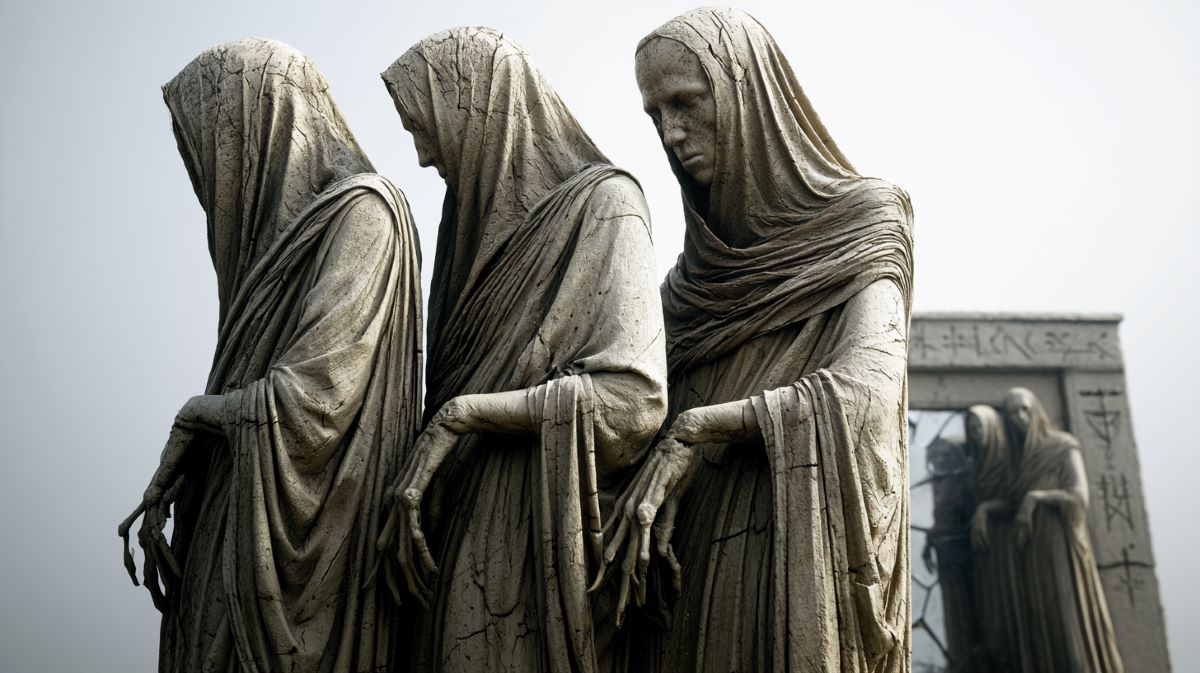
The reflective trace worsened once Auralis Crossing vanished behind the river bends. Not in any useful way. It sat behind Dorian’s eyes, thin as metal, and tugged beneath his ribs whenever the river curved east. Lucky stayed packed. The banks had turned to mud, reed roots, and strips of wet ground the machine would only insult.
After half an hour, the insects became unbearable. Toren sprayed them with herbal mist from a clay bottle.
Dorian turned slowly. “I was tracking.”
“And now you can track without being eaten alive,” Toren said.
Annoyingly, it worked.
They walked until the trace thinned, broke, and slipped under mud and root-shadow.
Dorian stopped, glanced towards a half-sunken road beside the river, and changed direction. It led them to an old bridge of pale stone. In the River Lands, stone construction was strange enough. Time and floods had worn the carved symbols almost smooth. Liana studied them first, but they meant nothing to her. Toren paused longer. Two of the marks felt familiar, though he could not have said why.
The bridge crossed almost nothing. The river had shifted away long ago, leaving a dead channel and a thin line of black water beneath the arch. Dorian crossed first and stopped halfway. The trace caught below him. Something under the bridge pulled hard.
Liana watched him lean over the side. Privately, she decided he looked less like a Walker and more like a well-bred hound in expensive boots. Dorian climbed down the bank. Under the bridge, rotten plants and trapped damp filled his lungs. His boots slid in the silt before he caught the stonework with one hand. The mirror lay half-buried beneath grey mud and roots. Its frame was cracked. The glass still held a dull shine under the filth.
Weak Mirror Call. Still there.
Dorian cut roots away with his knife, revealing worn black polish and the Great Council emblem.
“And what exactly does that mean?” Liana asked.
“It means the Council sealed it.” Dorian opened his holographic map. Blue routes flickered over his palm. “A long time ago, judging by this mess.”
He searched again. Nothing.
His eyes sharpened. “And it is not registered.”
Liana stared at him. “That sounds like a reason to leave.”
“It does, yes.” Dorian looked back at the mirror. “Sadly, it is also the first unlisted mirror I have found along the raven’s route.”
Toren glanced up at the bridge. “This was built centuries ago. Maybe older. Those carvings are not River work.”
Liana watched Dorian take the thin brass tablet from his inner pocket. “And it’s sealed.”
“Yes, I noticed.” Dorian placed the tablet over the Council emblem. “Fortunately, or unfortunately, I am allowed to unseal it.”
Nothing happened at first. Then the black polish moved. It lifted from the glass in slow, oily threads and sank into the brass tablet. The metal darkened. The tablet clicked.
Dorian removed it and looked at Liana and Toren. “Right. You both stay here.”
Toren stepped closer.
“Not a chance, Walker,” Liana said. “We are going with you.”
Her voice settled the matter with irritating efficiency.
Dorian opened the mirror with his blood. Surprisingly, it did not ask for much. The ring bit into his chest, just above the corset. Red beads gathered against pale skin and vanished into the mirror with unpleasant efficiency. Dorian pushed his hand through the surface. The glass yielded around his fingers with a slow ripple.
He glanced back. Liana and Toren were watching him in silence. Not fear. Worse. Something perilously close to reverence.
Dorian sighed. “Take each other’s hands. Then take mine. Follow me, and do not break the chain.”
Dorian stepped through first. Toren and Liana followed. The mirror took them cleanly. They landed on their feet, closer to each other than expected.
A narrow indicator panel flickered across Dorian’s brass arm. He checked it, then crouched and pressed two fingers to the ground. “Air is safe. No surface toxins. Magic present, but nothing immediately dangerous.”
“Good enough,” Liana said.
The ground was not soil. White stone lay in broad plates, with narrow cracks between them. Pale threads clung inside the seams, dry and colourless, like something that had never been alive. No grass. No moss. Nothing growing.
Reassuring, obviously.
Behind them, the mirror stood inside a low stone arch. Around its frame, the same unfamiliar carvings cut through the white surface. Pale shapes stood across the plain. Some were geometric. Some were statues.
Liana shifted her grip on her bow. “Do they move?”
Dorian studied the nearest statue. “No,” he said. “Not yet.”
“Walker. Please.” Irritation crossed her face. She hated the place at once.
The low grey sky glowed with flat, sourceless light. No sun to read. No cloud movement. No wind on Liana’s skin. Even the dust sat too still. The air carried nothing. Sterile suggested something had been cleaned. This felt as if nothing had ever been allowed to exist here in the first place.
Dorian reached for the mirror’s pull. Weak, but present.
“There is something ahead,” he said.
He started the route recorder on his cuff. Liana watched with quiet mistrust, then pulled small red-painted pebbles from her pouch.
Dorian glanced at them. “Charming.”
“Useful,” Liana said. She placed the first pebble beside the mirror arch.
They walked.
Their boots scraped over the stone without echo. They passed white columns, and Liana counted gaps before dropping another red pebble. Two massive statues stood ahead with blank faces turned away from each other. Their hands were wrong. Fingers too long. Too neat.
The mirror disappeared behind the statues. The thread ahead strengthened, faltered, then caught again. False turns. Broken signals. They walked for what might have been hours.
Then sound began to disappear, and the Mirror Call went with it.
The scrape of boots faded first. Then Dorian’s gear. Then Liana’s bow. Then Toren’s breathing. Dorian did not notice until Toren touched his arm.
Toren’s mouth moved. No voice came.
Liana lifted her chin and spoke. Nothing.
Dorian said, “Stop.” His mouth formed the word. The air gave him nothing back.
Not quiet. Not muffled. Nothing.
The silence had closed over them while they walked. The white statues watched without eyes. Dorian knew the Council name for this world then.
Acalith.
A silent world. No speech. No footfall. No Mirror Call. Stay too long, and people stopped trusting their bodies first, then their minds.
Naturally, the Great Council had sealed it and then failed to keep it properly listed.
Public safety through administrative guesswork. Inspiring.
Dorian tried to activate his route recorder. No route appeared.
He tried to unpack Lucky. A pale warning blinked across the storage capsule’s screen.
Error: spatial orientation failed.
Of course.
Liana glanced back and realised the last two pebbles had sunk between the stone plates without a trace. She swore at the same moment Dorian did.
Toren crouched and pressed his left palm to the ground, trying to listen through the stone.
For one second, nothing happened.
Then the pale threads inside the seams twitched. They slid over his fingers, dry and colourless at first, then darkened as they dug into his skin. Within seconds, they had wrapped his hand.
Toren tried to pull away. His hand did not move. Horror crossed his face.
Dorian grabbed Toren’s arm. Liana caught his shoulder, and together they dragged him back. The threads stretched from Toren’s skin, then snapped apart without a sound. Toren fell against Dorian, breathing hard in the silence. Angry red lines crossed his fingers and wrist, threaded with tiny pale fragments.
Dorian wrapped Toren’s injury with quick, firm movements. Not gentle. Efficient. He could be gentle later, assuming later chose to exist. Liana scanned the area while he worked. A chill went through her when she recognised the shape at the base of a nearby column.
A rib cage, wrapped in the same pale threads that had bitten into Toren’s hand.
Toren, practical even now, pulled out a folded sheet of parchment and a pigment stick.
Dorian wrote first: Acalith. No Mirror Call. Route recorder dead. Lucky cannot orient. I can guess the way back. I cannot guarantee it.
Liana took the paper: My pebbles are sinking. No sun. No wind. No clouds. We map from memory.
They bent over the paper together. Liana remembered the landmarks best and drew several repeated carving symbols. The map looked terrible. It was also useful.
Then Liana wrote: Toren, help me. Dorian, follow.
Dorian nodded. Liana rose too fast. Her balance shifted. Toren caught her, but his own stance slipped as if the stone had moved under him. He pointed to his ear, his eyes, and the ground.
The silence was taking balance, distance, and the body’s sense of where it stood.
Liana led them back.
Or tried to.
The first ridge was wrong. Too low. The next ring of columns had the same marks, but the gaps were wrong. She could no longer trust the count. They turned back.
However long they searched, none of them could tell. Dorian’s cuff was dead. The sky remained the same flat grey. Time had become another thing the world had taken.
After a while, Dorian could hear only his own heart, beating too hard in the void where sound should have been. When they drifted too close, Toren’s hair brushed his cheek. The familiar scent of him held Dorian in place better than reason did.
Liana kept one hand on Dorian’s sleeve and the other on Toren’s arm. Touch helped. Warmth helped. Their bodies gave her something the world had not yet stolen.
Toren struggled most. First came the pressure behind his eyes. Then the ringing, faint at first, like bells heard through deep water. Aren Thal’s voice came next. What did you touch, Toren?
Toren closed his eyes for one breath, then opened them again. Stone under his boots. Liana’s hand on his arm. Dorian beside him. Real things.
At last the columns appeared. White. Narrow. Familiar in the way a knife became familiar when it was still in the wound. Liana counted the gaps. Three to the ridge. Seven towards the statues. She chose the ridge. Dorian touched her sleeve and pointed left.
A red pebble. Half caught in a crack, but visible.
Right direction.
The next pebble had sunk lower, only a red edge showing. The low arch emerged between two slabs. The mirror. Relief crossed Dorian’s face and vanished at once.
They hurried. After ten steps, Toren lurched. Liana caught him, but the movement pulled her sideways. Dorian grabbed them both. They moved slower after that.
The mirror stood where they had left it, but its faint shine had almost gone.
Dorian pulled the ring to his chest. The bite was quick. One drop of blood touched the mirror. The surface opened. It remembered him.
Liana gripped Toren’s wrist. Toren gripped Dorian’s sleeve. They crossed back to the River Lands.
Damp air filled Dorian’s lungs. He exhaled with relief, then realised he was on his side, sinking into mud several metres from the mirror.
Liana had landed cleanly on the bridge above. Of course she had.
Toren was on his knees beside the mirror, his wrapped hand shaking against the stone frame.
Dorian rolled onto all fours with no dignity whatsoever. Mud slid down his coat, chest, and hair.
“A charming excursion,” he said. “Let us never improve upon it.”
Toren looked up, still pale. Dorian offered him a hand and pulled him to his feet. His grip was careful around Toren’s injured fingers, which was annoying, because Toren noticed.
Liana climbed down from the bridge and reached them under the arch. She did not speak at once. Her hand stayed on Toren’s arm, as if she had decided not to let go. Dorian noticed that too. Naturally, he said nothing useful about it.
Liana looked from Dorian to the mirror. “Seal it.”
“I was considering leaving it open for educational purposes,” Dorian said, drawing the brass tablet from his coat. “Children do benefit from practical demonstrations of institutional negligence.”
“Dorian.”
“Yes, yes. Public safety. Dull but persuasive.”
He pressed the tablet to the mirror. The brass clicked. Black polish flowed out of it, filling the cracks and sealing the reflection. The Great Council emblem rose at the centre, clean and sharp.
The Mirror Call thinned at once.
Dorian removed the tablet. The brass had lost its shine. A dull word appeared across its surface:
Used.
He slipped the tablet back into his coat.
Toren kept staring at the sealed mirror.
“The Hush,” he said.
Dorian looked at him.
“A River children’s story,” Toren swallowed. “A place with no sound. No footsteps. No breath. Elders told it near old bridges when children wandered too far. I thought it was only meant to frighten us.”
Dorian looked at the Council emblem on the sealed glass. “The Council lost the file, but the nursery kept a copy.”
Liana and Toren watched the sealed mirror for another second, then turned to Dorian in the same instant. Dorian looked down at his ruined coat, as if, of all recent disasters, this one deserved immediate attention.
Chapter 26: Drowning with Dignity
Read this chapter on its own page →
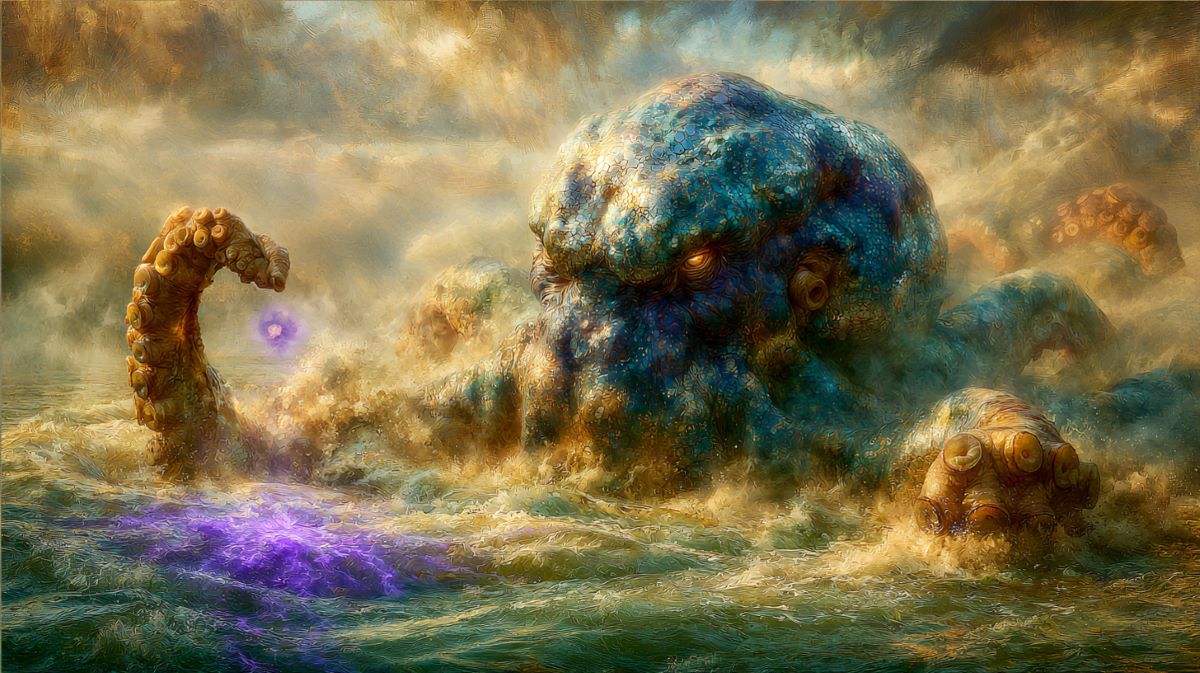
Acalith stayed behind them, sealed under stone and Council incompetence. The River Lands took over again: mud underfoot, reeds at their legs, insects whining in the grass. After the Hush, noise felt almost vulgar.
They saw the smoke first. Then the camp appeared through the reeds, wrapped in the thick smell of fish smoking over a trench fire. Flat-bottomed barges rested along the bank, broad and low, their bright paint dulled by weather and repair. Reed mats covered the roofs. Nets hung from poles. Shell charms clicked softly in the wind.
“Reedborne,” Toren said quietly. “Travelling River Loteri.”
Several children in bright tunics sat on one barge roof and stared. Beside them, a few sleek otters chirped and stretched their necks towards the newcomers.
One child pointed at Dorian’s brass cuff. “What is that?”
“A weapon,” Dorian said.
The child considered this. “Does it explode?”
“Not when properly respected.”
“Does it bite?”
“Only people with questions.”
The children went quiet. Even the otters froze for a moment.
Liana gave him a look. Dorian adjusted his ruined sleeve over the cuff. “What? It worked.”
An older woman came from between the barges, carrying a knife in one hand and a half-cleaned fish in the other. Pale hair hung down her back in two braids tied with blue glass. Her eyes moved over the dried mud on their skin.
“You look as if you came from the Hush,” she said, her accent soft and distinct.
Dorian’s attention sharpened at once. Toren leaned closer to him. “It is a local phrase,” he murmured. “For someone who looks terrible.”
Dorian eased his shoulders and privately admitted that the woman had no idea how accurate she had been.
Her mouth twitched. “The Reedborne greet you, drifters. Let the River hold you tonight. Wash first. Eat after.”
All three bowed with gratitude.
They washed because the Reedborne had standards. Liana needed little work. She washed her face, scrubbed mud from her boots, and was done. Of course.
Dorian and Toren went downstream to wash properly, then returned cold, clean, and dressed in long patched tunics. Their own clothes dried on a rope beside the Reedborne laundry.
The borrowed tunics were bright. Very bright. Liana failed to stop a small laugh.
The colourful camp worked around them while they ate. Nets were mended. River snails were cooked. Berries were sorted. Otters stole things and were apparently rewarded for enterprise.
A few hours remained before sunset.
Liana lasted less than half an hour. She sat with the monastery bow across her knees, thumb moving over the grip. A good bow. But not the shape her hands remembered. Then she stood, walked to the willow trunks at the edge of the camp, and drew targets with ochre from her pouch.
Her first arrow struck left of centre. Not bad. Nearly right. She stared at it.
Dorian watched from beneath a willow. “That tree has offended her.”
Toren sat beside him and laughed quietly.
Liana’s second arrow hit the centre. One young Reedborne hunter with long dreadlocks lowered his knife and smiled. “Good shot.”
Liana ignored him and drew again. The third arrow split the second. The boy stopped smiling.
A Reedborne girl laughed. “Steppe hands.”
After that, more River Loteri came. Young men. Young women. All quick eyes, wet boots, and no visible fear.
On the fourth shot, Liana changed her grip. Not much. A finger’s width. A Steppe correction forced onto a foreign bow. The next arrow struck exactly where she wanted it. They cheered. She looked as if praise had made a tactical error.
Dorian returned to work. His brass cuff lay open across his lap. The storage capsule waited beside him for its turn. He cleaned mud from the grooves with a thin tool, slow and precise.
Toren noticed. “You clean things when you are worried.”
“I clean things when they are dirty.” Dorian did not stop.
Toren smiled and moved closer. Dorian glanced at the healer’s hand. The red marks still crossed the skin, threaded with tiny pale fragments from Acalith. “Give me your hand.”
Toren hesitated. He had healed the worst of it, but his hand still hurt.
Dorian sighed. “Do not be heroic. It is tiring to watch.”
Toren held out his hand. Dorian opened a jar of dark green balm. The smell was sharp. Mireal’s special prescription: for wounds that made ordinary medicine feel underqualified. He spread the balm over the marks. Toren breathed in sharply. Dorian wrapped his hand with clean cloth, careful enough to be annoying.
Across the clearing, Liana hit another target. The Reedborne hunters shouted in excitement. Her ears went red. For a while, Toren watched Liana in silence. The camp softened around them.
Then Toren asked, “Why did you never stay?”
Dorian’s mouth curved. “Because my presence causes structural damage to respectable households.”
Toren did not react. He only waited.
Dorian’s tool stopped. He did not look up. “That is not what happened.”
“No?”
“No.” He started scraping dried mud from the cuff again. “Nobody wanted to stay with me.”
Toren looked at him. “I find that hard to believe.”
“That is because you are kind. A charming defect.” Dorian did not smile.
“You think no one did?”
“I think people find Walkers useful.” Dorian set the tool down. “We arrive. We fix something. We leave. Very tidy. Nobody chooses to stay with us once the interesting part ends.”
“And if someone chose to?”
Dorian looked towards Liana. She was pretending not to enjoy the compliments. Badly.
“If someone did,” he said, “that would be a completely different matter.”
Toren put his hand over Dorian’s. Lightly. Warm fingers over his knuckles.
Dorian looked down. “You are being unwise.”
“I know.” Toren smiled.
“That was not an invitation.”
“I know.”
Toren squeezed once. Dorian’s sarcasm died in the warmth of Toren’s skin.
Then Liana called, “Toren!”
Toren stood. He took two steps, stopped, came back, and bent before Dorian could object. A quick kiss touched Dorian’s brow. Then Toren walked away, leaving the scent of his hair behind.
Dorian stayed still. The cuff lay open in his lap. Across the clearing, Liana taught young hunters a Steppe grip. Dorian looked at the tool in his hand. For once, it was useless.
They left at first light. The Reedborne gave them food and one last attempt at prophecy.
“You still refuse our fortune-teller?” the elder asked. “The river already talks. Seems unwise not to listen.”
Liana inclined her head. “Your offer honours us. Not today.”
Toren bowed. “With gratitude.”
Dorian glanced at Liana. “We are trying something new. Ignorance with dignity.”
Before they left, Toren gave the elder a packet of Forest herbs. She accepted it with a nod, “Useful.”
Dorian searched his coat, found a small brass repair hook, and handed it over. “For nets. Ropes. Hinges. Small stubborn things.”
The woman turned it in her palm. “You carry hooks for stubborn things?”
“I travel with people.”
Liana looked at him. Dorian smiled pleasantly. The elder laughed once, slipped the hook into her belt pouch, then touched two fingers to the river and pressed them to Liana’s brow, Toren’s, and Dorian’s.
“Let the current be kind.”
They followed the raven’s route south.
By late afternoon of the following day, the trace sharpened again. Not the messy thread from Auralis Crossing. This one pulled behind Dorian’s teeth. Too obvious to ignore.
The reeds thinned. The ground dipped. Wind moved over open water. Ahead, the river widened, deep and brown, cutting straight across their path.
All three stopped. Dorian opened the storage capsule. “Unless the river intends to become polite and move aside.”
It did not.
Lucky unfolded with sharp clicks.
“One passenger at a time,” Dorian said. “Liana first. She has arrows. Toren can stay here and negotiate with the water.”
Liana laughed and climbed behind him, bow in hand. Toren remained on the bank with the storage capsule.
Lucky lifted. For three seconds, the crossing behaved.
Then the river opened. A dark funnel formed beneath them. Water twisted inward. Wind rose, cold and sharp. Lucky shuddered.
Dorian pushed the engine harder. “No.”
The river already talks, the old woman had said. Dorian decided, with some irritation, that it could have spoken more clearly.
The vortex pulled harder. Lucky stopped in mid-air, caught as if hooked by invisible wire. The engine screamed. The frame began to turn.
Once.
Twice.
“Oh, excellent,” Dorian said through his teeth.
Liana braced one knee against the frame. “Can you hold it?”
“Barely.”
Something rose from the spinning water. Not a snake. Not a worm. Something repulsive. Long translucent bodies slid out of the vortex, slick and pale, with visible organs shifting inside them.
Liana shot first. The arrow struck one through the throat. The creature folded around it. Still moving. Dorian lifted his brass cuff. A shield flashed out. Another creature lunged and flattened against it, organs smearing inside its own skin.
“Revolting,” Dorian muttered.
He fired a blade of reflective light. It cut through the nearest creature. The pieces vanished into the vortex. Two more rose in its place. Liana fired again, because apparently drowning was not enough to ruin her aim.
Toren reached the river’s edge.
“Toren, stop!” Liana shouted over the wind.
He did not stop. He dropped to one knee and pressed his damaged hand into the river. The water around his palm shivered. Pain crossed his face. He ignored it, lifted his healthy hand, and dragged it sideways through the air.
A wave rose against the vortex and knocked the nearest creatures off course. Dorian used the gap. Lucky lurched forward. Nearly.
The vortex tightened. The machine spun again, throwing Liana hard against Dorian’s back. His cuff flashed. The shield caught another bite, cracked, then collapsed.
“Hold tighter!” Dorian shouted.
Lucky dipped. The river boiled beneath them. Dorian fought the controls. For one sharp moment, Lucky climbed half a metre. The current caught the lower frame. Water swallowed them. Cold reached Dorian’s neck. Liana’s hand locked in his belt. Lucky dragged down hard.
Toren abandoned the bank and plunged in.
Dorian saw him for half a second. Idiot.
He kicked against the pull and fired another blade. It struck one translucent head. The creature split. Its insides unfolded like pale thread. It kept coming.
Of course.
Liana had lost the bow. She had not lost the knife. One hand clung to Dorian. The other slashed at anything too close. Dorian caught her chest strap and held.
Above them, Toren fought through the current. He reached for them, missed, and was struck sideways. His shield flared once. Then failed. Dorian saw his face through the water. Furious. Afraid. Still coming. Forest idiot.
Something clicked against Dorian’s chest.
Once. Then again. Purple light grew beneath his shirt. The river priestesses’ amulet pulsed, spreading through the water in sharp beams. The jelly-snakes recoiled.
Well. That was new.
Then the Mirror Pull hit him. Not a trace. Not a thread. Not the thin metallic ache he had followed for days. This was enormous. Ancient. Wrongly placed. It moved under his skin and through his bones. Vast enough to make the river feel small. For one ridiculous moment, while drowning with monsters and a useless machine, Dorian felt professional satisfaction. He had found it. Probably.
The water closed over his face, and even that thought went dark.
The Wise One had been letting the current carry him through the River Loteri Lands for days.
He liked this. It was slow and uncomplicated. Rare. The current bent around him without touching him. Fish vanished into the reeds. Even the mud seemed to reconsider its position.
Then the purple pulse touched the water. Sharp. Ticking. Too familiar.
Auralis.
It caught the Wise One’s attention at once. His polished black skin shifted to bright silver, and strong rings moved across his body. In one sudden movement, he covered a mile to reach the pulse.
Then he paused. It was rising from a noisy, messy vortex. Water tore itself open. Wind scraped over the surface. Jelly-hunters thrashed in the pull. People struggled. Metal screamed.
The Wise One disliked noise. He considered leaving. It was not his vortex. Not his river trouble. Land people were always falling into things and then objecting to the natural consequences. But the purple pulse ticked again, bright and inviting through the water.
Auralis.
The Wise One slid towards the vortex. The jelly-hunters fled in seconds.
One powerful tentacle coiled around the Mirrorwalker while another slipped beneath his coat and drew out the amulet. The purple pulse ticked against the Wise One’s skin, warm and pleasing.
A third tentacle caught the hunter-woman. A fourth gathered the young healer, who was still trying to fight while barely conscious. Admirable. Pointless. Very Loteri.
The Wise One threw them onto the bank. Gently, by his standards.
Then something hard struck one of his lower tentacles. Metal. Wings. Noise. Wrong in the river. The machine. The Wise One pulled Lucky from the mud and flung it after them.
The river should be kept clean.
He slid the amulet along his silver skin and dissolved into the water. He had involved himself quite enough for one day.
Lucky landed on the bank with a muffled thud, and a final wave of reflective energy rolled over the mud before passing through the three survivors.
Toren came back to himself first, half on his side with sky, mud, and reeds swimming in and out of focus while his lungs tried to escape his chest. He turned onto all fours and coughed river water into the grass. The cloth around his injured hand had gone dark with river water and blood.
Liana lay nearby, choking and swearing under her breath. Dorian rolled onto his side as water spilled from his mouth, then dragged in one breath after another, each one rough and unwilling.
“If anyone suggests swimming again,” Dorian rasped, “I shall become difficult.”
Liana pushed herself upright. “Become?”
Dorian closed his eyes for a brief moment. Toren laughed once, but it broke halfway through and turned into another cough.
Then Liana looked towards the reeds. “Lucky.”
Dorian pushed himself up too fast, regretted it immediately, and crawled towards the machine. Lucky lay half in the mud with its wings spread at a wrong angle. The left wing was bent, not destroyed, but badly twisted. Dorian touched the joint, and Lucky gave one weak click.
“Alive,” Toren said.
“Legally speaking.” Dorian closed the panel with care.
Behind them, the river moved on, smooth and innocent. Dorian moved closer to the water. The powerful Mirror Pull he had felt below the surface was gone completely. He wiped mud from his face and swore privately. His hand went to his chest. The amulet was gone.
Of course it was.
Ancient river things apparently charged a rescue fee.
“Well,” he said. “At least the day has developed structure.”
Chapter 27: The Ferry Keeper’s Terms
Read this chapter on its own page →
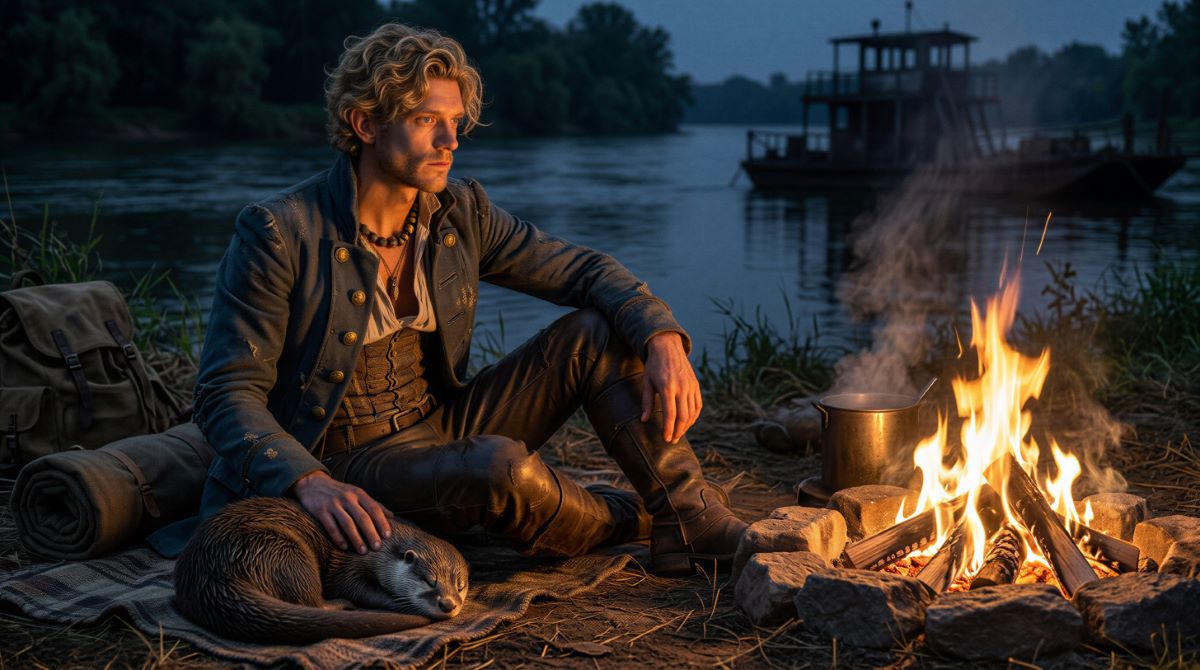
Morning came grey.
They stamped out the fire and left the riverside camp. Their clothes had dried beside the flames, but still smelt of mud, river water, and old smoke. Lucky’s left wing was twisted out of shape and would not fold. The engine housing was still wet. Dorian tried the storage capsule anyway.
Item calculation error. Compression unsafe.
“Of course,” he said.
Liana watched him for a moment. “My father brought me through this part of the Lands once. There was a ferry downstream. River Loteri family.”
That settled the direction.
Dorian took the handlebars and pushed Lucky along the bank. Toren walked beside him. When the mud softened, green light pulsed beneath Toren’s palm, steadying the wheels. Roots shifted aside. Stones firmed beneath the tyres. Each small spell tightened pain across his injured hand.
Dorian noticed at once. “Less magic.”
Toren smiled faintly. “More pushing, then.”
“Naturally. Heroism by manual labour.”
Dorian moved Toren’s injured hand off the frame. “Healthy hand.”
They pushed.
Liana led ahead through reeds and old willow roots, studying the bends of the river. Once or twice she stopped, checked the bank, then walked on with more certainty. Dorian kept checking the pull. The trace was still there, thin and sharp beneath his ribs, drawing from the far side of the river.
The best they could do was follow the bank until they found a crossing.
By late afternoon, the river bent west between banks of black reeds.
Liana stopped first. “There.”
A rusted chain stretched across the water. The ferry waited on their side, tied to a leaning post. Across the river, a timber house leaned beneath a reed roof, with a shed beside it and drying nets moving in the wind.
Dorian watched the ferry nudge the bank. “That is either transport or a public warning.”
“It still floats,” Toren said.
“A generous assessment.”
The River Loteri woman by the wheel noticed Toren at once. Her bright green eyes moved over his shoulders, his face, then lingered a heartbeat too long before she inspected Liana, Dorian, and Lucky.
She wiped grease from her hands. “Get that thing aboard before the bank eats it.”
“Him,” Dorian said.
Her smile deepened. “Of course.”
They pushed Lucky onto the ferry. The boards creaked, but held. Liana stood near the front. Toren stayed beside Lucky, one hand ready on the frame.
The woman pulled the lever. The ferry moved slowly. Very slowly. Halfway across, the chain snapped tight. The platform stopped, tilted, and ground hard enough to make Dorian flinch. The woman kicked open a panel, hit something twice with a hammer, then dragged the lever with her shoulder. The chain caught. The ferry lurched forward.
“Your chain tension is uneven,” Dorian said.
She glanced at him. “You noticed?”
“It announced itself.”
“It’s old.”
“Old is not the problem.” Dorian looked towards the shed. “Do you have tools?”
“Yes.”
“Then I would like to negotiate.”
She folded her arms. “Go on.”
“I repair your ferry. In exchange, I use your tools to repair my machine.”
“You are offering free work?”
Dorian looked mildly offended. “No. I am negotiating access to superior equipment.”
She laughed. “Deal. I’m Nessa, by the way. Seems polite to mention that before I start exploiting you.”
Once they reached the far bank, Nessa opened the shed and waved Dorian inside.
The workshop smelt of oil, damp rope, and stubborn metal. A cold forge crouched at the back. Old chain links, cracked pulleys, oil tins, clamps, and worn tools had been shoved along the walls in practical disorder.
Dorian looked around. For one rare second, his smile was genuine. “I may survive after all.”
Nessa leaned against the doorframe. “My father built most of the ferry. My brother kept it running until he married upstream, the traitor. Now it is just me and a hammer.”
Dorian looked towards the ferry. “That explains the damage.”
Nessa smiled.
Darkness settled around Nessa’s house and folded the river into black glass.
They ate outside by the fire, passing flatbread, smoked fish, and stewed roots from hand to hand. Lucky dried near the workshop, every panel open to the cold night wind. Nessa did not ask what had happened. Mud, blood, and a half-drowned machine explained enough.
After dinner, Toren did what he always did and checked Liana and Dorian for bruises, cuts, and anything either of them might pretend not to have.
When he finished, Dorian took Toren’s injured hand. “Your turn,” he said, in a tone that allowed no appeal.
Toren laughed, but let him. The red lines from Acalith had faded. Dorian spread Mireal’s balm over the skin and wrapped it again.
Nessa watched them over her cup, interest plain now.
They had just finished passing the sacred-bud pipe around when a small creature padded from the workshop, sleek and bright-eyed. It looked at Liana, Toren, and Nessa.
Then Dorian.
Dorian looked back. “No.”
The otter climbed into his lap.
“I said no.”
Liana looked away. Toren smiled into the fire.
Nessa laughed under her breath. “Sniffy likes you. Somehow.”
“My reputation with wildlife remains terrible,” Dorian said.
He gave the otter a piece of smoked fish. Sniffy accepted it with grave affection, settled against Dorian’s thigh, and permitted one cautious stroke.
Dorian glanced at his ring. “May I?”
Sniffy rolled over and offered his belly. Fine blue lines shimmered through his fur and slipped into the ring’s stone. The ring flashed, then dulled. Sniffy curled up and fell asleep.
Only then did Dorian notice the three Loteri staring.
“It is harmless,” he said. “My ring only takes what is freely offered. Animals and plants give easily. People’s bodies object. Sensible of them, really.”
Toren woke in the loft, warm under a rough blanket, the dry scent of river grass around him. Dorian lay beside him. Liana was already up.
Toren looked through the opening beside the ladder. Below, Nessa handed Liana a reed basket and pointed riverward. Liana checked her knives, nodded, and left.
Of course.
Toren settled back. Light slipped through the reed roof. Dorian lay on his back, his pale, almost silver hair loose across the blanket, face almost peaceful. Toren moved closer, fingertips drifting over Dorian’s chest. Dorian caught his wrist without opening his eyes.
“Oh,” Toren said quietly. “You are awake.”
“And you,” Dorian murmured, voice rough with sleep, “should keep your hand out of trouble.” His thumb rested below the bandage, careful despite the tone.
Toren kissed him anyway. Dorian breathed him in. Sleep, smoke, river water, and the faint green sharpness of sacred bud. His hand slid into Toren’s hair and held him close. Toren softened against him.
Dorian drew back only enough to murmur, “You are testing my patience, Forest boy.”
Toren smiled. “Is it working?”
“Catastrophically.”
Pots clattered below.
They climbed down a few minutes later. Breakfast waited on the table. Liana was somewhere downstream, doing whatever Steppe hunters did to innocent crabs.
After breakfast, Dorian worked with his sleeves rolled up, meticulously fixing things. Sniffy inspected his boots first, huffed at the tools, and settled nearby as if supervising.
First, Dorian made the ferry behave like a machine again. By late morning, it crossed and returned without jerking. Nessa stood beside the chain housing, arms folded, watching with quiet satisfaction.
“You gave it another twenty years,” she said.
“Thirty, if you stop abusing the chain.”
“I do not abuse it.”
“You struck the tension box with a hammer.” Dorian wiped grease from a spanner.
“It deserved it.”
“Machines rarely deserve violence. People, often. Machines, no.”
Nessa laughed.
After a quick break, Dorian returned to Lucky. Toren summoned careful streams of wind through the open frame, drying what he could while sparing his injured hand. Nessa kept her distance, watching with amusement as Dorian muttered at the machine.
By sunset, Lucky stood whole again. Not perfect, but steady, and willing to start. Dorian closed the final panel. Lucky clicked once.
“Do not sound so smug,” Dorian told him.
Liana returned with food and the route fixed in her head. She dropped the basket by the fire and helped Nessa clean molluscs, crack crab shells, and stir the soup. Sniffy circled their ankles, inspected every shell, and waited for tribute while river spice, smoke, and steaming shellfish filled the air.
They ate outside as the river darkened, passing bowls and tearing bread in quick, hungry silence. Afterwards, the sacred-bud pipe moved from hand to hand, its smoke slow and bitter in the cooling air.
Liana took a couple of puffs and yawned. “I am washing before I fall asleep.”
No one argued. She went upstream and returned with damp braids. Her eyes passed over Nessa, Toren, and Dorian. “Do not stay up too late.”
Then she climbed inside and fell silent almost at once.
Nessa smiled into her cup. “She sleeps fast.”
“She does most things as if arguing with them,” Dorian said.
Toren laughed. Nessa watched him through her lashes. Her smile had softened. Every time Toren passed her the pipe, she let her fingers rest over his for a moment longer than required.
Dorian noticed, of course.
When they went to wash, the river bit cold against their bare skin, the current slow near the bank. With rough soap, they scrubbed away grease, brass dust, sweat, and the last traces of mud.
Toren’s wound had nearly closed, so he finally unwound the bandage. The water shifted behind him. Nessa stepped close, her breasts warm against his back, her mouth brushing his ear. “Fancy a kiss, healer?”
Toren went still for one breath and looked at Dorian first. Dorian answered with a small smile. Then Toren reached back, found Nessa’s hips, and drew her closer with slow certainty. She laughed softly against his neck, hands sliding over his sides to rest low on his belly.
When Toren turned, he caught her waist and held her gently.
Familiar.
Dorian watched from a few steps away, water running from his hair down his back. It was the first time he had seen Toren with someone else. With a woman.
The sight settled something in him. Dorian had been Toren’s first man, but not the first person in Toren’s bed.
Thank gods.
He had feared Toren had come to him too new, too trusting, too ready to mistake wonder for choice. Apparently not. Toren knew desire. He had chosen.
Dorian smiled faintly.
How inconveniently reassuring.
They left the river before the evening chill settled properly. Inside, the house was warm from the hearth. Above them, Liana already slept deeply. Downstairs, the broad reed mattress lay by the fire.
Nessa sat on the edge of the mattress and looked at Toren. “Come here.”
He did. She drew him into an unhurried kiss. Toren answered, one hand braced beside her, the other on her waist.
Dorian watched them for a moment. Toren was smiling. Desired. Welcomed. Entirely present. Right. Something in Dorian eased. Pleasure was pleasure. It did not matter whose hands brought it, only that Toren wanted them there. He was enjoying himself. That was enough.
Dorian smiled to himself, gathered his folded clothes, and turned towards the ladder. Nessa’s voice stopped him. “Where do you think you’re going?”
He paused. “Upstairs.”
“Why?”
“I assumed the invitation had concluded.”
Her eyes moved from Dorian to Toren. One hand rested lightly against Toren’s chest. “Would you mind if he stayed with us?”
Toren did not hesitate. “Not at all.”
Then he turned to Dorian. “I want you here.”
For a heartbeat, Dorian simply stood there, meeting Toren’s eyes. Then he crossed the room.
“You might consider,” he said, dry amusement returning, “being less dangerously clear.”
Nessa laughed and held out her hand. “Stay.”
Dorian took it. “Very well. Since everyone has become alarmingly specific.”
Toren laughed again, low and warm, as Nessa drew him down. The sound was bright enough to make Dorian smile without thinking. Good. He liked that sound.
Firelight caught the damp sheen on their skin, faint steam rising where river-cooled bodies met the warm room. Woodsmoke clung to the air. Beneath it, clean skin. Nessa caught Dorian’s wrist and pulled him closer. Her green eyes were bright in the firelight.
“Come here, both of you.”
They kissed first, the three of them, easy and deliberate. Then Nessa shifted lower. She took them both in her hand, slow enough to make Toren go still, then lowered her mouth with the same calm certainty.
Toren smiled without realising it. Dorian noticed. He usually did.
Above Nessa, they kissed again, deeper now. Dorian tasted of river water, warm breath, and the bitter trace of sacred bud.
Dorian’s fingers threaded lightly through Nessa’s hair. Toren’s hand moved over her breast, thumb circling until she arched into his touch. Nessa hummed, the vibration passing through all three of them. She drew back smiling, then sank down again.
When Toren’s control began to fray, he parted Nessa’s legs. He pressed open-mouthed kisses to the wet warmth of her inner thighs, then found her with his mouth. The taste and scent of her arousal filled his senses, sharp beneath the woodsmoke. Two fingers joined his tongue, curling gently.
Nessa drew Dorian back to her with hungry confidence. Her hand moved where her lips could not, and her moans came low and muffled, breaking each time Toren pulled another sound from her.
Nessa tightened beneath Dorian’s hands, her thighs trembling around Toren’s shoulders. Toren stayed with her until she arched sharply, breath breaking into a cry. Only then did he rise to his knees.
Nessa reached for his hip. “I want you inside me.”
He entered her in a slow glide, then paused halfway, eyes on hers. “All good?”
“Yes,” she said, voice rough. “All of you.”
Dorian’s voice came from beside them. “A woman of admirable precision.”
Toren began slowly. Nessa’s low sounds thickened, and Dorian found himself smiling again. His fingers moved down her belly and pressed against her wetness as Toren sank deeper with every thrust.
Then Dorian leaned in and kissed Toren. The kiss changed the rhythm. Each movement landed harder. Quicker. Nessa broke again with a raw cry, clenching tight around Toren. Dorian kissed her through it, slow and thorough. River mint clung to her hair, and the taste of himself on her mouth sent his heart racing.
When she could speak, Nessa looked up at Dorian, eyes hazy.
“And what do you have for me, ferry fixer?”
Dorian pressed a kiss to her shoulder and eased back. Nessa rolled onto her hands and knees, fluid despite the tremor in her thighs. Toren shifted in front of her. She moved forward and took him into her mouth again, tasting herself on him.
Dorian knelt behind her. One hand stroked down her spine.
“May I?”
“Yes,” she answered, voice rough, then sank lower onto Toren again.
Dorian pressed forward in one long, controlled movement. The new angle drew a low sound from all three of them. Toren’s hands moved over Nessa’s body. She reached back, fingers finding herself. Dorian set a steady rhythm, each deep thrust rocking her forward onto Toren.
Her sounds sharpened. Wet sounds filled the room. When her fingers moved faster and her thighs began to shake, Dorian did not slow. He drove her through it until she cried out around Toren, body locking hard.
Then she came in a sudden rush, soaking Dorian’s thighs and the bedding under her. Dorian held her through every pulse, one hand firm on her hip, the other stroking her side until the tremors eased.
Only when she softened beneath him did he pull back. A rough sound broke from him as he released across her back in hot silver streaks. Toren shuddered too. Nessa took his release with a satisfied sound.
They sank into the bedding in a warm, ruined heap, sweat cooling on their skin. No one spoke. The fire crackled.
Dorian reached for the river-damp towel and cleaned Nessa’s back and thighs with slow, careful strokes.
“You survived,” he murmured.
Nessa smiled. “Only just.”
Toren kissed her temple, then her mouth. She laughed, dazed and warm, and kissed them both, tasting of salt and smoke.
For a while, there was only skin, low fire, damp hair, and the river moving outside.
Chapter 28: The Island That Waited
Read this chapter on its own page →
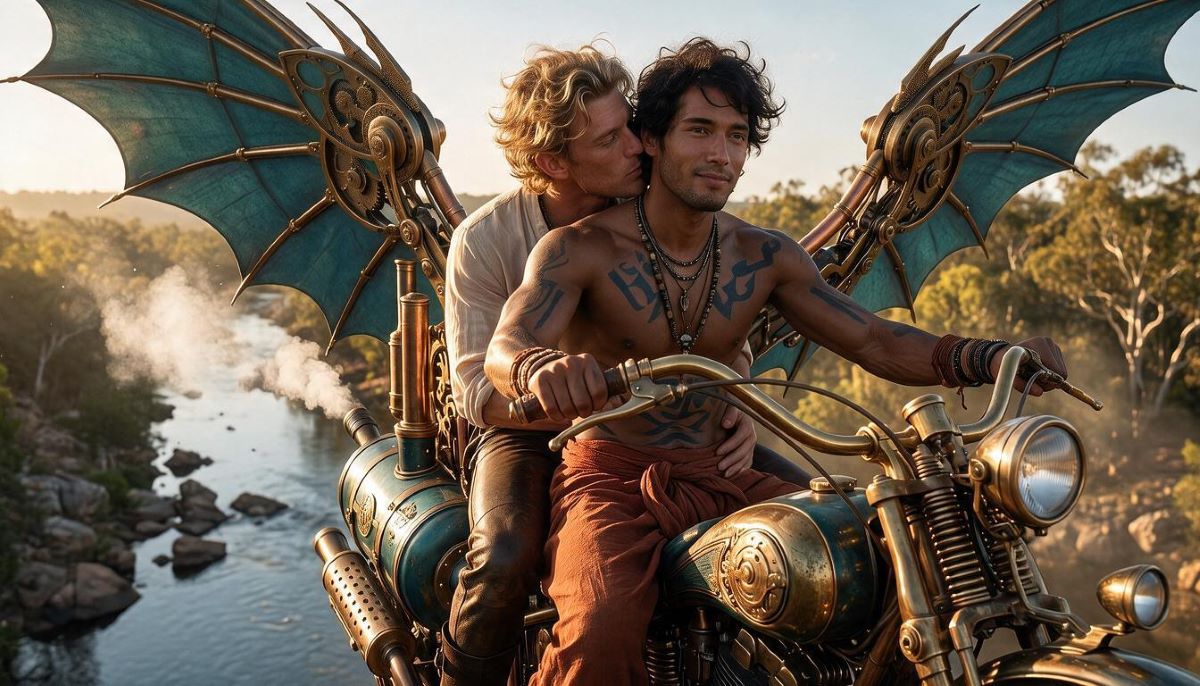
Cool river air drifted through the open windows, smelling of wet reeds. Nessa stretched between Dorian and Toren with entirely too much satisfaction. “Time to leave.”
She kissed Toren first, soft and unhurried. Then Dorian, shorter but no less certain. River mint lingered on his mouth. “There. Something pleasant to remember me by.”
Dorian looked at Toren’s reddening face. “I had no intention of forgetting.”
Nessa laughed and slipped from beneath the blanket. Dorian rolled onto one elbow and kissed Toren’s forehead.
“Good morning, Forest boy.”
Toren smiled despite himself, breathing in the familiar scent of oil, smoke, and Dorian’s skin.
Something clattered below. Liana, reminding them that respectable people had been awake for hours. By the time they came down, she had braided her damp hair and arranged the packs beside the house. She sat checking each knife with methodical care.
Her eyes passed over all three of them.
Her expression did not change.
After breakfast, Toren handed one of his small pouches of sacred-bud to Nessa. “For the ferry.”
She weighed it in her palm. “Generous.”
While Dorian folded Lucky into the storage capsule, Sniffy ran circles around him, chirring and clicking impatiently. Then he settled firmly on Dorian’s boot.
Dorian looked down. “I believe I am being adopted.”
“He has excellent judgement,” Nessa said.
Then she noticed Liana’s belt. “Only knives?”
“Lost my bow.” Liana’s mouth tightened slightly.
Nessa disappeared into the workshop and returned carrying a long hunting spear. The dark wooden shaft had been worn smooth with use. “My father’s.”
Liana tested the weight once. Then again. The spear cut through the air with a soft hiss. “Good steel.”
“He knew what he was doing.” Nessa pushed it gently back towards her. “Keep it.”
Liana accepted it carefully. “Thank you.”
Then she drew her skinning knife and offered it in return. Nessa took it and checked the edge with her thumb. “A good one.”
Before they left, Nessa dipped two fingers into a bowl of water. She touched her own brow, then brushed Dorian’s and Liana’s in turn. Her fingers lingered on Toren’s cheek.
“Nal ven, sha’ri.”
Dorian inclined his head.
Liana settled the spear across her shoulder. “River hospitality seems rather... extended.”
“So far,” Dorian said, “I have no complaints.”
Toren found the ground unexpectedly fascinating.
Nessa laughed, then looked down at Sniffy. “You know what... Take him while you travel through the River Lands. He knows these rivers better than any of us.”
“You trust us with him?” Toren asked.
“I trust Sniffy.”
She unclipped the bronze bell bracelet and fastened it around Dorian’s wrist. Her fingers brushed his pulse. The bell gave one quiet note. Sniffy’s ears twitched.
“When you no longer need him, put this around his neck and tell him, ‘Vesh ta nor.’ It means ‘home is calling’. He’ll find me.”
Nessa scratched Sniffy behind the ears. He made a pleased, bubbling sound as she murmured something in the River dialect.
“And don’t take my otter beyond the River Lands.”
Dorian nodded. “I should hate to cause an international incident.”
Nessa stepped back and folded her arms.
“Safe travels, drifters.”
After several hours of walking, the river widened, and the opposite bank receded behind reeds and low willows. It looked calm.
They had learnt not to trust peaceful rivers.
The reflective trace no longer faded. It stayed beneath Dorian’s skin, steady now, drawing him along the bank. He walked first. Liana had stopped questioning the direction. She merely adjusted their route around mud, roots, and flooded ground.
Sniffy had appointed himself supervisor. He vanished down the bank, reappeared somewhere entirely different, chattered at them for falling behind, then disappeared again.
Toren watched him go. “He is judging us.”
Dorian looked ahead. “He is not entirely wrong.”
The air thickened as the day wore on. Mosquitoes gathered in determined little clouds. Toren crushed sharp-smelling leaves between his palms, whispered over them, then rubbed the mixture across their wrists and necks. It cooled Dorian’s skin and stung every small scratch.
By late afternoon, Dorian stopped.
“There.”
A wooded island stood in the middle of the river. Old willows bent over its banks, their branches trailing through the water. Nothing about it appeared dangerous.
Dorian distrusted that immediately.
“The trace?” Liana asked.
“The strongest yet.”
She studied the current, then looked at Toren. “Can you tell what is there?”
Toren stepped to the water’s edge and held both hands above the surface. For a long moment, he stood still. The current curled around the exposed roots. Something answered him, reluctant and distant.
“Nothing dangerous. At least, nothing I can feel.”
“That sounds reassuring,” Dorian said, already reaching for Lucky’s capsule.
Toren gave him an apologetic look. “River magic is not my strongest. It changes too quickly. Forest and steppe stay where they are.”
A splash settled the matter. Sniffy disappeared beneath the surface, emerged several body lengths away, and immediately began chasing fish.
Liana watched him. “I believe he approves.”
Dorian unpacked Lucky. “I trust the local expert.”
Lucky carried them across in two trips. Sniffy preferred swimming. By the time Dorian returned with Toren, the otter was already waiting on the bank. He shook cold river water over Dorian’s trousers, chirped once, and disappeared into the undergrowth.
Dorian barely noticed.
The trace was almost tangible now. He walked towards the centre of the island, and it strengthened beneath his skin. When he turned back towards the shore, it weakened. Another path gave the same answer.
“It is here.”
Damp roots twisted through the soil. Fallen trunks and tangled undergrowth divided the island into narrow paths and hidden clearings.
Liana looked around slowly. “You are certain?”
“The epicentre.”
They made camp before dusk. While Toren cooked, Dorian searched the island again. Every path bent away. Every detour returned him to the same clearing.
The trace insisted.
The island offered nothing.
Morning brought no answers.
Dorian searched properly this time. Every tree. Every stone. Every hollow beneath the roots. Every surface smooth enough to hold a reflection.
Nothing.
Liana searched differently, checking for footprints, broken branches, hidden boats, or signs of an old camp. Anything suggesting another traveller had reached the island before them.
Nothing.
Near midday, Dorian stopped in a clearing.
Recognition came at once. “The raven.”
Toren and Liana looked up.
“He circled here.” Dorian turned slowly, but he saw only damp grass, twisted roots, and blue sky between the branches. There was no mirror.
“This is the place.”
The trace insisted.
Reality refused.
The search continued. Eventually, Dorian brought out a device he had built years ago to measure mirror pull. It produced three contradictory readings before giving up entirely.
“No device in Mireth can measure it properly,” he muttered. “We continue relying on the highly scientific method of educated guessing.”
By late afternoon, Liana had circled the shoreline twice. Toren had gathered wood, fetched water, and prepared the meal, quietly keeping the camp in order.
Dorian finally put the useless device away and uncorked a vial of oil. He began polishing his brass cuff with unnecessary force. It already reflected the lowering sun well enough to blind passing birds.
Liana watched for a moment, wisely said nothing, and went to practise with her new spear. Toren poured tea into a wooden cup and sat beside Dorian. The heat reached Dorian’s hands first. Then came the smell of herbs.
“Dorian?”
“Yes?”
“Could you teach me to fly Lucky?”
Dorian looked at him over the rim. “Planning to steal my machine?”
“I thought I should learn before the next emergency.”
“Reasonable.”
For the next two hours, Lucky circled the island. Toren learnt quickly. He laughed whenever they climbed above the trees, leaning into each turn with entirely too much enthusiasm. Dorian sat close behind him, correcting his grip now and then, one hand steady over Toren’s on the controls. Every movement pressed them together. Toren was warm against his chest, the familiar scent of herbs clinging to him.
For one regrettable moment, Dorian’s self-control slipped. His lips brushed Toren’s neck.
Highly inappropriate.
Fortunately, he managed not to develop a more obvious problem.
When they landed and packed Lucky, dusk had spread across the river. Liana had returned to the fire, and the smell of baked sweet water potatoes drifted through the camp.
They ate in comfortable silence until Dorian set his bowl aside. “There is only one explanation.”
Toren looked up.
“It is beneath us. Tomorrow we dig.”
Liana glanced towards the western sky. Dark clouds had gathered over the river.
“The wind changed,” she said. “Rain tonight.”
Dorian followed her gaze. “Then we dig in mud.”
They withdrew into the tent before the island went fully dark. Rain already hung in the damp air, waiting to fall. Liana lay down first. Toren settled beside her, leaving Dorian the remaining place. Sniffy circled three times, ignored every patch of blanket, and curled around Dorian’s head instead.
Dorian sighed. “You are becoming increasingly unreasonable.” The otter answered with a contented chirr and promptly fell asleep. Dorian accepted defeat.
Outside, the wind shifted through the branches. Thunder rolled somewhere across the river, still distant enough to ignore. The first drops arrived shortly before dawn. Soft at first, then steady. Rain drummed across the canvas.
Liana slept through it. Toren shifted closer until one arm rested across Dorian’s chest. Dorian remained awake, replaying the search. What had you missed, Corvell?
Then the Mirror Call struck.
His breath caught.
Not stronger.
Closer. Outside.
Carefully, he lifted Toren’s arm and eased himself free. Toren murmured something unintelligible but did not wake. Sniffy did not stir at all.
Dorian stepped barefoot into the rain. Cold mud pressed between his toes, and water soaked through his shirt within seconds. In the first dull light, the island no longer looked the same. Water shone faintly across roots and stones, while shallow streams crossed yesterday’s paths.
The raven-shaped brand on Dorian’s wrist shimmered. Then the words returned with perfect clarity.
Follow the rain.
He did.
The Mirror Call strengthened with every step, drawing him through the dripping woodland towards the clearing. Rainwater filled a shallow hollow between the willow roots. At its centre, a broad puddle held the grey morning sky in an unnaturally still reflection.
Dorian stared at it. Then he laughed quietly. “Of course.”
Not glass or polished metal. Only reflection.
He had spent two days searching for a mirror.
The island had simply been waiting for rain.
When Dorian returned to camp, the rain had already passed. Dawn spread pale light through the wet trees, and the island smelt of mud, water, and crushed leaves.
Dorian was soaked. His shirt clung to his skin, silver hair hung across his face and neck, and mud covered his bare feet. Liana opened one eye. For a brief moment, she decided he had finally lost his mind. Beside her, Toren was already sitting up, reaching for a blanket.
“Calm down,” Dorian said, his voice rough. “I found it.”
Liana sat upright. “You are certain?”
“I am still a professional, despite the River Lands’ repeated attempts to prove otherwise.”
Toren draped the blanket over Dorian’s shoulders and summoned a warm current of air. It moved through Dorian’s wet hair first, then beneath his shirt. Dorian closed his eyes briefly as warmth returned to his skin.
He considered objecting.
Instead, he allowed it. “Thank you.”
By the time they packed the camp, his clothes were merely damp. The Mirror Call still pulled steadily from the clearing. Waiting. It was unmistakably the same pull he had felt from the Drommala remains at the Pain Monastery.
Before leaving, Dorian unclipped the bronze bell bracelet from his wrist and fastened it around Sniffy’s neck. The otter accepted one last piece of smoked fish.
“Vesh ta nor.”
Sniffy chirped, nudged Dorian’s hand with his nose, then slipped into the river and disappeared downstream.
Only then did Dorian lead them into the clearing.
Liana stopped beside him. “That?”
A broad puddle reflected the pale morning sky.
“Yes.”
Toren frowned. “A puddle?”
“A mirror.” Dorian crouched beside the water. “Glass is merely convenient. Anything capable of holding a reflection can become a door between worlds.”
He touched one finger to the surface.
“And some are Wander Mirrors. They move or hide, while others settle into temporary reflections. This one appears to combine both rare qualities.”
Liana folded her arms. “I dislike Mirrorwalking.”
“I know.”
Dorian rolled up his left sleeve. “Now we discover how hungry it is.”
The ring bit into his forearm. Blood struck the water and disappeared without spreading.
Nothing happened.
He fed it more.
The puddle swallowed every drop.
“It is ancient,” Dorian murmured. “And greedy.”
Blood continued to run from his arm. Colour drained from his face, and the ground shifted beneath him. Toren caught his elbow.
Dorian gently pulled free. “I’m concentrating.”
He turned the ring’s wheel to blue and pressed it against the wound. Cool reflective energy flowed into him, replacing enough of what the mirror had taken to keep him standing.
He opened the cut again.
More blood vanished into the water.
Then again.
Only then did the puddle answer.
Ripples crossed the surface without wind. The reflection darkened until the water turned perfectly black.
“There.”
Dorian sealed the wound and lowered his hand above the mirror. Black water climbed around his fingers like living glass, cold and smooth against his skin.
The connection formed.
He checked the straps securing Lucky’s capsule across his back.
“Hold on to me.”
Toren’s hand found Dorian’s shoulder immediately. Liana gripped Toren’s forearm. Dorian looked back once at the quiet island, then stepped forward.
The black water rose without a splash and swallowed him.
Toren followed.
Liana came last.
A moment later, the blackness was gone. The puddle reflected nothing but the sky.
Chapter 29: Tomorrow Had Become Inconvenient
Read this chapter on its own page →
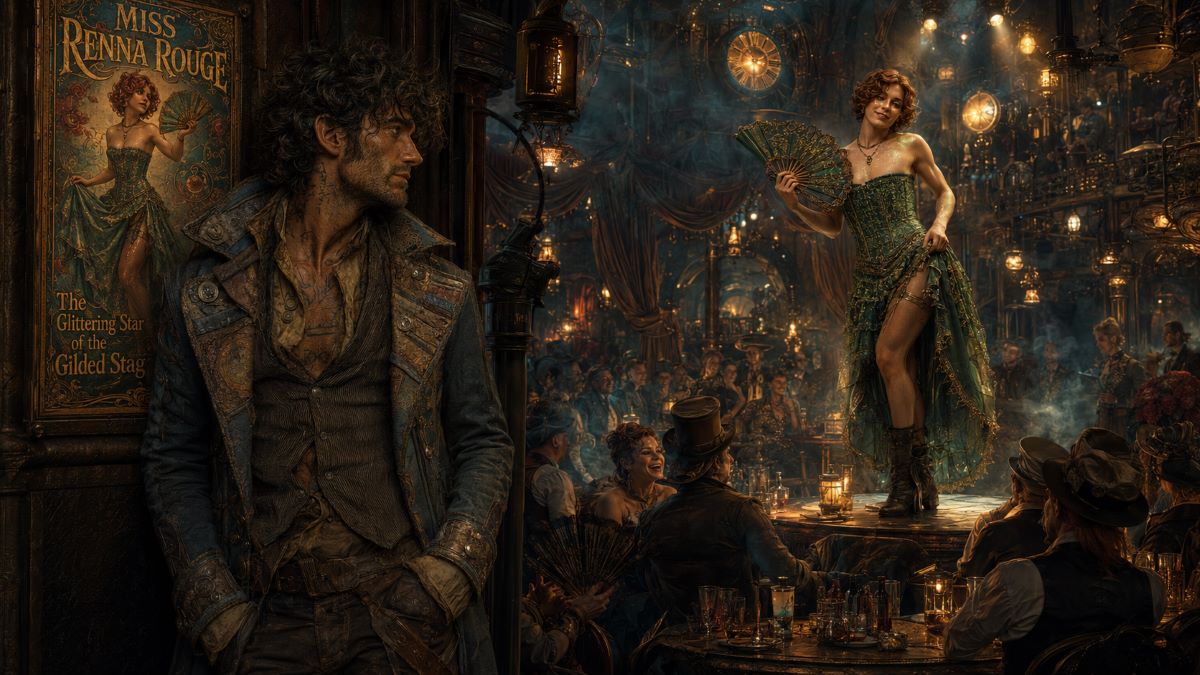
Coyote slipped into one of Brassville’s smaller post offices. The low hum of a brass air purifier reached him at once. He coughed. After the damp fog outside, the dry air caught his throat and made his eyes water within seconds.
He was fully packed and already regretting taking the job in Epinalium. The payment had been obscene. Apparently, so was his judgement.
He placed a sealed envelope on the counter. His usual backup’s name and address were written across the front.
“Hold it for seven days,” he told the clerk. “If I do not collect it, deliver it.”
The clerk read the instruction twice. “And if you return on the eighth?”
“Then I shall be annoyed.”
Coyote signed the form and left before the man could become any more interested.
He found the nearest parking yard with a landing pad and unpacked his compact steam biplane from a storage capsule. It was one of two rare capsules he had politely borrowed from Vesk years ago. Corvell adored the other until Vesk sent men to retrieve both, preferably with Coyote attached. Coyote found a more civil settlement. It cost him a fortune, but fewer fingers.
The plane’s wings unfolded with a series of clicks. Coyote secured his bags behind the second seat, checked the boiler pressure, then climbed in.
The engine caught on the third attempt.
Good enough.
Beyond the city, he landed beside a large unofficial mirror and folded both wings against the fuselage, turning the machine into a narrow steam car. He gave the mirror two drops of blood. The surface recognised him, then swallowed Coyote along with the vehicle.
He crossed into the Loteri Lands.
Another hour driving along a dry steppe road brought him to the next familiar mirror. The second crossing treated him less gently.
Still acceptable.
Coyote unfolded the wings again, raised the holographic map and followed the Mirror Call above an endless forest.
Coyote landed some distance from the Epinalium mirror. He preferred to be less visible now. He packed the plane back into its capsule and moved quietly through the trees. His coat grew damp. The air hung heavy, sharp with the scent of tree resin.
His instincts had not fooled him. He was not alone near the mirror. One young Walker was already trying to open it while another held the equipment and offered increasingly useless advice. Their clothes were worn. Their blood device looked worse. It pulled unevenly, clicked twice, then stopped. The Walker swore, took out a knife and cut too deep. The mirror seized the blood greedily. Within moments, the young Walker’s face had gone grey and slack. His companion tore him away, wrapped the wound and dragged him into the trees.
Coyote waited until the forest swallowed them.
His bracelet activated the blood port implanted beneath his collarbone. The brass seal opened, and the mirror drew three measured drops through the air before the port closed with a pulse of reflective energy.
The mirror remembered him.
It opened immediately.
The mirror released Coyote into darkness.
His boots struck damp stone. The echo travelled down the passage, found several other tunnels and returned from all of them. He inhaled cold, stale air and switched on the torch clipped to his coat.
The main passage opened into an abandoned mine. Rusted rails disappeared beneath rubble. Something pale and many-legged slipped between two broken barrels. Coyote decided not to count.
Silvery veins ran through the rock. When he passed them, his image remained behind for several seconds, then followed in a slow imitation of his steps.
Coyote stopped. His reflection took another two steps before stopping.
Not new. Still unsettling.
He opened the holographic map. Five possible sites marked by the client appeared across the tunnel system. The first was several hours away.
Coyote unpacked the biplane, kept its wings folded and lowered the land gear. The main tunnel was wide enough for the machine in road mode.
Deeper passages would not be.
Coyote drove beneath thick pipes. Cables hung from the ceiling in long loops. Far above, narrow cracks admitted cold shafts of daylight, illuminating little but dust.
The mineral veins appeared and vanished along the walls, leaving delayed reflections of the biplane. Coyote glanced back and saw himself still sitting inside a stretch of shining rock.
The image looked back. Then it copied his movement and disappeared.
Coyote faced the road again.
Epinalium had been abandoned for excellent reasons.
When the tunnel finally narrowed, he returned the plane to its capsule and continued on foot.
A few days later, Coyote reached the third location without the client’s artefact and with considerably less patience.
The first site had been a dead mining settlement, thoroughly abandoned except for several objects nobody had guarded well enough. The second offered six buried crates, five varieties of rust and a necklace of white metal and orange stones. His specialised instruments found no toxic, unstable or actively magical properties. Valuable, certainly, and safe to handle.
Not a complete waste, then.
By the time he reached the third site, the biplane’s storage compartments held a modest collection of unofficial acquisitions.
The coordinates led him to an underground waterfall. The main cascade had dwindled to a thin trickle long ago, but clear water still spilled into a broad stone basin below. Above, a vast hole in the ceiling poured daylight over the area and made the search considerably less miserable.
Reflective veins covered the wall behind the waterfall. Water distorted the images trapped inside them, stretching Coyote’s shape into several narrow versions of himself. They continued moving after he had stopped. None appeared especially trustworthy.
Coyote made camp nearby.
Coyote dropped a small white tablet into the water he had collected from the waterfall. He watched the dirt sink slowly to the bottom of the bottle, leaving an almost clear layer above the sediment. It was not perfect, but it was drinkable.
The stars were visible through the hole above. Coyote ate jerky and squeezed something advertised as “cream soup” from a foil tube. His reseller had called the tubes a blessing for travellers.
He had lied. The tubes were light. That was their finest quality.
Before falling asleep, Coyote decided this would be his final attempt. The client had marked two more locations, but they were welcome to remain mysterious without him.
He woke to a scrape outside the tent.
Then silence.
Pistol in hand, he checked his traps. Nothing had moved. The detector showed only old reflective residue. A black spider larger than his foot crossed a supply case and vanished beneath a rock.
Everything remained untouched.
Coyote returned to the tent. For the first time since arriving, he regretted coming alone.
Fear had arrived too late to help.
The next morning finally rewarded him.
His instruments led him to a section of damp ground beside the waterfall. Beneath the surface, his tools struck wood. Daylight from the hole above helped him clear the debris without introducing his fingers to anything poisonous.
He uncovered a small box matching the client’s description. Damp had swollen the wood, leaving the simple lock hanging loose.
Coyote opened it.
Inside lay a dull crystal no larger than his palm. Its cloudy grey surface and uneven shape matched the drawings supplied by the client. His torch produced no reaction. Passing his hand above it revealed no warmth or energy.
Coyote did not touch it. Valuable artefacts often punished unnecessary confidence.
He tested it and found nothing dangerous.
He closed the box, wrapped it and encrypted the bundle in his usual way. He washed properly in the cold basin, dismantled the camp, secured everything he had collected and followed the mapped route back towards the mirror.
A light glinted in a parallel tunnel.
Coyote drew his pistol and approached quietly. Being stabbed after the difficult part would have been offensively predictable.
A dim figure moved along the wall ahead. Coyote stopped. The figure continued for another two steps before stopping with him.
His own reflection. Again.
Beyond it, a brass kettle caught the daylight through a crack above. Beside it lay an abandoned camp: blankets, food tins, lamp oil, machine parts and a worn coat.
Coyote lowered his pistol.
Inside one pocket, he found a filthy linen handkerchief. Old oil and dirt covered most of the embroidered initials, leaving only an M visible. Something hard was wrapped inside. A smaller dull crystal, similar to the one in his case. Coyote wrapped it again with care and slid the bundle into his pocket.
Habit occasionally paid.
Coyote reached Brassville by the same route without being arrested or killed, which made the journey almost respectable. He landed on a pad in Rustwing Alley after midnight, returned the plane to its capsule and headed to the Gilded Stag.
Outside, a bright theatre poster showed a graceful copper-curled performer, lifting the sweeping gown with one hand and holding an open fan in the other. Large gold letters announced:
MISS RENNA ROUGE
The Glittering Star of the Gilded Stag
Inside, the place was thick with smoke, cloying perfume, spilled drink and loud people. Coyote kept to the wall and leaned one shoulder against a column at the edge of the room, away from the crowd but close enough to the stage. From there, he watched Ren work the room.
Bright light caught the glitter on Ren’s emerald corset and layered skirt, then sharpened his painted face and almond-shaped eyes.
He snapped his fan open and drew it slowly up his thigh. “Careful, love. Another minute of that and I’ll have to charge you by the fantasy.”
The audience erupted in laughter. A drunk man near the stage shouted, “Higher, Renna!”
Ren lowered the fan, looked him over and smiled. “Darling, you could not afford higher.”
The room broke into whistles.
Bar boys slipped between the tables with gearwallets raised, collecting credits while everyone was still generous and distracted.
Coyote stayed where he was.
Then Ren saw him through the smoke. His smile changed. Only slightly.
Enough.
Coyote slipped into the private room above the Gilded Stag and dropped his storage capsule beside the door. Ren’s skirt lay across an armchair. He stood in the emerald corset, carefully untucking himself.
Ren caught Coyote’s reflection in the mirror. “You look terrible.”
“Good evening to you too.”
Ren finished, straightened and turned towards him. Coyote crossed the room and settled one hand on Ren’s waist, breathing in the sweet scent of Ren’s face powder. With his free hand, he brushed a smear of green dust from Ren’s cheek.
“There it is,” he said. “Proof I’ve been here. Green suits you better.”
“You said that about the blue one.” Ren’s mouth twitched.
“I lied.”
“You always lie.”
“Only about colours.” Coyote shrugged off his coat. “The usual, or are you feeling adventurous?”
Ren pulled him closer. Coyote laughed into the kiss and returned it with the taste of smoke and salt. Their hands moved with familiar purpose until Coyote lifted Ren onto the table.
Ren reached for the oil vial at Coyote’s belt. “Walkers are always prepared.”
Coyote caught it first and pulled the cork free with his teeth. “It’s for polishing mirrors.”
“Of course.”
Coyote’s smile widened as he stepped between Ren’s thighs. “Mostly.”
Ren raised an eyebrow.
“Some people turn out to be reflective enough.”
Ren shook his head, still smiling. “That was dreadful.”
“You laughed.”
“I hate that you’re right.”
Coyote’s oiled fingers pressed inside Ren with a teasing twist. Ren gasped and rocked against his hand. Glitter from Ren’s thighs caught on Coyote’s knuckles. Ren freed Coyote’s length and stroked it with firm, precise movements. Coyote dropped his forehead to Ren’s shoulder, a rough sound escaping him.
Coyote pressed into him in one slow movement, waiting until Ren drew him closer. Both made the same low sound, half groan, half laugh. He set a lively pace, hips rolling deep and sure, one hand braced on the table, the other wrapped around Ren’s arousal. When Ren’s moans grew too loud, Coyote shifted his weight, lifted his hand from the table and covered Ren’s mouth as he leaned closer.
“Shhh, my little star,” he whispered, still moving inside him. “You’ll wake the whole district.”
Ren’s eyes gleamed above Coyote’s fingers, but he bit back the next sound. Coyote kept his hand there a moment longer, his thumb stroking Ren’s cheek, before sliding it down to grip Ren’s hip.
Ren tightened around him, breath breaking against Coyote’s shoulder as he spilled between their bodies. Coyote followed seconds later, thrusting deep and holding, releasing inside Ren with a satisfied groan that ended in another soft laugh.
Afterwards, Coyote stayed where he was for a moment, his forehead resting against Ren’s while they caught their breath. He eased out carefully and helped Ren sit upright on the edge of the table. With quick fingers, he wiped the worst of the sweat and oil from their thighs, along with the silver traces of his release, his movements casual but careful.
Coyote pulled up and fastened his trousers, then settled Ren’s slipped wig back into place. He wiped a streak of mascara from beneath Ren’s eye with his thumb.
“You’re a mess,” he said. “My favourite kind.”
Coyote guided Ren into the worn armchair and sat beside him, one arm loose around his waist. Glitter clung to them both. After a few quiet minutes, Coyote straightened his shirt and reached into his pocket. “Before you ask, I didn’t steal it. Much.”
He unwrapped a necklace of pale metal and bright orange stones. “Found it on the run. Thought it might suit you.”
Ren’s smile turned unguarded. Coyote fastened the necklace around his throat. It settled above his collarbones, bright against the stray glitter on his skin.
“Wear it,” he murmured. “Let it shine.”
His fingers stayed briefly at Ren’s nape. Ren leaned against him. Coyote let him.
After another moment, he kissed Ren’s temple and stood. “I have to move.”
“When will I see you?”
“Tomorrow is good.” Coyote put on his coat and slung the storage capsule over his shoulder. “Fancy something special, little star?”
“I’m off tomorrow.”
“I’ll collect you at midday.”
Coyote slipped out.
Coyote returned to his apartment tired enough to resent the stairs.
The trap on his door had been disarmed.
Carefully.
Someone had found the wire beneath the frame, released the catch and put everything back almost correctly.
Almost was enough.
Coyote drew his pistol before opening the door.
Inside, furniture lay overturned, drawers emptied and concealed compartments stood open.
Nothing valuable was missing.
Ophelia’s bags were.
Hope reached him before sense. Perhaps she had returned. Then he saw the dirty boot marks across the floor. More than one person.
Of course.
Coyote checked the apartment, then opened the wall panel and emptied the safe. Valuable artefacts, weapons, forged licences and his compact brass mail device went into two cases. He added spare clothes, irreplaceable instruments and everything from Epinalium.
Within minutes, he was down the service stairs and into the dark.
Tomorrow had become inconvenient.
Chapter 30: The World Behind the Rain
Read this chapter on its own page →
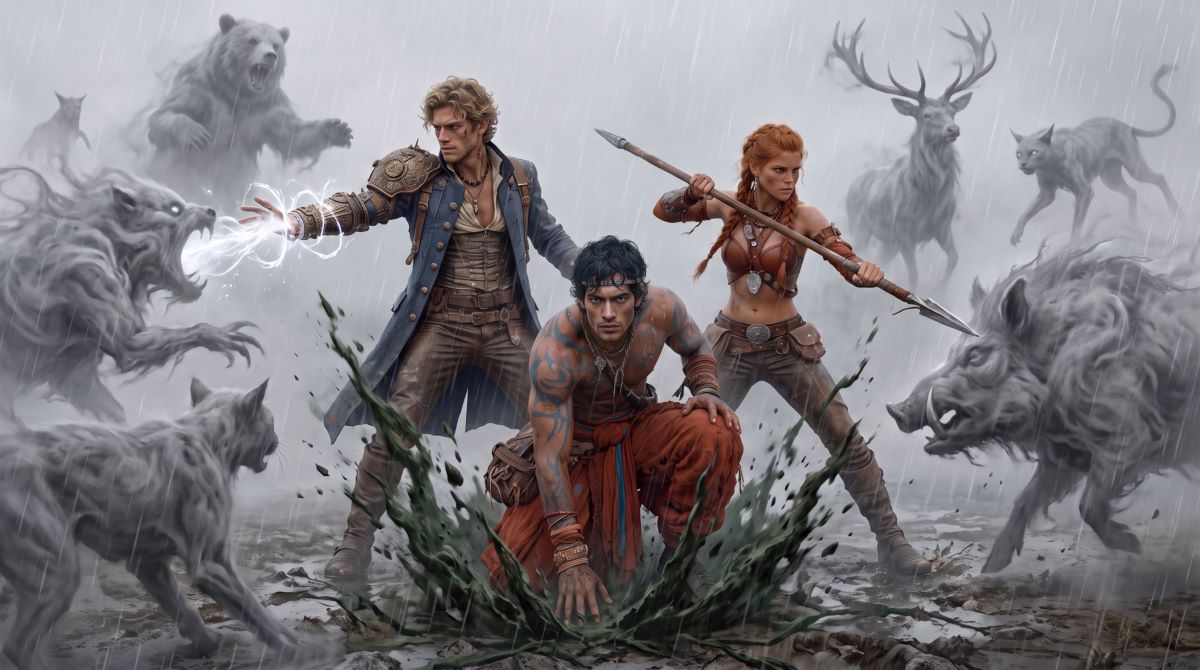
The mirror spat them into cold rain.
Dorian’s boots struck dark, wet sand, and the world lurched beneath him. He staggered, and Toren caught his arm before his knees reached the ground.
“I am fine,” Dorian muttered, though a dull ache had already begun crawling towards his temple.
Toren ignored him and tightened his grip until Dorian stood steadily.
Liana stepped through a heartbeat later. Behind her, the mirror collapsed into an ordinary puddle, its surface rippling violently.
Dorian tasted rain on his lips. The downpour hammered against his coat, cold enough to sting through the fabric, then softened into warm mist across his face. A moment later, a sharp gust drove icy drops against the back of his neck. He looked up. Low grey clouds rolled overhead, but the rain seemed to arrive from several directions at once. The Mirror Call pressed against him from everywhere. That is new.
The indicator panel on his brass arm flickered. Air safe. No toxins. The magic reading climbed and stayed there.
“We are safe enough here.” Dorian crouched beside the puddle and touched its surface. It was still a mirror.
“We should move,” Liana said.
They climbed only a short distance before pitching the tent, keeping the puddle within sight. None of them wanted to misplace the only route home.
As soon as the canvas stood, Liana ducked outside again. She walked a short distance from the tent, studying the low clouds and shifting fog. Warm air pressed against one cheek while cold rain struck the other, and the sparse grass bent first towards the shore, then away from it.
When she returned, water ran from her braids. “I’ve never seen weather behave like this.”
“That makes two of us,” Dorian said, removing his brass cuff.
Toren rubbed his palms together. Green light gathered between them.
Or attempted to. The magic fractured almost at once, thin strands of emerald light drifting apart like broken reflections.
Toren frowned. “It shouldn’t do that.”
He tried again. A weak current of warm air passed over them, carrying the scent of grass and sun-heated leaves. Liana felt it for half a second before the spell split into shimmering fragments and vanished.
“Well,” Dorian said, pulling off his soaked coat, “that was nearly useful.”
“I’ll try again.”
The third attempt held long enough to dry the worst of their clothes and hair.
Liana unpacked Nessa’s provisions: smoked fish and flatbread wrapped in cloth. They ate quickly while the tent ropes creaked with every change in the wind.
Then Liana looked at Dorian. “Can you tell where we are?”
“Not really. I’ve already checked.” He activated the holographic map anyway. Blue light unfolded above his palm, revealing the familiar web of registered mirrors. He enlarged the surrounding routes and pointed towards an empty space at the centre.
“No registered mirror. No registered world.”
Toren leaned closer. The blue glow sharpened the concern in his face. “So the Council doesn’t know this place exists?”
“No.” Dorian dismissed the hologram. “And I have absolutely no idea where we are.”
“But you feel it?” Liana asked.
Dorian rubbed his temple. “Everywhere. No centre. No direction. The whole world is saturated with reflective energy.”
“The same kind as along the raven’s path?”
“Yes. And beside the Drommala remains at the Pain Monastery.” A faint tingling moved beneath the skin of his forearms. “But never this strong.”
The headache pulsed again. Dorian had blamed the blood loss from opening the mirror. He pressed the ring to his skin and released another measure of stored energy into his blood.
The pain remained.
Toren and Liana exchanged a glance.
“So this is the world of the Drommala?” Toren asked.
“I can’t prove it,” Dorian replied. “But I am becoming increasingly confident.”
Neither of them smiled.
Liana reached into her pack and removed a tightly rolled bundle of papers. Toren produced another, then packed the pipe with sacred bud and lit it. The first draw warmed his throat. He held the smoke, passed the pipe to Liana and unrolled his pages across his knees.
“What are you doing?” Dorian asked.
“Preparing,” Liana said.
“My speech,” Toren added.
Dorian blinked. “You prepared speeches?”
Liana gave him a flat look. “We represent our people.”
“We speak for the Steppe and the Desert,” Toren added.
Liana took another pull from the pipe. The familiar bitterness settled her thoughts, and she began reading silently, her lips shaping each word. After several lines, she stopped, crossed one out and replaced it before beginning again. Her face hardened with determination. She looked ready to fight for every word she intended to place before the Drommala.
Beside her, Toren rehearsed beneath his breath. Whenever he stumbled, he checked the page and started again. His face looked unexpectedly young. Not the healer, but a schoolboy before an examination.
Dorian watched them with quiet fascination. The sacred creature might welcome them, ignore them, or kill them. Still, every word had been prepared.
Morning arrived without sunrise.
The rain had not stopped. Liana checked her knives and ducked outside to inspect the area. Dorian woke with the headache worse than before and sat up slowly. Dark shadows had deepened beneath his eyes. He pressed the ring to his skin. It barely helped.
Toren watched from across the cramped tent. “What hurts?”
“I’m fine.”
“That was not my question.”
Dorian tried to stand. Toren caught his shoulder. “Stay.”
“You have become remarkably authoritative.”
“And you look ill. Where?”
Dorian hesitated. “My head.”
Toren moved behind him, knees bracketing Dorian’s hips, chest against his damp back. He placed one hand at Dorian’s temple and the other against the cold ground.
A thin thread of green light reached Dorian and broke. The second attempt failed faster. Toren tried again. This time, the thread held. The pressure behind Dorian’s eyes eased. He exhaled before he could stop himself.
“How long?” Toren asked.
“Since we arrived.”
The hand against Dorian’s temple trembled.
Dorian shifted away. “You will make yourself ill.”
Toren tightened his hold. “If this is the world we came for, we need you able to translate.”
Dorian went still.
“Not only for that,” Toren said quietly, close to his ear. “I need you, Dorian.”
Dorian let him continue. Toren’s breath warmed his neck while the healing current held.
They ate a quick breakfast and packed. Visibility had shrunk to little more than twenty paces. Liana took out the painted pebbles and began leaving them along the route. Dorian opened the holographic map and set a tracker.
The map looked disturbingly clear. It marked their temporary entry point, but nothing else existed. No terrain. No paths. Only an impossible blank around the place where they had arrived.
The ground gave beneath their boots, soft with moss and water. Grey frogs scattered from the path in sudden, silent jumps.
Dorian checked the tracker again fifty paces later. “The route back should still hold.”
“Should?” Liana asked.
“The world may not exist on the map, but the tracker still knows where we entered.”
“And if the route changes?” Liana dropped another pebble.
“Then we have a larger problem.”
They continued. Rain ran from Dorian’s hair into his collar, soaked Toren’s cloak and dripped steadily from Liana’s braids. Their hands had gone stiff with cold.
The reflective pressure remained unchanged.
Liana glanced at him. “The mirror magic is still everywhere?”
“Exactly the same.”
Toren looked into the fog. “What does that mean?”
Dorian hesitated. “The entire world may be one enormous reflective system.”
They walked for hours through wet undergrowth and the same colourless trees. Rainwater dripped through the leaves.
Then Liana stopped. Fresh air scented with herbs filled her lungs. She dismissed it as imagination. But the mist ahead thinned.
For a few seconds, the world beyond changed. A clear lake shone beneath a cloudless sky. Bright flowers spilled along the shore, and beside the water stood an enormous tree, every branch warm with sunlight.
Then the opening vanished. Grey trees returned. Fog drifted between the trunks.
All three stood motionless.
“Did either of you see that?” Liana asked.
“The lake?” Dorian said quietly.
Toren nodded. “And the tree.”
They stared ahead as a nearly transparent snake slid between the wet trunks and vanished beneath the rotten roots.
“Maybe fungal spores in the fog,” Toren said. “Making us see things.”
“All three of us seeing the same thing?” Liana asked. For once, she sounded unsure.
“A reflective distortion affecting all three of us.” Dorian closed his eyes briefly against the headache. “Possible.”
“Likely?”
“No.”
That settled nothing, but they continued. Liana dropped another pebble, and Dorian set another tracker. This time, both of them looked back.
The fog thickened as they walked, swallowing the dull trees until only the nearest trunks remained visible. Wet leaves brushed against their clothes. Beneath the smell of rotten wood, Dorian caught something metallic. Then he tasted it. Another spike of pain had made him bite down hard enough to split his lip.
A branch snapped ahead.
Liana raised her spear.
Fog gathered between the trees. It thickened into the shape of a wolf, though it stood far too high through the shoulders. Vapour drifted from its back and curled around its paws without disturbing the mud.
As it moved, the muzzle shortened. Antlers formed above its skull. Within seconds, the wolf had become a stag.
“Watch out!” Dorian shouted, his voice rough and distant.
More shapes appeared. Bears, wolves and long-legged cats stepped from the mist, changing with every movement. Horns dissolved. Paws stretched into hooves. One creature lost its head before the fog shaped a new one.
None of them made a sound. There was no smell of fur or breath. Only damp soil and decay.
The fog surged between the travellers. The trees vanished. Toren’s orange cloak blurred, then disappeared. Liana caught one flash of Dorian’s pale hair before the mist swallowed him too.
“Everyone?” she called.
“Still here,” both men answered from different directions.
The stag charged. Liana planted her boots in the mud and drove her spear into its chest. The blade passed through without resistance. Cold vapour curled around the shaft, and the beast scattered before gathering behind her again.
Somewhere to her left, Toren threw a knife. Metal struck nothing. Green energy rose through the soaked moss. He thrust it towards an advancing bear, but the spell fragmented into rain.
Silver light flared between the trees. Dorian activated the cuff, but the shield broke into droplets and ribbons before it could form. His beam dissolved just as quickly.
More shapes closed around them.
A wolf cut between Liana and Dorian. A moose forced Toren farther away. Each time one of them moved towards a voice, another phantom crossed the path.
“Stay where you are!” Dorian shouted.
“That would be easier if I knew where that was!” Liana called back.
A long-legged cat lunged at her. She drove the spear through its mouth and stumbled through the vapour.
“Liana, on your right!”
She turned too late. A bear rushed towards her. Liana swung her spear, lost her balance and sprawled in the mud. The impact forced the air from her lungs.
“Liana!” Toren shouted.
“I’m all right!”
She rolled onto one knee and touched her ribs. No torn clothes. No blood.
The bear gathered in front of her again.
Liana lowered her spear slightly. “It didn’t touch me.”
Toren emerged through the mist, breathing hard. His cloak was soaked and filthy, but he was not injured either. A huge eagle swept towards him. Toren stepped back by instinct and slammed into a tree. The bird vanished before touching him.
Dorian appeared behind him with the cuff raised. His coat was intact. Apart from the blood on his lip, he was unhurt.
“They’re not hurting us.” Liana stared at the fog. “They’re making us fight.”
Dorian watched the circling shapes. Their bodies sharpened whenever someone raised a weapon and thinned again when no one moved.
Then he lowered his arm. “Stop.”
A boar rushed towards him.
Nobody moved.
It reached Dorian and dissolved against his body in a burst of cold vapour. Another phantom charged Toren, then disappeared before touching him.
The remaining shapes slowed. Antlers thinned into mist. Claws unravelled. One by one, the beasts returned to the fog that had made them.
The fight ended when Liana, Toren and Dorian refused to fight.
The rain stopped.
Not gradually.
Instantly.
The fog began to lift, revealing that they stood near the crest of a hill. The grey world melted into colour around them. Blue sky opened overhead. Sunlight poured across green forests, wide meadows and lakes shining below.
They watched in silence as colour returned to the smaller creatures. A frog beside Liana’s boot brightened from grey to vivid green. Tiny golden birds stirred among the branches. Their calls broke the silence, joined by insects rustling in the grass.
Fresh air carried the scent of blossom.
Something enormous stood farther along the hill among the flowers, motionless beneath the sunlight. Brilliant blue and copper scales gleamed across its broad body. Its long trunk hung over the emerald grass.
The Mother Drommala watched them quietly.
Chapter 31: A Blessing Should Not Bleed
Read this chapter on its own page →
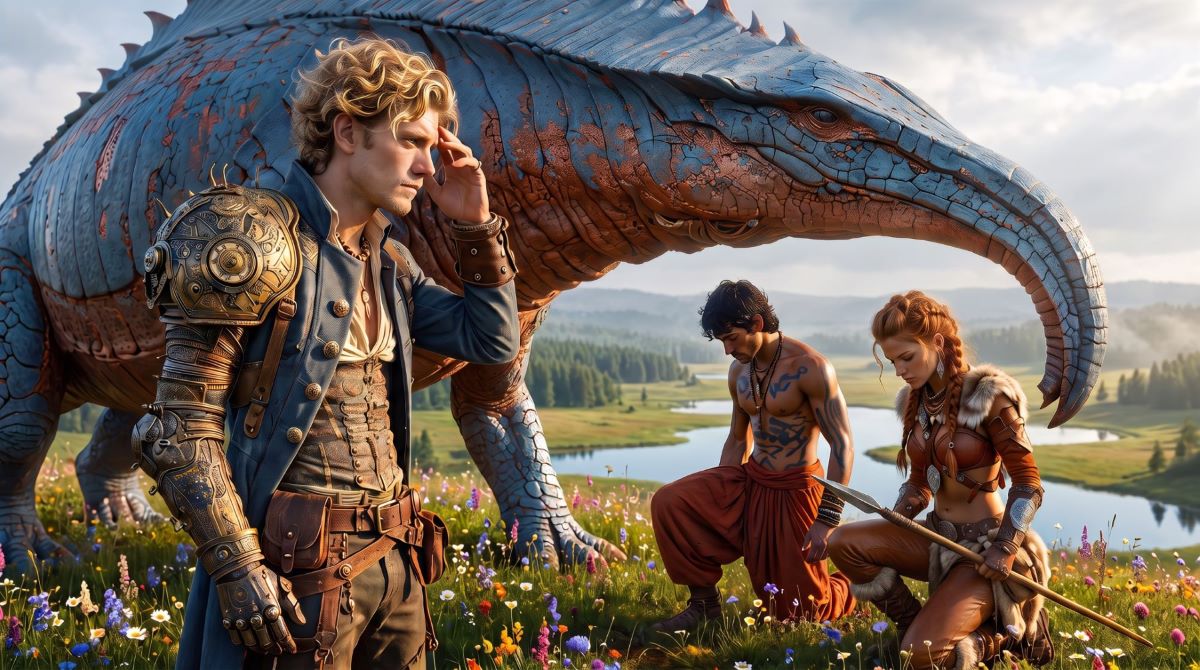
Liana and Toren recognised the Mother at once and dropped to one knee. Liana lowered her spear, and both bowed their heads. Dorian remained upright, one hand pressed to his temple. If he tried to kneel, he doubted the movement would be voluntary.
The Drommala lifted her trunk.
A low vibration passed through the ground. Dorian felt it climb his bones and find the pain behind his eyes. His pupils vanished as silver spread across his irises, swallowed the whites and turned both eyes into flawless mirrors.
The vibration turned inward. Reflective flickers passed through his mind, carrying meaning without words. His mind recognised it, gave it language and reflected it through his voice.
His mouth opened. The voice was his, but his accent was gone. Even. Empty of emotion.
“What need has carried you beneath a sky not your own?”
Liana and Toren raised their heads. For a moment, horror showed beneath their sacred reverence.
Liana recovered first. She laid her spear on the grass before her, placed both hands beside it and lowered her head.
“Great Mother Drommala. You Who Find the Life Water. We kneel before you beneath your sky. We speak for the Steppe and Desert.”
She lifted her head but remained on one knee.
“Your daughter has found her way to the sky. The life water fails without her. The earth dries. Our people thirst. We come not to command. We come to ask. Entrust another daughter to our care, if it is your will and hers.”
Her words reached Dorian without sound. Their meaning became silver flickers that flashed from his mirrored eyes and travelled across the Mother’s scales.
She gave no answer. Her gaze settled upon Toren. His throat had gone dry. He placed one palm over his heart and the other against the earth. Then he bowed until his forehead almost touched the grass.
“Great Morrawyn. You Who Walk the Buried Rivers. Hear the vow we place before you.”
The first words came rough. The rest did not.
“By the water below and the sky above, we shall care for your daughter without possession. Guard her without chains. Listen without command. Her will shall remain her own. Her life shall be sacred to us. If she chooses us, we shall keep the pact until she finds the sky.”
Toren lowered his head fully. Liana bowed beside him.
Together, they waited.
Then Dorian spoke again.
“Why did my daughter find the way to the sky before her time?”
Liana’s prepared speech became useless.
“We do not know.”
Toren lifted his head.
“She became ill. We tried to heal her. We failed. The Loteri are seeking the cause. The Pain-Bearers are studying what remains. We believe someone helped her die. We do not know who. We do not know why.”
Their answers followed the same path through Dorian. Silver signals moved across the Mother’s scales.
Her trunk curled. The copper in her scales darkened. The world changed with her. Crimson spread through the grass and flowers. The lakes below turned red. Clouds swallowed the sky, and rain swept across the hilltop. Tiny golden birds fled the branches. The insects fell silent.
Toren and Liana remained on their knees, though no longer from reverence alone. The wind struck, tearing them from the ground and sending them sideways. They struggled upright and bent against it, barely keeping their feet.
Every drop of rain caught the Mother’s fury. So did the lakes, the wet grass and every shining leaf.
The whole world reflected it into Dorian at once. He clutched his head and dropped to his knees. Pain tore behind his mirrored eyes. Blood welled around their silver edges, spilled over his lashes and ran down his cheeks.
“Dorian!” Toren forced his way towards him through the wind.
The Mother’s gaze fell to Dorian.
She stilled.
The wind died. The reflective pressure withdrew.
Dorian remained bent over the grass, one hand braced against the ground. His body shook. One final vibration passed through him. Thin and controlled.
“Tomorrow, I shall answer. Until then, you are my guests.”
The Mother’s vast body broke into copper mist.
Toren reached Dorian before the last scale disappeared. As Dorian swayed sideways, Toren gripped both shoulders and held him upright. Dorian remained on his knees, staring through the place where the Mother had stood. The silver drained from his eyes, leaving their usual grey beneath bloodshot whites. Blood covered his lashes, ran down his cheeks and slipped from both ears.
“Dorian.” Toren touched his face. “Can you hear me?”
Dorian blinked. His eyes moved towards Toren without finding him.
“Regrettably.” His accent had returned, though little of its polish had.
Liana crouched on his other side. Rainwater streamed from her hair and clothes. The storm had gone, leaving flattened grass and the smell of wet earth.
“We need to move him,” Toren said.
“The lake.” Liana looked towards the trees below the hill, then back across the field where they had fought the fog beasts. “Our things are still there. You stay with him.”
She ran down the slope.
The headache had followed Dorian since they entered this world. The Mother’s voice had driven it deeper into his skull. He pressed the heel of his hand to his temple.
“I assume,” he murmured, “that went well.”
“You can’t remember?” Toren asked. He checked Dorian’s shoulders, ribs and arms for any damage the Mother’s fury might have left behind.
“In fragments.” Dorian closed his eyes.
Toren found no other wounds and exhaled with relief. “She will give her answer tomorrow.”
Dorian tried to nod, with little success. Fresh blood slipped from his ear and vanished beneath his collar. Toren wiped it away.
“Do not move.”
“I had no immediate plans.”
Liana returned with their gear and Lucky’s storage capsule secured across her back.
“Nothing missing,” she said. “Including his machine.”
“Lucky,” Dorian corrected faintly.
“Your machine is safe. Can you stand?”
They pulled him upright. His legs failed at once. Toren caught most of his weight. Liana stepped beneath Dorian’s other arm and braced her shoulder against his ribs.
“I can walk.” He attempted a step and nearly folded.
They carried him more than guided him down the slope. Every movement sent another pulse through Dorian’s skull, and more of his weight settled against Toren with every step.
The lake waited beneath broad trees, blue and harmless again. Liana chose a sheltered place beneath the largest tree, where thick roots lifted the ground above the wet grass.
“Here.”
They lowered Dorian against the trunk. He closed his eyes.
“No,” Toren said. “Stay awake.”
“A cruel request.”
Liana cleared the ground, shook the water from the tent and pitched it between the roots. Toren knelt before Dorian and carefully removed the brass arm, then the soaked coat, dark with blood around the collar.
As Toren unfastened the corset beneath it, Dorian opened one eye. “You appear worryingly experienced.”
“I have removed clothing from injured people before.”
“How disappointing.” Dorian’s reply lacked its usual force.
Toren eased the corset away, leaving Dorian in the damp shirt that clung coldly to his skin. Then Toren cleaned the blood from Dorian’s face, neck and hair with a cloth soaked in the lake. The sharp copper smell remained on Toren’s fingers.
When the cloth touched the skin behind Dorian’s ear, he flinched.
“Sorry.”
“You are becoming dangerously considerate.”
“Be quiet.”
Dorian obeyed for nearly half a minute.
Sunlight warmed the clearing. A lively wind carried the scent of flowers, wet bark and clean water. Their clothes dried with surprising speed. Steam curled faintly from Liana’s damp fur cloak as she secured the last tent rope.
Dorian lifted his left hand. The bloodbound ring’s crystal was colourless and dull. He turned the wheel. Nothing happened. He tried again.
“Empty,” he murmured.
Toren placed one palm against the ground and the other over Dorian’s chest. He reached for healing magic. Power rose, but the reflective field scattered it through the wet grass and across the lake. Only a thin thread reached Dorian, too weak to heal him. As before, reflection broke the direction of Toren’s magic like light on water. He withdrew his hand with a quiet curse and reached for his herbs.
Movement stirred beyond the clearing.
Animals had gathered between the trees. Tiny golden birds watched from the branches. White rabbits sat among the flowers, and bright-coated creatures stood farther back among the silver-leaved shrubs. None showed fear.
Liana stopped moving. “Their eyes.”
Toren followed her gaze. His hand tightened around the pouch of herbs.
Every animal watched them through flawless mirrored eyes. No pupils. No whites. Only smooth reflection, catching the lake, the trees and the three travellers in miniature. The same eyes Dorian had worn while the Mother spoke through him.
A small deer stepped forward. Its horns divided into curling branches covered with tiny silver leaves. Its mirrored gaze shifted towards the empty hill where the Mother had vanished, then settled on Dorian.
Liana’s fingers closed around her spear.
The deer continued across the grass.
“It is not afraid,” Toren said.
“An obvious failure of judgement.” Dorian tried to smile and failed.
The deer stopped beside him and sniffed his shoulder, his hair and the blood beneath his collar. Its nose was cool against his skin. It smelled of warm grass and rain. Up close, Dorian saw his own exhausted face reflected in its eyes.
A soft reflective glow moved beneath the deer’s skin, warm and familiar to Dorian’s blood. His thumb rested against the wheel of his ring. A small amount of that energy would be enough.
He raised his hand slowly. “Would you object terribly?”
The deer did not move away. Dorian placed his palm against the side of its neck. Its hide felt unexpectedly warm and fine beneath his hand.
Warmth struck him. Not through the ring. Directly.
The energy spread along his arm into his chest, spine and the damaged places behind his eyes. Dorian inhaled sharply and pressed his shoulders against the tree.
Toren abandoned the herbs. “What is happening?”
“I do not know.” The deer remained still beneath Dorian’s hand.
Reflective energy moved through Dorian in slow waves, filling what the Mother had emptied. The pressure behind his eyes weakened first. He closed them. The headache loosened fraction by fraction. The pulse at his temples faded. The ringing in his ears lowered until he could hear water touching the reeds and leaves shifting above him.
Toren saw the blood beneath Dorian’s ear stop flowing. “The bleeding has stopped.”
Colour returned to Dorian’s face as the grey left his lips. Liana’s attention kept returning to the deer’s eyes.
The ring remained dull for several more breaths. Only when the hollow weakness inside Dorian had filled did the excess energy find it. The crystal warmed against his finger and filled from the centre outward until it held a steady dark-blue glow.
For the first time since they had crossed into the world of rain, Dorian’s head was clear. He exhaled, long and unsteady, carrying more relief than he would have preferred anyone to hear.
The deer’s ear flicked. Dorian opened his eyes. Silver met silver.
“Thank you.”
Only then did the animal step away.
It bounded towards the others. They scattered with it, slipping between the trees or rising into the air, dozens of mirrored eyes flashing once before the clearing belonged to the travellers again.
“How do you feel?” Toren asked.
Dorian checked the ring, then touched one ear. “Restored.”
He tried to sit straighter. His body began to shake. One tremor passed through his shoulders, then another. He folded his arms around himself, but the shivering continued despite the warm sun.
Toren placed a hand against Dorian’s chest. “Your body is exhausted.”
“My body has always been needlessly dramatic.”
“You bled through your eyes.” Toren gently held him in place.
“And ears,” Liana added.
“Thank you, Liana.” Some of Dorian’s usual sarcasm had returned. Not enough to hide the shaking.
Liana unfolded the thickest blanket over a travel mat beneath the tree. Toren slipped one arm behind Dorian’s back and the other beneath his knees.
“I remain capable of lying down independently,” Dorian said.
“I have seen your walking.” Toren lowered him onto the mat.
“That was temporary.”
“So is my patience.”
Liana covered Dorian with the blanket and placed his folded coat beneath his head. He opened his mouth for one final complaint. Nothing came. His eyes closed. Within several breaths, he was asleep. Toren remained beside him, his fingers resting over the steady pulse in Dorian’s wrist.
Liana watched his sleeping face. “His eyes became mirrors. Like the animals here.”
Toren nodded. “As if this world recognised him as one of its own.”
“He did not merely translate her words. She passed them through him.”
“And her anger.”
Liana looked at the bloodstained cloth beside Toren. “Walkers really are cursed creatures.”
Toren drew the blanket higher over Dorian’s shoulders. “Some call it a blessing.”
“A blessing should not bleed this much.”
They looked towards the empty hill where the Mother had vanished.
Tomorrow, she would speak through him again.
Chapter 32: The Mother’s Answer
Read this chapter on its own page →

Dorian woke warm, trapped and profoundly confused.
For several seconds, he stared into Toren’s sleeping face without understanding why it was so close. Toren lay facing him, one arm secured around Dorian’s waist beneath the blanket. His breath touched Dorian’s forehead, carrying the familiar scent of crushed herbs, clean skin and smoke.
Something warm pressed along Dorian’s back. He moved his head slightly and discovered Liana behind him, one arm locked around his ribs and her knees drawn against the backs of his legs. She held him with the determination of someone preventing an injured prisoner from escaping.
Dorian remained still.
Memory returned without courtesy. The Mother’s voice passing through him. Silver swallowing his sight. Her fury striking from every wet surface in the world. Blood over his lashes and inside his ears.
He remembered every word now.
He also remembered shaking beneath the tree while Toren and Liana tried to warm him. Apparently, they had eventually chosen the practical solution of pinning him between them for the entire night. Dorian lay quietly, unwilling to disturb either of them. It was comfortable. Disturbingly so.
Toren moved first. His arm tightened before his green eyes opened. “How do you feel?”
Dorian considered the question. “Surrounded. I had not realised near death improved my romantic prospects so dramatically.”
Relief softened Toren’s face.
Behind Dorian, Liana spoke without properly waking. “Do not be flattered.”
Her voice was rough with sleep. She tightened her hold once, apparently to make the warning clearer. “You would not stop shivering. We had no choice.”
“Of course.”
“Walker,” she murmured, “you are still valuable.”
Dorian laughed. The movement disturbed both of them, but he could not help it. Liana made an annoyed sound behind him. Toren closed his eyes again, though the corner of his mouth lifted. Liana released Dorian, pulled on her boots and left to check the camp.
Toren watched her disappear between the trees. His arm remained around Dorian’s waist. His erection pressed firmly against Dorian’s thigh. At least one part of him had enjoyed the arrangement. Dorian shifted his thigh. Toren froze.
“Your concern for my health appears remarkably firm.”
Colour rose across Toren’s face. “It happens in the morning.”
“So I have heard.”
“You could move.”
“I could.” Dorian did not.
Leaves shifted above them, carrying the smell of wet bark and flowers. Toren’s fingers rested warm against Dorian’s side. “How do you really feel?” he asked.
“My head is clear. Nothing hurts. My dignity may require further treatment.”
“You frightened me.”
Dorian looked at him.
“You were bleeding,” Toren said. “Then you would not stop shaking. I thought she had damaged something I could not heal.”
Dorian brushed the curls back from Toren’s temple. His fingers lingered against Toren’s cheek. “I am difficult to dispose of.”
Toren smiled and pressed his forehead against Dorian’s. For once, Dorian did not make another joke.
Liana returned with broad green leaves folded into makeshift bowls. Inside lay dark-blue berries, small golden fruits and something pale pink shaped like a twisted pear.
Dorian regarded them cautiously. “Do any of these kill Mirrorwalkers?”
“Only rude ones,” Liana said.
She had watched the birds and deer eat each kind before gathering them. In this world, that qualified as research.
The golden fruit broke beneath his teeth with a soft snap. Juice flooded his mouth, cool and intensely sweet, tasting of honey, citrus and rainwater. The berries burst warm from the sun, leaving his fingertips stained violet.
They ate beneath the tree while golden birds watched from the branches. Every creature around them had the same impossible eyes. Birds, deer and the smaller animals among the roots all stared through smooth mirrored surfaces that held the bright world around them.
Afterwards, Toren packed sacred bud into his pipe. The smoke smelled green and earthy, with sweetness beneath the bitter edge. They passed it between them until the morning softened.
For once, there was nowhere they had to reach. Nothing hunted them. No one required healing, rescuing or translating. Released from its fog, the world spread bright around them.
Later, they undressed beneath the tree and walked naked through the flowers to the lake. The water was clear enough to see pale stones beneath their feet. Warmth closed around Dorian’s legs as he stepped deeper, loosening the last stiffness from his body. Flowers drifted across the surface, carrying a faint scent of vanilla and wet leaves.
Toren stood waist-deep nearby, looking across the lake towards the animals drinking at the opposite shore. He seemed about to speak, stopped, then tried again. “There is no word in Common for this.”
Dorian wiped water from his face. “A serious failure of civilisation.”
Toren smiled faintly. “Vaelyn.”
Dorian looked at him. “Meaning?”
“Love. Care. Happiness.” Toren glanced across the lake, then back at Dorian and Liana. “All at once. Vaelyn.”
Dorian watched Toren’s peaceful profile for a long moment. For once, he was neither healer nor protector. Only the Forest boy.
By afternoon, they were clean, rested and dressed again. Their packs stood ready beneath the tree.
Liana settled on one of the broad roots and unfolded the Acalith map. She turned the parchment over and began drawing the deer that had healed Dorian. The narrow head came first, followed by branching silver antlers and the silver leaves growing along its back.
Dorian watched the image take shape. “Nature research? Apparently, you are equally skilled with a knife and a pencil.”
Liana bent closer to the antlers, hiding the smile threatening at the corner of her mouth.
“I have never seen one before,” she said. “Never heard of one either.”
Nearby, Toren gathered unfamiliar herbs from around the lake. He examined each stem and flower before pressing them between spare sheets for his herbarium. Afterwards, he wrapped the remaining fruit and berries from breakfast in clean cloth.
Dorian waited beside them, outwardly composed and privately preparing to bleed from several inconvenient places.
The world quietened.
Golden birds stopped singing, though none left the branches. The silver-antlered deer raised its head from the flowers. Smaller animals emerged between the trees and stood without fear, all facing the hill.
A warm vibration passed through the soil.
Flowers bent beneath no wind. Copper mist gathered among them, brightening in the sunlight. The Mother Drommala formed within it, blue and copper scales appearing one after another until her vast body stood beneath the open sky.
Liana and Toren dropped to one knee.
Dorian remained standing.
The Mother lifted her trunk.
He braced himself.
The vibration climbed through his boots and into his bones. His pupils vanished. Silver spread across his irises, swallowed the whites and smoothed both eyes into flawless mirrors.
No pain followed.
Calm entered him instead, loosening his muscles and emptying the tension from behind his eyes. His body felt distant and extraordinarily light, as if the earth had released its claim upon him.
The Mother’s meaning moved through his mind again.
“I have heard the need that brought you here.”
Dorian’s voice carried no accent and no emotion.
“A daughter of my line shall be entrusted to the Loteri. She shall walk beneath your sky. The buried waters shall know her, and life shall follow where she chooses to lead.”
Liana drew in a sharp breath. Beside her, Toren lowered his head.
“Her coming shall bind the Loteri to truth.”
Silver light moved across the Mother’s scales.
“The death of the daughter who came before must be followed to its source. What touched her body must be named. What weakened her life must be discovered.”
Her trunk curled towards her chest.
“If another’s will hastened her journey to the sky, those responsible must be found and punished.”
The leaves above them trembled.
“And the daughter yet to come shall stand above border, custom, pride and need. Steppe, Desert, Forest and River shall hold her life sacred. None shall possess her. None shall command her. None shall place desire before her safety.”
The Mother paused.
“This is my answer.”
Toren’s hand closed over his heart as he lifted his head.
“We receive it. Before the water beneath us and the sky above, we accept your answer on behalf of those who sent us.”
Liana’s face had brightened beyond concealment. Her fingers trembled against the shaft of her spear.
“Your daughter will be protected,” she said. “I swear it.”
The Mother went silent.
For several breaths, nothing followed. The world remained perfectly still. No bird moved. No leaf turned. Even the lake seemed to have forgotten its ripples.
Then the Mother looked at Liana.
A skinning knife rested in one hand, a freshly caught rabbit in the other. Warm stone pressed beneath her thighs as the familiar steppe wind carried the scent of dry grass and horses.
Movement shimmered through the afternoon heat.
A young foreign woman walked slowly towards her beneath a darkening sky. Blood covered one side of her face and soaked through the fabric at her ribs. One hand pressed against the wound as she forced herself forwards, one step after another.
When she lifted her head, her eyes caught the light like mirrors.
Without thinking, Liana dropped the knife and rabbit and ran.
The woman reached out. Liana stretched both hands towards her, desperate to close the last few steps between them. Their fingertips almost touched.
The woman scattered into drifting dust.
The Mother’s gaze moved to Toren.
A dark wooden corridor closed around him. People with shaved heads stood silently in two lines along the walls. At the far end waited a figure with the build and posture of a man, though deep shadow concealed his face.
The stance felt painfully familiar. Toren was certain he knew the man, yet each time he reached for the memory, it slipped away.
He walked forwards. The heavy scent of herbs and blood clung to the air while the quiet toll of a bell echoed somewhere ahead. Something sharp rested against his chest, rising and falling with every breath. As he passed, the people on either side bowed their heads.
The figure slowly lifted his head.
The corridor fell away before Toren could recognise him.
Finally, the Mother turned to Dorian.
He stood on a hill overlooking a dying city. Towers of glass and metal folded like houses of cards while fire swept through the streets below. One by one, the remaining lights failed until darkness swallowed the skyline.
Smoke, ash and hot metal filled his lungs.
A deafening crack sounded behind him.
Dorian turned.
A vast distorted mirror towered over the hill, its surface split by thousands of fractures. Endless shards poured from the frame, hiding the figure standing beyond it. He could make out only the outline of a body.
For the briefest moment, two violet lights pierced through the falling glass.
The mirror gave way.
From the city behind him came the scream of metal and the bursting of glass. The ground shook beneath his feet as buildings collapsed out of sight. The roar spread in every direction until it seemed the whole world was coming apart.
The sound broke apart first.
Warm ground returned beneath Dorian’s feet. Air touched his face. Somewhere close, water moved softly against the shore.
Silver withdrew from his eyes, taking the Mother’s reflections with it. Colour returned in blurred shapes before the flowers, lake and bright sky settled back into place.
Liana remained on one knee, staring at her empty hands as though dust might still lie across her palms.
Toren had turned towards the trees. There was no dark corridor around him, no bowed figures, only leaves shifting in the breeze.
The Mother stood before them, silent and immense.
None of them asked what they had seen.
The Mother turned away and began walking through the flowers. After several paces, she looked back. Her trunk lifted once, then lowered towards the distant hillside.
“She wants us to follow,” Toren said quietly.
Liana was already on her feet. Dorian fastened Lucky’s capsule across his back. Liana checked the bindings on her spear while Toren secured his herb pouches beneath his cloak.
While they were occupied, Dorian projected the map against his forearm. The trackers answered at once. He frowned. The entry marker remained exactly where it should have been, but the boundary around it had swollen until its edge disappeared beyond the projection. Whatever surrounded the crossing was now considerably larger than the puddle through which they had entered.
He glanced after the Mother.
Interesting. Potentially inconvenient.
Dorian dismissed the projection before either of them noticed and said nothing.
They followed the Mother across the bright landscape.
Without the fog, Dorian recognised the slope they had climbed after entering the world. Flowers covered the ground where the false creatures had attacked them, leaving no trace of yesterday’s battle.
Ahead, the land dipped.
Dorian stopped.
The puddle was gone.
In its place lay an enormous lake, wide enough that the opposite shore disappeared into blue distance. Its surface remained perfectly still despite the warm wind moving through the trees. Clouds, branches and flowers rested within it with unnatural clarity.
The Mirror Call remained impossible to separate from the world around him. It drifted through the water, flowers and leaves, and through the mirrored eyes watching from the trees, until every reflection seemed to whisper at once.
Dorian crouched beside the lake and lowered his hand to the surface. The water answered. The familiar sensation settled around his fingers, unmistakable now. He had touched this mirror before.
It had simply grown. It was already open. It asked nothing of his blood.
The Mother stepped onto the surface.
For several paces, it held her weight. Reflections moved beneath her blue and copper scales, sliding around her legs like pieces of another sky. Then the water began to accept her, first her feet, then her legs and vast body, until only her head and trunk remained above the surface.
Toren followed at once. Liana entered beside him without hesitation, water closing around their boots and climbing their bodies.
Dorian remained on the bank for one more breath. He stepped in. Warm water closed around his legs. The Mirror Call pulled gently through his bones.
Ahead, the Mother disappeared beneath the surface. Toren and Liana went after her. Dorian drew one final breath and followed. The lake closed over all three travellers.
Light fractured around them.
The reflection took them.
Chapter 33: The Corpse Without a Name
Read this chapter on its own page →
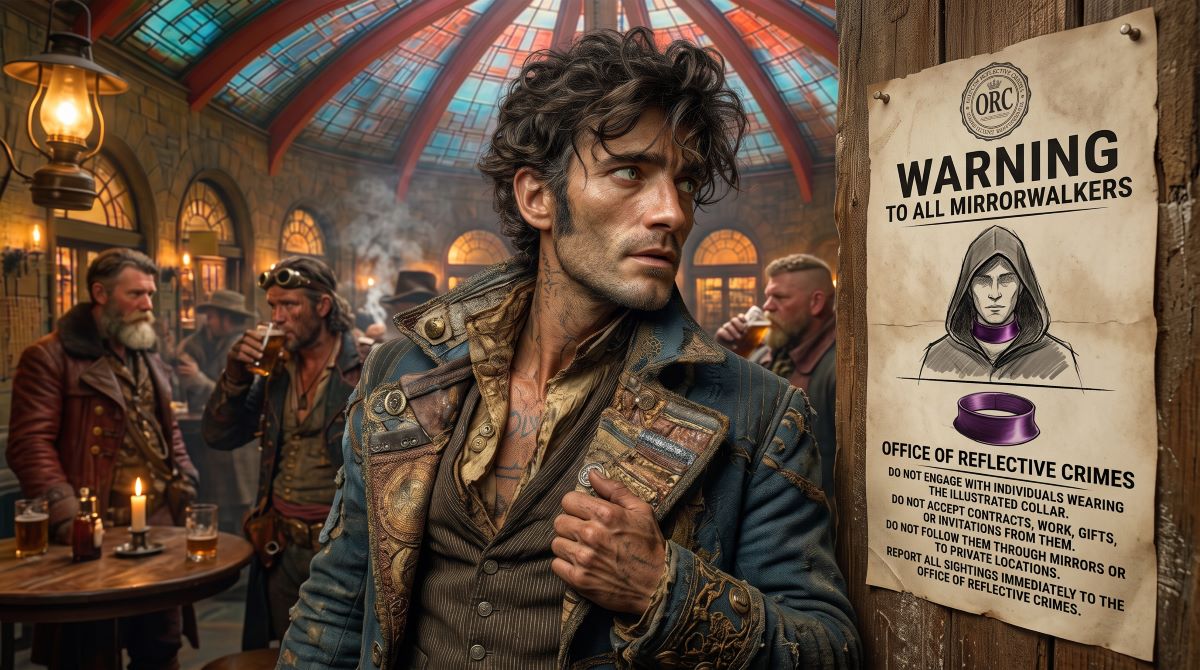
Coyote arrived at Haven carrying two cases and a bad mood. The familiar savoury smell drifting from Mireal’s kitchen was already improving it. The mirror closed behind him with a soft shiver of glass. He put the cases down and flexed his fingers.
The Keeper waited in the mirror-lined corridor. They looked at the luggage, then at Coyote. “Moving?”
“Considering my options.”
“What happened?”
“Someone searched my apartment.”
The Keeper’s expression barely changed. “What did they take?”
“That’s the interesting part.” Coyote picked up the cases again. “Nothing valuable.”
“Ophelia?”
“Her bags.”
That changed the Keeper’s face. Barely. Coyote had known them long enough.
“They knew what they wanted,” the Keeper said.
“Rude, after I’d kept everything so nicely.”
They entered the Central Hall. Voices were a little too lively, as usual, rising over cutlery and glasses knocking against the tables. Coyote caught two words from somewhere ahead.
“Collared bastards.”
He stopped.
A couple of Walkers stood in front of one of the new notices on the wall. Official Great Council paper. ORC seal. Beneath the heading was a detailed sketch of a purple collar.
WARNING TO ALL MIRRORWALKERS
DO NOT ENGAGE WITH INDIVIDUALS WEARING THE ILLUSTRATED COLLAR.
DO NOT ACCEPT CONTRACTS, WORK, GIFTS, OR INVITATIONS FROM THEM.
DO NOT FOLLOW THEM THROUGH MIRRORS OR TO PRIVATE LOCATIONS.
REPORT ALL SIGHTINGS IMMEDIATELY TO THE OFFICE OF REFLECTIVE CRIMES.
Coyote read it twice. Then he noticed what was missing. Registered. For once, the Great Council had remembered that Shadowwalkers existed too.
“Well. Someone finally remembered we’re useful enough to keep alive.” His voice came out rougher than he would have liked.
The Keeper stood beside him. “They should have issued this years ago.”
“But?”
A faint satisfaction touched their face. “But they issued it.”
Coyote looked again at the purple collar. The Council had acted before everyone involved was dead. Progress.
“Any news about the missing Walkers?”
“Nothing useful. Measures have been taken.”
Coyote looked at them. “That sounds ominously official.”
“It is.”
“In that case, I’d like to borrow your expertise.”
Coyote followed the Keeper into one of Haven’s workrooms. A small furnace kept the room hot. Machine oil and paper dust hung in the air.
Bren Reed was dismantling a strange mechanism. Tiny brass parts clicked into a tray beneath his hands. His head turned before Coyote reached the table. The unmistakable scent of Coyote’s blood had reached Bren first.
“You brought rubbish.” Bren grinned.
“Rubbish from Epinalium.”
Bren looked up. “Luxurious.”
Coyote opened the first case. Most of the artefacts received restrained enthusiasm. Bren turned pieces over, tested them, rejected two as decorative, then called up several holographic files to identify the less obvious ones. Pale light moved over brass, glass, and his fingers.
The Keeper shifted closer and examined the two rejected pieces. “I’d check with your birds before throwing these away.”
Coyote looked over. Both objects were shaped in ways that suggested decoration had not been their only intended purpose. He raised an eyebrow, laughter already in his voice. “Ah.”
Nothing changed in the Keeper’s expression or tone. “Quite.”
A moment later, Coyote produced the smaller crystal. He pulled the dirty handkerchief from his coat and unfolded it on the table. The cloth had gone stiff with old oil.
The Keeper went still. Only for a moment.
They were looking at the cloth, not the crystal. Most of the embroidery had been ruined by dirt and grease. One letter remained.
M.
The Keeper said nothing. Coyote looked at them, then at the handkerchief. Interesting.
Bren had already picked up the crystal and turned it beneath the lamp. “Fuel storage.”
Coyote frowned. “That little thing?”
“Rare. Properly charged, it could hold gallons.”
That improved Epinalium considerably. Coyote reconsidered the client’s final price. “How?”
“You need a transfer device. Specialised. Fuel goes in compressed and comes out at usable pressure. With one, the crystal is probably worth twice as much.”
“Have one?”
“No.”
“Know where to get one?”
“Underground market.” Bren glanced at him. “Badly made ones explode.”
“Less attractive.” Coyote reduced the imaginary surcharge slightly.
Bren searched another file, then opened one of the shelves lining the room and pulled out a scroll. Dust lifted from the edge.
“I have a blueprint. Never built one. Not sure I could.”
Coyote studied the design. Work for Corvell.
“What do you want for the appraisal and the blueprint?”
Bren pointed at the small Epinalium measuring device in the open case. “That.”
Coyote considered it, then pushed it across the table. “Highway robbery.”
Bren took it. “Coming from you, I’ll treasure that.”
“Bren, if you still have hopes after that kiss ten years ago, forget them. Immortals aren’t my type.”
Bren laughed. “Coyote, if you change your mind, I always carry a feeding partner contract in my pocket.”
“That is profoundly reassuring.” Coyote smiled. He copied the blueprint and stored it.
The Keeper finally spoke. “Where did you find it?”
Coyote looked at the crystal, then the handkerchief. “Which part?”
“Both.”
“Abandoned camp in Epinalium.”
“Anyone there?”
“Not by the time I arrived.”
A soft knock interrupted them. Mireal stepped inside. “Keeper. A messenger is waiting for you. Urgent.”
The Keeper inclined their head and left.
Lady Elena Maris Venn-Areenholm waited outside ORC, the Office of Reflective Crimes. A dense black lace veil covered most of her face. The Keeper looked at it once. Elena had never been particularly shy about being seen. Today, apparently, she had reconsidered.
She showed a sealed Council authorisation at the entrance. The officers let them through.
ORC occupied several floors beneath the Council complex, all grey walls, reinforced doors, stale steam and sharp disinfectant over sweat uniforms. The Keeper prepared for the blood beneath it. Old blood always meant a migraine later.
“They caught one,” Elena said. “One of the purple collars.”
The Keeper looked at her. “How?”
“A Walker recognised the collar from the warning and reported three men. ORC set a trap. Two escaped. One was arrested.”
They passed an open operations room. An officer sat beside a table, pulling off a dark wig and scratching his damp scalp. Another gathered civilian clothes from the floor while two more argued over what had gone wrong.
The Keeper watched for a moment.
Centuries passed. Empires collapsed. Technology improved. Police bait remained police bait.
Elena kept walking. “The arrested man is a Mirrorwalker.”
“Registered?”
“No record of him anywhere.”
That was more interesting.
An officer opened the observation-room door. The Keeper smelt fresh blood before the door closed behind them.
Beyond the glass, the detainee sat under harsh white light. Or tried to. Dried blood covered one side of his face and the front of his shirt. One eye was swollen nearly shut. His hands trembled on the table. Every few seconds he shifted, looked around the room, then stared at the table as though he had forgotten where he was.
The purple collar sat tight around his throat. Too tight.
Two ORC officers questioned him. “Again. Name?”
The man hesitated. His mouth moved. Nothing came out.
“Your name.”
He swallowed. “Pipkin Brassbutton.”
The Keeper narrowed their eyes. A name from a children’s book.
One of the officers moved closer and slapped him. The sound cracked through the room. “Stop playing games.”
Fresh blood ran from the detainee’s nose. He did not even lift a hand.
“World of origin?”
“I travelled.”
“Where are you from?”
“I travelled.”
“Where were you born?”
“I don’t remember.”
The officers exchanged a look. “Who employs you?”
“No one.”
“Who were the other two men?”
The detainee frowned. For several seconds he seemed to search for the answer. “Friends.”
“Names?”
Silence.
“Where did you meet them?”
“I don’t know.”
The Keeper watched the detainee carefully. His answers were not evasive. Questions reached him. Sometimes nothing came back. Elena stood beside the Keeper, arms folded.
“He can cross,” she said quietly. “Tests confirmed Mirrorwalker blood.”
“And the collar?”
“We tried to remove it.”
The Keeper looked at her. Elena gestured through the glass. One of the officers approached the detainee with a small mechanical tool. Metal clicked as he opened it.
The detainee saw the tool and recoiled so hard that the chair scraped backwards. “No.”
The second officer caught his shoulders and forced him back.
“No, no. Don’t.” The man grabbed the collar. His nails scraped over the smooth surface. “Don’t touch it.”
“Sit still.”
The tool moved towards the fastening. The detainee began shaking hard enough to move the chair beneath him. Not resistance. Fear.
Elena said, “There is some sort of mechanism inside. We cannot find the release.”
The Keeper watched another minute. Enough. They turned and left. The heavy door shut behind them, reducing the interrogation to a dull murmur.
“He needs a medic and a mental assessment,” the Keeper said. “They are only making him worse.”
“He is a criminal.” Elena’s tone cooled.
The Keeper stopped. “I haven’t noticed a judge in that room, Elena.”
She said nothing.
“When he can sit upright, call me.”
Elena’s mouth tightened, but she nodded.
“And tell those idiots to leave the collar alone. Send a competent mechanic to check it first.”
“I will.”
The Keeper resumed walking. “How many escaped?”
“Two.”
“Walkers?”
“Probably.”
Elena led them into one of the Investigation Bureau rooms and closed the door. Several files waited on the desk.
“This is everything I can give you on the missing Walkers. Reports, confirmed disappearances, suspected disappearances. Some material is still restricted.”
The Keeper picked up the first file. “And the corpse?”
“Still Greyname.” Elena sat down.
“No identification?”
“Someone identified the body by appearance, but we cannot confirm it yet. The fingertips were deliberately destroyed.”
“How?”
“Acid.”
The Keeper looked at her. “And the reflective information?”
“Almost useless. The body remained in the Scarlet Valleys’ mountains too long. Most of the reflective trace bled into the surrounding snow and ice.”
“Cause of death?”
“Not clear. The whole body showed repeated punctures from a very thin blade. Blood loss was significant.” Elena paused. “If someone was collecting it, that is strange. Walker blood without the living Walker who carries it is nearly useless.”
“Nearly. Anything else?”
“One of our experts believes magic may have been used.”
The Keeper’s attention sharpened. “What kind?”
“We don’t know yet.” Elena folded her hands on the desk. “We contacted relatives. If the identification is right, they’ll confirm it.”
“That will take time.”
The Keeper opened another file. Names. Dates. Worlds. Last confirmed crossings. Too many gaps. Then one name stopped them. Eric Still.
The Keeper looked at Elena. “You had a report on him.”
Elena nodded. “Yes.”
“When?”
“Months ago.”
The Keeper waited. Elena activated the hologram box and opened the internal record. “There should have been a missing-Walker alert attached.”
There was none.
“The report never entered the active system,” Elena said.
“Lost?”
“Or removed.”
She closed the record.
Coyote stayed in Haven long enough to eat. Mireal made certain of that. A couple of hours later, reasonably fed and considerably less relaxed, he headed towards the Steamhollow mirrors.
He nearly walked into Samara.
She had obviously come in a hurry. Her coat was still buttoned high for the Scarlet Valleys, a bit too heavy for Steamhollow. Her amber hair had escaped its pins, and one hand gripped an envelope hard enough to crease it.
Usually Samara arrived immaculate. Not today.
“Samara?”
She looked at him. “Coyote.”
Something in her voice made him put the cases down. “What happened?”
“I came for the Keeper.” She glanced towards the Central Hall.
“They left a few hours ago.”
Samara exhaled and handed Coyote the envelope. The ORC seal hovered above the text.
You are requested to attend the Office of Reflective Crimes immediately regarding the disappearance of Eric Still.
Her hand shook as Coyote took it.
“They know something.”
“Maybe.”
“You knew he was missing.”
“I knew you hadn’t heard from him.” Coyote looked at the letter again. “That’s all. I didn’t know ORC had a file. I don’t know where Eric went.”
Samara stared at him, waiting for more. There was none. Mireal appeared before the silence became unbearable. She took one look at Samara and guided her towards a table. “Give me your coat and sit.”
“I need to go to ORC.” Samara remained standing.
“You need tea first.”
Samara sat. That told Coyote more about her condition than the shaking had. Mireal took her coat, then placed a hot cup between her hands and sat beside her. Steam rose against Samara’s face. Her fingers kept trembling anyway.
Coyote stood there for a moment. One name stayed with him. Ophelia.
He picked up his cases. “Samara, I can’t go to ORC. Obviously. But if you need me later, leave a message with Mireal.”
Samara nodded without looking up.
Coyote finally left Haven. The moment he stepped through the mirror into Steamhollow, cold rain caught him full in the face.
Of course.
Halfway to his destination, he stopped outside a florist and went in.
Coyote pointed at the largest arrangement in the shop. “Add more.”
The florist blinked. Coyote added several flowers whose names he neither knew nor intended to learn until the price became offensive enough to satisfy him.
The card was simple.
To: Renna Rouge
Gilded Stag
He wrote a short message, folded the card, and sealed it in an envelope. “This goes with the flowers. Into Renna Rouge’s hands only.”
“Of course.” The old florist smiled.
“I mean only.”
The florist looked at Coyote again. The smile disappeared. He nodded firmly.
Coyote transferred far too many credits for the delivery. He checked the amount once and decided it was acceptable only because it was appalling.
For once, extravagance felt like sensible planning.
Chapter 34: The Mother Returned
Read this chapter on its own page →
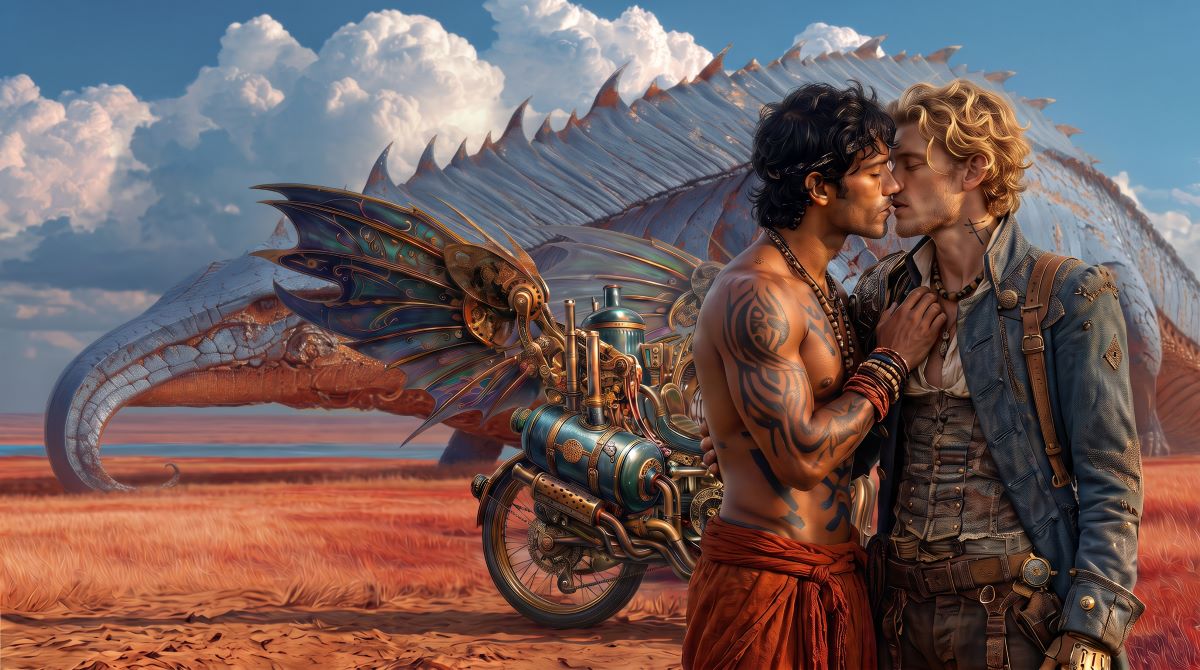
Dorian came through water and landed badly. One boot sank into wet earth. His knee followed. He caught himself with both hands before the rest of him joined them. Professional as ever.
Liana emerged behind him, then Toren. Both stayed upright.
Dorian wiped mud from his hands and looked up. Morning. That did not fit. He checked his watch. It disagreed with the sky. Time in the Drommala world had not passed here in the same way. Whether they had lost hours or gained them, he had no idea.
The air felt heavier too. Rain cooled the ground while steppe heat already pushed through the damp soil. The forest smelled of wet bark and leaves. After the clean air of the Drommala world, everything felt crowded again. Familiar, though. They had crossed close to the Steppe Outpost where they had left the horses. Ineya had already recognised Liana and was pulling against her tether.
Dorian turned back. A shallow puddle lay behind them, perhaps two metres across. Rainwater filled a depression in the earth and reflected the pale sky. Its edges were already shrinking.
“So that was it,” he murmured. “Rain again, as on the island. Unknown gods forbid a Wander Mirror remain somewhere reliable.”
Movement beside the Outpost shelter caught his attention. The two guards had seen them. Recognition came first. Then both stopped. Their attention fixed on Dorian’s face. One reached for his weapon.
Dorian frowned. “What?”
“Your eyes,” Liana said.
Ah. Still mirrors, then.
“He is unharmed,” she called. “The Mother spoke through him.”
The guards paused.
Then the puddle moved. A vast blue-and-copper head rose through the reflection, her long trunk lifting after it. Then the rest of the Mother Drommala followed, her enormous body emerging through water that should not possibly have held her. The puddle widened beneath her.
The guards froze. Then both dropped to their knees, gripping the mirror amulets at their chests and lowering their heads.
The Mother stepped clear. Behind her, the puddle began shrinking again.
A few seconds earlier, the men had been guarding horses. Now the oldest sacred story of their folk stood in front of them. That appeared to settle all questions.
The Mother walked only a short distance towards the open steppe before stopping. One moment she was moving. The next she was completely still. Her eyes closed.
Dorian waited. The meaning reached him through reflection.
The land has not accepted me yet.
“She will wait here,” Dorian said aloud. “The land has not accepted her yet.”
His voice sounded like his own this time. Same tone. Same polish. Waiting for the Mother’s meaning first and speaking after seemed to leave more of him intact than when she spoke through him at once.
Liana bowed her head. Toren did the same. Neither questioned it. The Mother lowered herself onto the ground.
One guard remained kneeling beside her. The other rose, moved the horses farther from the water and checked the approach to the Outpost. Then he disappeared into the shelter and returned with a hooded steppe eagle on his arm and a narrow message tube in his hand.
Liana dictated. “The Mother Drommala has returned. She rests at the Forest border.”
The guard wrote quickly, sealed the message in the tube and fastened it to the eagle’s leg. When he removed the hood, the bird spread its wings and climbed over the steppe. Dorian watched until it became a dark mark against the sky. Efficient. Much better than bureaucracy.
Liana went straight to Ineya. The mare pushed against her while Liana checked her legs, hooves and tack. Toren did the same with his horse. Both animals seemed perfectly content with having spent the journey somewhere sensible.
Liana borrowed a bow from the guard. She tested it, checked the string, then started circling the edge of the Outpost. The guard joined her after a while, watching the forest line and open steppe.
Toren had meanwhile decided that an ancient creature the size of a house required additional protection.
He began with a Steppe ward. Then came a Forest one. Herbs burned in shallow dishes around the Mother while Toren murmured spells and placed warning charms.
He kept going.
The Mother opened one eye. Dorian looked away before either of them accused him of smiling.
By early afternoon the ground had dried. Toren had also exhausted every protection he could reasonably justify. He still needed to return to the Pain Monastery. Whatever time had passed here, Aren might have learned something useful by now. Waiting beside the border would not improve the report.
Liana opened her pack and took out the folded Acalith map. “Take this too. Ask Aren about the runes.”
Toren accepted it, checked the markings and tucked the map into his bag. “Anything else?”
“Come back in one piece.”
He smiled.
Toren approached the Mother and knelt on one knee. “Mother Drommala. I ask permission to leave your presence and travel to the Pain Monastery. I will return as soon as I can.”
The Mother moved her trunk by a few inches. At the same time, her answer touched Dorian through reflection. “She agrees.”
Toren bowed his head. “Thank you.”
Dorian was already unpacking Lucky. The machine unfolded with a hiss of steam and several sharp clicks. He opened the fuel slot and inserted a compressed-fuel capsule.
Then he handed Toren a small box. “More capsules. You should not need them. If the indicator turns from yellow to orange, add one.”
Toren took the box.
Dorian brought up the navigation display. “Two destinations. First is the monastery. Second is Tavra Sol. This switches between them.”
“I know.”
“This releases manual control.”
“I know.”
Dorian pointed to another control. “This you do not touch.”
Toren suppressed a smile. “You have explained this before.”
Dorian checked the fuel display again. Then the route line. “The autopilot will take you directly to the monastery. Do not interfere unless something blocks the route.”
“I understand.”
“This is for emergency landing. If you land manually, keep the nose slightly raised.”
“I know.”
There was nothing else left for Dorian to explain. Annoying.
Liana had returned to the horses. The patrolling guard watched the forest line. The other was still kneeling near the Mother.
Toren stepped closer and kissed Dorian. Quick. Warm. Gone almost immediately. The familiar scent of herbs and skin stayed after he stepped back. Dorian went hard almost at once. Appalling timing.
“Safe road.” Dorian’s voice dropped.
Privately, he informed Lucky that if anything happened to Toren, he would burn the brass bastard to the ground.
“Thalen ven, sael var,” Toren said in Old Forest. Then he added in the common tongue, “Walk the path. Return safely.”
Toren secured his bags, climbed onto Lucky and started the engine. The machine lifted from the drying earth, turned towards the forest and accelerated. Dorian watched until the brass shape disappeared between the trees. He kept watching.
The Mother noticed.
You fear for the healer.
“I fear for my machine.”
Before he had quite finished speaking, he felt the answer leave him through reflection. Dorian went still. That was new. He had spoken from habit, but he had not needed to. Her thought had come through reflection. His answer had gone back the same way. No borrowed voice. No pressure in his skull.
The Mother’s amusement touched the connection.
Machine?
“My ugly flying bird.”
No living warmth from it.
“Correct. It is not alive.”
It moves. Sorcery?
“In my world we call it science.”
The Mother slowly moved her tail.
Liana checked the horses, the horizon, the forest, then the Mother. A few minutes later she repeated the entire sequence.
The Mother spoke to Dorian again.
The hunter believes danger waits until she looks away.
Dorian glanced at Liana. “She says you are exhausting.”
Liana stopped. “Did she actually say that?”
“Not exactly.”
Her eyes narrowed. Then she looked at the Mother and back at Dorian. “Do you speak to her now?”
“Apparently.”
The usual irritation disappeared. Liana looked at him more carefully. Then she went back towards the forest line.
A gentle pull reached Dorian through the reflection.
Come closer.
Dorian approached the Mother’s flank.
Rest.
He placed one hand against a warm scale and sat down. After a moment, he leaned back against her. The kneeling guard noticed. So did Liana. Both stared longer than Dorian found comfortable. He sincerely hoped nobody intended to start worshipping him by association.
Still, he stayed where he was. For once, properly still. Absurdly, an ancient creature large enough to crush him felt safer than most places he had slept recently.
The Mother remained silent for a while. Then she asked him to tell her about his world.
“Steamhollow?”
Is that what you call it?
“Yes. Steam runs the machines. Smoke everywhere. People everywhere.”
Curiosity passed through the connection.
“You want to see?”
Yes.
Dorian opened a small piece of his memory. Brassville. Chimneys in brown sky. Steam between buildings. Crowded streets. Factory roofs. Lucky flying through the smog.
The Mother lingered over the machines.
Dead creatures that breathe steam.
“They’ve never been alive.”
Dorian let the memory close. “My turn.”
The Mother waited.
“There was another reflective pull. In Auralis. In the river.”
Their connection sharpened.
“At first I thought it was you. I know now it was not. The pull was as strong as yours, but less gentle. Do you know what it might be?”
The Mother paused.
Old. Yes.
“Older than you?”
The answer took longer.
Older. He was old before my line began.
Dorian waited.
The First Reflection. Now people call him the Wise One.
Amusement touched Dorian’s thoughts. “I think he saved us.”
He follows his own path.
Nothing else came. Dorian understood the matter was closed.
After a while, the Mother’s thought reached him again.
Your worlds are loud.
Dorian looked across the nearly empty steppe. “There is hardly anyone here.”
Exactly.
He understood. Not sound. Prayer. Fear. Expectation. People wanting things from her. One guard had remained kneeling beside her all this time, occasionally shifting from one knee to the other.
They kneel too often.
“You object to reverence?”
I object to damaged knees.
Dorian laughed. The kneeling guard glanced up nervously.
“You know, most sacred beings would probably enjoy it.”
The Mother ignored that. Then another thought came.
You stood.
“I was busy bleeding.”
Still. You stood.
Dorian rested his head against the scale. The connection deepened.
You walk where others cannot.
The Mother opened one eye.
Reflection knows you.
Dorian waited for an explanation. None came. He should have expected that by now.
The change came later that afternoon. Dorian felt it through the scale against his back. The Mother opened her eyes.
The land has accepted me.
Dorian straightened. “The land has accepted her.”
Liana was already approaching. She bowed her head. The patrolling guard did the same. The other finally shifted from his knees and rose carefully.
The Mother stood. Dorian expected her to begin the journey towards Tavra Sol. Instead she lifted her trunk towards the sky. A cold drop struck his cheek. Then another. Clouds gathered over the Outpost.
Oh.
Rain fell. Steady and deliberate. It cooled the steppe and darkened the earth. Water gathered around the Mother’s feet. Small pools joined until a broad reflective sheet spread over the ground.
The Mirror Call touched Dorian almost immediately. The Wander Mirror. Again.
Liana understood. She untied Ineya and took the mare by the reins, then passed Toren’s horse to Dorian.
The Mother stepped into the water. Its surface darkened beneath her feet, then lost the sky entirely. The Mother crossed first. Liana followed with Ineya.
Toren’s horse stopped at the edge and stared at the dark reflection. A perfectly reasonable objection.
Dorian tightened his grip on the reins and stepped forward. The horse did not. Dorian touched its neck. “Your objection has been noted and overruled.”
One reluctant step. Then another. The horse followed him into the water. The reflection closed around them.
The Outpost disappeared.
Chapter 35: Too Many Names
Read this chapter on its own page →
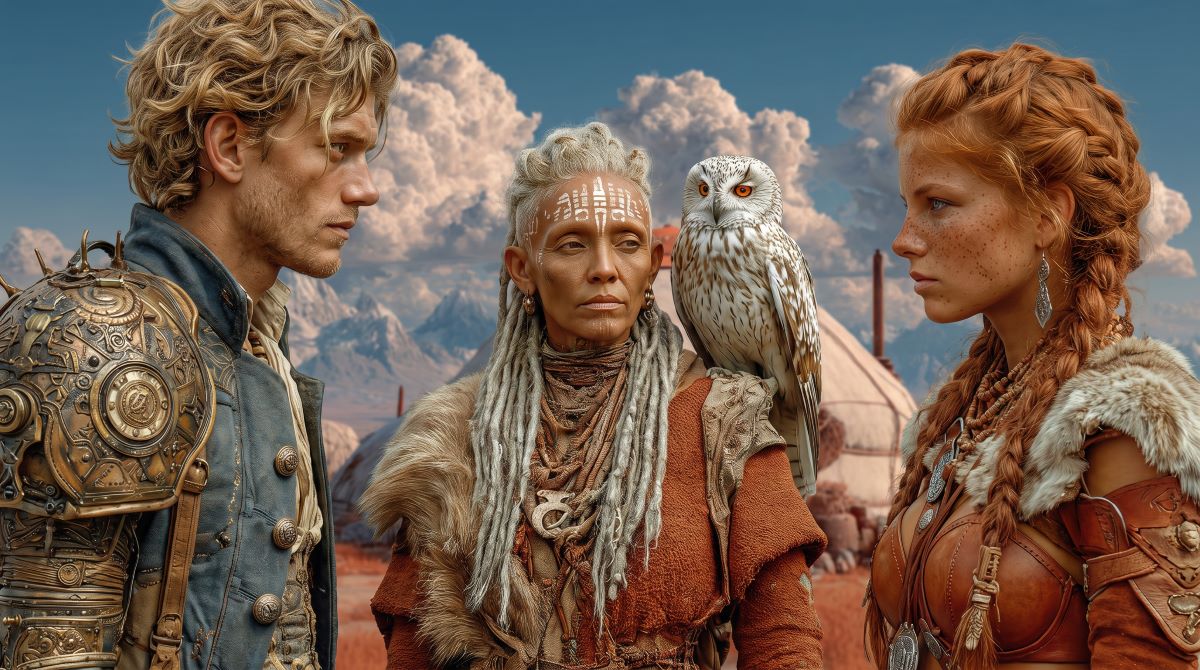
The Mother had returned to the Loteri Lands. Beyond that, nobody knew when she would reach Tavra Sol.
Rain answered the question.
It struck the settlement without warning. No clouds had gathered over the steppe. The wind had not changed. People stopped beneath the sudden downpour and looked up.
Then someone said, “The Mother.”
That was enough.
The Elders headed for the Circle as quickly as dignity, age and unreliable health permitted. The rest of Tavra Sol emptied towards the settlement entrance. Meals, tools and unfinished work were abandoned. Children were pulled along by wet hands. Hunters arrived carrying whatever weapons they had been holding. Healers came with bags and herbs.
By the time they reached the road, everyone was soaked. People spread along both sides and left the centre clear. Nobody had seen the Mother yet. Nobody needed confirmation. Rain did not fall from a clear sky in the dry season by accident.
Water gathered on the ground ahead. Instead of sinking into the thirsty earth, it joined into a broad reflective sheet. The crowd fell silent. The Wander Mirror opened.
The Mother Drommala crossed first.
Her enormous head emerged through the reflection, followed by her shoulders and vast blue-and-copper body. She stepped onto the wet Steppe and paused. The rain weakened at once. The last drops caught on her scales and shone there like hundreds of tiny mirrors.
Those who could kneel did. Those unable to kneel bowed as deeply as their knees and backs allowed. The Mother watched them.
Liana emerged next, leading Ineya. Dorian followed with Toren’s horse. Liana signalled to the nearest handlers, and both animals were taken away.
The Mother occupied most of the road. Liana walked behind her. Dorian moved slightly ahead and took his place beside the Mother’s trunk.
The Mother started towards Tavra Sol, slow and unhurried.
People bowed as she passed. Some pressed mirrors to their chests. Others touched their foreheads to the wet earth. Children stared until adults pulled them down. One old man remained kneeling after the Mother had passed, weeping openly into both hands.
Dorian looked away.
Then the whispers changed. “Mirrorwalker.”
Several people looked at him. A woman recognised him, then saw his eyes and stepped back. Silver still covered them completely.
Ahead, several people stood with raven feathers braided into their hair. Raven Kin. They did not kneel. As the Mother approached, each pressed a hand over the heart. “Greetings to the Mother.”
Their attention shifted to Dorian. “And to Mirror Raven.”
The feather brand on his arm warmed beneath his sleeve. He touched it instinctively. Several nearby Loteri noticed. Heads turned. Dorian inclined his head to the Ravens.
Amusement brushed the connection with the Mother.
Of course.
The road ended at the ceremonial ground. Red cloth, dark with rain, hung from posts. Mirrors tied with red thread caught fragments of blue scales, copper plates and silver eyes. The Circle waited ahead, wet, muddy and maintaining the impressive fiction that everything had happened exactly as planned. Representatives of the Desert, Forest and River peoples stood among them.
The Mother stopped.
Liana stepped forward and spoke first in Common, then repeated the words in the Steppe tongue. “The Mother Drommala has heard our request. She has accepted it.”
Relief moved through the gathered Loteri. Some lowered their heads. Someone behind Dorian began crying.
“But her answer carries conditions.” Liana stepped back.
The Mother turned one mirrored eye towards Dorian. The connection opened. Meaning came without force. Nothing entered his thoughts. Nothing took his voice. His words, then. Trust apparently came with additional duties.
He faced the Circle. “The Mother will entrust another daughter to the Loteri Lands. No commune shall claim her above another. None shall possess her. None shall command her. Her safety comes before border, custom, pride or need.”
The meaning continued. “The death of the daughter who came before must be investigated until its cause is known. If another’s will hastened her death, those responsible will answer for it.”
One final thought settled. “Her decision is made. She will renew the Pact under these conditions.”
Nobody answered immediately. The silence was not hesitation. Dorian understood that much.
Four representatives stepped forward: Steppe, Desert, Forest, and River. Each gave their name and spoke for their people. Then, one after another, they repeated the oath in Common and their own tongue.
“We will guard without chains.”
Each knelt before the Mother and pressed a small mirror to their forehead.
Elder Mother Elasya struck her staff once. “The Loteri accept.”
Dorian carried the words through the connection. The Mother answered.
“She has heard you,” he translated. “She accepts your oath.”
The relief around them changed shape. Not celebration yet. Something quieter. The release of a fear carried too long.
The Pact was renewed.
The Mother moved towards the protected ground at the edge of Tavra Sol.
Only then did Dorian see how much had been prepared while they were away. Forest healers stood beside Steppe ones. Desert shamans tended smoking herbs. River priests carried life water and narrow mirrors wrapped in blue cloth. Warriors from all four Loteri peoples guarded the perimeter.
Tavra Sol had not spent the last weeks merely praying and worrying. They had organised their worrying.
A huge tent stood inside the protected ground, open at the front and large enough for the Mother. Thick animal skins, broad sleeping mats and cushions covered the earth inside. Hunters held the outer line while healers and shamans laid protective spells, apparently determined to defend against every malicious magic known to the Loteri.
Liana took one look and nodded in approval.
Dorian smiled privately.
The Mother noticed.
The Loteri are very thorough when frightened.
He looked at the guards, wards and enough protective herbs to smoke half of Tavra Sol. “They have had a difficult few weeks.”
So have you.
“That has never made me organised.”
Her delight touched the connection.
A broad stone basin stood before the tent. The Mother drank deeply from the life water, emptying most of it in one attempt. Two River priests hurried to refill it with admirable professionalism.
Then she turned one mirrored eye towards Dorian.
I need solitude. The daughter must begin without voices near me.
Dorian glanced at the impressive number of people surrounding her solitude. He kept the observation to himself.
You are released from your duty.
“For how long?”
You will know when I need you. Follow the Call.
Then came another thought.
Go. Before they give you another name.
Dorian looked towards the Circle. “Finally, sensible advice.”
The Mother moved towards the tent. Whispers had already begun around the perimeter. Prayers, blessings, invocations and enough sacred enthusiasm to disturb something that had specifically requested solitude.
The Mother stopped. Her irritation brushed against Dorian.
And for the Wise One’s sake, tell them to be quieter.
He lowered his head before anyone noticed the smile. “The Mother requests silence.”
The whispers died immediately. A priest in the middle of a blessing stopped with both hands raised. The Mother entered the tent.
Dorian remained where he was for another moment. The entrance closed behind her beneath layers of red cloth and protective threads. For the first time since they had crossed the lake, he was not responsible for interpreting. The relief was almost physical.
The Mother’s warning about names came too late. The Circle summoned Liana almost immediately. Dorian was asked to remain. Asked, apparently, in the Loteri sense of the word.
Elder Mother Elasya looked at Liana. “Tell us.”
Liana began in the Steppe tongue. Dorian understood almost nothing, which for the first minute was unexpectedly comfortable. He sat beside the Circle and listened without trying to follow.
Then Liana said, “Mirrorwalker.”
Several Elders looked at him. A little later came another phrase he recognised. “Mirror Raven.”
Elder Mother Elasya’s gaze dropped towards his arm.
Dorian inclined his head slightly. “I assume congratulations are appropriate.”
Nobody reacted to his words. Liana continued. Then came Veyran. Veyra 16 followed soon after. Dorian recognised both with significant discomfort.
One Elder interrupted with a question. Then another. Liana answered the first briefly, the second at considerably greater length. By the time she finished, the mood around the Circle had changed. Several Elders looked towards Dorian.
“In my defence, Veyran was unpleasant before we arrived.”
The Circle maintained admirable collective deafness.
Toren’s name came next, followed several times by Aren Thal. That brought more questions, though not as many. Liana answered them and continued.
Acalith came later.
This time the interruption was immediate. One Elder asked something sharply. Another joined in before Liana had finished answering. She waited for them to stop, replied, then carried on.
After another minute, she switched to Common. “We reached the Mother’s world.”
She described the endless water, the mirrored eyes of the creatures and the Mother’s presence everywhere around them.
Elder Mother Elasya went still. “The Sacred Shelter.”
Liana frowned. “What?”
“The Mother’s refuge,” Elasya said. “No living Loteri has ever reached it. It seems you and Toren have.”
Liana looked at Dorian. He looked back. Useful information. Slightly late.
“Toren returned with us,” Liana continued. “He went to the Pain Monastery after we crossed back into the Steppe. He will bring Aren Thal’s answers.”
Elasya nodded once. Two Elders exchanged a few quiet words.
Then Liana looked towards Dorian. “Without Mirrorwalker Dorian Corvell, we would not have reached the Mother.”
Dorian stared at her. This much praise from Liana was deeply unnatural.
“He opened the mirrors. He spoke with her when we could not. He carried our request and her answer.”
Several Elders looked towards him.
Dorian sighed. “Whatever she is saying, I object to the amount of respect it is generating.”
One Elder smiled.
Liana ignored the comment. “The Mother chose to return. Dorian witnessed her answer and the renewal of the Pact.”
That was apparently enough. Liana stopped. Silence remained around the Circle for several seconds. Elder Mother Elasya rose. The others followed.
Her attention settled on Liana first. “You left Tavra Sol as our guide. You crossed lands beyond our maps and worlds beyond our knowledge. You kept the path when it could be kept and found another when it could not.”
Liana straightened her back.
“You guided those entrusted to you to the Mother. You guided the Pact back to the Loteri Lands.” Elder Mother Elasya placed a hand over her heart. “The Circle names you Guide of the Pact.”
For once, Liana looked caught off guard. Only briefly. She bowed. “I accept.”
Elasya turned to Dorian. “Dorian Corvell. Mirrorwalker. Mirror Raven.”
There it was. The Mother had warned him.
“You crossed where we could not. You carried our words before the Mother and returned with her answer. You stood as witness when the Pact was renewed.” A pause. “The Circle names you Witness of the Pact.”
Dorian looked briefly towards the Mother’s tent. Very funny. Then he bowed. “I accept the honour, Elder Mother.”
“As Witness of the Pact, you will always be received among the Steppe Loteri. Food, shelter and protection will not be refused to you.” Elder Mother Elasya struck her staff twice.
That killed the joke. Permanent guest rights meant something. The Steppe did not give protection lightly. Dorian knew enough by now to understand what had just been placed around him.
He bowed more deeply. “Then you have my gratitude.”
When he straightened, the Elders were still looking at him. Being tolerated had been considerably easier.
One Elder cleared her throat. “You have travelled far. The Loteri are waiting to bathe you.”
Dorian blinked. Liana closed her eyes. They were wet, filthy and exhausted. Under different circumstances, the offer would have been excellent.
Dorian also remembered his first ceremonial bath in Tavra Sol rather too well. “Your hospitality is appreciated, but sleep would be the greater kindness.”
“Sleep,” Liana agreed immediately.
The refusal was accepted without offence. Elder Mother Elasya led them outside.
Dorian stopped. Two groups were waiting. The first, clearly intended for Liana, consisted entirely of bare-chested men in linen trousers. The second included women and men. Dorian nearly laughed.
“That,” he murmured, “is remarkably considerate.”
Liana looked sideways at him. “Do not.”
“I said nothing.”
“You were about to.”
One of the men from Dorian’s group stepped forward hopefully. He looked around fifty, perhaps older. Tanned, broad-shouldered and muscular, with silver hair and a neatly kept beard. Strikingly handsome. Dorian almost regretted his decision. Almost.
Elder Mother Elasya struck her staff once. “The Guide of the Pact and the Witness of the Pact are going to rest.”
The groups bowed and dispersed without protest.
Dorian watched the silver-haired man go. “Efficient.”
“You are disappointed.” Liana grinned.
“Deeply.”
“You can barely stand.”
“I can be exhausted and appreciative at the same time.”
Liana snorted and kept walking. Ahead of them, Elder Mother Elasya did not turn. Dorian suspected she was smiling.
Chapter 36: I Choose You for Tonight
Read this chapter on its own page →
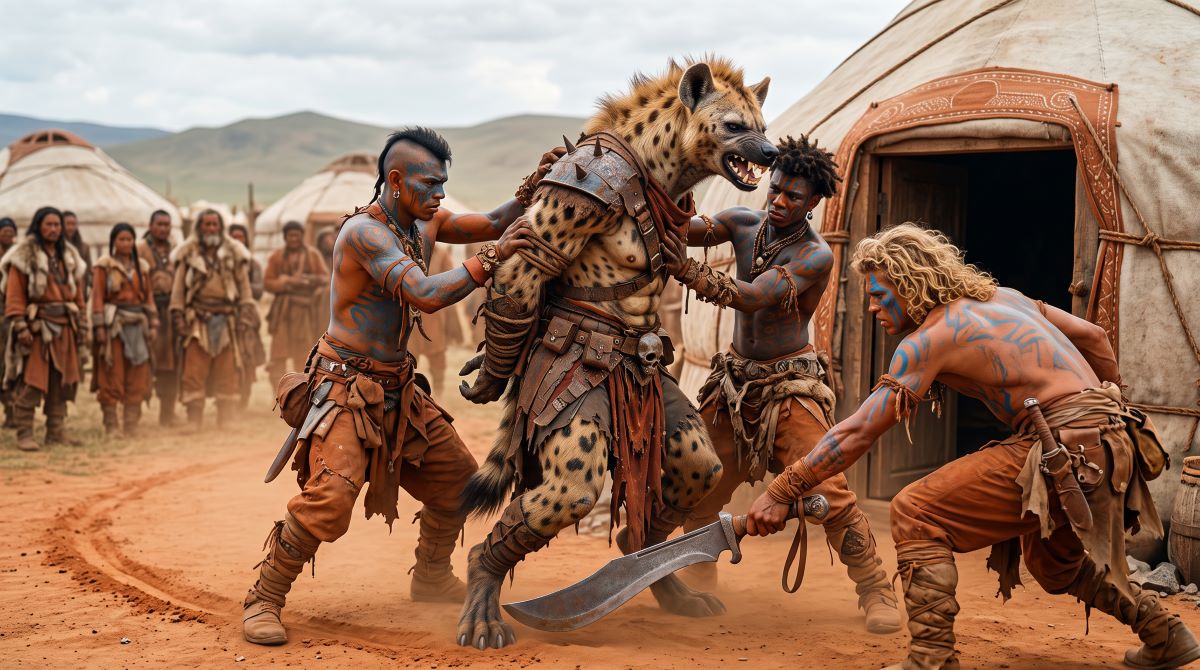
Dorian woke to the Mother Call.
Not the familiar pull of reflection. This one caught somewhere behind his ribs and dragged him awake hard enough that he sat up before his thoughts followed.
The Mother needed him.
He reached for his clothes. And found nothing.
Dorian stared at the empty space beside the sleeping mat. Most of his clothes had vanished. His coat and brass cuff had been placed carefully on the low table, apparently considered too dangerous for the laundry. A folded set of plain linen clothes waited beside them.
Excellent.
When he stepped outside, two young Loteri immediately jumped to their feet.
“Witness of the Pact, did you rest well?” one began. “Do you need food? Water? Anything?”
“Thanks. Later.” He started towards the Mother’s protected ground. The two young Loteri fell in behind him. After two steps, Dorian stopped and looked back.
“The Elders sent us,” one explained quickly. “In case you need help.”
Dorian opened his mouth to object, then noticed everyone else. At least twenty people waited around the guest tent. Some held mirrors. One woman had brought a child. Several bowed as soon as they saw him.
A woman stepped forward. “Witness, will you bless my son?”
Dorian blinked.
Other voices followed immediately.
“Can you ask the Mother if my sister will recover?”
“Will the shroom harvest be successful this season?”
“Man with Mirror Eyes! Will you bless my marriage?”
More voices joined them. Before the requests reached a critical number, the two Loteri sent by the Elders moved with surprising professionalism. They stepped between Dorian and the crowd, blocked several determined petitioners and opened a path.
Dorian reconsidered his objection. Perhaps having an escort was not entirely a bad idea.
After that, the two young Loteri moved slightly ahead of him, intercepting people before they could get too close. Several questions still followed him across the settlement.
He kept walking.
The closer he came to the Mother, the quieter everything became. Conversations dropped to whispers. People moved carefully. Even children were being reminded to keep their voices down.
Several lines of warriors guarded the protected ground. Each let him through without question.
Inside the great tent, the Mother rested among skins and cushions. She looked entirely content.
Dorian stopped. A soft layer of unfamiliar reflective energy gathered around her belly, gentle and warm. The Mother lowered her trunk and rested it there with extraordinary care. Then one mirrored eye opened.
The Great Sun and the Loteri Lands have blessed me with a daughter.
Dorian bowed slightly. “Sincere congratulations.”
Take the news to the Elders.
He inclined his head.
You are released from your duty for now. I will Call when I need you again.
“That sounds dangerously close to a holiday.”
Her laughter touched the connection.
As Dorian turned to leave, another thought reached him.
And tell them they may chant now, if they wish.
Dorian smiled privately.
He paused outside the tent and glanced around. From the gentle slope of the protected ground, he could see beyond Tavra Sol more clearly now. The place had grown considerably since their arrival. More Loteri were still coming through the entrance. Temporary camps had spread across the steppe beyond the permanent settlement.
Dorian reached the Circle to find the Elders already waiting. A huge fire burned before the stones, far larger than any cooking or ritual fire he had seen in Tavra Sol. Behind it, the bronze gong hung from the raised platform.
Elder Mother Elasya stepped forward. “The Mother called you.”
“She did.” Dorian looked around the Circle. “She asked me to tell you that the Great Sun and the Loteri Lands have blessed her with a daughter.”
For one moment, nobody moved. Then Elasya lifted both hands. Two Elders approached the fire carrying bowls. One held bright blue powder, the other copper.
They threw both into the flames.
Blue and copper fire erupted upwards, twisting around each other as it climbed. The two colours intertwined above the Circle. They kept rising, far beyond any natural flame, until they stood high over Tavra Sol. People nearby stopped. Mirrors lifted. Those outside the Circle began dropping to their knees.
Elasya looked back at Dorian. “There was more?”
“Yes.” His mouth twitched. “She said you may chant now, if you want.”
Elasya reached for the gong striker. Dorian suspected the Mother was about to regret that permission.
By the time Dorian left the Circle, chanting had spread across Tavra Sol. Blue and copper still twisted high above the settlement. Sacred bud smoke drifted between the tents. People laughed, cried, embraced and lifted mirrors towards the sky.
Then shouting cut through the celebration.
Dorian stopped.
Four warriors were forcing a prisoner through the crowd. His arms were tied behind his back.
The creature was tall and broad, upright but far more animal than human. Spotted golden-brown fur covered his body. A dark, coarse mane ran down his neck between large rounded ears. His heavy muzzle showed sharp teeth. Battered leather armour covered his torso.
A warrior shoved him forward.
The creature twisted hard enough to drag another sideways, then snapped his head round and growled. People moved quickly out of the way. Parents pulled children closer. The chanting faltered as whispers passed through the crowd.
Everyone seemed to know what he was.
Except Dorian.
He looked at his escort, the two young Loteri still following him. “What is that?”
“A Hyelot,” one said.
The warriors forced the prisoner towards the Elders’ tent. He resisted again before three of them shoved him inside. The last warrior followed, dragging the Hyelot’s heavy curved knife through the dust.
“They are wild folk. Not friends of the Loteri,” the other added. “But he should not be here. Their land, Pustka, is sealed.”
“And yet.” Dorian watched the tent flap fall.
His escort exchanged a look. But neither of them had an answer.
For once, Dorian did not find the Loteri’s precautions excessive.
By late afternoon, Dorian was back in his tent. Tavra Sol had become exhausting. His escort had done an excellent job, but there were limits to how many blessings, predictions and questions one man could tolerate.
He ate, checked the routes in his memory, then cleaned and polished his brass arm until the metal shone.
Order restored.
Dorian packed his pipe with sacred bud. After the first draw, he opened the small pouch of rare Forest shrooms he had brought from Mossgrove.
The Mother had released him from duty. Technically, this was responsible timing.
Liana came to his tent without an invitation.
Muffled chanting passed through the canvas in a slow, steady rhythm. Dorian looked up from the sleeping mat. Lamplight caught the pale linen of Liana’s long tunic. She carried a wreath of pale flowers. He recognised the ritual. That alone should have warned him.
She came closer, bent and placed the wreath on his head. “I choose you for tonight.”
Dorian stared at her. “I assume Witness of the Pact is more appealing than merely Walker.”
He shifted back slightly. “This is an exceptionally terrible idea.”
“I know.” Liana laughed.
He opened his mouth. She kissed him before he could continue. Her mouth tasted faintly of sacred bud. When she pulled back, one hand remained against his neck. “You may stop explaining why.”
“Liana. Think again.”
“I did. Still yes.”
Dorian laughed quietly. “Stubborn Loteri.”
Then he pulled her back and kissed her properly. He drew her down onto the mat with him, loosened her tunic and kissed the tanned skin beneath. Smoke lingered in her hair. His mouth travelled along her collarbone, then lower.
Liana pushed his shirt open. The familiar scent of clean machine oil clung faintly to his skin. Her hands moved over his ribs and stomach. She had touched him before, but there had been no desire in it. Only survival.
This was different.
Her fingers traced an old scar, then brushed his nipples. Dorian exhaled sharply. Liana did it again.
“You appear pleased with yourself.”
“I am.” Her hand moved lower and closed around his erection.
Dorian stopped talking. That pleased her even more. He let her stroke him for a while, then caught her hand and kissed it. “My turn.”
She laughed when he pushed her onto her back.
Dorian kissed his way down her stomach and between her thighs. Her skin was warmer there, softer than the wind-roughened skin above. She was already wet. His fingers found her first, then his mouth.
Liana’s hand tightened in his hair. Her hips moved towards him, her thighs closing around his shoulders when he found the right rhythm.
“Dorian.” Her breathing broke. Her body clenched around his fingers, then softened. Dorian thought she had come. Probably. The shrooms were beginning to make timing unreliable.
Before he could decide, Liana pulled him up and pushed him onto his back. “My turn.”
Apparently there were turns after all.
She climbed over him and guided him inside her. Liana lowered herself slowly. Dorian held her waist and watched her face until she settled around him. Then she moved.
For a while there was nothing complicated about it. Her hands on his chest. Her thighs against his hips. The steady rhythm between them. The sharp herbal scent in her hair whenever she leaned over him.
Beyond the canvas, the Loteri continued their chant for the Mother and the daughter growing inside her.
Then the shrooms hit properly.
Something changed beneath his hands.
Her breasts felt fuller. Her weight heavier. Red hair slipped loose from the braid and darkened into thick curls along her shoulders. Her skin softened beneath his hands, paling towards milk-white. Freckles spread across her chest and shoulders. Her amber eyes shifted towards hazel.
He knew something was wrong. The thought came from very far away.
Liana’s face changed with the lamplight until another woman looked down at him.
Lorenna.
The careful part of Dorian simply failed. He caught her against his chest and thrust up hard.
Deep.
Once.
Again.
“Lorenna.” He came with the name torn out of him.
Reality returned slowly.
Canvas. Lamplight. Muffled chanting outside. The wreath. Liana remained astride his hips, breathing hard. The amusement was still there, but now she was studying him. Her gaze settled on his unfocused eyes for a long second.
“Who is Lorenna?”
Dorian said nothing.
Liana looked at him once more, then let out a short breath that might have been a laugh. Whatever answer she wanted, she was apparently prepared to wait.
Then another thought cut through the haze. He was still not certain Liana had come. That, at least, was a problem he understood. He caught her around the waist and rolled her onto her back.
Liana laughed. “Dorian.”
He kissed her once, then moved between her thighs again, supporting one of her legs against his shoulder and opening her wider. “May I?”
“Do not stop.” Her breathing was already ragged.
This time he gathered what remained of his concentration. The shrooms were not helping. His fingers found her, sliding in and out in a hard, fast rhythm while his mouth kissed her inner thighs. Liana’s breath shortened almost at once. Her body pulsed around his fingers.
There.
Certain.
Liana lost control for a moment, thighs tightening around him before she softened again.
He gave her barely enough time to breathe.
“You are very determined,” she managed.
Dorian ignored that. He changed the rhythm, slower for several strokes, then harder when her hips began moving towards his hand again.
The next one came harder. Liana shifted away once and Dorian stopped immediately.
“Don’t you dare stop.” Her fingers dug into his arms.
“Easy. You’re bruising me,” Dorian whispered.
He bent back between her thighs. Her back lifted from the mat. A broken sound escaped her, followed by a sudden rush of wetness over his hand and hips.
Then she collapsed. Dorian stayed where he was until the trembling stopped.
Later, Liana lay staring at the canvas roof while he cleaned them both with a cloth. Outside, Tavra Sol remained awake. The chanting had quietened but not stopped.
The wreath had slipped halfway off Dorian’s head, pale petals stuck in his hair.
“You are still not going to tell me who Lorenna is?”
“My stepsister.”
Liana turned her head and stared at him. Dorian had never told her he had one. He waited for the obvious question. The question reached her face and stopped there. She did not ask.
Dorian made a private note never to mix sacred bud and shrooms again. The experiment had produced sufficient evidence.
He pulled the blanket over them. Liana moved closer beneath it.
Neither of them mentioned that she stayed.
Chapter 37: Dead Hair
Read this chapter on its own page →
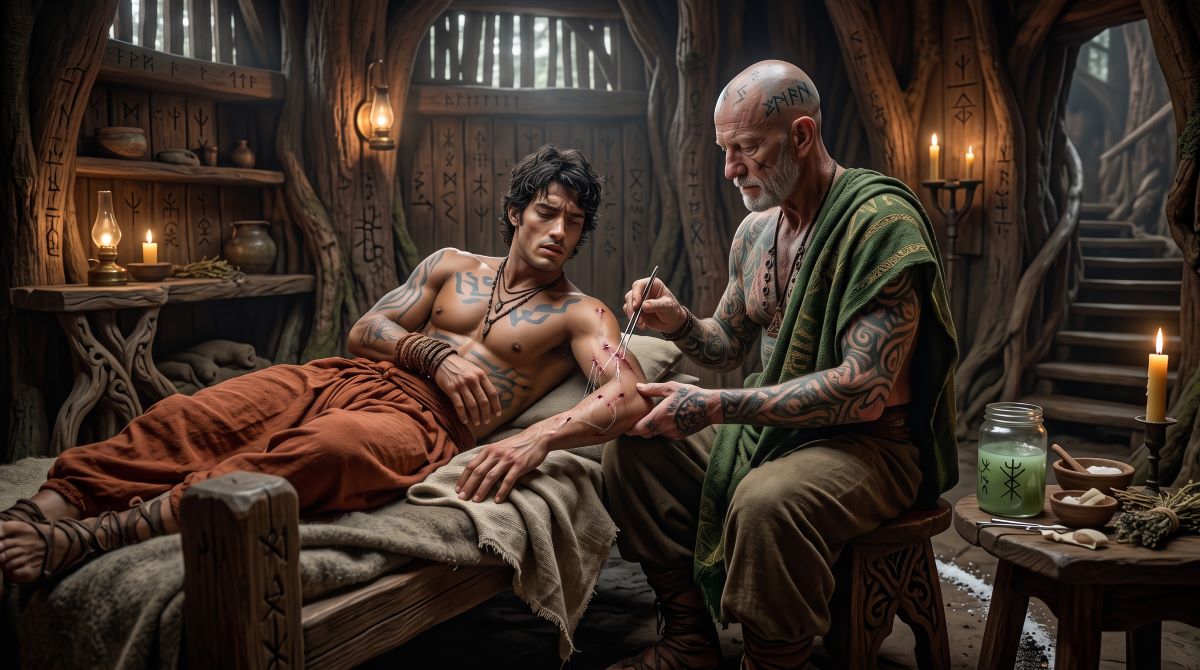
Lucky carried Toren through the forest as evening settled between the trees. The machine behaved perfectly.
It also smelled of Dorian.
Brass, warm oil and leather followed Toren for the entire journey. Every time he leaned forward, the scent rose from the controls. Every time Lucky adjusted beneath him, he remembered Dorian’s hands on the same handles.
By the time the Pain Monastery came into view, Toren had thought far too much.
He landed the way Dorian had shown him, Lucky’s nose slightly raised.
Perfectly.
A monk came to meet him while Lucky’s engine cooled. “Brother Aren is away seeing a patient. He will return in the morning.”
Toren looked towards the darkening forest. “I’ll wait.”
The monk nodded and led him inside. Then the monk opened the guest-room door.
Toren stopped.
Of course.
The same room. The bed stood against the wall, blankets neatly folded. Nothing remained of Dorian. No coat. No brass cuff.
Nothing except memory.
Easy. Breathe with me.
Toren closed his eyes. He had known before leaving the Steppe Outpost that something had changed. Perhaps before that. Perhaps when Dorian had said that nobody wanted to stay with Walkers.
Toren put his bag down. He had come for Aren’s answer. He was also beginning to suspect he already had one of his own.
Morning found Toren awake. He had slept a little. Every time he closed his eyes, the room supplied memories with unnecessary accuracy. Dorian’s voice behind him. His hands. His breath against Toren’s neck.
By sunrise, Toren gave up.
He washed, dressed and left the room.
Aren returned not long after. Toren saw him coming through the monastery entrance with two younger monks. Mud marked the bottom of his robe, and a leather bag hung from one shoulder. He looked tired, but otherwise exactly as Toren remembered him.
Aren noticed him immediately, stopped in front of him and studied his face. “You did not sleep.”
“I did.”
“Poorly, then.”
Toren decided there was little benefit in arguing with someone professionally trained to notice suffering. “We brought the Mother to the Steppe Lands. The Pact is renewed.”
Aren bowed. “May you and all who travelled with you be blessed.”
“The Mother is waiting for your answer. Did you find anything, Brother?”
Aren’s expression changed. “Yes.”
That pushed Dorian, the room and the entire miserable night out of Toren’s thoughts.
Aren gestured for him to follow. “Come with me.”
Aren led Toren deeper into his ‘garden’. They passed several marked patches of earth, each carefully separated from the next. The air smelled of damp soil, burned herbs and things that had once been alive.
Then Toren saw the Drommala’s plot.
He stopped.
The piece of the Drommala’s trunk was still buried beneath the glass. White threads covered it. Hundreds of them, packed over one another. Some had worked out from beneath the edges and spread across the earth in thin, tangled layers. But they stopped at the protective border. Every strand ended at the line of salt and burned herbs. Not one crossed it.
Toren stared.
Aren watched him rather than the threads. “You know what they are?”
Toren moved closer to the colourless strands. His injured hand began to ache. “I saw them in the Hush.”
Aren’s eyes narrowed. “You were in the Hush?”
“Yes. We did not know where the mirror led until we crossed.”
For the first time, Aren looked genuinely unsettled. “You crossed an unknown mirror?”
Toren nodded. “The Walker unsealed it.”
Aren stared at him for a moment. “Brave. And stupid.”
Toren sighed. “We were running out of options.”
Then he pointed towards the threads. “They were everywhere. Inside the cracks in the ground. Wrapped around bones.”
His gaze stayed on the plot. “I touched the earth to listen to it. The threads reacted. They wrapped around my hand.”
Aren looked at him sharply. “Which hand?”
Toren lifted his left one. The old marks were faint now, pale lines across his fingers and wrist.
Aren reached towards it, then stopped before touching him. “How badly?”
Toren hesitated. “They broke the skin. Pieces remained in the wounds for a while.”
Aren’s attention returned to the plot. Toren stepped closer to the glass.
“Toren.”
He barely heard the warning. The threads moved. Not slowly. Every strand nearest him lifted at once.
Toren froze.
The white mass surged across the glass. Straight towards him. It reached the protective border and stopped. For half a second. Then several threads rose above it.
Aren moved.
Too late.
The first strand struck Toren’s left hand. Pain exploded through his fingers. He jerked backwards, but more threads followed, wrapping around his wrist almost instantly. They darkened as they touched his skin, white turning pink, then red.
“Toren, do not pull.” Aren’s voice sharpened.
Toren could not have if he tried. The threads tightened and raced up his arm.
Wrist. Forearm. Elbow.
They moved impossibly fast.
Toren grabbed his arm. Red threads were already winding around it, biting into the skin as they climbed.
“Aren.” The word broke into a gasp.
The threads reached his shoulder. Something tore through his body. His knees gave way. Aren caught him with one arm and pressed his other hand against Toren’s chest.
Magic struck. Cold first. Then pain.
Aren dragged something through him, following the threads backwards from shoulder to wrist. Toren screamed. He felt them tightening, resisting, burrowing deeper as Aren forced them out.
The world narrowed to Aren’s hand and the terrible pulling inside his arm.
“Toren, stay with me.”
Toren tried. The threads around his shoulder blackened.
Aren spoke in the old Forest dialect. The protective border flared. Every strand connecting Toren to the garden snapped back at once. His arm dropped uselessly against Aren. Blood ran from his fingers, wrist and forearm. Thin red lines crossed the skin all the way to his shoulder, some already darkening beneath the surface.
Aren caught his face between both hands. “Toren.”
He tried to answer.
Aren’s face blurred. “Toren. Look at me.”
He did.
For approximately one second.
Then everything went black.
Toren burned with fever through most of the first night. Aren stayed beside him.
Once, somewhere between waking and sleep, Toren turned his head against the pillow. “Dorian.”
Aren looked up.
“Stay.” Toren’s eyes remained closed.
Aren changed the cold cloth on Toren’s forehead and returned to mixing remedies.
By morning, the fever had eased enough for Toren to wake properly. He looked around. Protective markings covered the walls. Salt and burned herbs formed an unbroken barrier around the room. Aren sat beside the bed.
“Where am I?” Toren's voice was weak.
“In a sealed chamber. Some magic is safer when it has nowhere to spread.” Aren checked Toren's pulse.
Then Aren gently moved Toren’s left arm onto the folded cloth, exposing the wounds from his fingers to his shoulder. Aren picked up the narrow silver forceps. “I need to remove what they left behind.”
Aren pulled carefully. Pain shot through Toren’s arm. A thin white fragment emerged from beneath the skin, twisting around the forceps. Aren dropped it into a glass jar covered in protective symbols. Cloudy green liquid filled the bottom.
“How many?” Toren watched the fragment writhe, darken and dissolve.
“Too many. In the Hush, you probably provoked it when you tried to use your magic.” Aren removed another. Then another.
“I suspect that in the garden, it recognised your hand. Apparently, Dead Hair does not like losing its prey twice.”
“Dead Hair?”
“Yes. I found the name in one of the old books. But there was nothing about its reaction to magic.”
Toren’s body started shaking after Aren removed another piece. Aren stopped, leaned forward and pulled Toren against him.
Toren recognised the intention and panicked. “No, it might spread to you!”
“Less likely. I’ve already weakened it with spells to make it safe enough.” Aren didn’t move an inch.
“Aren.”
“Be quiet.”
Aren held him firmly, one arm around his back, the other supporting his injured arm between them. Toren’s bare chest pressed against Aren’s warmth. He felt the slow rise of Aren’s breathing, the brush of his beard against his temple, the steady weight of his body holding him in place.
Relief came first. Then guilt. The pain was already beginning to leave him, and Toren knew exactly where it was going. Into Aren. Into the body holding his. He should have pulled away. Instead, for one weak moment, he let himself rest against him. The closeness felt safe.
That was almost worse. Dorian crossed his mind without permission. Toren shut his eyes. Warmth spread through the embrace.
Then the pain moved.
Toren gasped as it drained from his arm. The wounds remained, but the agony disappeared. Aren inhaled sharply and closed his eyes for a moment.
“Aren, thank you.”
Aren lifted a hand to Toren’s face and stroked his cheek with a faint smile. Then he reached for the forceps again. Without the pain, Toren felt only pressure as Aren continued, piece by piece.
Toren drifted in and out of sleep.
When he woke again, daylight filled the room. Aren slept in the chair beside the bed. The jar was nearly full of dark residue.
“How long have I been like this?” Toren’s voice was husky.
Aren opened his eyes. “Two days.”
“You stayed here?”
“Yes.”
Aren examined Toren’s arm again. “One more.”
Toren looked at the forceps. “Could you take the pain first, please?”
Aren carefully drew Toren to his chest.
Once the last white fragments were removed, Toren’s wounds healed surprisingly quickly under Aren’s balms and spells. By the following morning, most of the cuts had closed. His arm still ached and weakness followed every movement, but he could walk without assistance.
In Aren’s laboratory, Toren produced a folded parchment. “The map from the Hush. The Great Council calls that place Acalith.”
Aren opened it carefully across the table.
The Acalith markings covered one section. He studied them for several minutes, then retrieved his drawings of the surviving rune from the Drommala and a few reconstructed from Toren’s memory.
Toren watched him compare line after line. Finally, Aren sat back.
“They are not the same runes, but they are from the same system.” Aren touched one of the Acalith markings, then the drawing from the Drommala. “The principle is identical. The way the magic is directed. The way the lines bind to each other.”
Toren looked between them. “So whoever killed the Drommala used Acalith magic.”
“Yes.” Aren folded the report over the drawings. “Together with Dead Hair, this is enough for me to say where the method originated.”
Toren exhaled slowly. At least they had something now.
Aren turned the map over. His hand stopped. On the other side was the image of the silver-antlered deer. “You saw this?”
“Yes.”
“Where?”
“Where we found the Mother.”
Aren looked at him.
Toren continued. “It was beautiful. Water everywhere. White trees. Animals with mirror eyes. Vaelyn.”
Aren remained silent for several seconds. “The Sacred Shelter,” he said at last.
“Do you know that place?”
Aren lowered his head briefly. “Only from old stories. You were greatly blessed. The Mother does not allow others into the Sacred Shelter.”
“May I?” Aren moved closer to Toren.
Toren nodded. Aren placed a hand carefully on Toren’s shoulder. He closed his eyes. Warmth moved beneath his palm as his magic searched for whatever trace that world might have left on Toren.
After a moment, Toren said quietly, “The Walker found it.”
Aren opened his eyes.
Toren added, “His eyes became mirrors there too.”
Aren said nothing. He simply watched Toren. Toren looked back at the map, suddenly very interested in the deer. Aren removed his hand from his shoulder. He had heard considerably more than Toren had actually said.
Aren returned to the drawings. “There is another problem.”
Toren looked up.
Aren pointed to the white lines worked through the Drommala rune. “Getting material out of the Hush is one thing. Keeping it dangerous and controllable is another.”
“Someone extracted the essence from Dead Hair?”
“Yes.”
“Could you?”
Aren considered that. “Perhaps. With preparation.”
Toren raised an eyebrow.
“I have protective chambers, stabilising solutions and equipment for separating magical contamination from living tissue. I am still not certain I could preserve it this cleanly.”
Aren tapped the rune drawing. “The essence was prepared before it was worked into the markings. The runes kept it stable, then directed it through the Drommala’s body.”
Toren remembered the threads racing up his arm. “Fast.”
“And I suspect the same rune system weakened her magic long enough for it to spread.”
Toren looked at the Acalith markings. “And they could have used it to get past her protection?”
“Possibly. Warriors, wards, the Drommala herself. Someone still got close enough to place this beneath her scales.”
“So not someone experimenting.”
“No.” Aren’s expression hardened. “I know of no laboratory in the Loteri Lands equipped for work like this. Mine might manage it. Perhaps.”
That was not comforting.
“They had equipment,” Toren said.
“Yes.”
“Access to the Hush.”
“Or access to someone who did.”
Aren gathered the drawings into the report. “This was planned, Toren. Someone knew how to reach her, weaken her and make the poison spread.”
The laboratory suddenly felt considerably less safe.
Aren sealed the report and handed it to Toren.
“Everything is there. The threads. The rune construction. The Hush connection. The extraction method, as far as I could determine it. I also found fur.”
Toren took the packet carefully. “Fur?”
“Yes.” Aren’s expression tightened. “Fragments caught beneath the scales. Not enough to identify the source. I will not pretend otherwise.”
Toren nodded.
Beside the report lay a smaller package containing written instructions, several packets of burned herbs and two sealed bottles.
“The cleansing mixture,” Aren said. “If the white growth appears again, do not touch it. Establish a border first. Salt, burned herbs, then the solution and the spell.”
He looked at Toren’s arm. “The border will stop it spreading. It will not stop it reaching for something it already knows.”
Toren looked at the thin pink lines across his skin.
“If it reaches living tissue, remove every fragment before healing.”
Toren packed everything carefully. By afternoon, Lucky waited outside the monastery. He secured the report inside his bag, checked the straps twice and rested one hand on the machine.
Aren stood nearby.
Toren should have left. Instead, he hesitated.
“Brother Aren.”
“Yes?”
Toren looked towards the forest rather than at him. “What if duty and the heart pull in different directions?”
Silence followed.
When Toren finally looked back, Aren was watching him with the same attention he had shown in the laboratory.
“Duty does not make the choice for you,” Aren said. “Neither does the heart. You choose which consequences you are willing to carry.”
Toren lowered his eyes. He said nothing for several seconds. Then he bowed to Aren.
“Thank you. Sael thalen.”
“Sael thalen,” Aren replied quietly.
Toren climbed onto Lucky and started the engine. Brass and warm oil filled the air again.
Dorian.
Toren closed his eyes briefly.
Then Lucky lifted from the ground.
He left the Pain Monastery carrying Aren’s report and an answer he was not certain he wanted.
Chapter 38: Will You Have Me?
Read this chapter on its own page →

Lucky announced Toren’s return long before anyone saw him.
The engine’s growl rolled across Tavra Sol, drawing faces from tents and temporary camps. Toren brought the machine down beyond the Circle, well away from people and animals. For once, he obeyed.
Lucky settled with a hiss of steam. Toren killed the engine and climbed off more slowly than he would have liked. His left arm still ached beneath his cloak.
A young Loteri hurried towards him. “Toren. The Elders are waiting.”
“Good. Watch the machine.”
Toren took his bag from Lucky and checked the sealed packet inside before walking towards the Circle. He did not stop for food, questions or the several people attempting to welcome him home.
Elder Mother Elasya was already standing when he entered the Elders’ big tent. Toren bowed to the Elders and placed Aren’s sealed report on the table before them.
“Brother Aren completed the examination.”
The Circle went silent.
Toren rested his hand on the packet. “The Drommala did not die naturally.”
Elasya’s expression hardened.
Toren swallowed. “She was murdered.”
Toren read the report aloud, trying to sound calm. His voice betrayed him a couple of times. The Circle listened without interrupting.
When Toren finished, he pushed his cloak aside. Thin pink marks still ran across his hand and arm. “This is what brief contact with Dead Hair did to me. It attacked me twice. The second time nearly killed me.”
The Elders looked towards his arm.
“The extracted essence would be far more dangerous inside a living body. Aren believes the runes weakened our Drommala’s protection and carried the poison through her slowly.”
Some of the Elders lowered their eyes. Others made no attempt to hide their anger. Toren passed Aren’s report to Elder Mother Elasya. She held it for a moment. Around them, the anger settled into something colder.
Questions followed almost immediately. The Elders argued over the Dead Hair, the Acalith runes and the equipment needed to extract and prepare the poison. The fur found beneath the Drommala’s scales produced another argument and no useful conclusion.
A warrior entered the tent and bowed to the Circle. “Elders. Another Hyelot has been caught by the east patrol.”
Several Elders looked towards him.
“Alive?” Elasya asked.
“Yes. Armed. He tried to hide when he saw the patrol. He is under guard.”
Elasya turned to Toren. “They have been appearing here for the last few days. Separately. None will tell us how they crossed from Pustka.”
Toren frowned. “But the mirror is sealed.”
“We thought so. We sent riders to Pustka after the first Hyelots appeared. They reported that the mirror is open.”
Toren looked at the packet of fur on the table.
Elasya followed his gaze. “We noticed.”
The broad-shouldered Elder with the scar across his face stood and turned to the warrior. “Send more riders to the Pustka mirror. I want people there before nightfall. Catch anyone who tries to cross it.”
The warrior bowed and left in a hurry.
The discussion returned to Aren’s report. They had learned more. Unfortunately, they now had considerably more questions.
Eventually Elasya struck the ground once with her staff.
The voices stopped.
She looked at Toren. “One thing remains.”
Toren straightened.
“You carried the evidence to Aren Thal. You brought his answer back to us. You nearly died doing it. You healed the Guide and the Witness during their journey and protected the Mother when she was beyond our reach.” She placed one hand over her heart. “The Circle names you Healer of the Pact.”
Several Elders repeated the gesture.
Toren stared at them for a moment, hesitating. Then he bowed his head. “I accept.”
Mother Elasya gave him a long look. “You have done well, Toren.”
Only when the meeting finally ended did she approach Toren. “Come with me.”
Mother Elasya took Toren to the communal healing shelter and treated his injured arm. The Steppe’s warmth moved through her hands, easing the ache left by the Dead Hair.
When she finished, she released him. “You should have returned in better health.”
“I did try.” Toren smiled faintly.
For a while they stayed quiet.
Then he asked, “How is the Mother?”
“The blessed birth is tonight,” Elasya said. “Tomorrow the daughter will be brought before the Loteri. The bonding ritual will follow.”
Toren absorbed that in silence. The mission he had volunteered for was complete.
“Elder Mother Elasya.”
She looked at him.
“There is something else.” Toren chose his words carefully. “After the ritual, I want to speak with you about my position as a Loteri healer.”
Elasya watched him. “You wish to leave us.”
“My position.”
Her expression did not change.
Toren swallowed. “Yes.”
She did not ask why. Not yet.
“Tomorrow,” she said. “After the daughter’s ritual. Then you will tell me properly.”
Toren nodded. He had chosen his consequences.
Toren pushed through the tent flap into warm air scented with smoke. His thin linen trousers were still wet around the hips from his hurried bathing, dark hair damp against his neck.
“Dorian...”
He did not have a chance to finish.
Dorian crossed the tent, caught Toren around the waist and kissed him hard. Toren startled, then gripped Dorian’s shirt and kissed him back.
Dorian’s smell hit harder than the kiss. Clean oil, leather and that faint metallic trace. The scent that had clung to Lucky and followed Toren into sleep. Toren breathed him in and pulled him closer.
“Miss me?” Toren murmured.
Dorian kissed him again and walked Toren backwards through the tent. One hand stayed firm at Toren’s waist while the other slid into his damp hair.
When Toren sank onto the sleeping mat, Dorian finally looked at him. He had spent days wondering whether Lucky would bring the Forest boy back. Only now did Dorian realise how badly he had wanted this.
Not release. Toren. Here. Alive. Under his hands.
Toren reached up and touched Dorian’s face. Dorian kissed Toren’s palm, then pulled the damp linen from Toren’s hips. Toren expected Dorian to come back up. Instead, Dorian settled between his thighs.
“Dorian?”
Dorian took Toren into his mouth.
Toren went rigid, then dropped his head back onto the mat with a sharp breath. “Oh, gods.”
Dorian held Toren’s hip and worked him slowly, tasting clean water and salt, feeling Toren’s thighs tense beneath his hands before easing open again.
Toren slid a hand into Dorian’s hair. “I didn’t know you...”
Dorian glanced up and took him deeper. Toren’s fingers tightened sharply. Whatever Toren had meant to say disappeared with his rough breath. Toren’s free hand came down to Dorian’s face, fingertips brushing his cheek without trying to guide him. Dorian turned briefly into the touch before kissing the inside of Toren’s thigh and moving back up his body.
Toren caught Dorian immediately and kissed him. Toren’s eyes widened at the taste of himself, but his arm only tightened around Dorian’s neck.
“You taste of forest,” Dorian muttered.
“I was in one.” Toren laughed against his mouth. The laugh lasted until Toren tore Dorian’s shirt free and shoved his trousers down. Dorian was already hard against him.
Dorian kissed Toren once more, then turned him onto his stomach. His mouth moved over the hot skin at the back of Toren’s neck, across one shoulder and slowly down his spine. Toren relaxed beneath him. Dorian spread Toren carefully and circled his entrance with his tongue. Toren jerked, fingers digging into the mat.
Dorian did it again, slower.
“Dorian...”
The name broke into a breath. Dorian kept one hand firm on Toren’s hip and took his time, feeling the small involuntary movements beneath his palm until Toren’s thighs began to tremble.
Dorian drew back, reached for the oil and leaned over Toren, chest against his back. “I need to hear it.”
Toren turned his face towards Dorian until their cheeks touched. “I want you.”
Dorian kissed the corner of Toren’s mouth and entered him slowly. Toren tightened around him. Dorian stopped and stroked a hand along Toren’s side until the tension eased.
When Toren pushed back, Dorian moved again. They found the rhythm together. Toren reached for Dorian’s wrist, and Dorian turned his hand to lace their fingers. The distant chanting outside the tent blurred beneath their breathing. Smoke mixed with hot skin, oil and the familiar herbal scent of Toren’s hair.
Dorian moved in slow, deep strokes. When he changed the angle, Toren’s breath caught.
“More.”
Dorian pinned Toren beneath his body and moved faster. Toren pushed back into him, breath breaking apart, fingers locked around Dorian’s hand.
Pleasure struck deep inside Toren, centred somewhere Dorian kept finding with every stroke. Toren’s muscles locked, then pulsed helplessly around Dorian as the release ripped through his body. His thighs shook beneath Dorian.
“Vaelyn mi.” The words escaped with it. Toren froze.
Dorian went still. He knew what Vaelyn meant. The rest required no translation. His breath was hot against Toren’s neck. Their hands remained locked together, their bodies pressed close.
Then Dorian’s control vanished. His free hand closed around Toren’s hip and Dorian drove into him hard. Toren gasped, still painfully sensitive, but pushed back to meet him.
That was enough.
Dorian bent over Toren, mouth against his shoulder, and the measured rhythm disappeared. He thrust into Toren without restraint, breath rough against Toren’s skin, fingers tightening around Toren’s hand.
Toren held on.
Dorian buried himself deep and released with a broken sound against Toren’s neck.
For several moments Dorian remained folded over Toren, breathing hard. Then his grip eased. Dorian withdrew carefully and turned Toren onto his back, immediately running a hand over Toren’s hip and side. “Did I hurt you?”
Toren looked up at him. Dorian’s hair was a mess, his face flushed, his expression genuinely worried.
“No.”
“You’re certain?”
“Dorian.”
“I am asking.”
Toren touched Dorian’s cheek. “You didn’t hurt me.”
Dorian studied him before finally relaxing. His hand moved lower, then stopped. “I didn’t touch you there.”
Toren looked down. Apparently not. He covered Dorian’s hand with his and smiled.
Dorian stared at him. “That was not criticism.”
“I know.”
Dorian chuckled and kissed him.
There was no urgency left now. Toren wrapped both arms around Dorian and kept him close, enjoying the heat of Dorian’s body against his. Dorian eventually reached for a cloth and cleaned them both. Afterwards, he lay beside Toren and pulled him against his chest, their legs tangled.
For some time neither spoke.
Dorian’s hand moved lazily over Toren’s back while Toren traced one of the old scars across Dorian’s chest. Then Toren noticed several others were gone. He remembered those scars clearly. Thin pale marks left by mirrors, crossing Dorian’s skin in places Toren had touched before.
The Mother, perhaps. Or the Sacred Shelter itself. Toren was not sure. He traced the smooth skin where one scar had been.
“Tomorrow, after the ceremony, I am free,” Toren said quietly.
Dorian looked at him.
“I spoke to Elder Mother Elasya. I am leaving my position as Steppe Loteri healer.”
That was considerably more information than Dorian had expected while naked.
Toren lifted his head. “I want to stay with you.”
Dorian’s hand stopped on Toren’s back.
“Will you have me?” Toren’s voice went rough.
Dorian was silent for a long moment. Then he said carefully, “Toren. Your people are here. Liana is here. You love her.”
“I do.” There was no hesitation. Toren laid his palm over Dorian’s heart. “I would die for her. She is part of my home. Part of me. But it is different. She isn’t interested in sharing a life with me.”
“And if she changes her mind one day?”
Toren considered it. “If she wants me one day, and you still want me, I would want you both.”
Dorian raised an eyebrow. “Ambitious.”
“I learned from you.”
That earned a quiet laugh, but Dorian did not relax. “You understand what staying with me means?”
Toren watched him.
“I travel constantly. Half the time I do not know where I will sleep the following night. My work is inconvenient, my finances are insulting, and mirrors regularly attempt to kill me.”
Toren smiled. “I’ve seen you cross unknown mirrors and take contracts without asking what they might cost you.”
“Toren, I am trying to discourage you.”
“I noticed.”
Dorian exhaled. “I am also a terrible provider.”
Toren laughed. “People in Steamhollow get sick?”
“Constantly.”
“Then I’ll be busy. And paid.”
Dorian stared at him. Stubborn Loteri.
“Anything else?” Toren asked, annoyingly calm.
Several things. Dorian could probably have produced a respectable list if given paper. The problem was, he was no longer sure whom he was trying to convince.
Toren’s thumb moved slowly across Dorian’s chest. “You love me.”
“That sounds dangerously confident.” Dorian looked at Toren for another moment. Corvell, you are an idiot.
Then he drew Toren closer. “I will have you.”
Chapter 39: The Daughter Disagrees
Read this chapter on its own page →
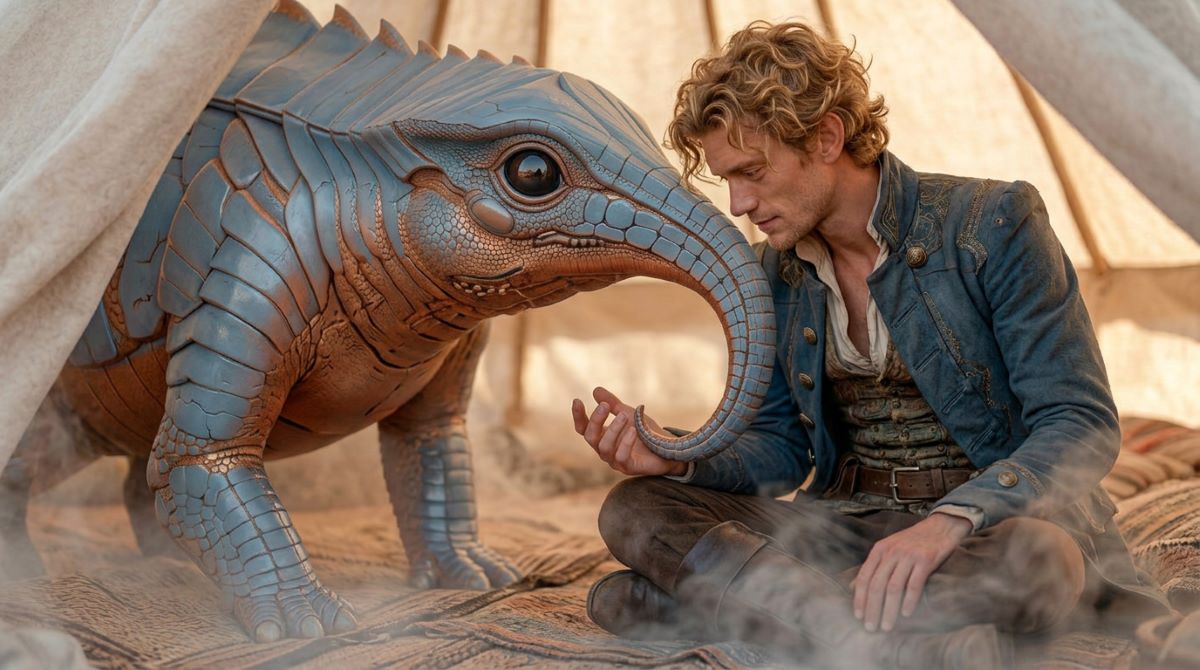
By morning, Dorian knew exactly how many seams crossed the tent’s canvas above him.
Toren had slept through the entire investigation. He lay beside Dorian with one arm across Dorian’s stomach, his face half buried in the pillow, dark hair falling untidily over his eyes. Sometime during the night, Toren had annexed the remaining space. Dorian had allowed it.
The night had given Dorian far too much time to consider what, exactly, he had agreed to. Steamhollow was not designed for Forest boys. Dorian was not designed for anyone.
Pale light was pushing through the canvas when Toren finally stirred. He opened his eyes, looked at Dorian and frowned. “You didn’t sleep.”
“I did.”
Toren kept looking at him.
Dorian sighed. “Not continuously.”
“That is not sleeping.”
“Your diagnostic skills remain excellent.”
Toren smiled and rolled onto his back. His left hand settled between them. The thin pink marks from the Dead Hair still crossed Toren’s wrist and ran up his arm, faded now but still visible.
Dorian took Toren’s hand and ran his thumb slowly across the scars. Toren said nothing. Dorian lifted the hand and kissed the inside of his wrist, just below the marks. Then he took Toren’s other hand and kissed that wrist too.
Toren watched him with quiet curiosity. “What was that for?”
Dorian kept hold of Toren’s hand. “You came back.”
Toren’s fingers tightened around Dorian’s. For a while they stayed like that.
Tavra Sol had not slept. Chanting still carried beyond the tent. Somewhere near the Circle, a gong sounded once.
Toren glanced towards the entrance. “The bonding ritual.”
“I remember.”
Toren sat up and reached for his clothes. Dorian watched while Toren pulled on his trousers. Only then did Dorian accept that the morning had become unavoidable and push the blankets aside.
“Once things settle here, we need to go to the Mirrors’ College,” Dorian said. “I owe someone a favour.”
Toren stopped dressing and looked back at him. “We?”
Dorian raised an eyebrow. “You did ask me to have you. I assumed that included transportation.”
A slow smile spread across Toren’s face.
“Do not look so pleased. You have not seen Steamhollow yet.” Dorian grinned.
“I’ll survive.”
“That is a very common belief among people who have never been there.”
Toren laughed and finished dressing. He crossed back to the sleeping mat and bent to kiss Dorian.
“Go,” Dorian said. “Before the Elders send someone looking for you.”
Toren smiled. “They will probably come for you first, Witness.”
Dorian considered this. Unfortunately, his Forest boy had a point.
When Dorian left the tent, the two young Loteri who had followed him the day before were waiting. Nobody else was. Tavra Sol learnt that Witness of the Pact was not available for blessings.
Both young men placed their hands over their hearts. “The Elders announced the birth of the daughter before dawn.”
Dorian looked past them. A column of white smoke rose above the Mother’s tent. It was not ordinary smoke. It climbed perfectly straight despite the morning wind, pale and almost luminous against the blue sky. Sunlight passed through it in long bright shafts.
The Mother’s pull caught him. Dorian blinked. His eyes had turned to mirrors. “Apparently she is waiting.”
His escorts led him through Tavra Sol. Smoke from smaller ritual fires drifted between the tents. Chanting and the smell of sacred bud followed them almost everywhere. People were moving towards the protected ground, carrying mirrors, flowers and bowls of smoking herbs. Nobody approached Dorian. His two escorts had evidently been very persuasive.
The closer he came to the Mother’s tent, the stranger the pull became.
Dorian slowed. It was not quite the Mother’s Call. He knew that sensation too well. Something else was tangling with the usual pull. Warmer, gentler, but unmistakably reflective.
The Loteri had formed rings around the protected ground, waiting. The guards at the Mother’s tent let Dorian through immediately.
White smoke filled the enormous tent, curling through the space before escaping through the opening in the ceiling. Dorian stopped just inside and waited. The smoke thinned gradually, revealing the Mother first, then the much smaller shape pressed close against her side.
The daughter’s plates were blue and copper, lighter than the Mother’s and softer around the edges. Her mirrored eyes looked enormous in her face, reflecting the tent, her mother and Dorian in distorted pieces.
Dorian bowed politely. “Congratulations to both of you.”
The daughter was watching him. The pull strengthened.
Dorian looked at the Mother. “She is doing that?”
Yes.
The daughter lifted her trunk slightly towards him. Dorian remained where he was. Her trunk moved again.
The Mother touched the connection.
Do not laugh at her.
“I would never.”
That was almost true.
The young Drommala took two uncertain steps towards him, stopped, then looked up. Dorian lowered one hand carefully and waited. Her trunk touched his fingers. Cool. Smooth. Something moved through the reflection between them. Not words. Not yet. Recognition.
For a moment Dorian simply stood there, looking into eyes that reflected his own silver ones back at him.
He exhaled slowly. “Well. Hello.”
The daughter touched his hand again, more confidently this time, then turned and returned to her mother’s side. Dorian watched her go.
The last of the white smoke dissolved around them. The Mother rose, vast enough that even the enormous tent suddenly seemed inadequate, and her daughter pressed closer against her flank.
The Mother’s meaning entered the connection.
It is time.
The gong began. One deep note rolled across the settlement, then another.
The Loteri removed the tent flaps, revealing the Mother and her daughter.
Outside, Tavra Sol had become a sea of people. The Steppe Loteri had formed ring after ring around the ceremonial ground. They had clearly been waiting for some time. Many sat on the earth, smoking. Several older people had blankets around their shoulders. Some were even asleep against their neighbours.
The gong sounded again. The Loteri began to kneel.
The movement spread through the gathering in waves. Some laughed. Others lifted their hands towards the Mother and her daughter. One old woman covered her face and began to cry.
Guests from the other Loteri Lands stood beyond the rings, watching. They were present for the ceremony, but not part of what was about to happen. Only the Steppe Loteri entered the ceremonial ground.
Dorian spotted Liana and Toren in different rings.
The First Elder stepped into the centre and struck her staff against the ground. The last of the chanting faded.
“The Mother has blessed the Steppe with a daughter,” she said. Her voice carried easily across the gathering. “Today the daughter will choose who will care for her, guard her and walk beside her.”
The staff struck the earth again.
“This choice belongs to the daughter. No Elder will name her Caretaker. No family will offer one. No tradition will decide for her.”
Heads bowed throughout the rings.
The First Elder turned towards the young Drommala. “Let the bonding begin.”
The chanting resumed, lower now. Dorian remained beside the Mother. The warmth of the connection strengthened. He had felt both of them before, but now the two pulls separated clearly in his mind.
The Mother.
The daughter.
At last, Dorian could tell which was which.
The daughter moved towards the first circle.
Nobody called to her or reached out. She wandered between the waiting Loteri at her own pace, choosing her own path from one circle to the next. Sometimes she crossed straight through a ring. Sometimes she followed its edge before moving inward again. Nobody tried to guide her.
She sniffed one woman’s hands, pushed her trunk into the folds of a hunter’s coat, then spent an unreasonable amount of time examining the beads at an old man’s belt.
Whenever she stopped, everyone nearby became very still. When she moved on, they hid their disappointment with varying degrees of success.
Dorian began to suspect that several hundred adults were attempting to interpret the judgement of someone less than a day old.
She inspected a young healer, touched his shoulder, sniffed his hair and continued into the next circle.
Then she reached Liana.
She stopped.
Liana knelt in the front ring, her back straight and her hands resting loosely on her thighs. For once, she looked neither impatient nor suspicious. Only very still.
The young Drommala lifted her trunk and pressed it against Liana’s chest.
Warmth reached Dorian through the connection, followed by something sharper. Recognition. Certainty. The meaning settled clearly in his mind.
Dorian’s steady voice carried across the kneeling Loteri. “The daughter chooses Liana of the Steppe.”
Liana’s expression shifted. Surprise came first, then quiet, unmistakable pride. The weight of the honour seemed to reach her a moment later. She lowered her head slightly before raising one hand to touch the daughter’s cheek.
A sound passed through the rings, relief breaking into celebration. Liana bowed her head until her forehead rested against the young Drommala’s. Several Elders stood and motioned Liana towards the Mother. She followed, still visibly stunned.
The Caretaker had been chosen. Everyone assumed the ritual was over.
The daughter disagreed. She turned away from Liana and headed back into the kneeling rings.
The chanting faltered. Heads lifted. The First Elder lowered the staff she had already raised to end the ritual. The daughter kept moving. Confusion spread through the gathering.
The Mother reached Dorian’s mind.
Then his voice cut across the confusion. “She has not finished. The daughter intends to continue.”
The First Elder looked sharply at him. Silence followed. Not ritual silence. Genuine surprise.
Dorian followed the daughter’s path and found Toren.
Third circle.
The Forest boy knelt among the Steppe Loteri. He watched the daughter approach with the same calm expression he used with frightened patients.
Dorian’s amusement disappeared.
The daughter crossed the second circle. Then the third. She stopped in front of Toren.
No. The thought came before Dorian could stop it.
Toren did not move. The daughter sniffed his hand, then lifted her trunk towards his left arm and curled it gently around his wrist. The scarred one. The same wrist Dorian had kissed that morning.
Something dropped hard inside Dorian’s chest. The meaning through the connection was absolute.
A faint smile touched Toren’s mouth. He looked surprised, confused, perhaps not yet believing what had just happened.
For one stupid moment, Dorian considered pretending he had misunderstood. But the daughter’s presence remained in the connection. Quiet. Waiting.
Dorian looked at Toren. Toren looked back, still kneeling with the daughter’s trunk around his wrist.
Then Dorian did his job with professional calm. “The daughter chooses Toren Earthwhisper.”
Silence held for barely a second before the rings erupted.
Dorian heard none of it properly.
Toren remained where he was for one breath too long. His smile faded into something uncertain. Then he rose and followed the daughter towards the centre. When he joined Liana, the young Drommala settled between them, pressing against Liana while keeping her trunk curled around Toren’s wrist.
The First Elder looked at Dorian.
Dorian checked the connection again with the detached precision he usually reserved for dangerous mirrors. No third choice. No uncertainty. The daughter was finished.
He nodded once. His throat had gone too dry for anything more useful.
Only then did the First Elder strike her staff against the ground. “The daughter has chosen Liana of the Steppe and Toren Earthwhisper as her Caretakers.”
She turned towards them. “Do you accept the honour?”
Liana answered first. “I accept.”
Toren looked at the daughter. Then at Liana. Dorian watched the full weight of it finally reach the Forest boy. His shoulders sank.
He had been chosen.
And only yesterday he had chosen something else.
Finally, Toren looked at Dorian. Dorian met his gaze steadily. It was the only thing he could give Toren in that moment. He would not make this crueller than it already was.
Toren stayed silent for several seconds. Then he lowered his free hand to the young Drommala’s back. His helpless smile was still there. Small. Broken.
“I accept.”
Every ritual mirror around the ceremonial ground brightened. Reflection opened through Dorian before he had time to prepare for it. Words older than Common, perhaps older than the Steppe tongue itself, moved through his mind. He understood them without knowing how.
Dorian spoke.
The reflections carried his voice across the ceremonial ground, repeating it softly from mirror to mirror. The daughter stood between Liana and Toren while light moved over all three of them, binding nothing, commanding nothing. Only recognising the daughter’s choice and the Caretakers who had accepted it.
When the final words left Dorian’s mouth, the mirrors went still.
The bonding was complete.
Celebration broke across Tavra Sol.
Dorian barely noticed.
People were rising, dancing, crying, reaching for Liana, Toren and the daughter. Somewhere a drum started. Someone shouted something that made several Elders laugh.
Dorian was already rearranging his life.
He could change his Steamhollow routes. Spend less time there. Make the Steppe one of his regular bases. If Toren could not come with him, Dorian would come to Toren.
Simple. Not ideal. Still simple.
Once a week if he could manage it. More often when his work allowed. There were worse problems than having to cross several worlds to see the man he loved.
Planning helped. Planning was control.
Around him, the celebration carried on without his attention until a drop of water struck his cheek. Dorian looked up. The sky above Tavra Sol was perfectly clear. Rain began to fall. The celebration quietened almost at once.
The First Elder lowered her head. “The Mother is leaving.”
The Mother rose. Her daughter pressed against her leg as the Loteri knelt again. Rain gathered near the protected ground. A puddle widened, then went perfectly still.
The First Elder struck her staff. “Mother, we receive your daughter by your choice. We receive the Caretakers she has chosen. We will guard without chains, care without possession, and remember the Pact.”
“We will remember the Pact,” the Elders answered.
The Mother touched her daughter’s forehead with her trunk, then moved towards the Wander Mirror.
Her voice reached Dorian’s mind.
Goodbye, Mirrorwalker.
Dorian raised an eyebrow. “After all that, I am merely Mirrorwalker again?”
Her amusement touched him.
Do not become greedy, Witness.
“Too late.”
She stepped through and vanished, leaving an ordinary puddle behind. The daughter watched it for a moment, then returned to Liana and Toren. The rain stopped.
Dorian’s eyes gradually returned to normal as he looked at Toren.
He still had routes to rearrange.
Chapter 40: No Visiting Hours
Read this chapter on its own page →
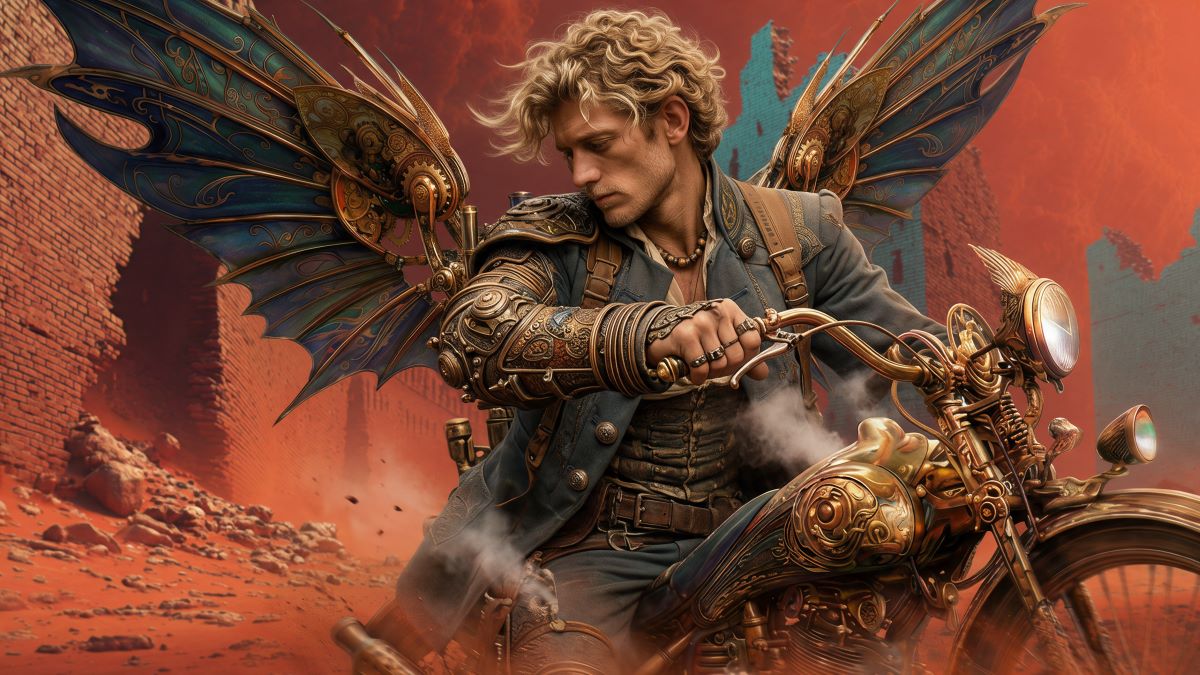
Dorian woke with sunlight across his face and a final plan.
He opened one eye, found the gap between the tent flaps responsible, and considered ignoring the morning for another few minutes. Then he sat up and rubbed his face. His mouth was dry, but his head was clear. More importantly, he had slept properly. After two sleepless nights, a few uninterrupted hours felt almost luxurious.
Outside, Tavra Sol was unusually quiet. The chanting had finally stopped sometime during the night. No gongs. No prayers. Only distant voices and the occasional movement between tents.
Dorian reached for his clothes.
Yesterday he had wanted to speak to Toren. The impulse had come almost immediately after the bonding ceremony. By then, Dorian had finished rearranging half his life in his head. His plan was hardly elegant, but neither was most of his life.
He had assumed there would be time for a talk after the ceremony.
There was not.
The daughter remained between Liana and Toren, pressed against Liana’s side. Her trunk curled around Toren’s scarred wrist. Then the First Elder struck her staff against the ground.
“The daughter has chosen. The sacred bond must deepen. Nobody will disturb the daughter or her Caretakers.”
Liana accepted the instruction without argument. Toren followed her and the daughter towards the protected tent. Just before they reached it, Toren looked over his shoulder. That smile stayed with Dorian. Small. Helpless. Still not entirely certain whether he had just been honoured or sentenced to something.
Dorian nearly followed him.
Instead, warriors, healers and protectors formed several circles around the tent. Apparently, sacred bonding included no visiting hours.
Nobody seemed to know how long it would take.
In retrospect, that was probably useful. Yesterday, Dorian might have said something careless. A night’s sleep had helped considerably. He had a plan now. He had even rehearsed what he intended to say to Toren. Twice. Several sentences had sounded suspiciously emotional. He had removed them.
Dorian finished dressing, fastened his brass cuff and checked himself once. Fresh. Rested. Entirely under control.
Good.
Now he only needed the Loteri to give Toren back. At least for long enough to talk.
The two young Loteri were waiting outside with breakfast. One smoked sacred bud while the other lazily chased flies from the tray.
Both jumped up when Dorian appeared and bowed deeply. “Witness of the Pact.”
Their gazes went immediately to his face. Dorian’s eyes were blue-grey again. Entirely ordinary. They looked impressed anyway. Dorian sighed privately.
“Breakfast, Witness,” one said.
“The Circle also summons you,” the other added.
Dorian looked at the food tray. Then towards the centre of Tavra Sol.
“Circle first.”
A decision his stomach regretted almost immediately.
The Elders were already assembled when Dorian arrived. Several objects had been arranged on woven cloth before them.
Dorian bowed. “Elders. Elder Mother.”
“Witness.” Elasya returned the greeting and indicated the place before the Circle. “Sit.”
Dorian obeyed.
One of the older Elders leaned forward. “Liana told us you opened a sealed mirror to Acalith.”
“I did.”
“And sealed it again afterwards?”
“Yes.”
The broad-shouldered Elder with the scar across his face spoke next. “Could another Mirrorwalker have opened it?”
“With a Council licence, certainly. Without one, illegally.”
“But possible?”
Dorian smiled faintly. “With sufficient skill and knowledge. Breaking an old seal is difficult. Sealing it properly afterwards is harder.”
Elasya rested both hands on her staff. “And the Acalith mirror? How long had it been sealed?”
“Decades, perhaps longer. I could not determine its exact age.”
“Could someone have opened it recently, before you arrived?”
Dorian shook his head. “I doubt it. The seal appeared undisturbed. No signs of recent opening or resealing.”
The Elders exchanged looks.
Elasya nodded slowly. “Thank you, Witness.”
Dorian inclined his head. “My pleasure. It is not often people ask about mirrors without also expecting me to bleed into one.”
Elasya gestured towards the objects on the woven cloth. “The Steppe remembers service. You carried our words to the Mother, witnessed the renewal of the Pact and brought her to Tavra Sol. These are given to you by the Circle.”
Dorian looked over the collection. “I was not aware being useful came with this many accessories.”
Elasya ignored him professionally. A silver-haired man stepped forward from behind the Circle. Dorian recognised him immediately. The man who had been waiting to bathe him after their return to Tavra Sol.
“You recovered,” the man said.
“Eventually.” Dorian grinned.
“A pity. We had prepared everything.”
“I remember.” Dorian looked him over. “Rather well, actually.”
Elasya cleared her throat. Dorian turned towards her with perfect innocence.
“He is our Relic Guardian,” she said. “He will present the gifts.”
“An excellent choice, Elder Mother.”
The Relic Guardian knelt beside the collection. “Shall we begin, Witness?”
“By all means. You have my complete attention.”
The Relic Guardian presented dried herbs, protective charms, ritual tools and sealed jars, explaining their uses with admirable patience.
“These mark you as a protected guest of the Steppe,” he said, holding up the carved charms. “Carry one if you enter a commune where nobody knows your face.”
“That seems increasingly unlikely.”
“It may save you from having to explain all your names.”
Dorian glanced at Elasya. “I like him.”
“I had noticed,” she said.
The remaining gifts were mostly ceremonial. Dorian listened politely, accepting that he would remember perhaps half their purposes.
Then the Relic Guardian drew a long leather case towards him and opened it. Dorian leaned forward. Inside lay old maps. Not copies. Originals. Their treated-hide surfaces had darkened with age. Faded routes, vanished settlements and old life-water paths covered them. Several mirrors were marked where modern Council charts showed nothing at all.
Dorian touched one line. It moved. He withdrew his finger. The line shifted again and settled several inches farther east.
“Useful,” he murmured.
“Especially for Walkers,” Elasya said.
The Relic Guardian watched Dorian studying them. “You approve?”
“I may forgive the missed bath.”
“Only may?”
Dorian looked up at him. “Do not become greedy.”
The Relic Guardian chuckled.
Three scrolls followed. All three were written in languages Dorian did not recognise. One carried an image of the Mother. Another showed an archaic network of mirrors across the Loteri Lands. The third showed broken mirrors. Their individual fragments were marked with symbols and notes.
Dorian picked up the second scroll. “How old?”
“Nobody knows,” Elasya said. “We believe they were found during the time of the Silence.”
“That predates the Great Council.” He studied the unknown writing again. “Nobody can read them?”
“Not here. You may find someone during your travels who can.”
Dorian set the scroll down with considerably more respect.
Next came a small mirror framed in blackened silver. Its surface was so dark that Dorian could barely see himself. He turned it towards the light. Nothing happened.
“What does it do?”
The Relic Guardian folded his arms. “We do not know.”
Dorian looked at him. Then at the Circle. “That is remarkably reassuring.”
“Sometimes the surface clears,” Elasya said. “We do not know why, nor can we predict when.”
Dorian examined the mirror again. “Now I definitely want it.”
The Relic Guardian began arranging the gifts inside the leather cases.
Dorian watched his hands for a moment. “Loteri hospitality continues to improve.”
The Relic Guardian looked up. “You are staying long enough to enjoy it this time?”
“Regrettably, no.”
“Regrettably?” He paused while closing the first case.
“Do not make me repeat compliments. I have a reputation.”
Dorian rose and bowed to the Circle. Years of Steamhollow noble education had not been entirely wasted.
“My sincere thanks to the Circle. I will keep them well.”
There was no irony in it. For once, ceremony had produced something better than a title.
The meeting ended soon after. Dorian stayed behind to pack the remaining gifts while the Elders rose and drifted away in small groups.
The Relic Guardian carried Dorian’s case to the entrance. “I assume you can manage from here, Witness.”
“I am a professional.”
“So I heard.” The Relic Guardian bowed and left.
Elasya was about to follow the others.
“Elder Mother.”
She stopped and looked back.
“Would you please stay a moment?”
Elasya gave a small nod and waited while the last of the Circle moved out of easy hearing distance.
Dorian closed the case. “When can I see Toren?”
Elasya studied his face before answering. “Not for at least a week. More likely longer.”
Dorian glanced towards the protected ground. “I thought the bonding ceremony was finished.”
“The ceremony was. The bond is not. The daughter needs her Caretakers close while it settles. She will decide when she no longer needs them all the time.”
Of course she would.
Dorian looked towards the tent for a moment, then reached into his coat for his notebook. He tore out a page and wrote one line. His Steamhollow address. Nothing else.
He folded the paper once and held it out to Elasya. “Could you please give this to Toren when you are able?”
She took it and glanced at the folded page. “Only an address?”
“He already knows my answer.”
Elasya looked at him for another moment, then tucked the paper carefully into her robe. “I will give it to him.”
“Thank you.” Dorian picked up the case.
Waiting in Tavra Sol would change nothing. The daughter needed Toren now, and Dorian had work waiting at the Mirrors’ College. He would return when he could.
Toren knew his answer. Now he had Dorian’s address to find him when he could.
Dorian secured the case behind Lucky’s seat. He left Tavra Sol before he found another reason to stay. The protected ground remained visible as Lucky climbed. He looked towards it once, then turned south.
The Steppe widened beneath him. For a while there was only grass, scattered herds and thin tracks between communes. Dorian let Lucky fly itself and tried not to think about Toren.
That lasted badly.
Then the land below changed. Long green blocks appeared across the Steppe, divided by irrigation channels. Workers moved through the rows while smoke rose from drying shelters farther ahead.
Dorian slowed Lucky.
Sacred bud. Fields of it. Beyond them stood warehouses, loading yards and caravans waiting beside stacks of packed bundles. Sacred bud was not merely tradition. It was business. A very large business.
The sacred bud fields thinned behind him until cultivation gave up entirely. Grass became scrub. Scrub became hard ochre ground. Then the Desert took over.
By mid-afternoon, Lucky was struggling with the heat. The engine temperature climbed steadily. The cooling system refused to keep up. Dorian loosened his collar and checked the readings again.
“Wonderful.”
He reduced speed, searching for somewhere to land. Something dark interrupted the sand ahead. At first he took it for a ridge. Then the ridge developed corners.
Dorian leaned forward. Lucky dropped lower.
The ruins unfolded beneath him. Broken fortress walls rose from the dunes. Dry channels crossed the ground in deliberate lines, some wide enough to have carried rivers. Stone gates stood open onto nothing. Farther in, collapsed structures surrounded great empty basins filled with sand.
Dorian stopped thinking about Toren. That alone was impressive.
He knew this place. Not personally. Fortunately. At the Pain Monastery, he had seen drawings of these enormous waterworks in an old Loteri account. A nameless ruler had dammed the rivers and sold water back to his people. When gold and possessions were no longer enough, he demanded children. The Great Sun had burned his fortress. The land had never recovered.
Dorian had assumed the story was exaggerated. Apparently not enough.
A warning flashed across Lucky’s control panel.
ENGINE TEMPERATURE CRITICAL
“Yes, I noticed.”
In the distance, the Mirrors’ College flashed brightly in the sun. Too far to reach with the engine in this condition. Dorian looked down at the ruins.
“Later.”
He brought Lucky down beside a broken stone wall. The remains of a tower offered some shade. The engine hissed as he shut it off. Beyond the wall lay the dry channels and empty basins of the fortress. He had spent weeks travelling because of the Drommala Pact. Now he had landed where the need for it began.